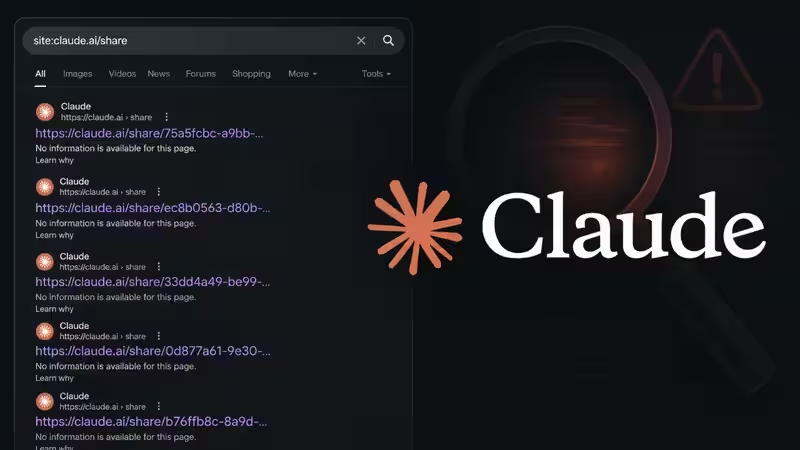
Hundreds of shared Claude AI conversations briefly appeared in Google Search, exposing legal, technical, and personal discussions. The discovery highlights how public sharing features can create unexpected privacy risks as AI tools become part of everyday work.Key TakeawaysShared Claude AI conversations briefly became searchable through Google.The issue centered on Claude’s optional public share links rather than private chats.Users should review active shared conversations and remove links containing sensitive information. Shared AI Conversations Became Searchable Hundreds of Claude AI conversations reportedly appeared online after Reddit users discovered that searching “site:claude.ai/share” surfaced publicly accessible chats containing legal advice, engineering work, and personal discussions, according to Cyber Security News’ report on the exposed Claude AI shared chats. Claude is Anthropic’s artificial intelligence assistant used for coding, writing, research, and workplace tasks. Its sharing feature creates public URLs that users can send to others, although the report indicated those pages lacked protections preventing search engines from indexing them after links spread through forums, social media, or other public websites. Google search results for the affected pages have largely disappeared, suggesting rapid deindexing or changes behind the scenes, although previously saved or bookmarked links could remain accessible unless Anthropic revokes them server-side. The discovery has renewed scrutiny of how AI companies protect sensitive information. The incident comes months after another Anthropic source code exposure involving Claude Code, highlighting broader concerns about the security and privacy of AI platforms handling user data. Sensitive Information Increasingly Flows Into AI Tools Professionals increasingly rely on AI assistants for reviewing contracts, debugging proprietary software, analyzing business documents, organizing financial records, and discussing personal matters, placing valuable data inside chatbot conversations. Financial data represents another category of private information at risk. One bitcoin holder even relied on Claude during a recovery of a lost 5 BTC wallet by uploading years of computer files, notebooks, and backup records. The case illustrates how users increasingly trust AI systems with confidential financial details that could expose digital assets if conversations or shared links become publicly accessible. Anthropic’s consumer terms covering conversation retention and model training explain how consumer chats may be retained under certain circumstances and outline the company’s policies governing model training preferences. The terms also describe how users can manage certain data settings, highlighting the importance of understanding how AI providers store, process, and use information shared through their services. Beyond accidental exposure, attackers are also exploiting growing trust in AI platforms through malicious campaigns. An Openclaw malware campaign targeted passwords and crypto wallets by impersonating legitimate AI software to steal sensitive user data. The campaign underscores how criminals increasingly exploit the popularity of AI tools, reinforcing the importance of keeping private files, credentials, and financial records away from publicly accessible services. Regulators Continue Examining AI Privacy Practices The U.S. Federal Trade Commission (FTC) warned in its guidance on AI privacy and confidentiality commitments that companies developing generative AI products should honor promises governing how consumer and business information is collected, retained, and used. The agency later launched an inquiry into AI chatbot data practices, examining how several providers collect, retain, disclose, and monetize information obtained through chatbot conversations. Regulators requested details on data retention policies, user protections, and internal safeguards as officials assess whether existing consumer privacy laws adequately address the rapid adoption of generative AI services. The stakes could increase as Claude and ChatGPT gain onchain capabilities, expanding AI systems beyond text generation into connected financial services and digital asset management. As chatbots begin interacting with cryptocurrency wallets, decentralized finance applications, and other online accounts, privacy and security concerns extend beyond conversation history to assets, transactions, and account permissions. Reviewing Shared Conversations Anyone who has created Claude share links should review active conversations within the platform’s privacy settings, remove links that are no longer necessary, and avoid posting public URLs containing confidential material. Google search listings may disappear quickly, although copied links, archived pages, screenshots, and saved bookmarks can remain available after search engines remove indexed results. Researchers have also documented AI agent attack techniques capable of exploiting connected systems, demonstrating how malicious actors can manipulate AI tools that have access to browsers, email accounts, cloud storage, and financial services. The findings underscore the importance of limiting chatbot access to sensitive files, credentials, and financial accounts while regularly reviewing permissions granted to AI applications that integrate with personal or business data.
Your AI Chats May Be Showing up in Google Search — One Sharing Feature Made It Possible
Hundreds of shared Claude AI conversations briefly appeared in Google Search, exposing legal, technical, and personal discussions. The discovery
TL;DRAI
Hundreds of Claude conversations appeared in Google Search, exposing legal advice and proprietary code. The incident signals governance gaps: public sharing enables data leakage when teams upload credentials, pressuring platforms on privacy as regulators examine AI practices.
722 words~3 min read