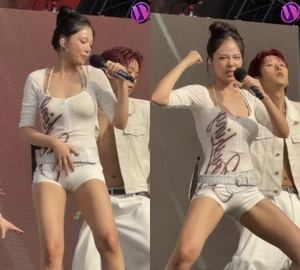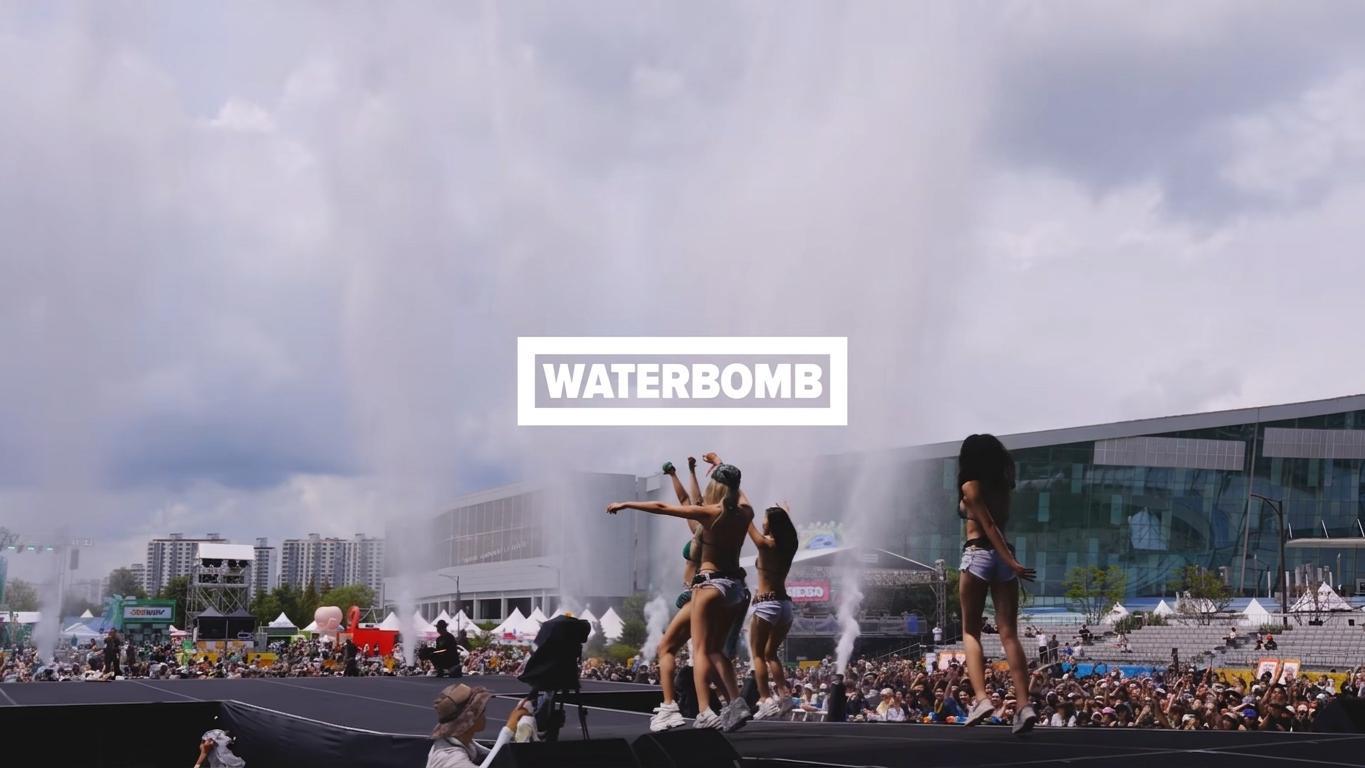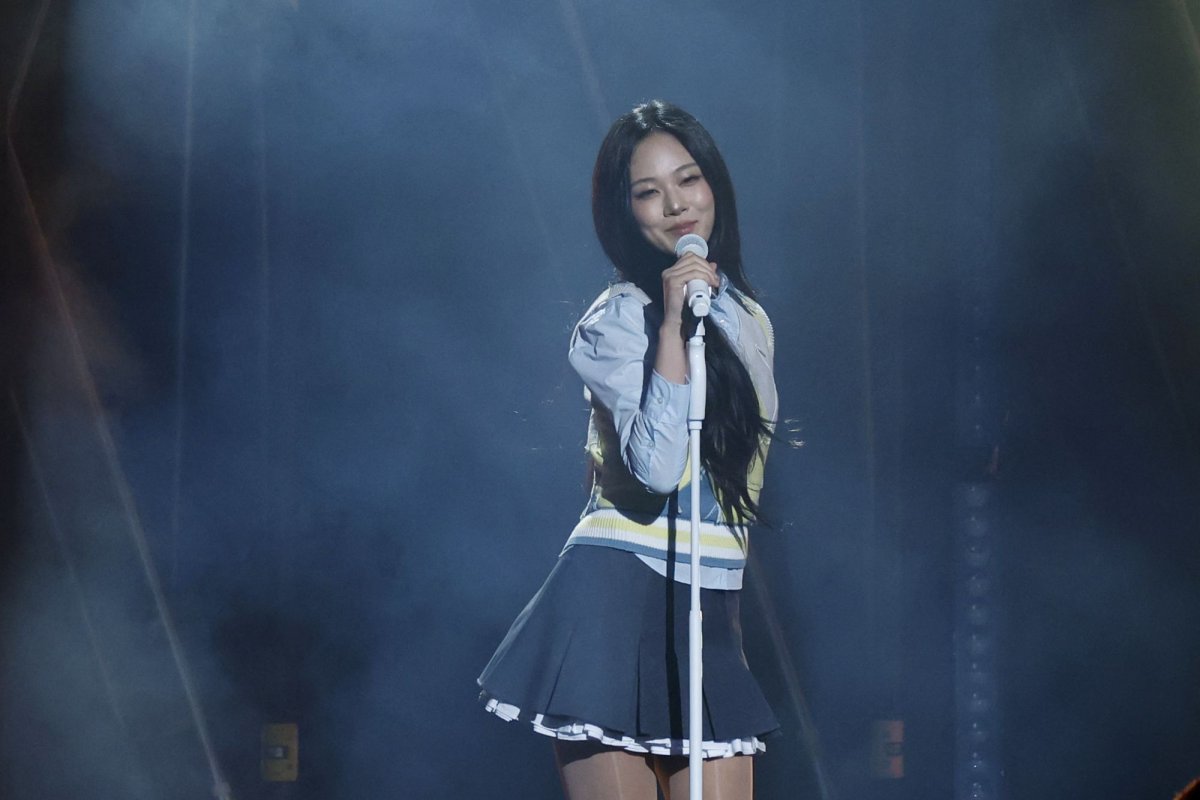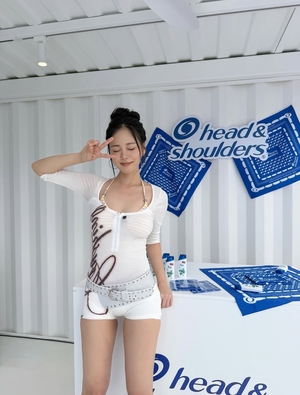
Critics, agency insiders say artists should be free to push boundaries -- but not at expense of the music Bibi poses for a photo before her performance at the Waterbomb Seoul festival at Kintex in Goyang, Gyeonggi Province, Saturday. (Bibi's Instagram) Bibi's midperformance costume change at Waterbomb Seoul over the weekend reignited a familiar debate over whether K-pop's biggest summer music festival has become excessively provocative. While online reactions were sharply divided, industry insiders largely agreed the performances should be viewed within the context of Waterbomb's distinct festival culture, cautioning against allowing spectacle to eclipse the music itself.The singer-songwriter drew widespread attention after incorporating an onstage costume change into her choreography during Saturday's performance at Kintex in Goyang, Gyeonggi Province.As dancers surrounded her, Bibi unzipped part of her outfit before continuing the performance, a moment that quickly spread across social media. Sunmi also attracted attention for a lingerie-inspired stage outfit, while former B.A.P member Zelo drew criticism from some viewers over choreography they considered overly suggestive.Originally launched in Seoul in 2015 as a hip-hop and electronic dance music festival, Waterbomb has evolved into one of Korea's signature summer music events, with K-pop performances becoming one of its biggest draws. As its popularity has grown, many artists have come to view the festival as an opportunity to showcase a different side of themselves while generating widespread online attention.Although the festival is restricted to attendees aged 19 and older, the performances once again prompted debate over where artistic expression should draw the line in Korea.Online reactions were mixed, with some calling the performances "excessively provocative" and questioning whether the choreography was appropriate given its widespread circulation on social media, where minors could also view the clips. Others pointed out that Waterbomb is an adults-only festival and that artists should be free to perform without such criticism. Sunmi poses for a photo before her performance at the Waterbomb Seoul festival at Kintex in Goyang, Gyeonggi Province, Sunday. (Sunmi's Instagram) Not every artist, however, embraced revealing concepts.Aespa's Karina and boy group Riize appeared in stage outfits that differed little from those worn at other concerts, underscoring that provocative styling is not a prerequisite for performing at Waterbomb.Music critic Kim Zakka said that evolution is precisely what has allowed Waterbomb to establish a distinct identity."Every festival needs its own identity to establish itself," Kim said. "Waterbomb has become a place where artists can freely showcase a different side of themselves while reaching new audiences."Cultural critic Bae Kug-nam said focusing solely on whether performances are "provocative" risks overlooking the broader evolution of popular culture."Every generation has debated where artistic expression should draw the line," Bae said. "Popular culture has continually expanded its spectrum through those debates." B.A.P's Zelo poses for a photo before his performance at the Waterbomb Seoul festival at Kintex in Goyang, Gyeonggi Province, Saturday. An official at a major K-pop agency likewise rejected suggestions that companies pressure artists into adopting revealing concepts, saying performers generally choose styles that fit Waterbomb's atmosphere."They're dressing for the occasion," the official said. "Most of the artists appearing at Waterbomb are already well-established enough that companies aren't forcing them into sexy concepts. They choose what best suits the festival."The official added that revealing outfits themselves are not unique to Waterbomb, but that artists naturally adapt their concepts to suit the festival's atmosphere.Still, not everyone in the industry believes the trend should continue unchecked.Music critic Jung Deok-hyun said Waterbomb should be viewed differently from conventional concerts because the audience attending expects a distinct festival atmosphere. At the same time, he warned against performers relying too heavily on increasingly provocative concepts to attract online attention."As performances continue to go viral online, artists naturally feel pressure to become more extreme," Jung said. "But moving too far in that direction is not desirable."
Has K-pop's biggest summer festival become more provocative?
Bibi's midperformance costume change at Waterbomb Seoul over the weekend reignited a familiar debate over whether K-pop's biggest summer music festival has beco
632 words~3 min read