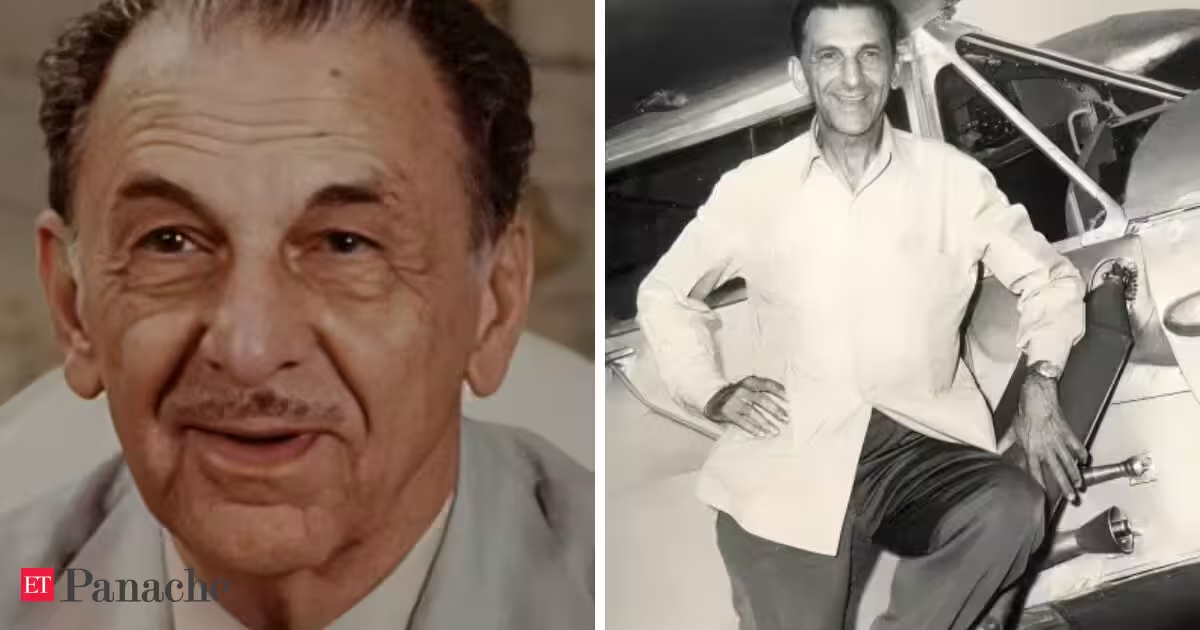
During JRD Tata’s tenure at the helm, many great Tata companies were born
| Photo Credit:
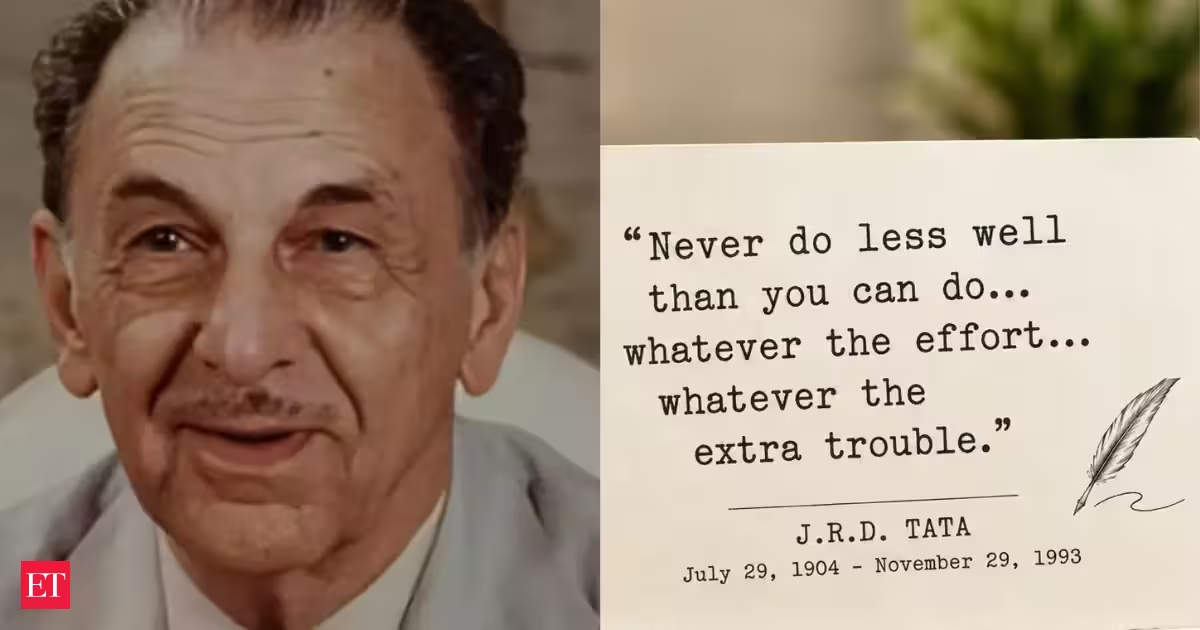
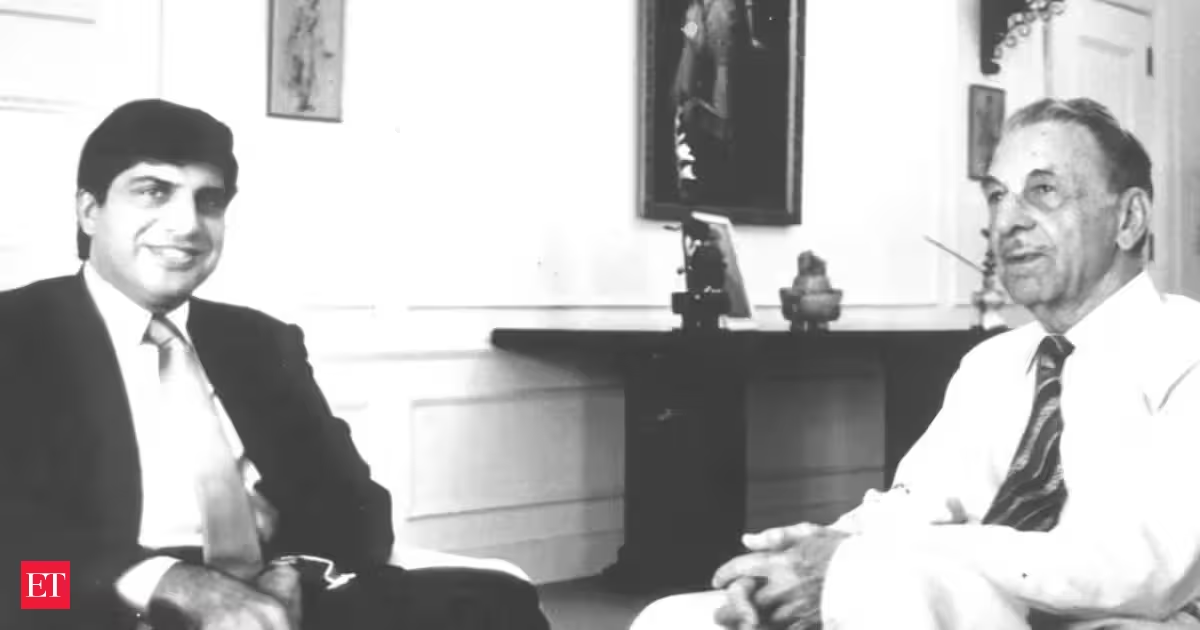
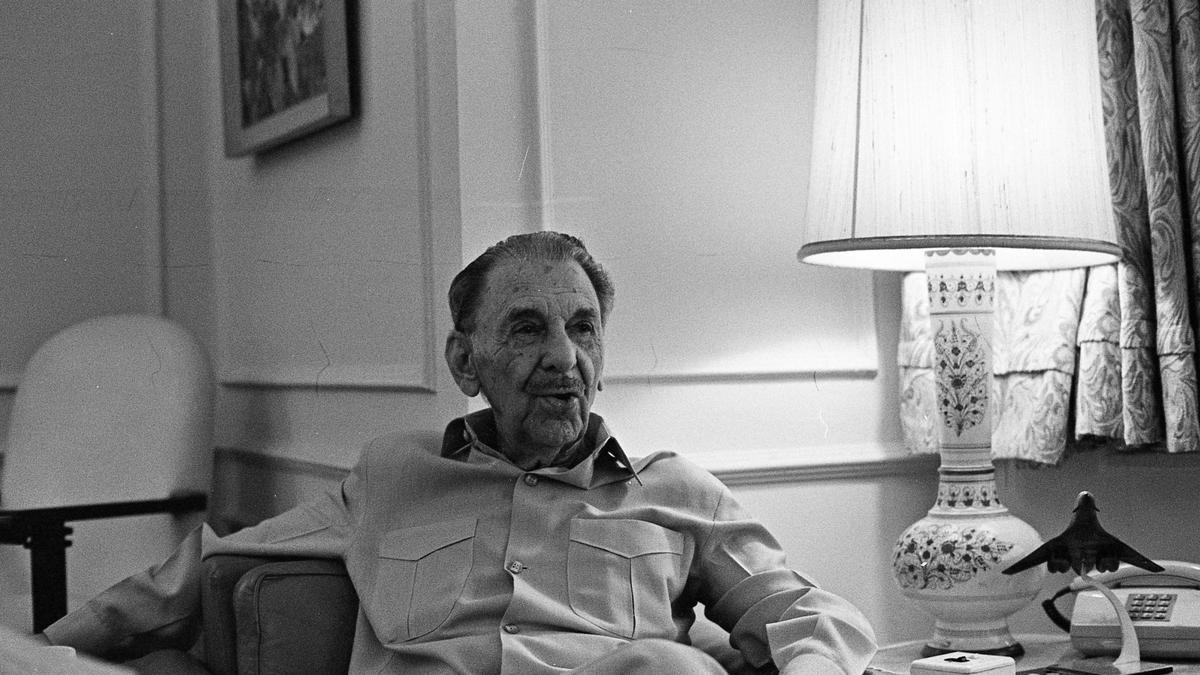
Today, we mark the 122nd birth anniversary of one of the greatest leaders our nation has known — JRD Tata. He was Chairman of the Tata Group for over 50 years, and inspired an entire nation with his pioneering achievements. Way back in 1932, he founded Tata Airlines (which later became Air India), thus laying the foundations for civil aviation in our country.During his tenure at the helm of Tatas, many great Tata companies were born — including Tata Chemicals, Tata Motors, Tata Tea, Tata Consultancy Services and Titan. Many of India’s finest institutions also took shape under his leadership, such as the Tata Memorial Hospital in Mumbai, Tata Institute of Fundamental Research (TIFR), National Centre for Performing Arts (NCPA) and the National Institute of Advanced Studies.Strong teamPerhaps one of the key reasons why JRD could achieve so much was that he assembled a team of outstanding leaders, across two generations. In his first two decades as Chairman, during the 1940s and 1950s, his leadership team consisted of stalwarts such as Sir Homi Mody, AD Shroff, Dr John Mathai, Ardershir Dalal and Naval Tata. During the 1960s and later, a second generation of equally accomplished leaders constituted his core team. They included the likes of Sumant Moolgaokar, Darbari Seth, Rusi Mody, Nani Palkhivala, JJ Bhabha, FC Kohli, Xerxes Desai and Ratan Tata.He had a sharp eye for spotting these phenomenal leaders, and in encouraging them to join the Tatas. When he saw the spark in managers such as Sumant Moolgaokar, Darbari Seth and FC Kohli, he spared no efforts in putting them in leadership roles where they could make a deep impact.And they repaid his confidence in ample measure by building great companies that have stood the test of time.But what is truly amazing is that he led this band of highly talented leaders so fluently, and inspired in them such a deep sense of commitment. In effect, he unlocked their superpowers. What enabled JRD Tata to do this?To answer this question, I turn to a thoughtful foreword that JRD Tata himself wrote to a book titled Keynote. JRD Tata says: “Outstanding managers are usually strong-willed and of independent character with distinct styles of management and personal behaviour. This made it difficult sometimes to ensure that a uniform philosophy of management prevailed in all the companies of the Tata group. If Tatas have on the whole have been surprisingly successful in that respect, it is because their directors and managers have been professional men, allowed full freedom to deploy their talents and ideas, while keeping within the pattern of traditions and standards introduced by Jamsetji Tata in regard to fair and honest management, product quality, human relations in industry and industrial philanthropy.”Space and freedomIn effect, what JRD Tata is telling us here is that great leaders need the space and freedom to practice their respective styles of management which may be widely different from each other, even while they stay uncompromisingly true to the core beliefs, values and traditions of the institution.In practice, this meant that JRD led these accomplished people on the strength of his principles, from which he did not budge, while being simultaneously flexible in accommodating their styles and preferences. For instance, speaking about Sumant Moolgaokar, who built Tata Motors, JRD has said: “I realized early that Sumant was a lone wolf. If I let him run it his way, he would deliver the goods. And he did.”JRD’s secret sauce of leadership is summarized in a reflection that he shared with his biographer, RM Lala. JRD told him: “If I have any merit, it is getting on with individuals according to their ways and characteristics. In fifty years, I have dealt with a hundred top Directors and I got on with all of them. At times, it involves suppressing yourself. It is painful but necessary….to be a leader, you have to lead human beings with affection.”As we celebrate JRD Tata’s birth anniversary today, it is worthwhile to reflect on this philosophy which enabled him to become not just a very successful leader, but a rare leader of leaders.Bhat is the author of eight books, including four bestselling books on the TatasPublished on July 29, 2026