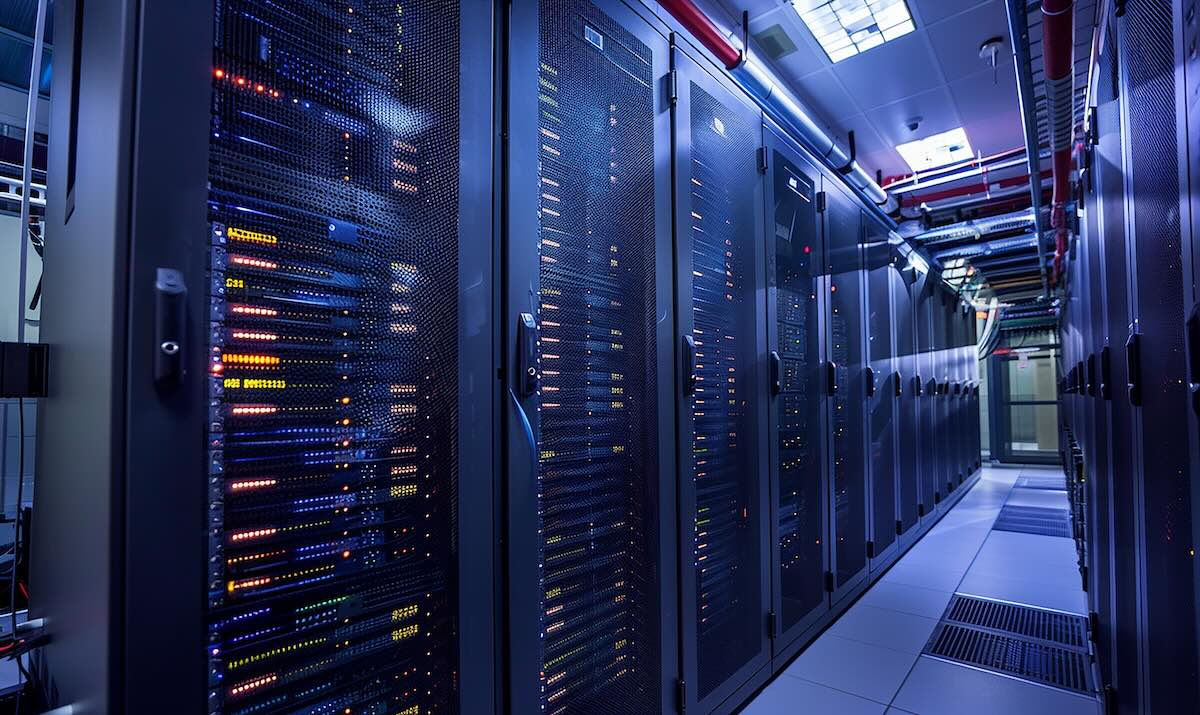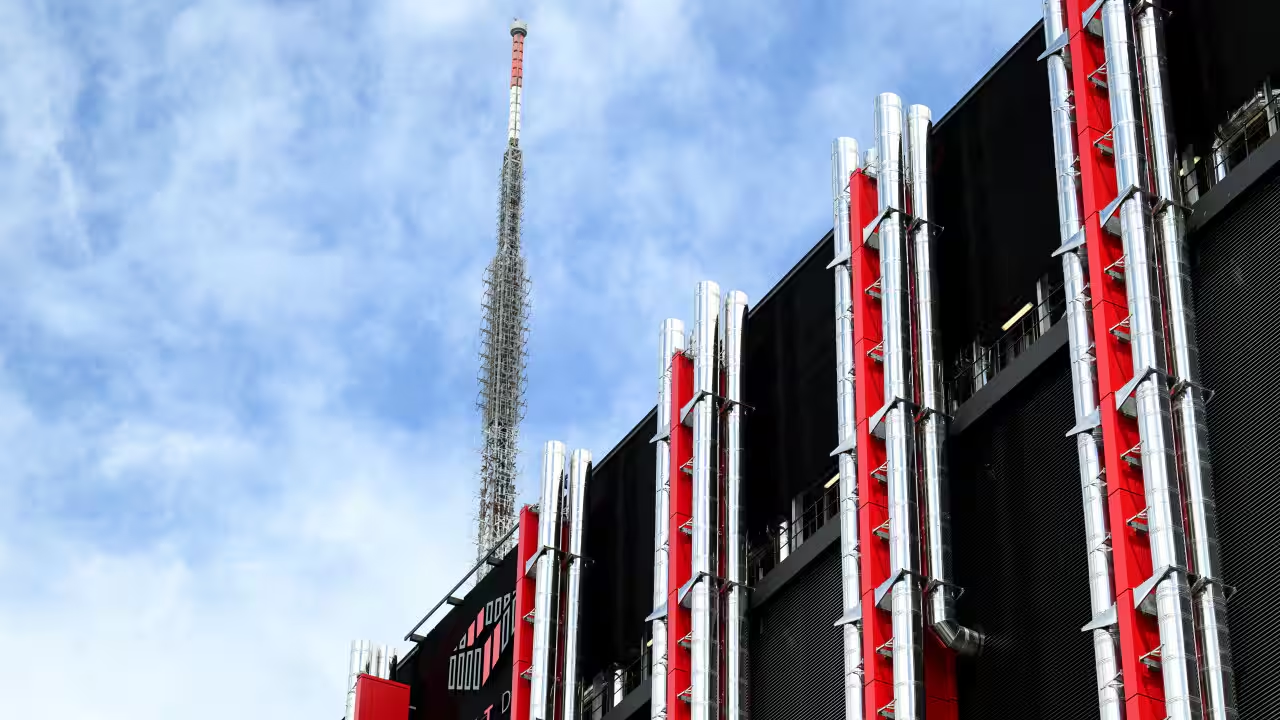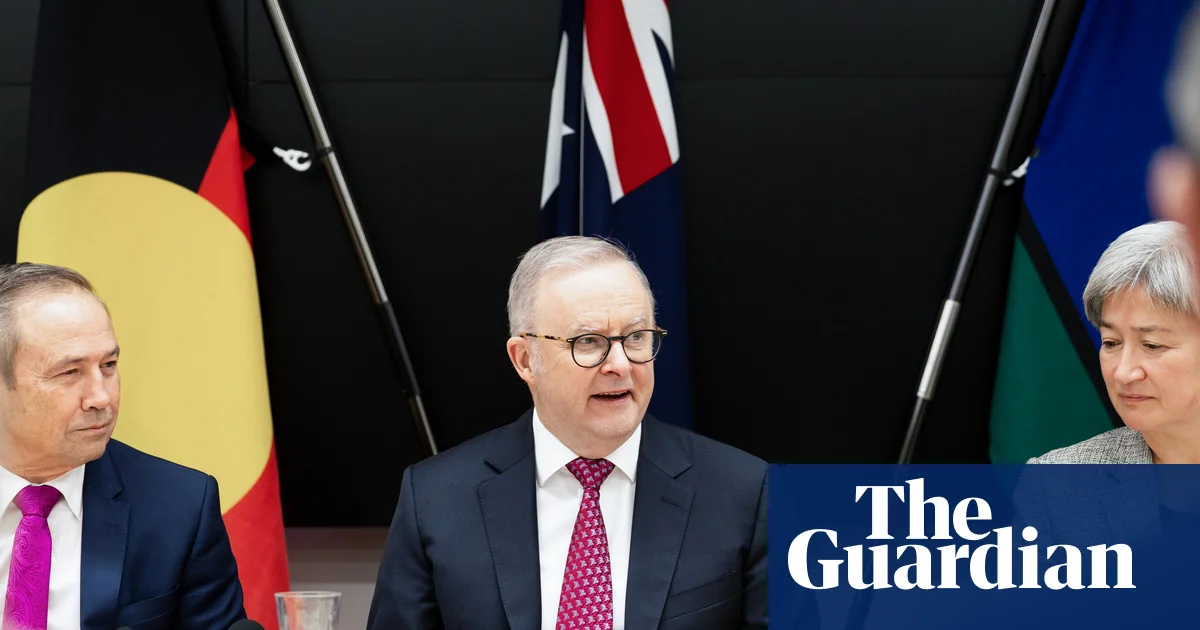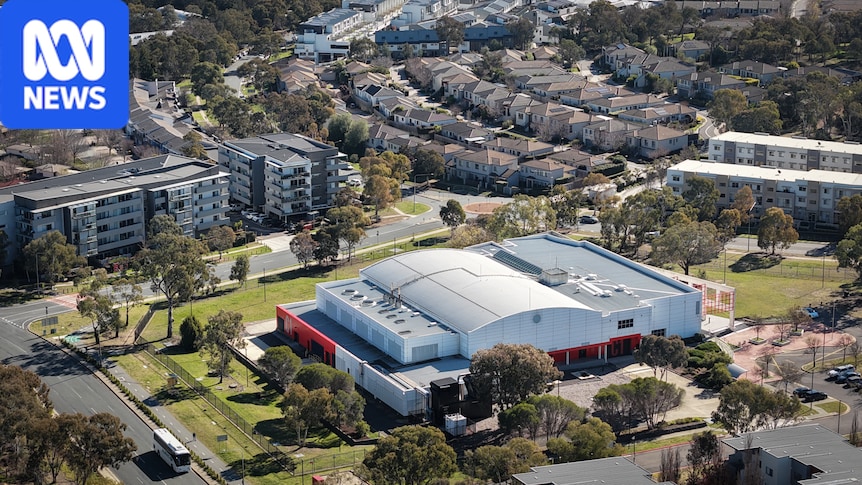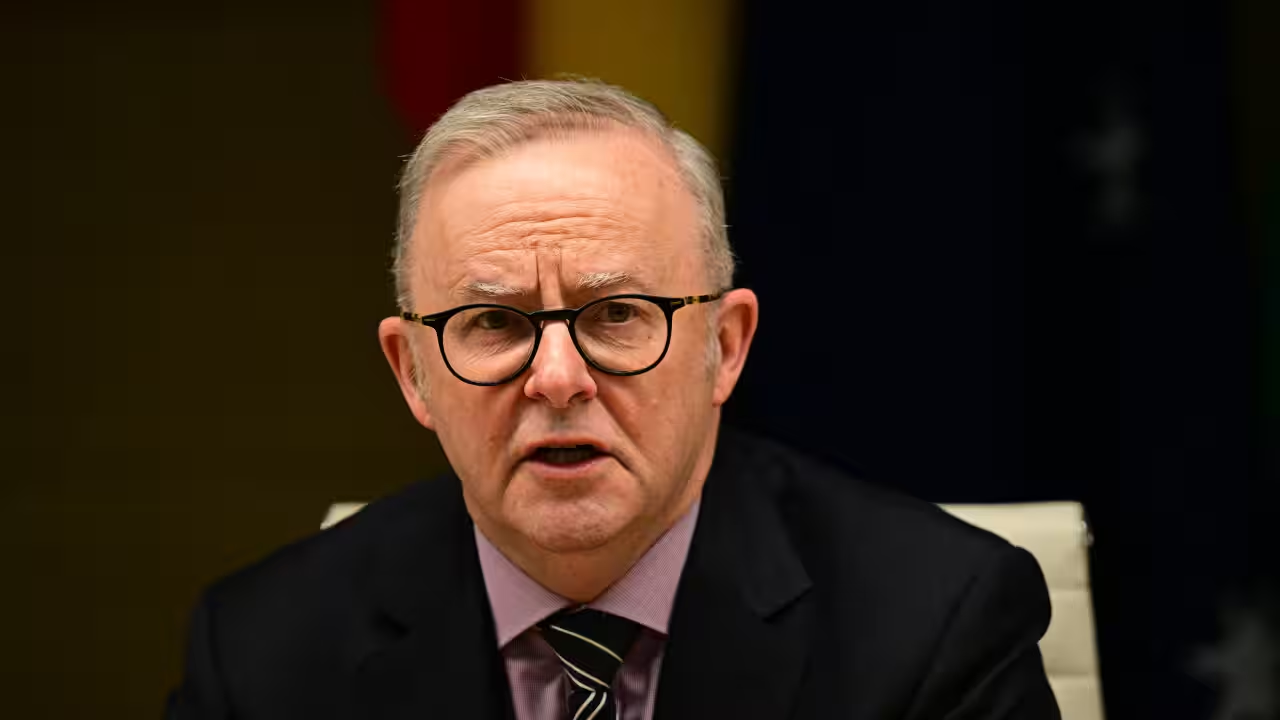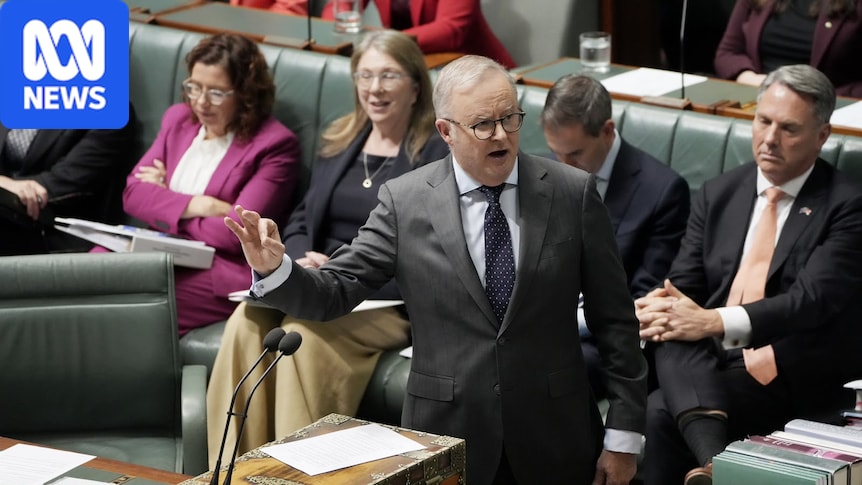
New AI data centres in Australia will be required to deliver "at least as much energy" into the grid as they take out under mandatory rules under the government's blueprint for AI regulation.And as the race to attract the power-hungry warehouses accelerates, political debate about how to generate the energy to feed them is intensifying.There are about 160 operational data centres across the nation, but that number is expected to balloon to accommodate the rise of AI.During a major speech on AI earlier this month, Prime Minister Anthony Albanese said the government wanted the next generation of data centres to build "new renewable generation and firming" to strengthen the nation's energy resilience.A new national framework for large-scale AI data centres will focus on mandatory energy rules. (Supplied: Cloud Carrier)The government is pursuing batteries, pumped hydro, and gas as firming energy technology, which is used to stabilise the grid when renewables such as solar and wind are unavailable.But the Coalition says a moratorium on nuclear power is deterring investment in Australia. Under the government's proposed mandatory standards, new data centres will be required to underwrite new power supply, minimise water use, and maximise energy efficiency.It is understood the government will use a yet-to-be-determined energy threshold to decide which future data centres are captured by the mandatory standards.The plan has already hit a snag, with Queensland and the Northern Territory signalling yesterday they will not back national standards requiring facilities pursue renewable power. 'Not all data centres are created equal'Data centres that support AI technology typically have greater energy and space requirements than traditional data centres used to store and process information, and according to recent analysis from McKinsey and Company, will account for 70 per cent of data centre demand from 2025–2030.The prospect of large-scale facilities cropping up in Australia's cities and regional areas has sparked community concern, especially around higher power prices and potentially harmful impacts on the environment.But the government says an influx of data centre applications means Australia can be selective.Assistant Minister for Technology Andrew Charlton said the government was receiving more applications than Australia could build, creating an opportunity to prioritise projects."Not all data centres are created equal," Mr Charlton told the ABC."Better data centres are the ones that bring their own clean energy, that use water responsibly, that contribute positively to their community."Worse data centres are the ones that plug into our grid, drink our water and push up bills."The proposed rules for large data centres will build on a set of non-binding "expectations" released by the government earlier this year.The expectations state that facilities should "not place upward pressure on energy prices", make a "positive contribution" to the nation's energy transition, and work in coordination with energy regulators and suppliers.Andrew Charlton highlights how data centres can positively and negatively contribute to communities. (ABC News: Matt Roberts)The CEO of Data Centres Australia, Belinda Dennett, said operational data centres in Australia were already offsetting 70 per cent of their energy use with renewable energy projects, but there was still a reliance on diesel for back-up power."Data centre operators and their customers currently underwrite new, renewable energy generation and firming, and pay their way on energy and water infrastructure," Ms Dennett said."Diesel generators are installed as back-up power generation because critical infrastructure requires 24/7 availability."In a recent submission to a NSW parliamentary inquiry into data centres, the National Health and Medical Research Council's Centre for Safe Air stated diesel emissions included several harmful pollutants that could have negative health impacts, and that back-up diesel generators were "one of Australia's most significant unregulated sources of harmful air pollution."According to Data Centres Australia, diesel generators are used for a limited number of hours per year for "periodic maintenance testing", and actual emergency use is rare and brief.The organisation describes emissions from data centre generators as negligible.Qld, NT oppose plan for national rulesEnergy ministers met virtually on Tuesday to discuss data centre energy use as part of the Energy and Climate Change Ministerial Council.QLD and the NT both knocked back several elements of the government's framework for AI, including the plan to legislate national standards for large-scale data centres to ensure facilities underwrite new renewable power supply. The ABC has approached Queensland Energy Minister David Janetzki and NT Energy Minister Gerard Maley for comment. The council, not requiring unanimity from all ministers, agreed to progress action to ensure what was described as "a significant pipeline of data centre developments" are beneficial to the nation's energy grids, and prevent additional costs on households. The opposition from the Qld and NT sets the stage for a potentially fiery meeting of National Cabinet in August, where the prime minister will seek agreement on the national standards from state and territory leaders.Coalition MPs push for nuclear-powered data centresShadow Energy and Emissions Reduction Minister Dan Tehan has argued the government's proposed standards for data centres are too restrictive."The problem is that the government has said that pretty much it's wind and solar as the only two forms of renewable energy that data centres can use," Mr Tehan told the ABC.Ahead of releasing the Coalition's revitalised energy policy, Mr Tehan has said that all options should be on the table to power future data centres, including nuclear energy."When [companies] look to invest in Australia, they are deterred by our moratorium preventing them from powering their centres through nuclear," Mr Tehan said in a statement.Dan Tehan argues that companies are deterred from investing in Australia due to the moratorium. (ABC News: Ian Cutmore)Mr Tehan said that US companies such as Google and Amazon were investing in "their own zero emissions nuclear power to power data centres."According to the International Energy Agency [IEA], nuclear energy plays a supporting part in powering the world's biggest data centre markets: the United States and China.The autonomous intergovernmental organisation expects nuclear power's role to grow from 2030, when it is expected that more small modular reactors [SMRs] come online.Google, for example, signed a landmark deal in 2024 with Kairos Power to buy energy from several SMRs to help support the tech giant's AI infrastructure.The first of the reactors is expected to come online by 2030. Nationals Deputy Leader Darren Chester, whose electorate of Gippsland in Victoria is experiencing significant data centre investment, said he believed that it was "inevitable" that Australian-based facilities would be powered by nuclear energy to some degree in the future.Mr Chester said "large-scale" nuclear reactors were "proven technology", but he would be open to other options in the years to come, such as SMRs."Removing the moratorium on nuclear [energy] is a sensible thing to do," Mr Chester said.Shadow Infrastructure and Sovereign Capability Minister, Andrew Hastie, said it was not feasible for AI data centres to be powered solely off renewables."There needs to be a mix of base load power, and nuclear should be part of that mix," Mr Hastie said in a statement.The Coalition's nuclear energy aspirations for Australia suffered a significant blow in its election drubbing in 2025.An internal review found the Opposition's election campaign was perceived as "incoherent," and acknowledged the Coalition's plan for nuclear was among policies widely criticised as "politically mistimed or alienating."At the core of the policy was a plan to build seven nuclear power sites, but the party did not specify whether large-scale reactors, small modular reactors [SMRs], or a combination of both, would be used.National science agency CSIRO and the Australian Energy Market Operator [AEMO]'s latest GenCost report showed introducing nuclear power to Australia would attract significant up-front costs."New large-scale nuclear costs are significantly lower than nuclear SMR, but both represent moderate-to high-cost sources of electricity generation," the report stated.Nuclear power generation has been banned in Australia under federal laws since the late 1990s.States and territories also have legislation prohibiting nuclear energy production, with some jurisdictions also restricting certain nuclear-energy-related activities, such as uranium mining. Labor is emphatically opposed to lifting the moratorium on nuclear energy in Australia.Energy Minister Chris Bowen recently told Sky, "Nuclear is not an answer for Australia any time."Chris Bowen's focus, like the government's, is transitioning to renewable energy. (ABC News: David Sciasci)Instead, the government is focusing on transitioning to renewable energy, specifically solar and wind energy backed up by hydro storage and gas, with a goal of having 82 per cent of electricity generated by renewables by 2030.Experts weigh in on how to power Australia's data centres Tony Irwin, a nuclear energy advocate and ANU honorary associate professor who spent three years building nuclear reactors in the UK, believes nuclear energy should be used to help power data centres."Solar and wind obviously can play a part in it. But nuclear should also be playing a part because, as I say, it's reliable, it's low emissions," he said.Mr Irwin believes large-scale reactors could be used, but SMRs and what were known as "micro-reactors" could be less costly.Operational SMRs are only found in Russia and China, according to Energy Strategy Reviews. Micro-reactors are still in development.The prime minister said in his speech that both Australia's land and sunshine were among reasons the world was "queuing up to invest" in the nation."Think about what we have … the space to build. The sunlight to power affordable, renewable, reliable energy," he said."Truly, there is nowhere else you'd rather be than Australia."Tony Wood, a senior fellow at Grattan Institute's Energy and Climate Change Program, welcomed the government's new rules but questioned how data centre operators would be forced to supply their own renewable energy."We are going to get on top of this. That's what this is about, and I fully support that," he said."I've not seen anything that really expands on how such a requirement would be implemented." Mr Wood believed the opposition's push for nuclear power for data centres was a "political sideshow".Grattan Institute's Tony Wood has labelled the Opposition's nuclear power push a "political sideshow". (ABC News)"The only reason, and it's a possibility, that nuclear may come back on the agenda for Australia is if what we're doing now turns out to be far too expensive and far too difficult, that is backing up wind and solar with gas, for example," Mr Wood said.He described the government's plan for Australia's energy transition as "plan A"."I think we've got a very strong plan A and we should stick with it in Australia," he said."And just because someone else does it [nuclear energy] doesn't mean we should fire."But Edward Obbard, an associate professor in nuclear engineering at UNSW Sydney, said he found it "strange" that power sources were aligned with different political parties and values in Australia."I think nuclear technology needs to be assessed like-for-like with other technologies and applied where it's useful," Dr Obbard said."But no-one's really doing that assessment properly now because you just look at Australia and say, 'Oh yeah, it's illegal, never mind', and just sort of move on."We're not actually considering how all these technologies could be applied and how they could work together."Greens urge pause as AI race acceleratesBeyond the obvious, at least initial, financial benefits, the Labor government also sees attracting AI data centres as a key to building sovereign capability."Not just adopting or accommodating AI. Designing it, making it, building the capability right here … building our sovereignty — and our economic resilience as a result," Mr Albanese said.As the prime minister urged haste on AI, the Greens have called for a moratorium on data centre approvals until mandatory standards are implemented, saying the government must take its time to get the right policy settings in place."With more than 90 data centres already in the pipeline, we cannot allow a free-for-all in the meantime," Greens senator Sarah Hanson-Young said in a statement.The federal government says it will legislate the new mandatory regulations early next year.
PM's data centre plan may hit roadblock as energy debate heats up
As two energy ministers oppose the prime minister's plan for national AI rules for data centres, the question over how to power the facilities intensifies.
TL;DRAI
Australia mandates AI data centres generate renewable energy matching consumption; Queensland and NT reject national standards. Signals tightening AI infrastructure regulation globally—operators must fund firming capacity (batteries, hydro), raising entry barriers for non-scale players.
1,951 words~9 min read