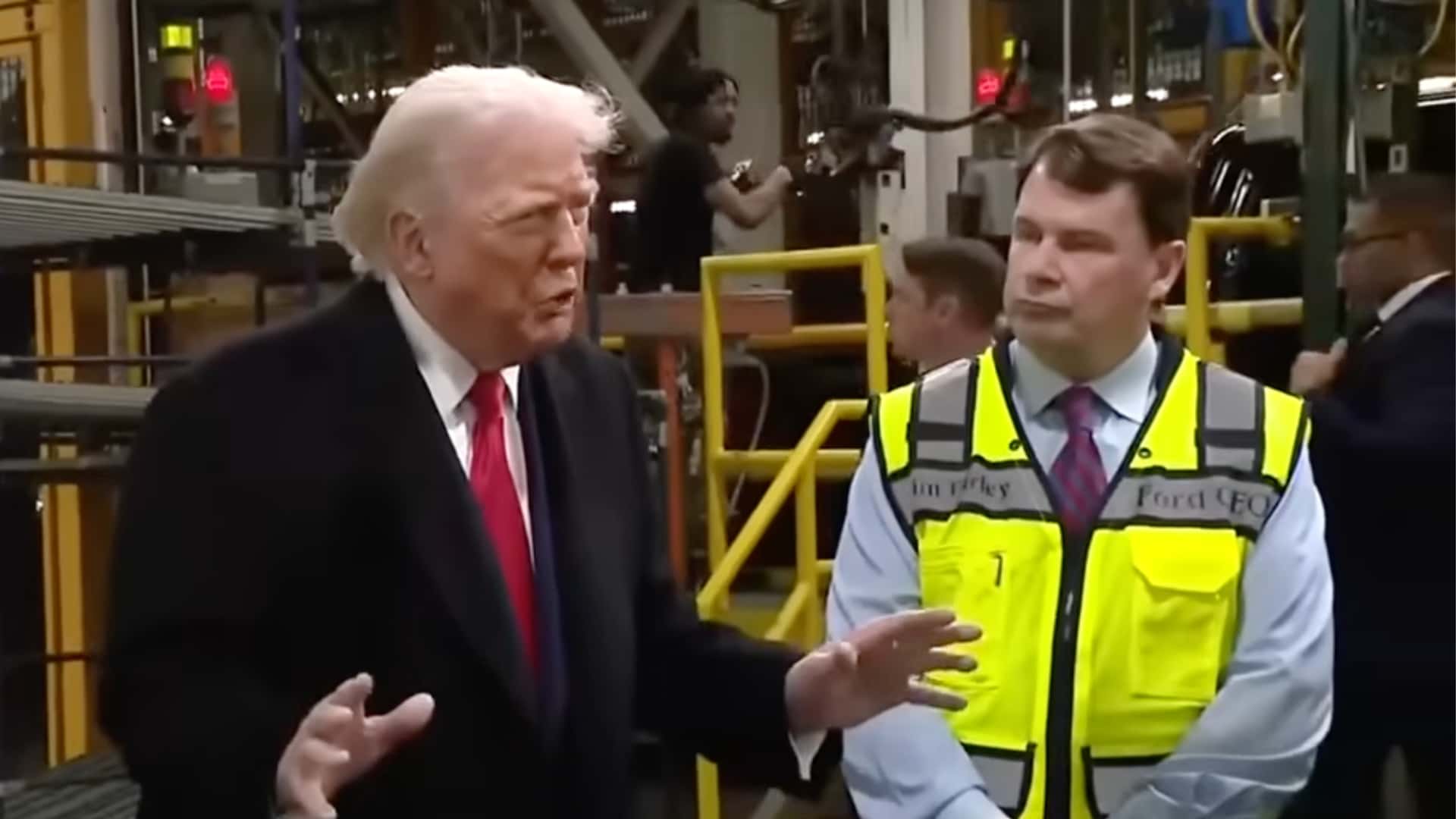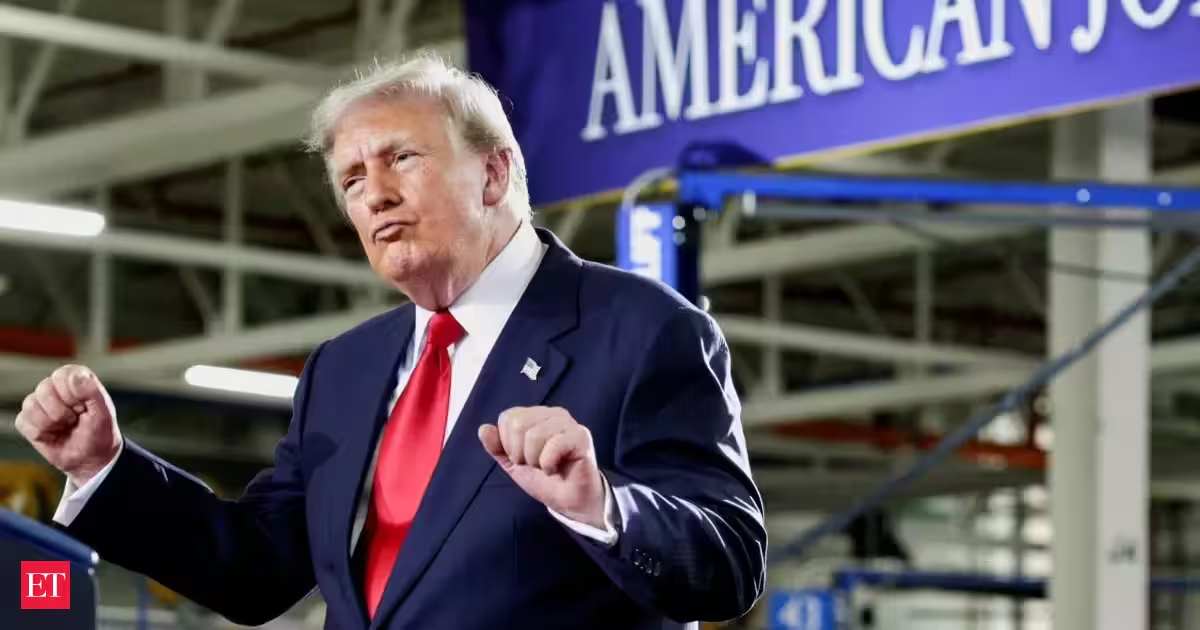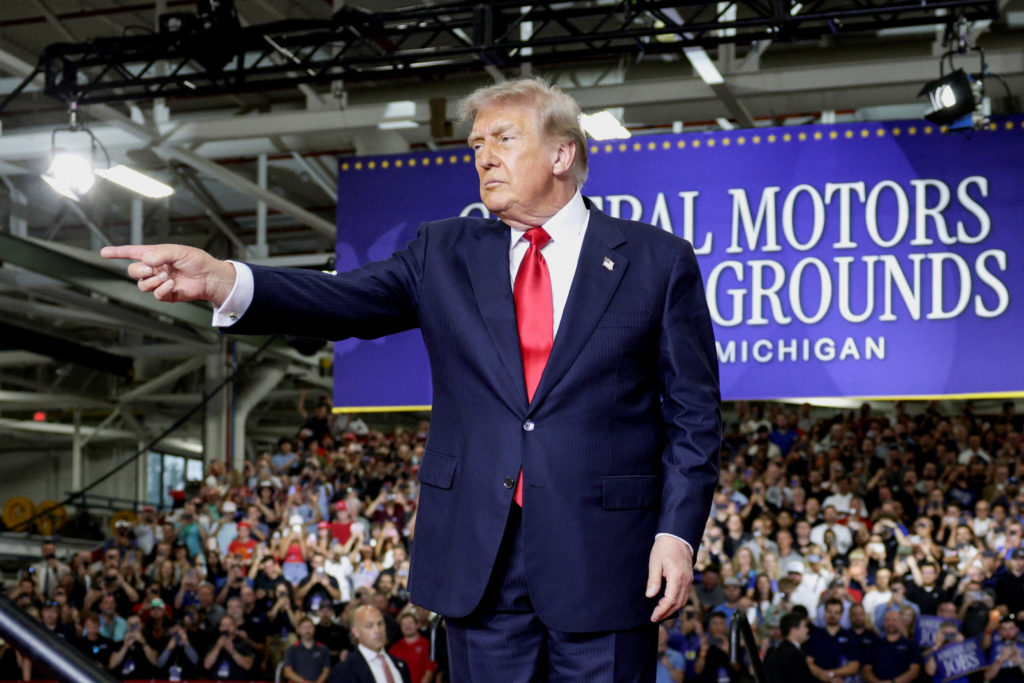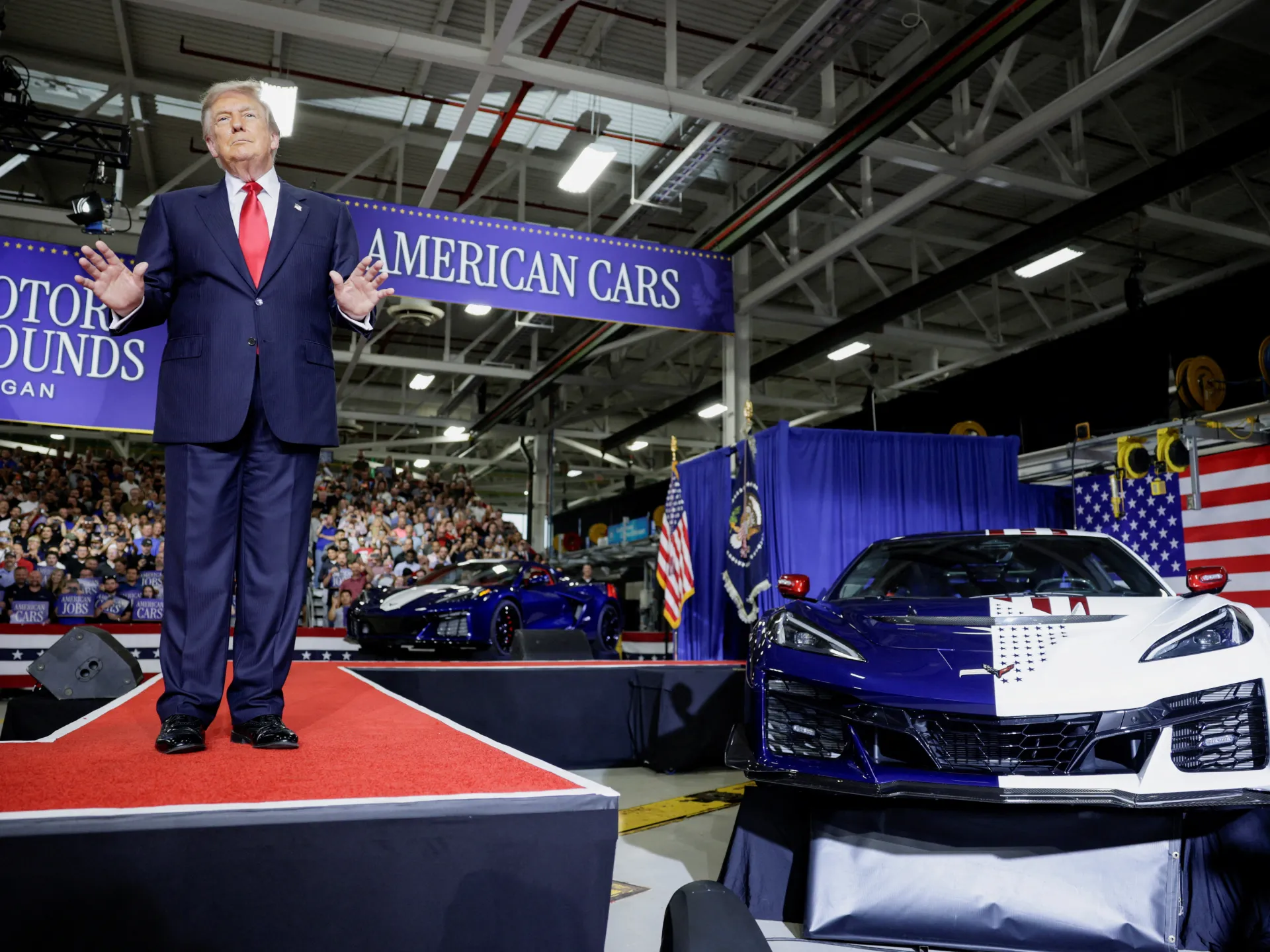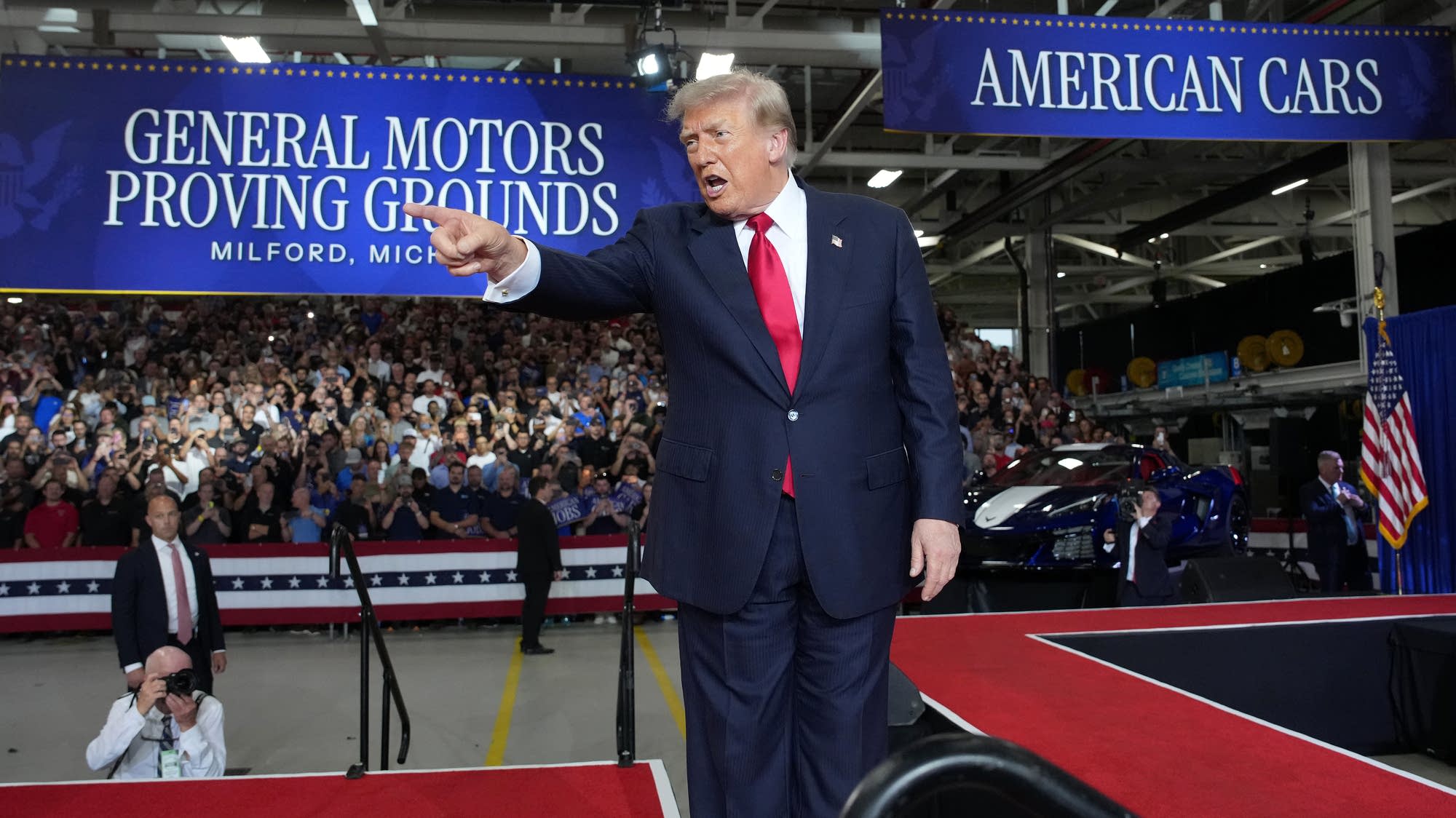
President Donald Trump is in Michigan this week, stumping for Republicans — the state has a primary coming up August 4. He made an appearance at the GM Proving Ground in Milford, where he toured production lines and watched Corvettes race around a track.In a speech, Trump touted his administration’s economic policies, which he said have brought manufacturing jobs back to Michigan, which remains a hub of the U.S. auto industry. Those policies have included steep tariffs at times on major trading partners, like Canada and Mexico, which are closely intertwined with the U.S. auto-production supply chain. The White House has repeatedly insisted that Trump’s aggressive trade policies will spur a “reshoring” boom in manufacturing, boosting factory jobs here after decades of declines. But since President Trump started his second term, the economy has lost 75,000 manufacturing jobs, according to the Bureau of Labor Statistics — a 0.6% decline. “Manufacturing has not revived to a significant degree,” said Moody’s Analytics Chief Economist Mark Zandi. He said it’s a trend that started in the 1980s. “The job losses continue. Tariffs and other policies that have been put in place have not reversed that.”But tariffs may still be helping U.S. manufacturers, said economist Laura Veldkamp at Columbia Business School. “[Tariffs] made it more profitable for American manufacturers to set up and produce here,” she said.Tariffs on imports diminish the competitive advantage of using lower-cost labor in places like Mexico or Malaysia. So more goods are made in the U.S. now: “Manufacturing output has gone up 1.1% over the last year,” Veldkamp said.But the industry is doing more with fewer people. “Manufacturing activity is very mechanized, automated. So even if you see a pickup in output, and we’ve seen that particularly in the tech sector, in the defense-aerospace industries, doesn’t translate into jobs, because these factories just don’t employ a lot of people,” said Zandi at Moody’s.The story is a little different in the crucial U.S. auto industry, where employment is down more than 2.5% since January 2025.One big problem is demand for new vehicles has been weak, because many consumers can’t afford them, said Ned Hill at The Ohio State University’s Manufacturing Institute.“The average price has been bouncing just under $50,000. You have to be solidly above the middle of the income distribution to buy an average car,” he said.Looking ahead, though, “Some of these jobs may come back,” said David Whiston, a U.S autos analysts at Morningstar. “There are some automakers looking to onshore production to the United States. And then that can create jobs for auto suppliers.”Whiston pointed to recent plans announced by GM in Kansas and Tennessee, and Toyota in Texas.
Trump says his aggressive trade policy is bringing back factory jobs. Is it?
President Trump touted his administration’s success in a visit to Michigan this week. The reality is a bit more nuanced.
442 words~2 min read