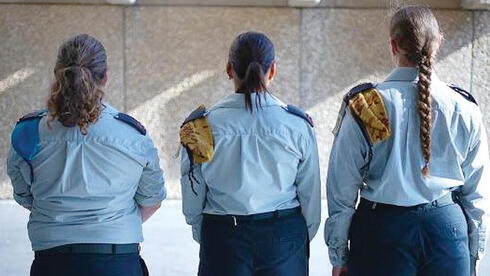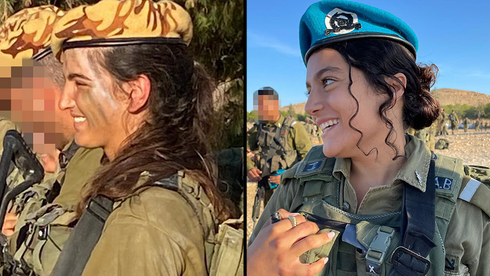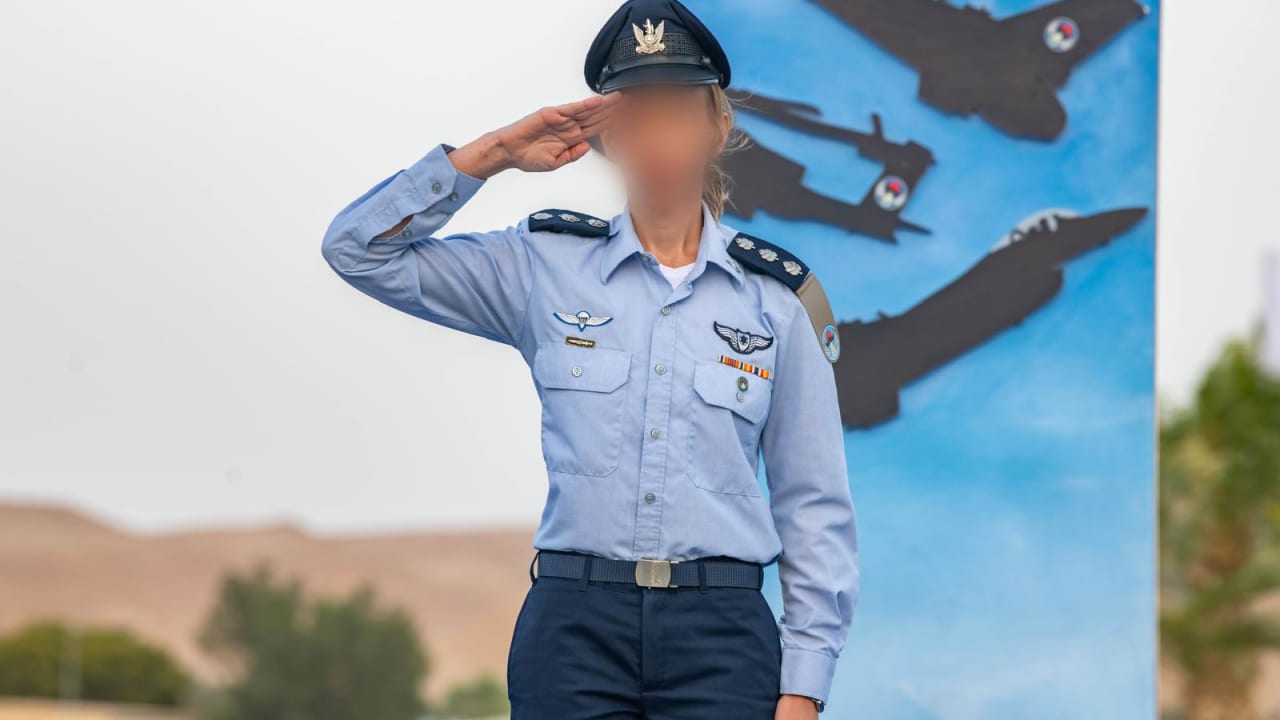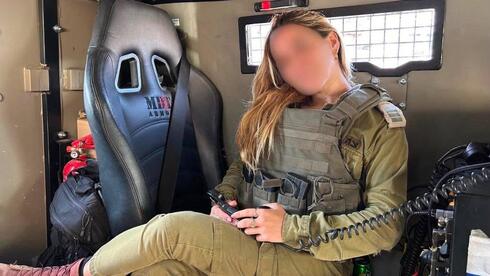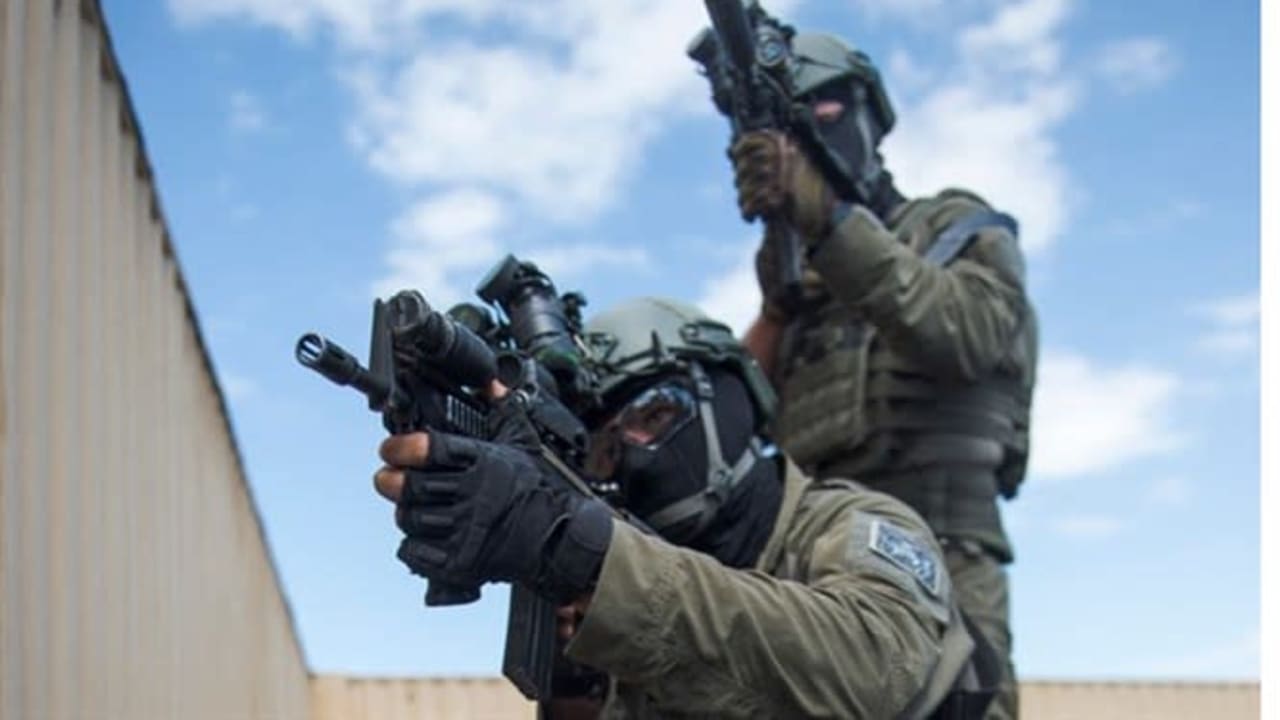
Maj. O., the first woman to serve as operations officer in the elite Yahalom unit, says success is about ability, not gender; after leading missions in Gaza and Lebanon, she reflects on breaking barriers, commanding in male-dominated roles and the growing presence of women in key combat positions"It's a privilege for me to reach this position. It's not about being a woman or a man. It sends a message that women can serve in key positions that they weren't necessarily part of in the past and succeed in them. It's a message to the military and to other women that it's not about gender, it's about your abilities and what you bring to the table," said Maj. O. (27), the first woman to serve as operations officer in the Yahalom, the IDF's elite combat engineering unit.Maj. O., from Holon, enlisted in August 2017 and joined the IDF's Magal training corps as a squad commanders' course cadet.Yahalom's activities in Lebanon (Credit: IDF Spokesperson)"When I enlisted, I never saw myself staying in the military," she said. "I became a commander at a very young age, and after five months I was commanding a platoon of recruits. Somewhere along the way I realized this was my place, that I really loved it. After a year in the IDF, it clicked."After serving in a variety of command and staff positions and completing her bachelor's degree, she applied for a field position and was assigned as Yahalom's training officer.Maj. O. was originally scheduled to finish her assignment on October 8, 2023, but the outbreak of the war changed those plans. She extended her service with the unit, then went on to serve as head instructor for the combat track at the IDF Officers School (Bahad 1). She was later appointed to her current role as Yahalom's operations officer, becoming the first woman to hold the position.According to Maj. O., her promotion reflects a broader trend of integrating women into core positions within the IDF's combat forces."It's very significant for the military to have women in key positions. These are roles that weren't customary in the past. My last two positions weren't the 'classic' path for someone with my career track. There had never been a Yahalom operations officer before, not in my branch or in the IDF at all. It was usually a position held by male combat soldiers. The role of head instructor for the combat track at Bahad 1 was also new. I was the first to establish the track and oversee all three battalions together."GalleryMaj. O., the first woman to serve as operations officer in the Yahalom, the IDF's elite combat engineering unit (Photo: Tomer Shunem Halevi)Although she is breaking new ground in the operations branch, most of the unit's headquarters staff is now made up of women."Most of the headquarters positions that changed hands in the unit were filled by women. The team under me is entirely female as well — the operations officer, the special operations officer, the training officer and my assistant," she said proudly. The branch also includes a male information security officer."Their suitability for the job is based solely on their qualifications," she added.Maj. O. also recalled previous assignments where she was the only female commander in the room."Now I'm surrounded by this kind of environment, but that wasn't always the case. Many times I found myself sitting in meetings as the only woman. For me, it was never an issue. I always focused on what I could bring to the table, what my X factor was as an officer. I was never concerned with the environment I was in, only with where I could contribute."Yahalom unit in Hezbollah's sanctuary cities (Credit: IDF Spokesperson)As part of her duties, Maj. O. was familiar with an incident first reported by Ynet in which a mission involving female Yahalom combat soldiers was canceled after they were denied entry to a base used by the ultra-Orthodox Hasmonean Brigade."There was a coordination gap. Once it happened, we knew how to respond, coordinate everything again and go into greater detail so the activity could take place. Coordination issues happen during wartime and we know how to deal with them quickly."She was also familiar with another incident in which female soldiers from the unit were denied entry to a site in Gaza because yeshiva students were staying there."It's complicated. I think the military is implementing changes, but it also takes time for people who aren't used to them to adapt. I think things work themselves out over time."Maj. O. was eager to highlight the unit's female combat soldiers, whom she described as an integral part of its work."I was in the unit when the pilot program for female combat soldiers began here. It was amazing to see then, and even more amazing to see now. They have extremely refined working methods. They know their job, they're highly professional, exceptional, truly something special. And I'm not saying that because they're part of my unit. Usually we don't encounter situations like these. When coordination is done properly and everything is organized as it should be, these kinds of issues aren't supposed to happen."Reflecting on an intense year of operations, Maj. O. pointed to two missions that stood out.Maj. O. (Photo: Tomer Shunem Halevi)The first, announced in April, was a large-scale operation to locate, destroy and neutralize underground tunnels in the Qantara area of southern Lebanon. During the mission, troops from the IDF's 7th Brigade and Yahalom fighters carried out targeted raids on Hezbollah tunnel networks stretching roughly 2 kilometers (1.2 miles)."For us, it was an incredible operation that the unit invested heavily in," she said. "Our fighters placed explosives inside the tunnel routes and destroyed a tunnel network that was one of the enemy's vital assets."The second operation, announced two months later, involved the destruction of a major underground route near the village of Majdal Zoun.According to the IDF, "Findings from operations in the village indicate it was heavily fortified and saturated with terrorist infrastructure. In addition to the significant underground route destroyed during the operation, two more tunnel routes were also eliminated."Maj. O. described it as "a very significant operation. It required using the full range of capabilities the unit brings to the battlefield and achieving such precise, high-quality destruction of critical enemy assets. That's the unit's X factor."
Breaking barriers: Yahalom's first female operations officer on leading in war
Maj. O., the first woman to serve as operations officer in the elite Yahalom unit, says success is about ability, not gender; after leading missions in Gaza and Lebanon, she reflects on breaking barriers, commanding in male-dominated roles and the growing presence of women in key combat positions
1,054 words~5 min read