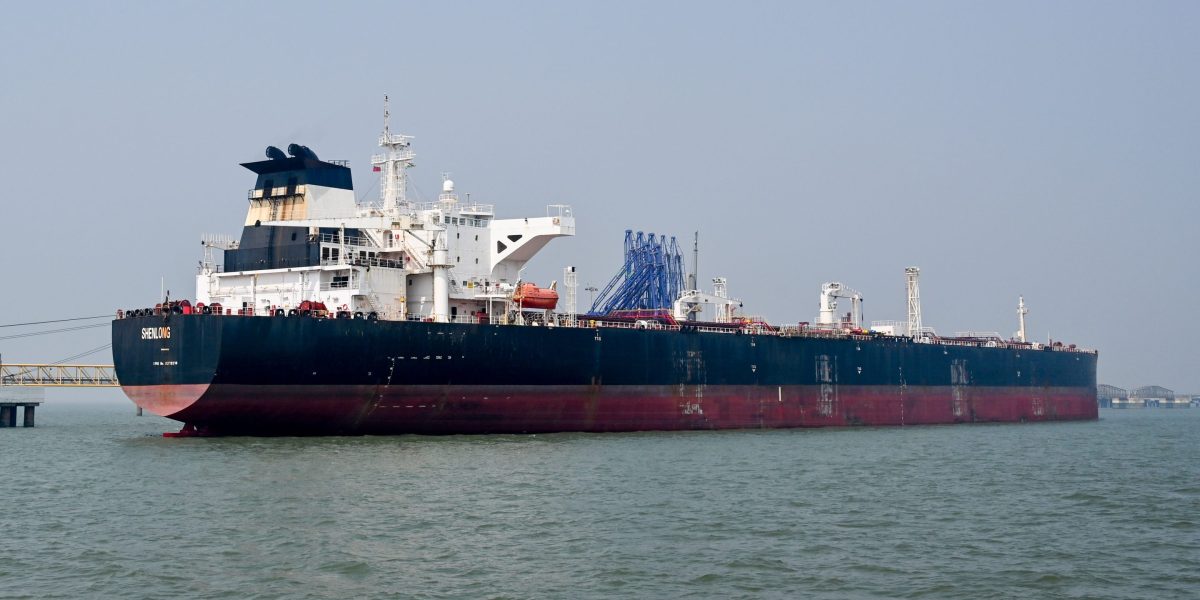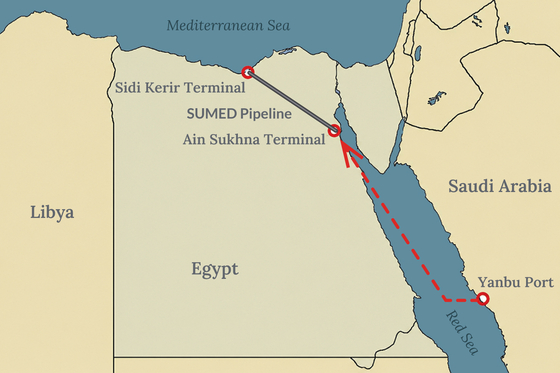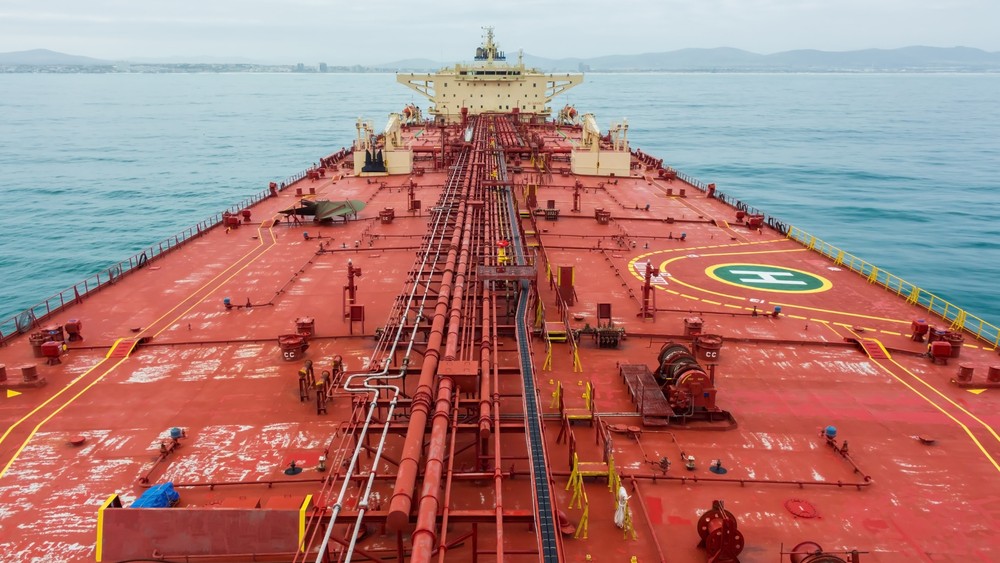
1. A Chinese state-owned supertanker, the "Kai Jing," has become the first vessel to ship Saudi crude to China by bypassing the Strait of Hormuz since heightened conflict in the Middle East made the strait dangerous for shipping. The ship, operated by China Merchants Energy Shipping Co. Ltd., left the Bab el-Mandeb Strait on March 16 and will deliver 2.2 million barrels of crude oil to Meizhouwan Port in Fujian, China, in early April. The vessel’s original plan to load oil at Fujairah in the UAE on March 3 was derailed after an Iranian attack on that port, necessitating a reroute to Saudi Arabia’s Red Sea port of Yanbu[para. 1][para. 2][para. 3].2. The rerouting of the "Kai Jing"—and at least ten other VLCCs from Chinese companies—to Yanbu demonstrates a major adjustment in oil transport logistics due to rising regional tensions. This shift is causing logistical challenges, including new shipping bottlenecks and only partial compensation for lost capacity through alternative routes. The situation underscores vulnerabilities in the global energy supply chain when a major pathway like the Strait of Hormuz is partially or fully closed to traffic[para. 4].3. Yanbu has emerged as the principal alternative port for Gulf oil exports, leading to a surge in tanker traffic. On March 15, nearly 80 tankers en route to Yanbu included 14 loading simultaneously. Because of high demand and supply pipeline constraints, congestion is mounting: on March 16, the average operational time in Yanbu reached 51 hours (with some ships exceeding 70 hours), considerably longer than international norms such as the 15-hour average at other terminals. Delays are primarily blamed on pipeline supply limitations rather than port handling capacity[para. 5][para. 6][para. 7].4. Saudi Aramco is attempting to maximize exports using its East-West Pipeline, which can deliver nearly 7 million barrels per day, with 5 million barrels per day routed to Yanbu. As a result, Yanbu’s loading has soared from about 1.1 million barrels per day in February to nearly 3 million barrels per day by mid-March 2025. However, rerouting around the Strait of Hormuz remains constrained, with Yanbu and other alternative ports together providing only 5–5.5 million barrels per day—about 40–50% of the 13.3 million barrels per day previously exported via the strait (excluding Iranian volumes)[para. 8][para. 9][para. 10][para. 11].5. Industry sources state that even if replacement oil volume from alternative ports is limited, the international market is expected to gradually adapt as these alternatives ramp up. Supplemental supplies from sources such as Brazil, the U.S. Gulf of Mexico, and West Africa are also likely to increase[para. 12].6. Risks in the Strait of Hormuz for Chinese ships have risen markedly. Although the Chinese bulk carrier Run Chen 2 managed to transit the strait on March 11, a drone attack on another "all crew China" ship on March 12 reduced Chinese shipping activity. Displaying Chinese identifiers no longer deters assaults. Between March 13 and 16, only one Chinese-owned ship traversed the strait. Insurance companies have ceased quoting war-risk coverage for such passages since March 12, further disincentivizing transit. As a result, several large Chinese vessels remain stranded in the Persian Gulf[para. 13][para. 14][para. 15][para. 16][para. 17].7. In this context, while Chinese vessels have largely retreated, Indian and Pakistani ships have maintained a limited flow through the strait, reportedly through case-by-case negotiations with Iran. India, heavily reliant on the route, is now in emergency talks to ensure continued safe passage, with around 20 Indian tankers waiting near the strait as of mid-March[para. 18][para. 19][para. 20].AI generated, for reference only
Exclusive: First Chinese Supertanker Loads Saudi Crude via Red Sea, Bypassing Strait of Hormuz
Dozens of tankers are rerouting to Saudi Arabia’s Yanbu port after attacks and insurance blackouts make the Strait of Hormuz too risky
583 words~3 min read