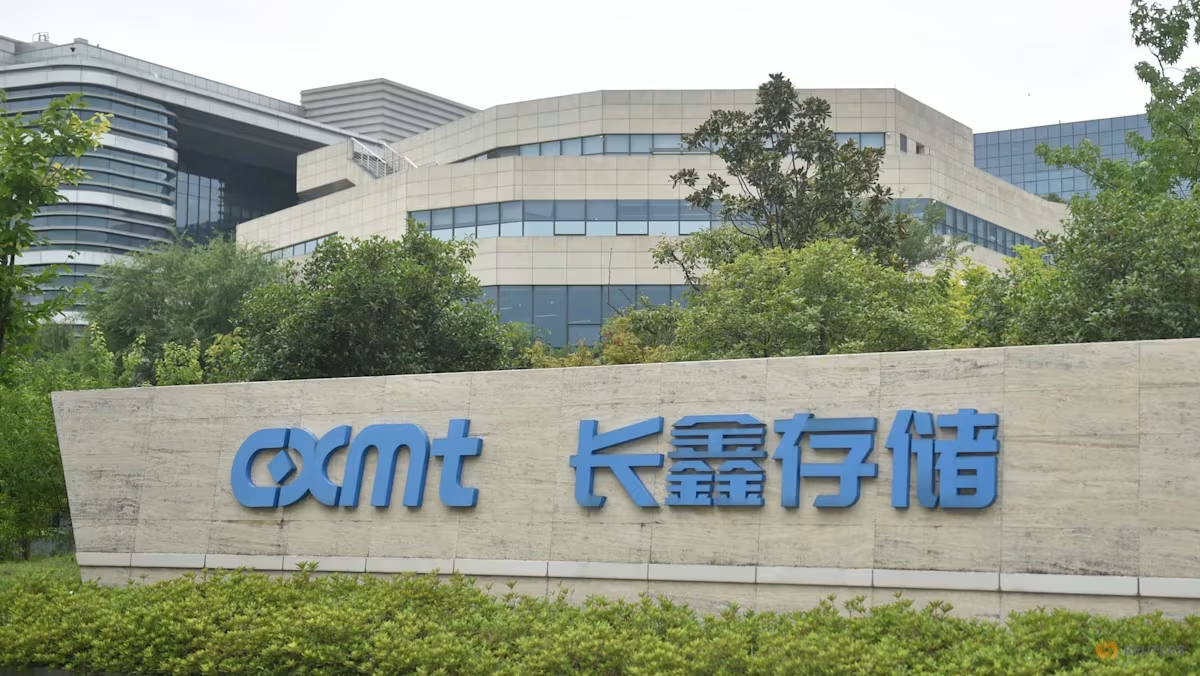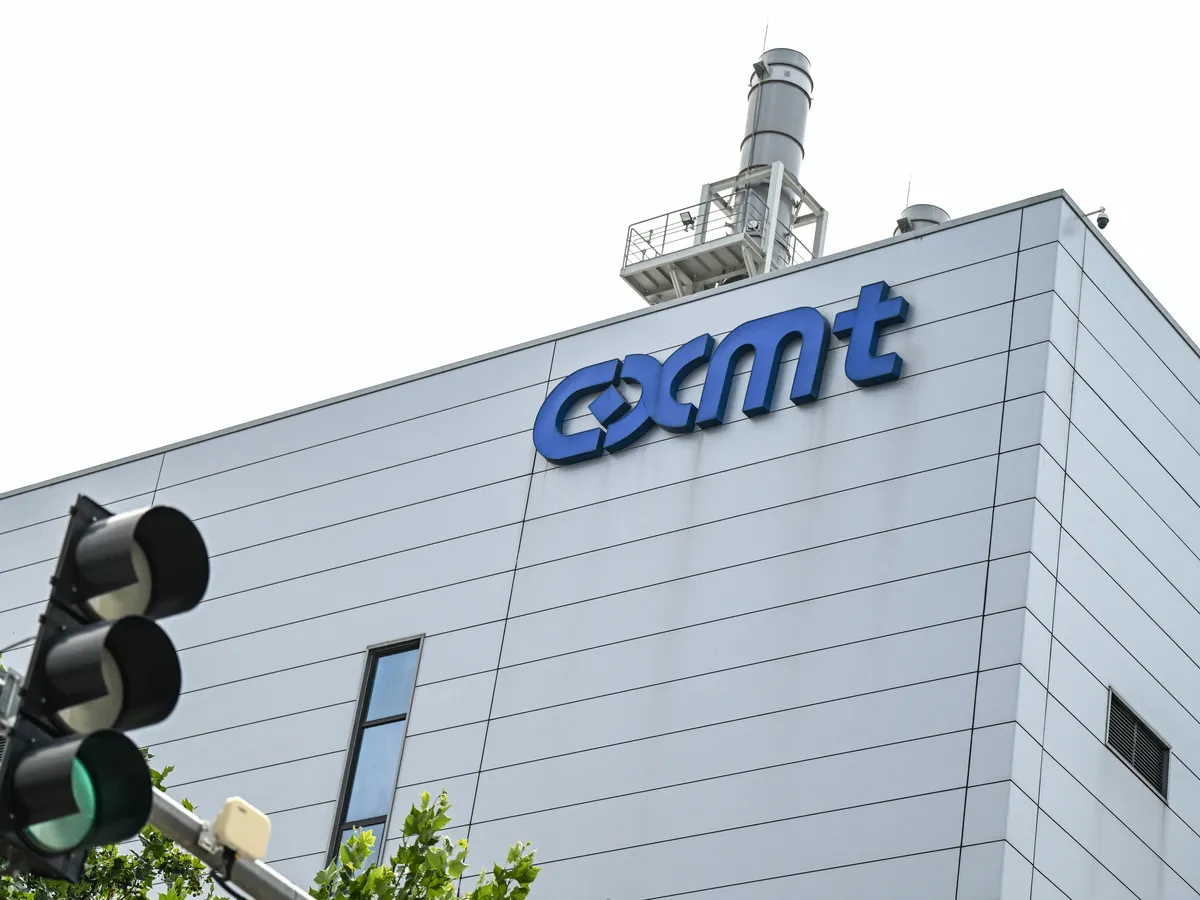
Skip to Content News Archives Economy Energy Oil & Gas Renewables Electric Vehicles Mining Commodities Agriculture Real Estate Mortgages Mortgage Rates Finance Banking Insurance Fintech Cryptocurrency Work Wealth Smart Money Wealth Management Investor Personal Finance Family Finance Retirement Taxes High Net Worth FP Comment Executive Women Puzzmo Newsletters Financial Times Business Essentials More Innovation Information Technology FP500 Podcasts Small Business Lives Told Tails Told Shopping Financial Post Store Obituaries Place a Notice Advertising Advertising With Us Advertising Solutions Postmedia Ad Manager Sponsorship Requests Classifieds Place a Classifieds ad Working Profile Settings My Subscriptions Saved Articles My Offers Newsletters Customer Service FAQ News Economy Energy Mining Real Estate Finance Work Wealth Investor FP Comment Executive Women Puzzmo Newsletters Financial Times Business Essentials HomeInnovationInvestorWhat is CXMT, the chipmaker that soared 466% Monday and is now China's most valuable public company?Here's what Canadian investors need to know after the company's blockbuster debut amid a selloff in semiconductor stocksLast updated 28 minutes ago You can save this article by registering for free here. Or sign-in if you have an account.Investing in a China-based semiconductor company like CXMT can provide Canadians exposure to one of the world’s largest and fastest-growing chip markets. Photo by Pedro PARDO/AFP via Getty ImagesInvestors poured into Chinese chipmaker CXMT Corp. on Monday during its market debut, sending its stock skyrocketing 466 per cent and making it the most valuable company listed in mainland China. CXMT’s blockbuster debut comes amid a selloff in semiconductor stocks this month, with investors betting on the Chinese company’s ability to benefit from the continued artificial intelligence buildout worldwide and Beijing’s quest for technological self-sufficiency. This as Washington mulls over how to manage Chinese chipmakers in the face of a global memory chip shortage and increasingly popular Chinese AI model makers. Here’s what Canadian investors need to know about CXMT.Subscribe now to read the latest news in your city and across Canada.Exclusive articles from Barbara Shecter, Joe O'Connor, Gabriel Friedman, and others.Daily content from Financial Times, the world's leading global business publication.Unlimited online access to read articles from Financial Post, National Post and 15 news sites across Canada with one account.National Post ePaper, an electronic replica of the print edition to view on any device, share and comment on.Daily puzzles, including the New York Times Crossword.Subscribe now to read the latest news in your city and across Canada.Exclusive articles from Barbara Shecter, Joe O'Connor, Gabriel Friedman and others.Daily content from Financial Times, the world's leading global business publication.Unlimited online access to read articles from Financial Post, National Post and 15 news sites across Canada with one account.National Post ePaper, an electronic replica of the print edition to view on any device, share and comment on.Daily puzzles, including the New York Times Crossword.Create an account or sign in to continue with your reading experience.Access articles from across Canada with one account.Share your thoughts and join the conversation in the comments.Enjoy additional articles per month.Get email updates from your favourite authors.Create an account or sign in to continue with your reading experience.Access articles from across Canada with one accountShare your thoughts and join the conversation in the commentsEnjoy additional articles per monthGet email updates from your favourite authorsSign In or Create an AccountorCanada's best source for investing news, analysis and insight.By signing up you consent to receive the above newsletter from Postmedia Network Inc.A welcome email is on its way. If you don't see it, please check your junk folder.The next issue of Investor will soon be in your inbox.We encountered an issue signing you up. Please try againChina-based CXMT, previously known as ChangXin Memory Technologies Inc., makes dynamic random-access memory (DRAM) chips that power everything from AI data centres and AI workloads to consumer electronics such as laptops and smartphones.Founded in 2016 by Chinese billionaire Zhu Yiming, CXMT is now the world’s fourth-largest — and China’s largest — manufacturer of DRAM chips. The company holds a nearly eight per cent share of the global DRAM market, according to its fourth-quarter 2025 sales outlined in its initial public offering prospectus.State-backed CXMT’s primary competitors are South Korean and American tech giants that dominate the memory chip market. South Korea’s Samsung Electronics Co. Ltd. and SK Hynix Inc., alongside Micron Technology Inc. in the U.S., collectively hold about a 90 per cent share of the worldwide DRAM market. This photo shows a view of the ChangXin Memory Technologies (CXMT) factory on the outskirts of Beijing on July 27, 2026. Photo by Pedro PARDO/AFP via Getty ImagesCXMT went public on Monday on Shanghai’s tech-focused STAR Market and its stock jumped 466 per cent in its market debut. Its IPO was 212 times oversubscribed, according to Bloomberg. The company’s market capitalization on Monday briefly surpassed that of Chinese internet giant and WeChat developer Tencent Holdings Ltd. Now valued at roughly US$490 billion, CXMT is the most valuable company listed in mainland China. (Tencent, valued at US$519 billion, is Hong Kong-listed).Founder Zhu’s net worth jumped 300 per cent to US$13.9 billion, according to the Bloomberg Billionaires Index. CXMT’s IPO is China’s largest since 2010 and Asia’s biggest of 2026.Counterpoint Technology Market Research Ltd. forecasts CXMT’s global market share to reach 11 per cent by 2028 from nine per cent in the first three months of the year. Morningstar Inc. estimates indicate that CXMT’s revenues will jump 405 per cent this year and 64 per cent in 2027.The stock was down about three per cent as of 2:31 pm in Shanghai on Tuesday, according to Bloomberg. People walk past the headquarters of CXMT in Hefei, in China’s eastern Anhui province on July 16, 2026. Photo by CN-STR/AFP via Getty ImagesCXMT’s fresh IPO funds will be used to improve its technological capabilities, investing in R&D and additional memory chip production. The U.S. is divided on how to manage the rise of CXMT, with some lawmakers and competitors such as Micron Technology Inc. seeking greater restrictions on the company’s access to advanced chipmaking equipment. The U.S. Pentagon has added CXMT to its 1260H list of blacklisted firms, designating it a Chinese military company, a charge which CXMT denies. Apple Inc. meanwhile is lobbying American officials to allow it to use memory chips from CXMT and another Chinese memory chipmaker, Yangtze Memory Technologies Co. Ltd., according to multiple media reports. The U.S. tech giant has already started testing CXMT’s memory chips for devices sold in China, according to a Financial Times report from earlier this month. China’s leading memory chipmaker CXMT soared 470 percent in its market debut in Shanghai on July 27, briefly surpassing megabank ICBC as the mainland’s most valuable company. Photo by CN-STR/AFP via Getty ImagesCanadian investors face higher risks investing in CXMT and in turn, higher potential returns, according to Bing Han, a professor of finance and the TMX chair in capital markets at the University of Toronto’s Rotman School of Management.Investing in a China-based semiconductor company can provide exposure to one of the world’s largest and fastest-growing chip markets, Han said, but added that these companies face added geopolitical and policy risks on top of the normal business risks of the semiconductor industry.Chinese and U.S. government policy changes could meaningfully affect a Chinese chip company’s profitability or business strategy, Han said.“CXMT faces risks from U.S. export controls … (making) it more difficult for CXMT to close the technology gap with its global competitors,” he said. Investors will also encounter greater uncertainty regarding disclosures, board independence, influence of controlling shareholders or state-owned investors due to a different corporate governance landscape in China, Han said. According to CXMT’s IPO prospectus, state-owned shareholders owned 36 per cent of CXMT’s shares pre-IPO.“Investing in Chinese AI is not simply a bet on AI adoption. It is also a bet on China’s ability to build a competitive domestic semiconductor ecosystem while navigating a complex geopolitical environment,” Han said.Foreign investor access to CXMT shares is limited.Large institutional investors can access Shanghai A-shares through the Qualified Foreign Institutional Investor (QFII) program and can invest in Chinese technology enterprises through the Qualified Foreign Limited Partner (QFLP) scheme, Han said.Retail investors meanwhile can buy an exchange-traded fund (ETF) that owns CXMT. The Tema Memory ETF (DISK) added the Chinese chip company to its portfolio on Monday with a 10.56 per cent portfolio weight. “This position gives DISK the highest exposure to CXMT of any U.S.-listed ETF,” he said.A more likely route for Canadian retail investors is waiting for CXMT to become eligible for inclusion in the Shanghai-Hong Kong Stock Connect, which will allow international brokers to buy CXMT shares on behalf of foreign investors, Han said. Join the Conversation This website uses cookies to personalize your content (including ads), and allows us to analyze our traffic. Read more about cookies here. By continuing to use our site, you agree to our Terms of Use and Privacy Policy.
What is CXMT, the chipmaker that soared 466% Monday and is now China's most valuable public company?
Here's what Canadian investors need to know after the company's blockbuster debut amid a selloff in semiconductor stocks this month. Read on
TL;DRAI
CXMT soared 466% Monday to become China's most valuable company (~$490B); the 4th-largest global DRAM maker signals Beijing's bid for semiconductor autonomy. For enterprise tech, CXMT disrupts the Samsung/Micron duopoly, forcing supply-chain and geopolitical sourcing recalibration.
1,465 words~7 min read