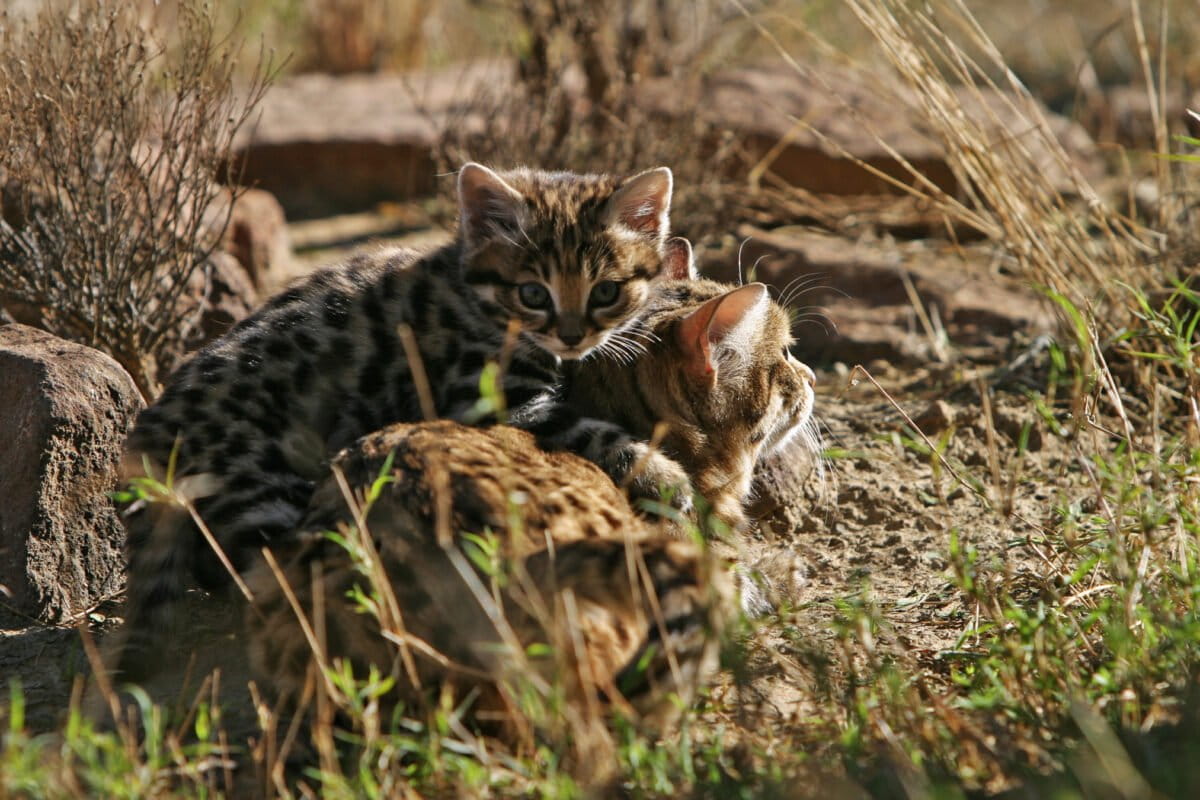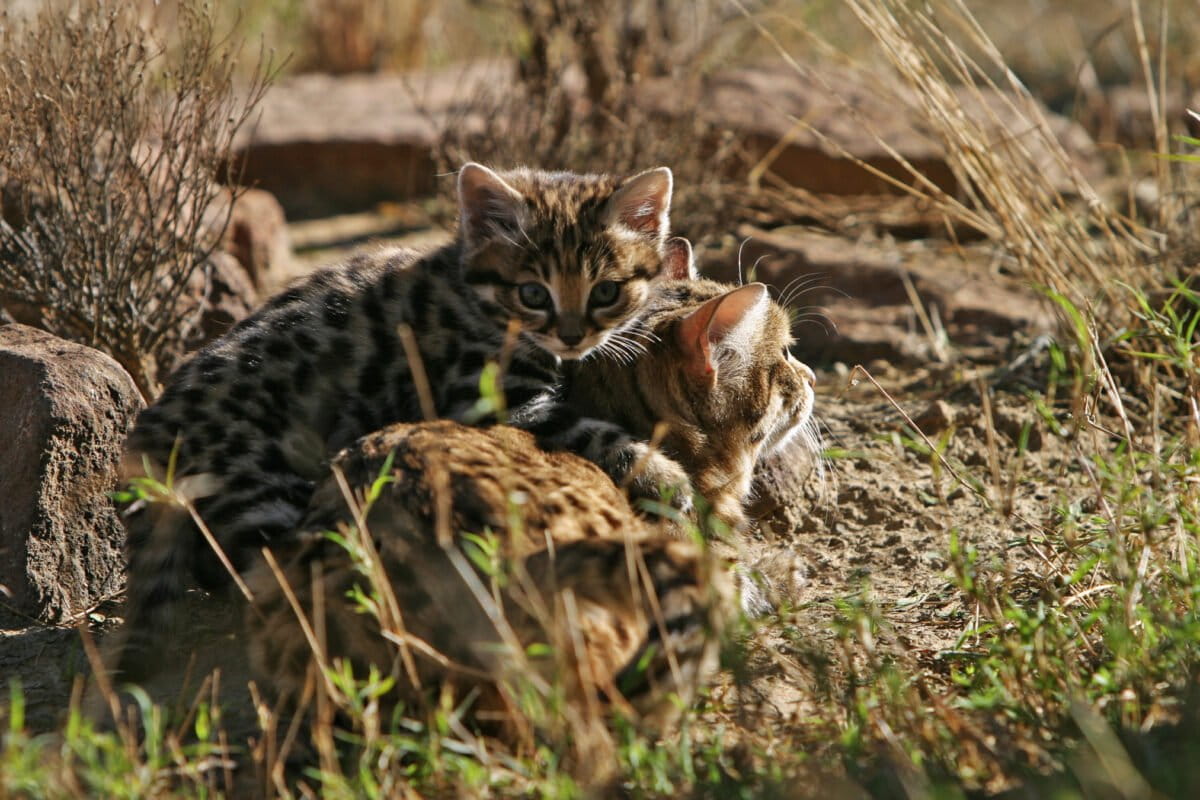
New research shows female black-footed cats rely heavily on abandoned springhare burrows to shelter themselves and raise their kittens, using a constantly shifting network of underground dens to survive Southern Africa’s harsh, semiarid landscape.Mothers rotate frequently among multiple dens — sometimes almost daily once kittens begin to move — a strategy likely aimed at avoiding predators and minimizing scent trails.Despite weighing as little as 1 kilogram (2.2 pounds), black-footed cats are among the most active and efficient hunters of any feline, ranging over large territories at night and retreating underground by day.With low reproductive rates, disease pressure and a population of around 10,000, the species’ survival depends on protecting both springhares and the working landscapes of livestock farms, where burrow loss, overgrazing and predator control can indirectly threaten the cats.
Under cover of night, a black-footed cat moves almost invisibly through the grasses of southern Namibia, hunting small rodents, birds and insects. Barely a third the size of a domestic cat, its tawny coat speckled with dark spots helps it disappear into the darkened landscape. By day, the cat disappears underground, folding its small body into abandoned burrows and tunnels — a rare behavior among felines.