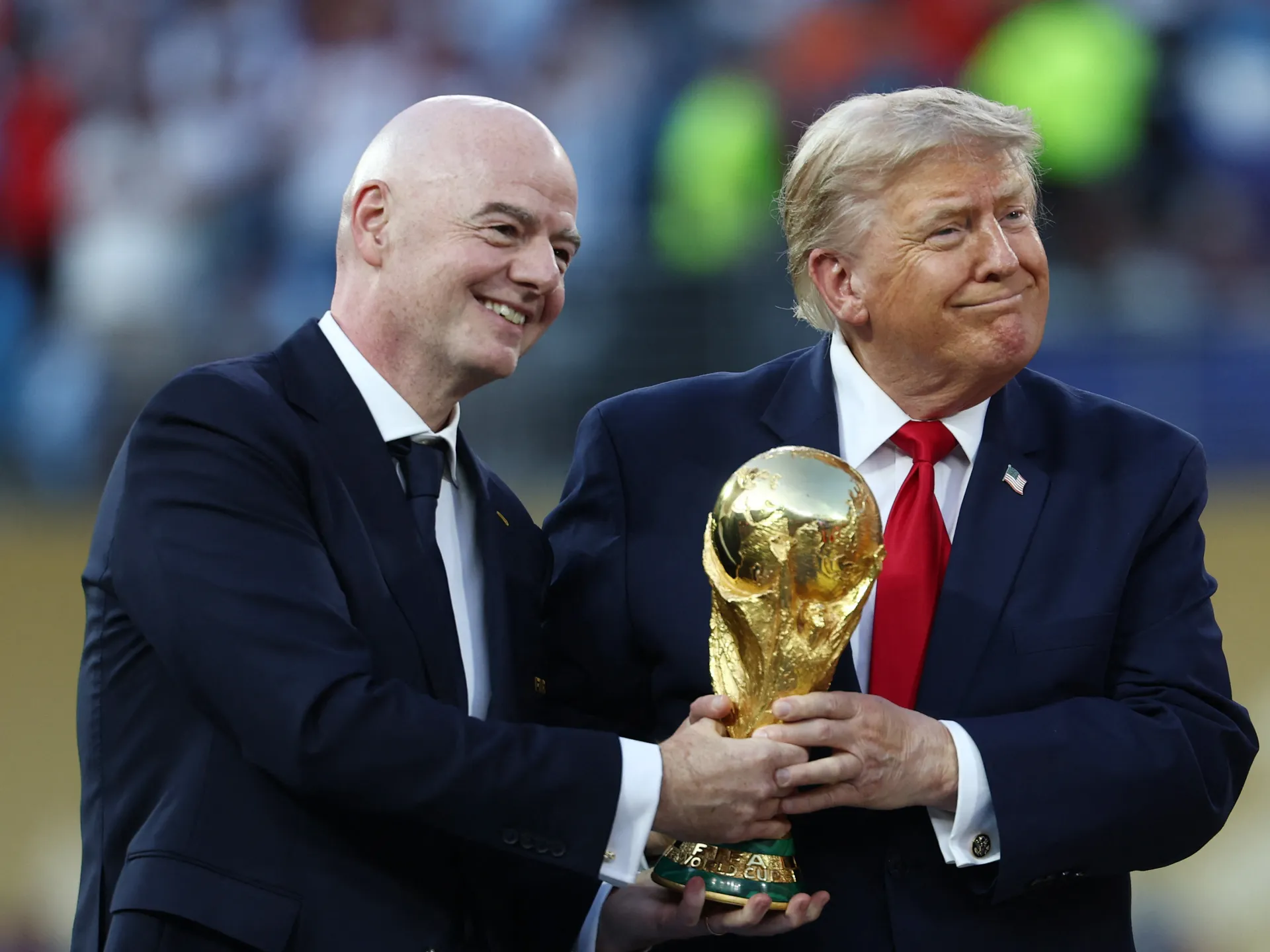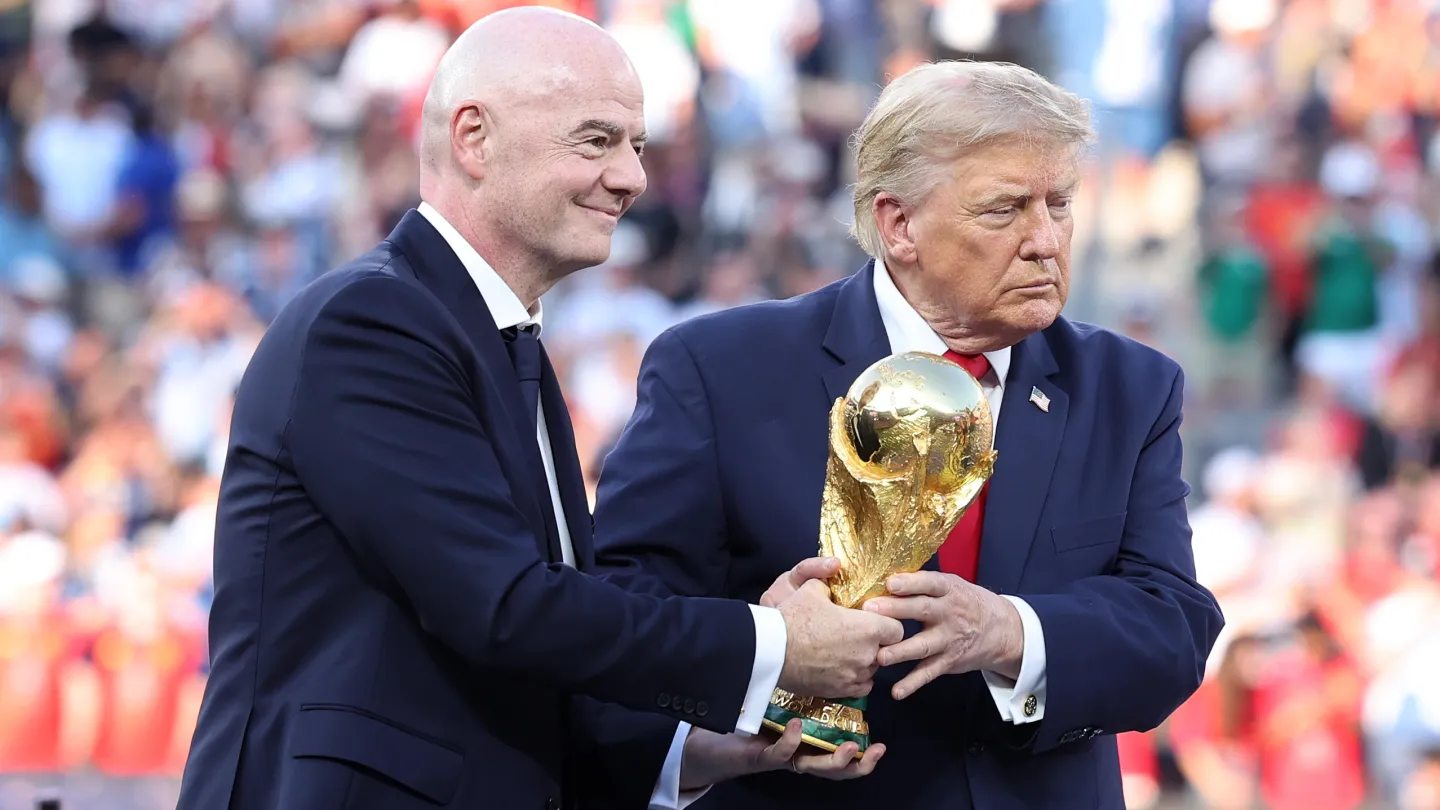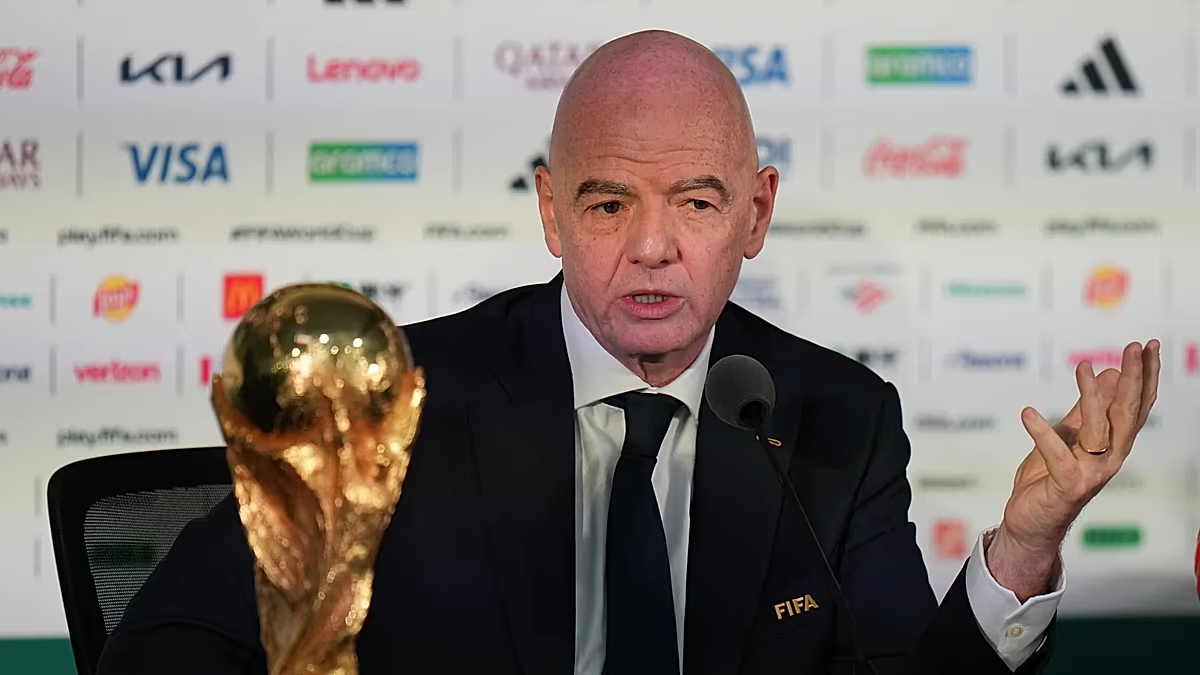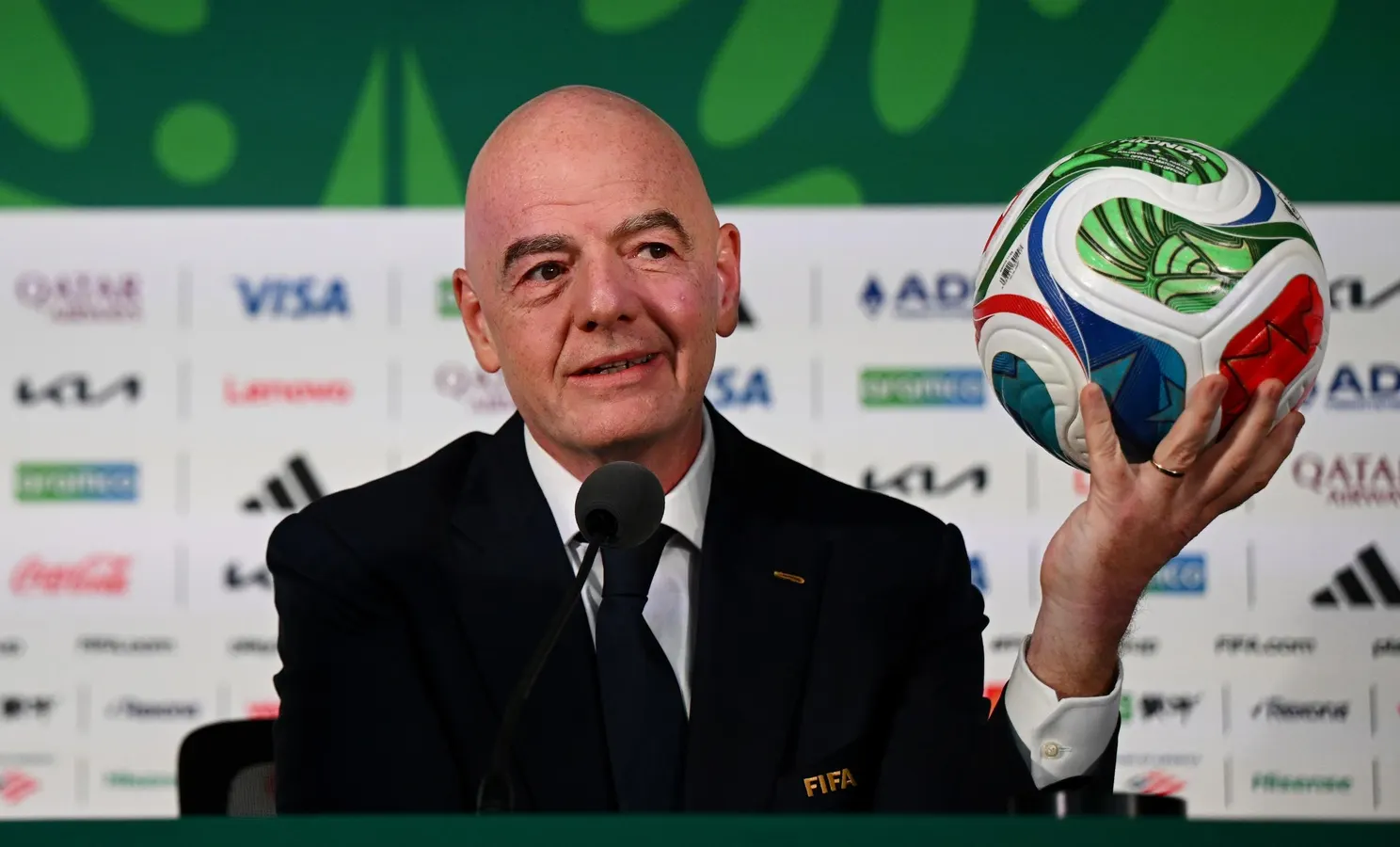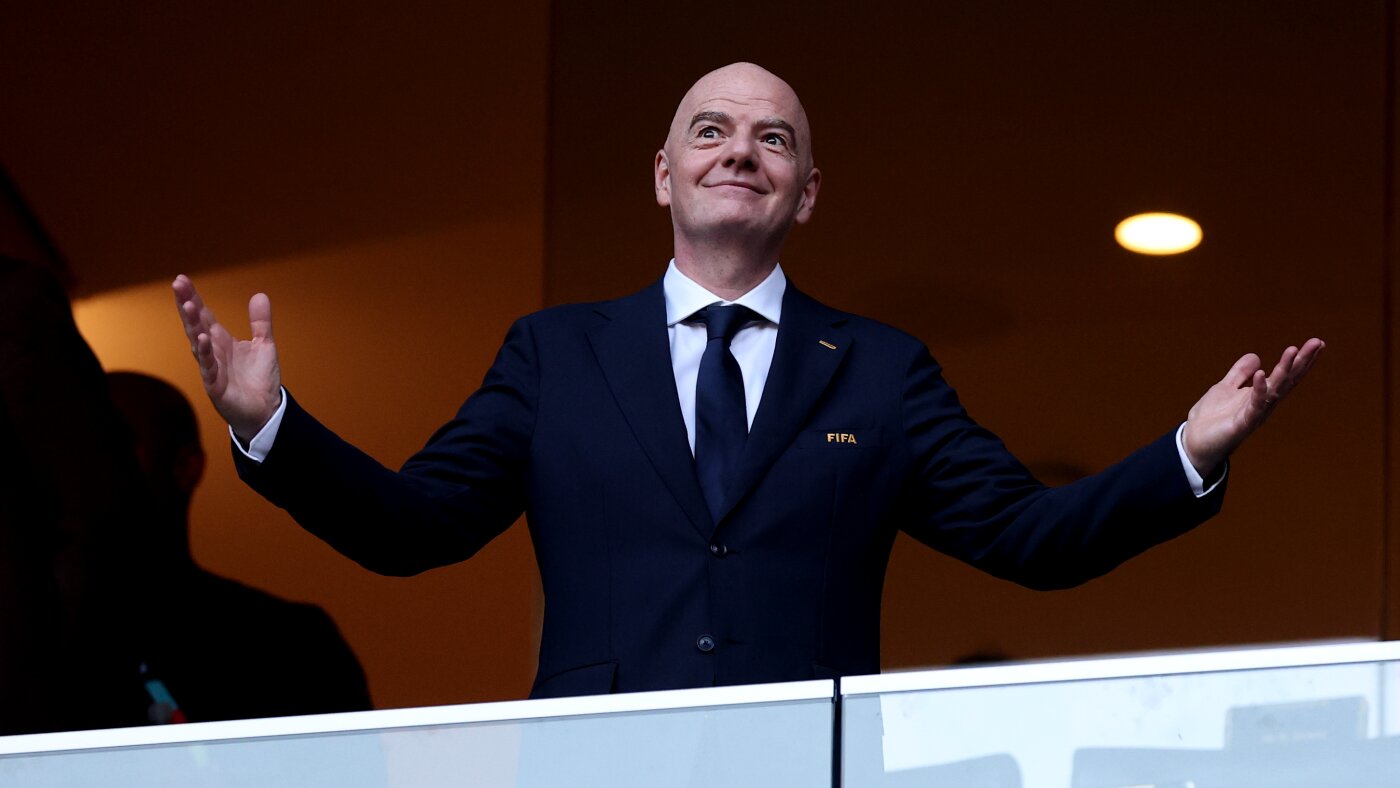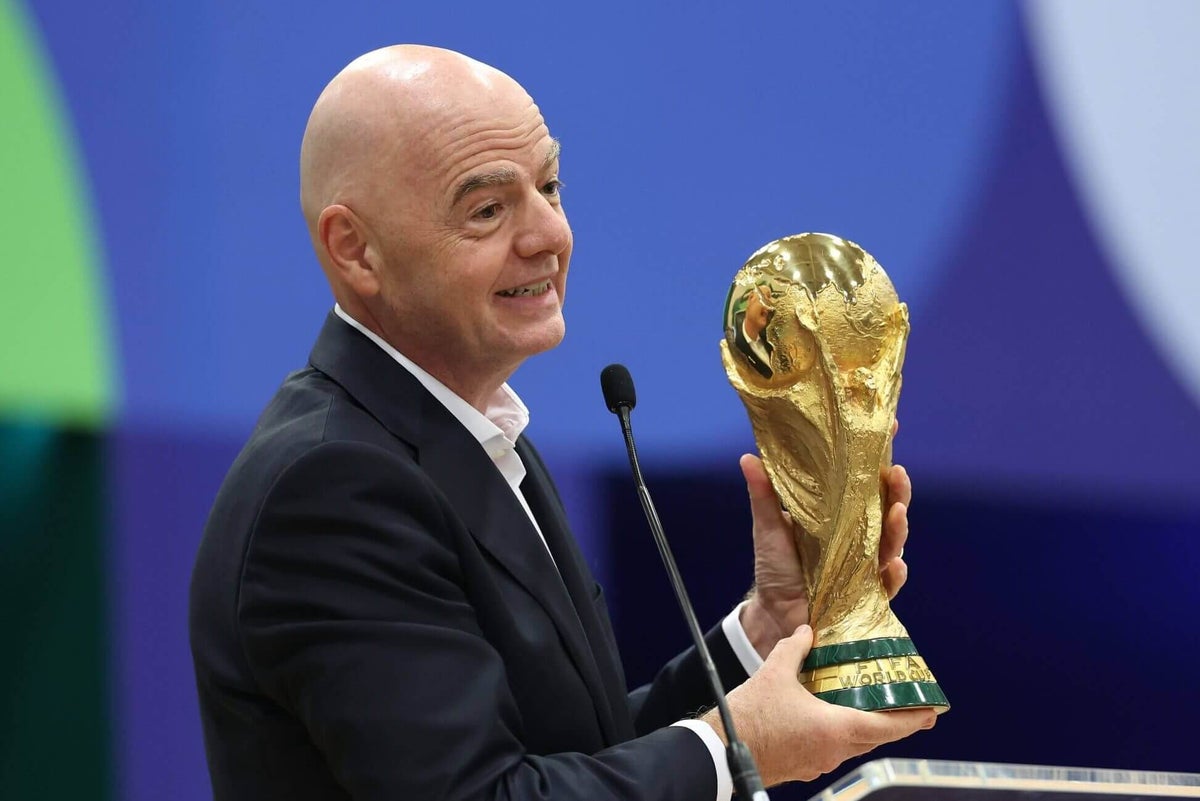
FIFA has announced plans to sell a large minority stake in a new company that will run its main events, including the World Cup and Club World Cup, as part of a plan to triple the amount of development money it dishes out to its 211 member associations.Under the proposals — which are subject to approval by a majority of those national associations and FIFA’s 37-member council — a new entity called FIFA Forward Enterprises (FFE) will take over all commercial operations, while FIFA remains the game’s global governing body and retains a majority stake in FFE.With elements of this plan starting to be reported by several media outlets earlier on Tuesday, FIFA was forced to rush out a press release that confirmed it was hoping to sell up to 21 per cent of FFE to private investors, with the intention of bringing in $4.2billion (£3.2bn) that could be immediately released to its member associations as part of a new funding stream called FIFA Fast-Forward Programme (FFFP).The press release also confirmed that global bank JP Morgan has been FIFA’s chief advisor on this project, with Thrive Eternal, a long-term investment vehicle set up by Joshua Kushner, the brother of Donald Trump’s son-in-law Jared Kushner, “expected to lead the proposed investor group for FFE.”Under the plan, FIFA’s total development funding would top $10bn over the next four years, with each member association allowed to draw an “optional” $20m each for “exceptional and immediate funding for special projects” from the new FFFP stream, which will be funded by the sale of the minority stake.However, that is only the beginning of the proposed bonanza, as each member association would also get regular Forward Programme grants of $20m each, up from $8m, in the next four-year cycle. That will rise to $22m per nation for 2031-34 and $24m — three times the current amount — for 2035-38.Who is behind the plan?Unsurprisingly, the idea is the brainchild of FIFA president Gianni Infantino, who has been working on it with chief operating officer Kevin Lamour, formerly of UEFA, for months.In FIFA’s press release, Infantino described football as “an extraordinary engine of human and social development” and said it was the governing body’s “responsibility” to make sure football’s “remarkable commercial value” is shared more evenly around the global game.“Our next stage of growth needs a structure built for it, one where the commercial side of the game operates as a focused, dedicated business, with its value shared more and better all around the world,” said Infantino.“Every FIFA member association should have an opportunity to seek a fair share of the available funding to shape its own future, deciding for itself rather than relying on others. This is about the democratisation of football worldwide.”It is a pitch that will certainly win some support within an organisation where the majority of the national associations rely on FIFA grants for most of their income.This, of course, is not the first time Infantino has tried to commercialise FIFA assets by bringing in external investment, having previously tried and failed in 2018 to use $25bn from the Saudi-backed, Japanese-based SoftBank to create an expanded Club World Cup and Global Nations League.There have also been suggestions that FIFA was an early party to discussions about the creation of the European Super League in 2021, when JP Morgan was lined up to invest in the new competition, although Infantino later criticised the plan.A FIFA spokesperson confirmed to The Athletic that JP Morgan will continue to advise the governing body on the project, with Rome-based consultancy OpenEconomics and BANN Ventures chief executive Greg Maffei also acting as advisors. Maffei was formerly president and CEO of Liberty Media during its purchase and ownership of Formula One.In terms of potential investors, Apollo Sports Capital, the long-term sports investment vehicle set up by private-equity firm Apollo Global Management, is another likely backer.The Athletic has contacted Apollo, JP Morgan and Thrive for comment.What has the reaction been?Given some of the controversies during and before this summer’s World Cup, the involvement of someone as close to President Trump as Joshua Kushner will raise eyebrows throughout the global game. European football’s governing body UEFA has already expressed its opposition to the idea of selling the sport’s most valuable assets to private investors and sovereign wealth funds.“This crosses a line that football’s governing institutions should never cross,” UEFA said in a statement released shortly before FIFA confirmed the plan.“UEFA takes it extremely seriously. So should every national football association. So should every stakeholder: leagues, clubs, players, supporters, governments and everyone who cares about the future of the game.“The soul and governance of football are not assets to trade — especially with zero transparency as to who gains financially. None of us are the owners of football. It is not FIFA’s to sell.”The proximity of Kushner, who is close to President Trump, to the plans will raise questions and criticism. (Jamie McCarthy / Getty Images)U.S. Congressman Jamie Raskin (D-Md.), who has requested Infantino appear before the House Judiciary Committee over FIFA’s ties to the Trump administration, said: “Soccer fans were already priced out of the World Cup by FIFA’s corrupt price gouging before—more oligarch corruption just means more corporate tarnishing of the beautiful game.”Many will agree with those sentiments but there will be just as many, perhaps more, who will point out that what FIFA is proposing is no different to the commercial entities that the likes of the French and Spanish leagues have created and sold stakes in to private-equity funds. The German and Italian leagues have been debating the same move for several years, too, and it is a strategy several other sports governing bodies and leagues have tried, most notably in Formula One and with golf’s PGA Tour.Does FIFA need the money?Even without external help, FIFA is making record sums of money. The four-year cycle that finished with this summer’s expanded World Cup, and included last summer’s 32-team Club World Cup, is expected to bring in $15bn (£11.3bn), beating the $13bn (£9.8bn) target and doubling the amount earned between 2019 and 2022.It is a racing certainty that those sums will only go up if control of FIFA’s portfolio of competitions is passed to an entity solely focused on monetising them, with a 64-team World Cup a very likely development, as well as an enlarged or more frequent (or both) Club World Cup, with similar moves on the women’s side, too.Talk of such large sums of money has inevitably led some to speculate who will run FFE, with The Times of London claiming it will be Infantino himself and he will earn a similar salary to NFL Commissioner Roger Goodell, who was paid $64m (£48m) in 2021, the last year his earnings were disclosed. That would be a tenfold pay rise for the Swiss-Italian football administrator.When asked if this was accurate, a FIFA spokesperson told The Athletic: “This has never been discussed. However, the FIFA president and administration will and must have leading roles in this entity — if approved — to always be in control of any FIFA subsidiary in accordance with the statutes and regulations for the benefit of FIFA member associations.”
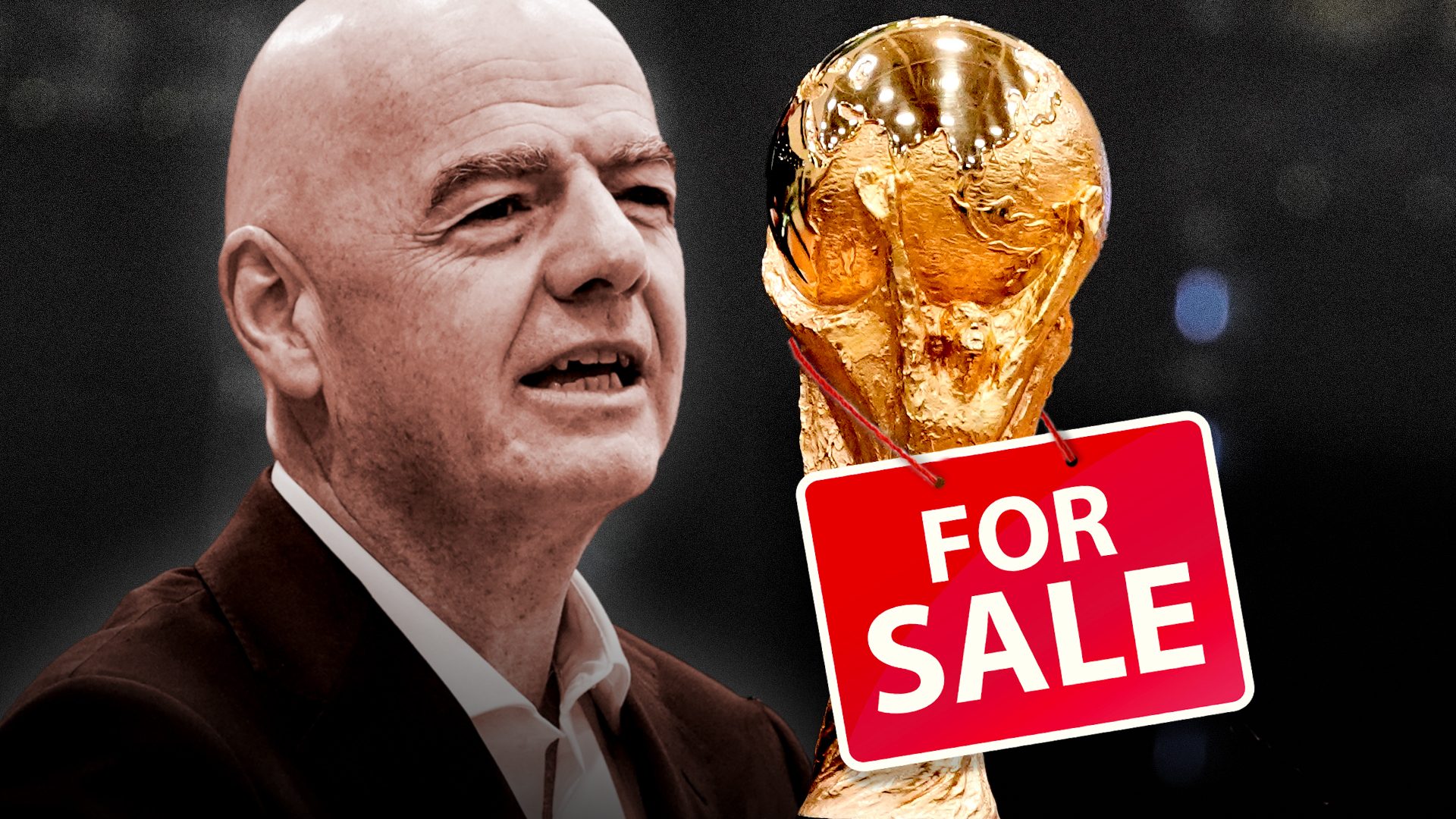
FIFA plans to sell a stake in the World Cup: How much for and why is Gianni Infantino doing it?
The proposal has been widely criticized, with European soccer's governing body UEFA saying it "crosses a line."
1,193 words~5 min read