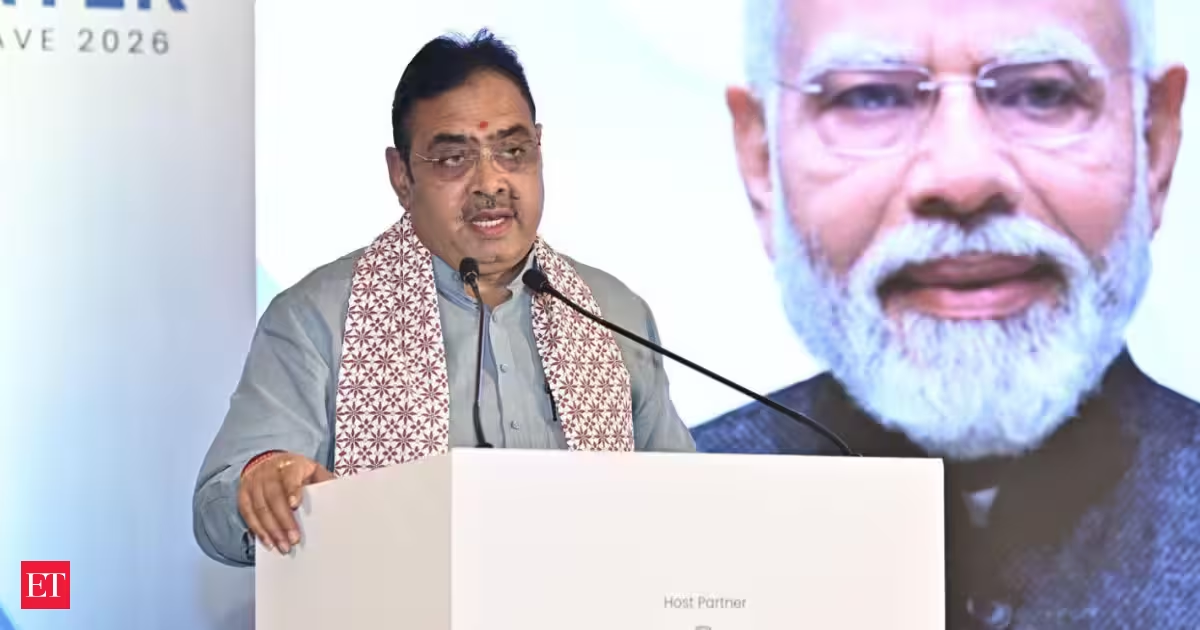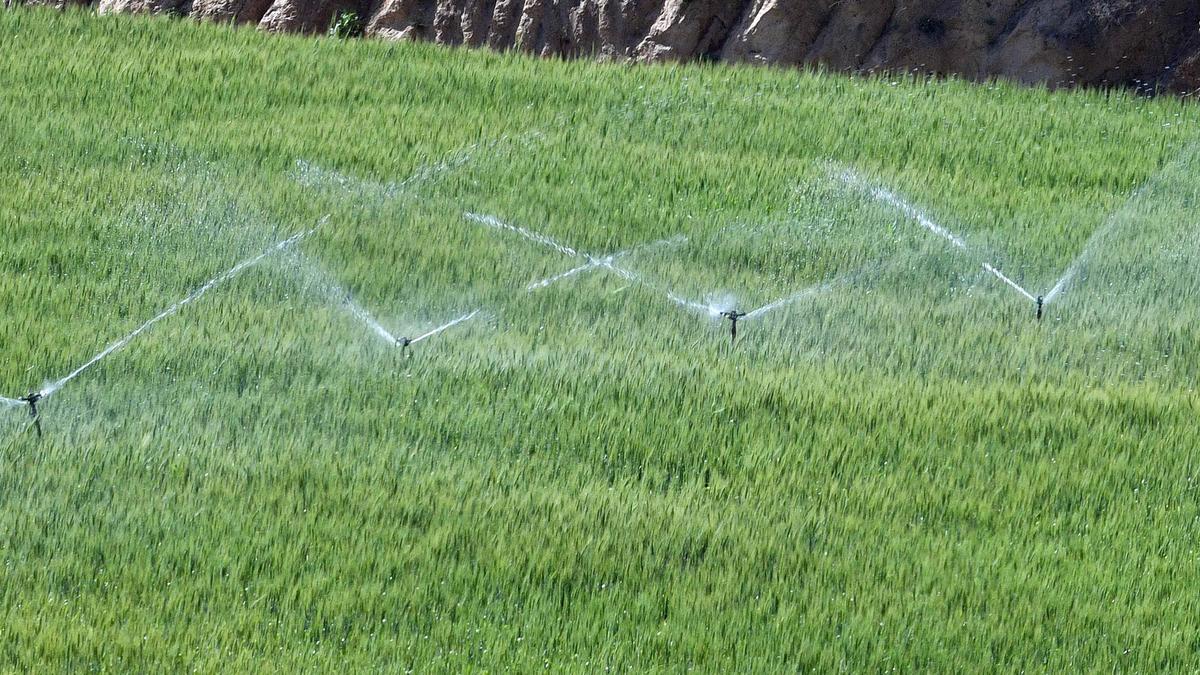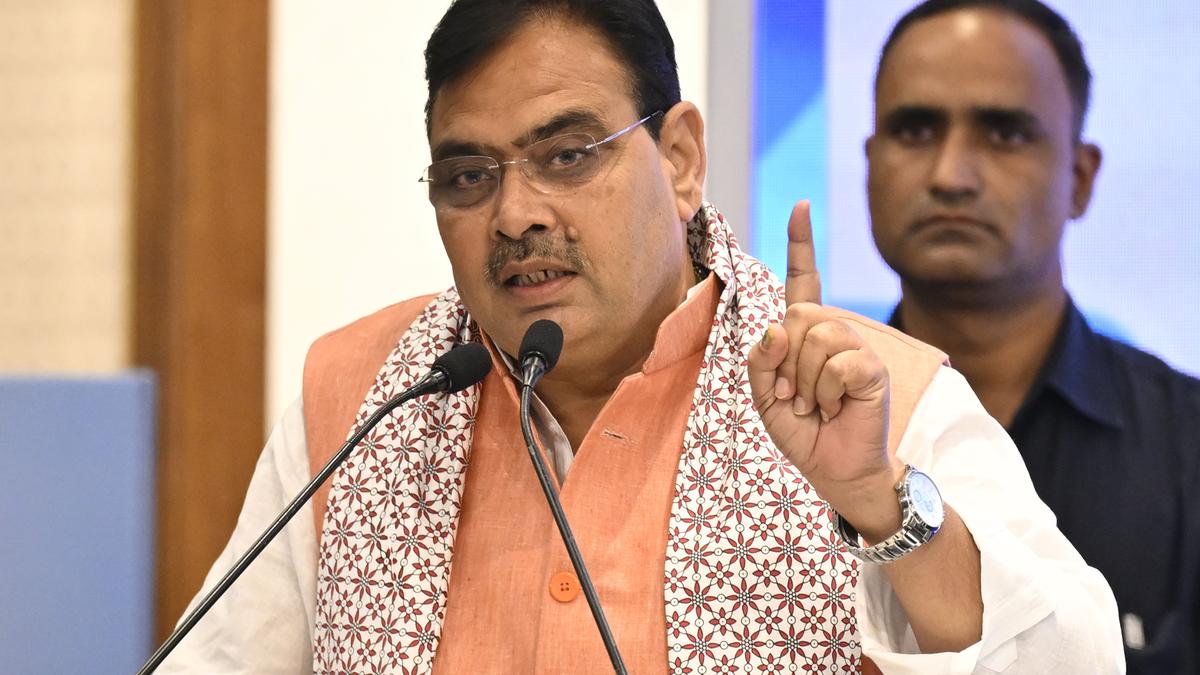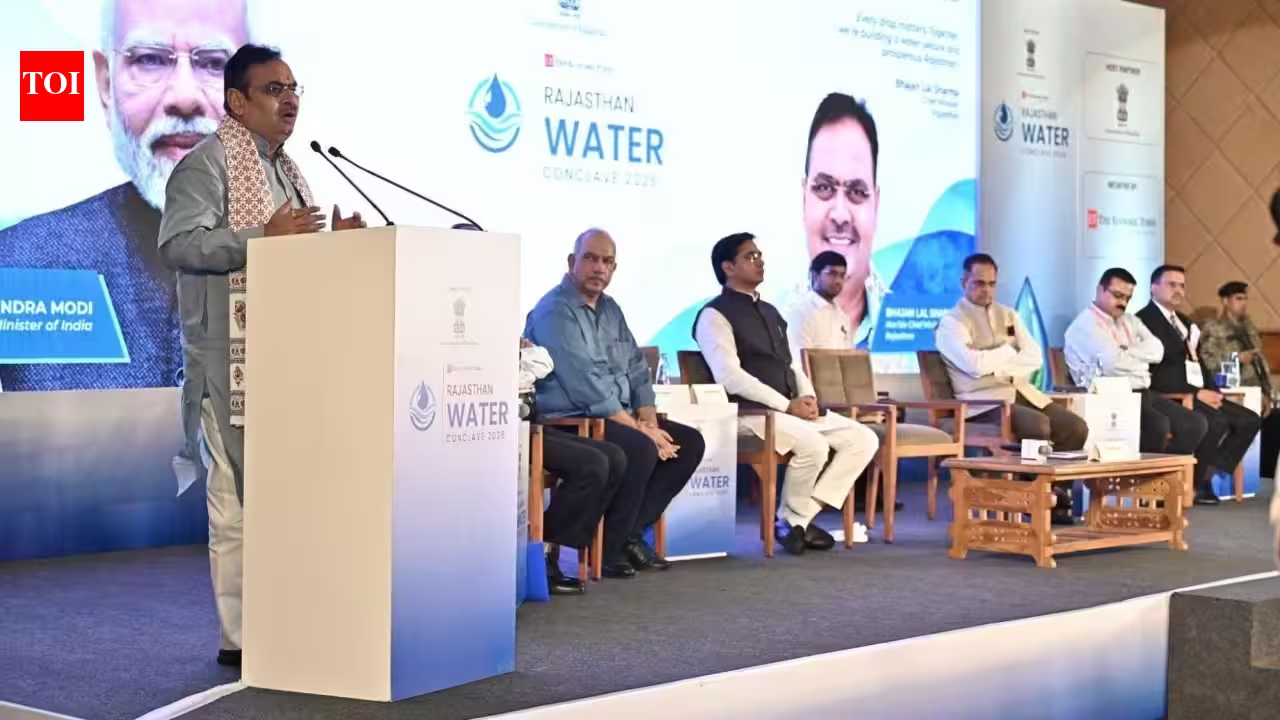
CM Bhajanlal Sharma at ET's Rajasthan Water ConclaveChief Minister Bhajanlal Sharma said Rajasthan is steadily moving towards becoming a national model for water management and water self-reliance. He said this is being driven by a combination of large-scale infrastructure projects, policy interventions, and public participation in water conservation. Addressing the Rajasthan Water Conclave Organised by the The Economic Times in Jaipur, Sharma said the state government made water security one of its highest priorities immediately after assuming office and has since taken several key decisions to strengthen drinking water supply, irrigation infrastructure and long-term water sustainability across the state. He said transformative initiatives such as the Ramjal Setu Link Project and the Yamuna Water Agreement are laying the foundation for a ‘new Rajasthan’ in the water sector.ET's Rajasthan Water ConclaveThe Chief Minister said that under the leadership of Prime Minister Narendra Modi, India has adopted a comprehensive approach towards water security through programmes such as Catch the Rain, Namami Gange, Jal Jeevan Mission, Atal Bhujal Yojana, Amrit Sarovar, Har Khet Ko Pani and Per Drop More Crop. He said these initiatives have provided a new direction to water conservation and management across the country and are helping states strengthen long-term water security.Sharma said Rajasthan is aligning its own water strategy with these national initiatives and is working towards becoming a model state in water management and conservation. He stressed that the success of water conservation depends not only on government programmes but also on the active participation of institutions, experts and citizens.Calling water conservation one of the most important issues for both the present and future generations, the Chief Minister said the government is encouraging collaboration with technical institutions, subject experts and organisations working in the field. He urged them to understand local water challenges and contribute through modern technology, scientific planning, innovative solutions and effective monitoring systems. Such collaborative efforts, he said, would accelerate Rajasthan's journey towards water self-reliance.Highlighting the state's flagship infrastructure projects, Sharma said the Ramjal Setu Link Project marks a new chapter in Rajasthan's water history. The project will provide drinking water security to 17 districts while extending irrigation facilities to nearly 4.84 lakh hectares of agricultural land. He described the project as a significant step towards ensuring long-term water availability for both domestic and agricultural use.He also outlined the significance of the Yamuna Water Agreement, under which approximately 1,917 cusecs of Yamuna water will be transported to the Shekhawati region through a 295-km pipeline. Once completed, the project is expected to provide permanent drinking water relief to nearly 75 lakh people living in Sikar, Jhunjhunu and Churu districts, regions that have historically faced water scarcity.Sharma said the government is simultaneously implementing several other strategic water infrastructure projects across different regions of the state. These include the Rs 1,691 crore Devas III and Devas IV projects aimed at meeting the drinking water requirements of Udaipur city. He added that work is progressing rapidly on strengthening the canal system under the Indira Gandhi Nahar Project (IGNP) in western Rajasthan.The Chief Minister said the government is also finalising plans to bring Narmada water to Raniwara and Bhinmal, while another proposal seeks to bring Brahmani river water to Bisalpur. He further highlighted the Parwan Multipurpose Irrigation Project, which is expected to become a lifeline for the districts of Kota, Baran and Jhalawar. According to Sharma, the state government has already spent Rs 1,164 crore on the project. Collectively, these initiatives are expected to strengthen drinking water supply, irrigation capacity, agriculture and industrial development across Rajasthan.ET's Rajasthan Water ConclaveEmphasising the role of community participation, the Chief Minister said water conservation cannot succeed without people's involvement. He said the government has launched the Karmabhoomi Se Matrubhoomi Abhiyan to encourage contributions from philanthropists, non-resident Rajasthanis and Corporate Social Responsibility (CSR) initiatives for the construction of water conservation structures. These efforts, he said, have already contributed to improvements in groundwater levels in several parts of the state.Sharma also highlighted the Vande Ganga Jal Sanrakshan Jan Abhiyan, under which activities such as cleaning water bodies, plantation drives, awareness campaigns and water conservation programmes have been carried out with extensive public participation. He reiterated that water conservation should evolve into a mass movement involving every section of society.Reviewing the progress of key government schemes, the Chief Minister said approvals worth Rs 5,100 crore have been issued under AMRUT 2.0 to strengthen drinking water infrastructure across 178 urban local bodies, while work orders have already been issued for 109 urban local bodies.He further said that under the Jal Jeevan Mission, more than 15 lakh rural families are receiving safe drinking water through household tap connections. Under the Atal Bhujal Yojana, water conservation and groundwater recharge works worth Rs 485 crore have been completed across the state.To improve irrigation management, Sharma said the government has constituted the Chief Minister Irrigation Task Force to ensure regular monitoring and time-bound implementation of irrigation projects. In addition, the Kisan Saathi App is providing farmers with information on irrigation water availability from their homes, helping them plan agricultural activities more efficiently.ET's Rajasthan Water ConclaveThe Chief Minister also referred to the state's power sector achievements, stating that farmers in 26 districts are currently receiving daytime electricity supply and that the government aims to extend this facility to all districts by 2027. He added that uninterrupted electricity is being ensured for households and industries and said Rajasthan has now reached a stage where it is supplying power to other states as well.Highlighting broader governance achievements, Sharma said, “under the government's zero-tolerance policy, not a single examination paper has been leaked in the last two and a half years, restoring the confidence of young aspirants preparing for government jobs. The government has provided government employment to 178,000 youths and facilitated private-sector employment for nearly 450,000 young people.” The Chief Minister also referred to the Rising Rajasthan investment initiative, saying that projects worth Rs 9 lakh crore have already been grounded out of the Rs 35 lakh crore investment proposals signed during the summit1. He said the government is also working consistently to promote sectors such as tourism and mining alongside infrastructure development.Concluding his address, Sharma appealed to citizens to recognise that there is no alternative to water and urged people to transform water conservation into a people's movement for the benefit of future generations. He also encouraged farmers to adopt micro-irrigation techniques to increase agricultural productivity while reducing water consumption. He said achieving the vision of a Developed Rajasthan would require sustained conservation of water resources, collective efforts, public participation and continued guidance from experts.Water Resources Minister Suresh Singh Rawat said water is not merely a natural resource but the foundation of Rajasthan's civilisation, prosperity and secure future. He said the state government under Chief Minister Bhajanlal Sharma has placed water security among its highest development priorities and accelerated several long-pending water projects. Stressing that climate change has made water conservation even more important, Rawat said protecting water resources is a shared responsibility of every citizen.During the conclave, Sharma interacted with organisations and experts working in the field of water conservation and discussed their experiences, innovations and suggestions. He said water conservation is important for both present and future generations and called for the use of technology-based monitoring, scientific approaches and innovative solutions to address local water challenges.Chief Secretary V. Srinivas, Abhay Kumar, Additional Chief Secretary, Water Resources, Hemant Kumar Gera, Principal Secretary , Public Health and Engineering and Ground Water Department, and several water conservation experts were present at the conclave.Reference/s:https://government.economictimes.indiatimes.com/news/economy/rajasthan-aims-for-350-billion-economy-by-2029-chief-minister-sharmas-vision-at-niti-aayog-meeting/131677744Disclaimer - The above content is non-editorial, and TIL hereby disclaims any and all warranties, expressed or implied, relating to it, and does not guarantee, vouch for or necessarily endorse any of the content.
Rajasthan to become national model for water management through major infrastructure push, says CM Bhajanlal Sharma
Chief Minister Bhajanlal Sharma said Rajasthan is steadily moving towards becoming a national model for water management and water self-reliance. He said this is being driven by a combination of large-scale infrastructure projects, policy interventions, and public participation in water conservation.
1,281 words~6 min read