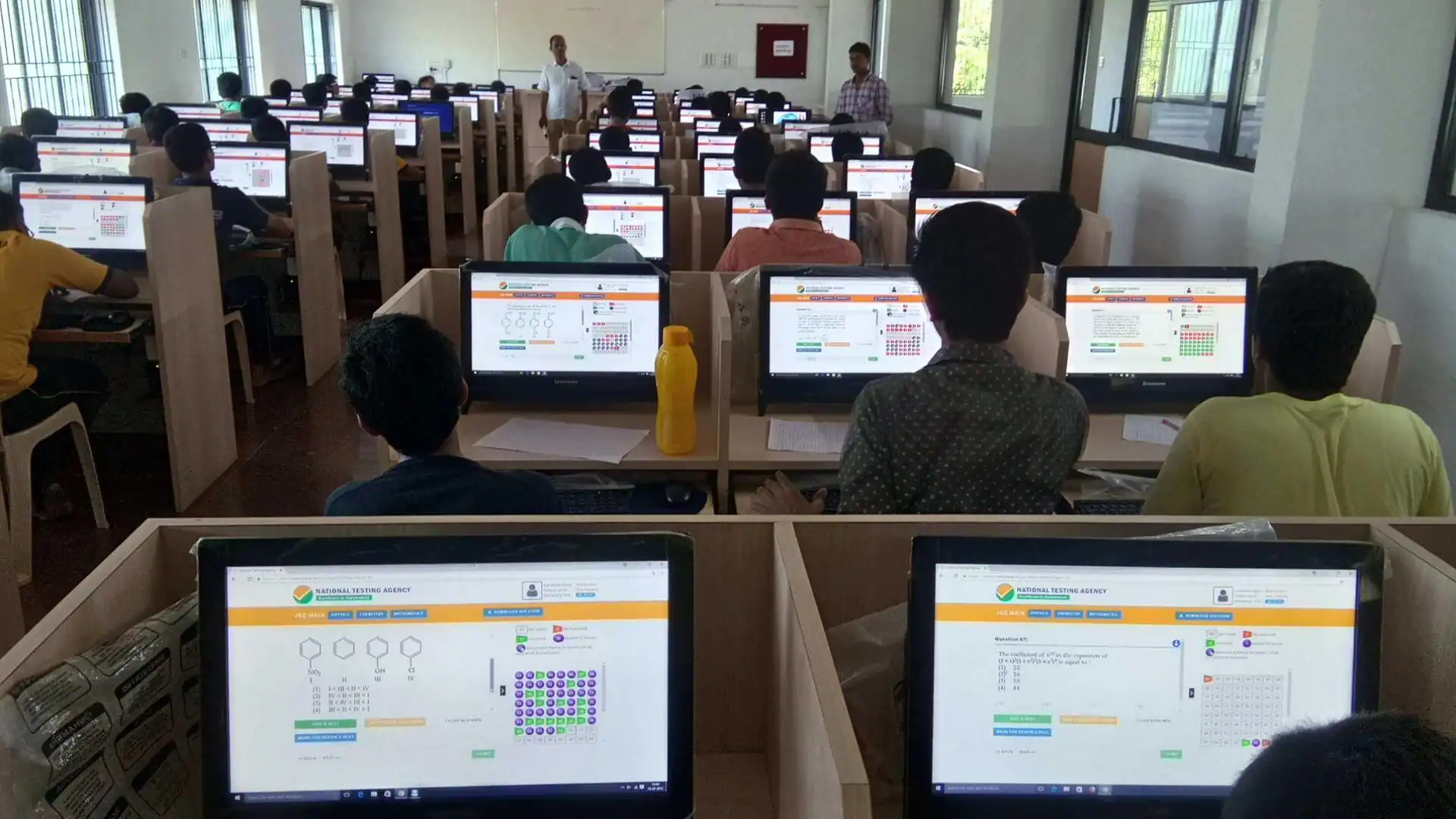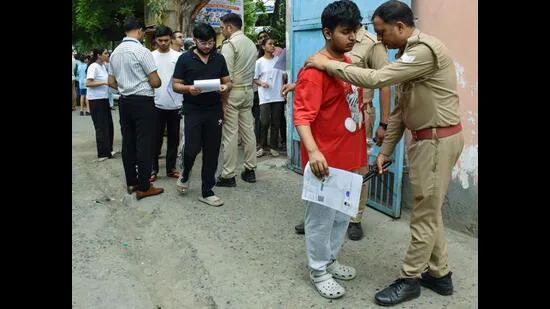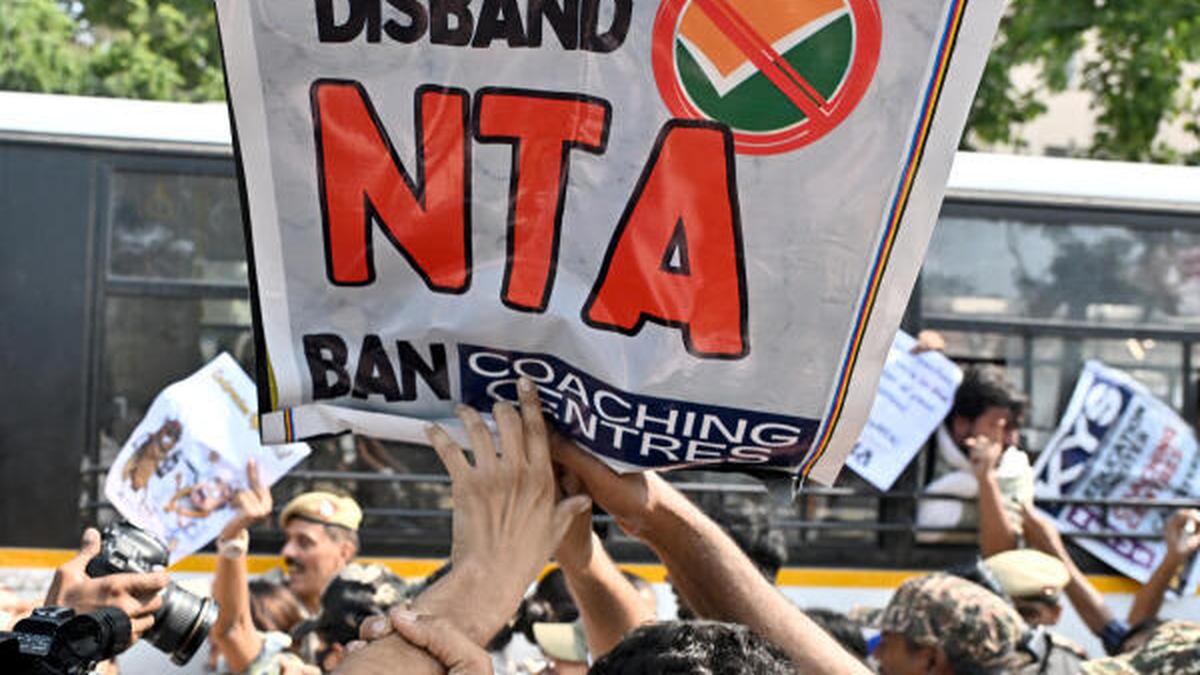
In the last few days, the Ministry of Education has launched a long-overdue institutional overhaul of the National Testing Agency (NTA). Over 47 contractual staff have been relieved of duty, criminal proceedings are underway against suspected leak networks, and a fresh recruitment drive for several key roles has been announced.(Sign up for THEdge, The Hindu’s weekly education newsletter.)While these administrative steps signal resolve, a fundamental question remains: can recruitment notifications alone transform the NTA into a zero-glitch testing body in time for the NEET-UG 2027 computer-based testing mandate?Join THEdge LinkedIn groupThe Radhakrishnan blueprintFollowing the 2024 examination paper leaks, the High-Level Expert Committee chaired by former ISRO chairman K. Radhakrishnan submitted a comprehensive restructuring roadmap. The core mandate moves the agency away from excessive outsourcing toward an empowered self-reliant institutional model.The panel recommended placing the NTA under a Director General of Additional Secretary rank, supported by two Additional Director Generals (ADGs) — one overseeing technology, products and operations, and the second managing test security and surveillance. Governance is anchored by an empowered governing body and three specialised sub-committees: test audit, ethics and transparency, nomination and staff conditions, and stakeholder relationships.To replace thin administrative teams, the panel mandated ten dedicated functional verticals:Information Security and CybersecurityAssessment Research and PsychometricsTest Center Operations and Network ManagementReal-Time Surveillance and Command ControlForensics, Vigilance and Legal AuditDigital Infrastructure and Technology StackVendor Assessment and Procurement IntegrityStakeholder Relations and Grievance RedressalState and District CoordinationCapacity Building and Personnel DevelopmentThe recruitment drive so farTransitioning from blueprint to execution, NTA initiated top-level executive hiring. Notifications were released during May 2026 for key strategic executive positions, including Chief Technology Officer (CTO), Chief Finance Officer (CFO), and General Manager – Human Resources.This was followed by contractual advertisements for four specialised General Managers anchoring core capabilities: assessment research and psychometrics, test center operations, information security, and vigilance and forensics. Simultaneously, NTA tapped UPSC’s Pratibha Setu portal to induct 16 young professionals across academic, legal, and finance units on multi-year terms. A fresh Expression of Interest was also floated to empanel subject-matter experts and translators to address longstanding deficits in question-paper development and multilingual delivery.Structural hurdles in specialist recruitmentWhile bringing in civil service deputations provides administrative stability, hiring niche domain experts through standard government channels presents major challenges.UPSC deputation mechanisms excel at selecting administrative generalists, but roles like Head of Psychometrics or Chief Information Security Officer require deep technical mastery in Item Response Theory, advanced encryption, and real-time threat intelligence.Specialist roles like cybersecurity engineers and data architects command private-sector compensation that far outpaces standard government pay matrices, making fixed contractual terms a barrier to attracting top talent.Bureaucratic recruitment cycles typically span 6 to 12 months, creating a severe bottleneck against the 2027 target for transitioning major tests like NEET-UG to Computer-Based Testing (CBT).Outright termination of temporary personnel must be matched by permanent cadre creation, which requires legislative and budgetary sanctions that move slowly.More steps for lasting transformationConverting a crisis-driven recruitment exercise into a sustainable institutional strength requires more strategic initiatives.The Parliament must enact legislation elevating NTA from a society registered under the 1860 Act into an autonomous statutory authority. This grants statutory power to penalise and enforce compliance from private lab operators and logistics vendors. Furthermore, mandating an annual report to Parliament will institutionalise external accountability.The three sub-committees on Test Audit, Ethics, and Staffing must operate as standing bodies with independent reporting lines to the Governing Body. Simultaneously, internal silos between exam divisions (JEE, NEET, CUET, UGC-NET) must be dismantled to share vendor performance and security incident data agency-wide.NTA must treat indenting bodies—such as the National Medical Commission (NMC), UGC, and the IITs—as active knowledge partners throughout the examination lifecycle rather than passive clients. For medicine, that means a standing rotating panel drawn from AIIMS institutions and NMC-recognised medical colleges. For engineering, the IITs are the obvious base with the adaptive-testing collaboration a natural entry point for deeper item-development ties. For the social sciences, increasingly relevant as CUET expands, UGC-affiliated central universities offer a comparable pool. In every case, subject experts should sit with NTA’s data scientists to see how their questions actually performed after the exam, not just submit content and walk away. Standing joint working groups and embedded academic representatives can resolve logistically unworkable formats before exams are announced.Collaboration with global testing agencies like ETS will help NTA in capacity building. As recommended by Dr Radhakrishnan Committee, engagements may be centred around structured secondments, joint research on India-specific problems such as multilingual equating across a dozen languages, and a running technical-advisory arrangement.Targeted 2027 roadmapMeeting the 2027 target requires completing key reform milestones recommended by the Dr. Radhakrishnan Committee. These include redesigning test delivery processes, piloting CBT models for NEET-UG, fully integrating the four-stage biometric ‘DIGI-EXAM’ authentication lifecycle, and equipping 1,000 Kendriya Vidyalayas and Navodaya Vidyalayas with secure local servers and isolated LAN infrastructure. The task is daunting but achievable. It demands strong leadership to recruit the right talent, quickly build a cohesive team, and drive performance with relentless focus and urgency.Way forwardRebuilding public confidence in India’s national examination system requires more than administrative housecleaning. Issuing hiring notices is a necessary starting point, but true success depends on transforming NTA into a statutory, research-driven, and globally credible testing body before the 2027 CBT mandate arrives. Failing to address core structural vulnerabilities-vendor dependence, rigid salary bands, and lack of regulatory authority-risks leaving the agency exposed to the same vulnerabilities it is trying to overcome.(Prof. O.R.S. Rao is the Chancellor of the ICFAI University, Sikkim. Views are personal.)
NTA reorganisation: why good intentions need structural reforms for results?
Explore the NTA's reorganization efforts and the necessity for structural reforms to achieve effective results by 2027.
910 words~4 min read