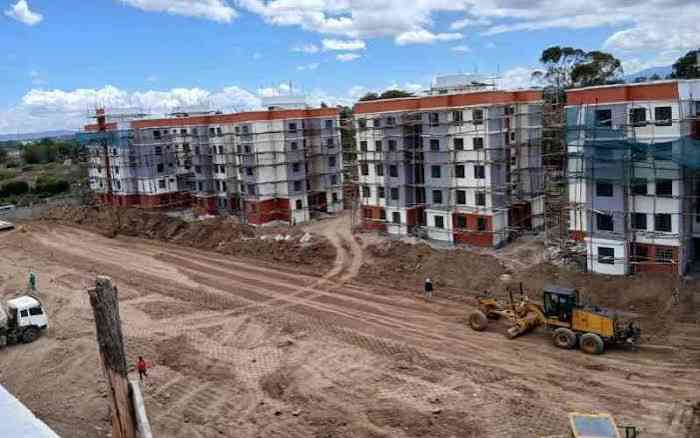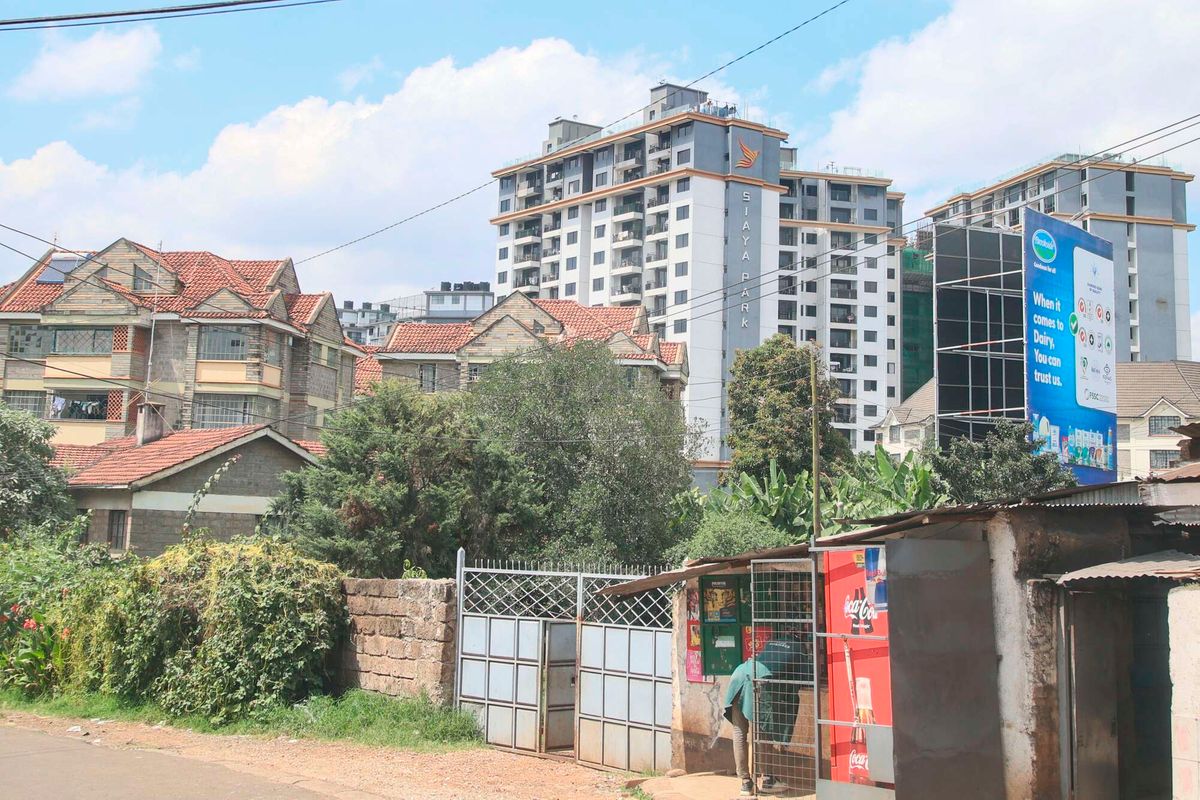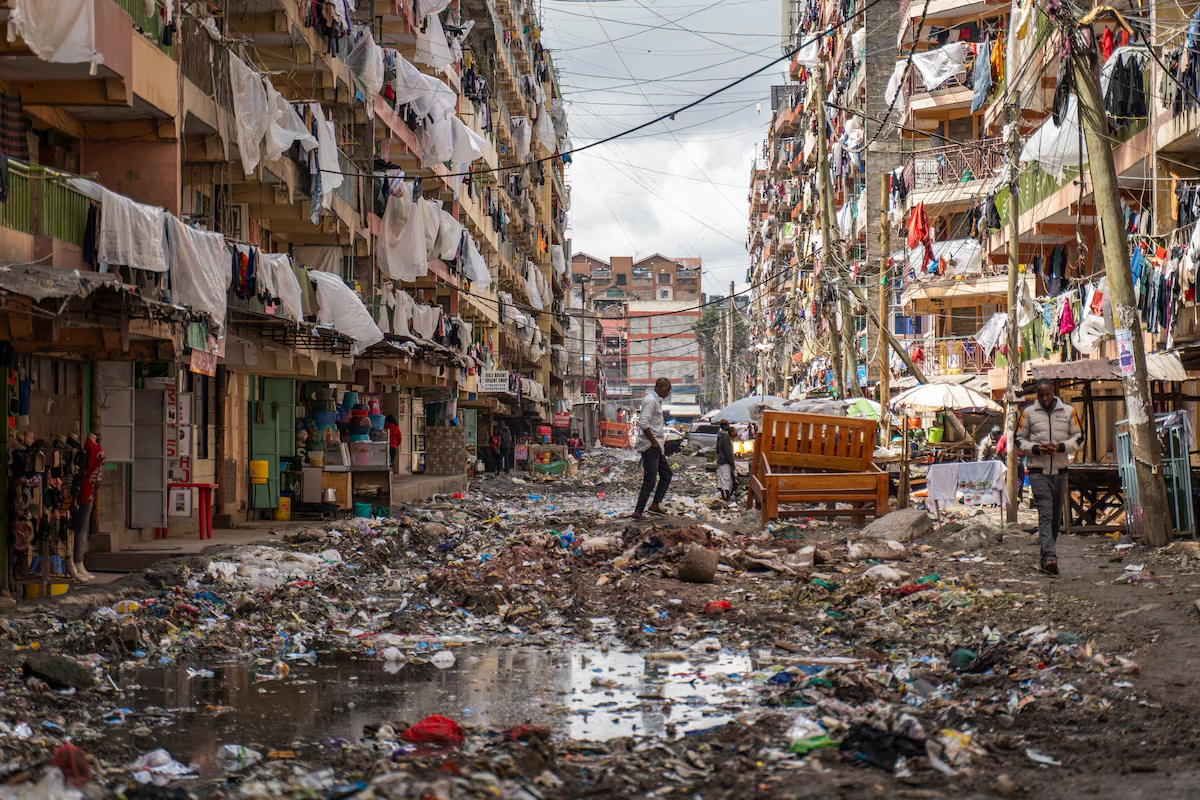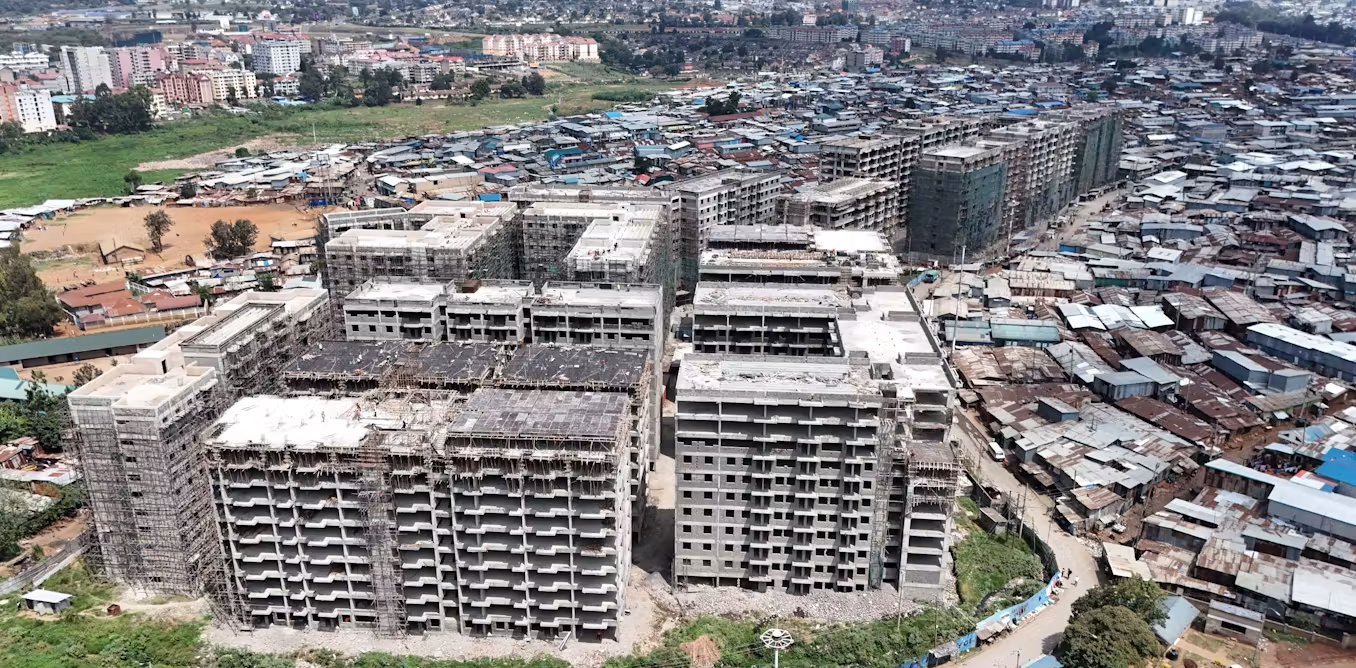
Bulldozers and construction crews are reshaping parts of Nairobi’s best-known informal settlement, Kibera. In a video shared by President William Ruto, new apartment blocks rise alongside existing corrugated-iron structures, while new roads cut through the settlement. The message is clear: Kenya’s affordable housing programme is bringing modern housing to one of the country’s most visible symbols of urban poverty.
The redevelopment forms part of Ruto’s broader affordable housing programme, which aims to deliver 200,000 housing units annually, combining social housing, affordable homes and market-rate units. By March 2026, government figures indicated that 8,367 units had been completed since Ruto took office in September 2022, with many more at various stages of construction across the country. Completed units therefore remain well below the programme’s stated annual target.
Supporters see it as a long-overdue investment in urban infrastructure and housing. Critics, however, have challenged the compulsory levy used to finance the programme: employees pay 1.5% of their gross monthly salary, matched by a 1.5% employer contribution, while people outside formal employment pay 1.5% of their gross income. They have also raised concerns about whether the homes will be affordable to lower-income households and allocated transparently.