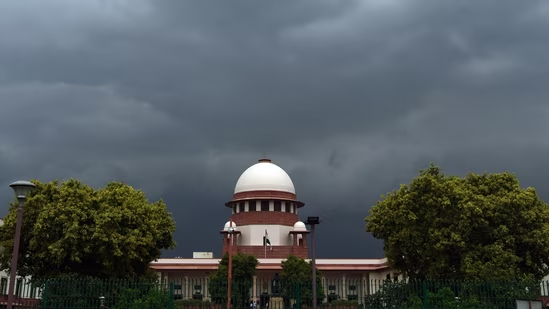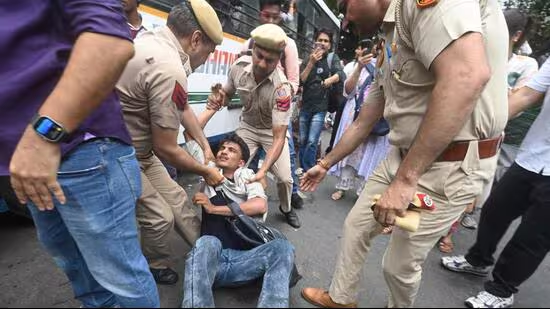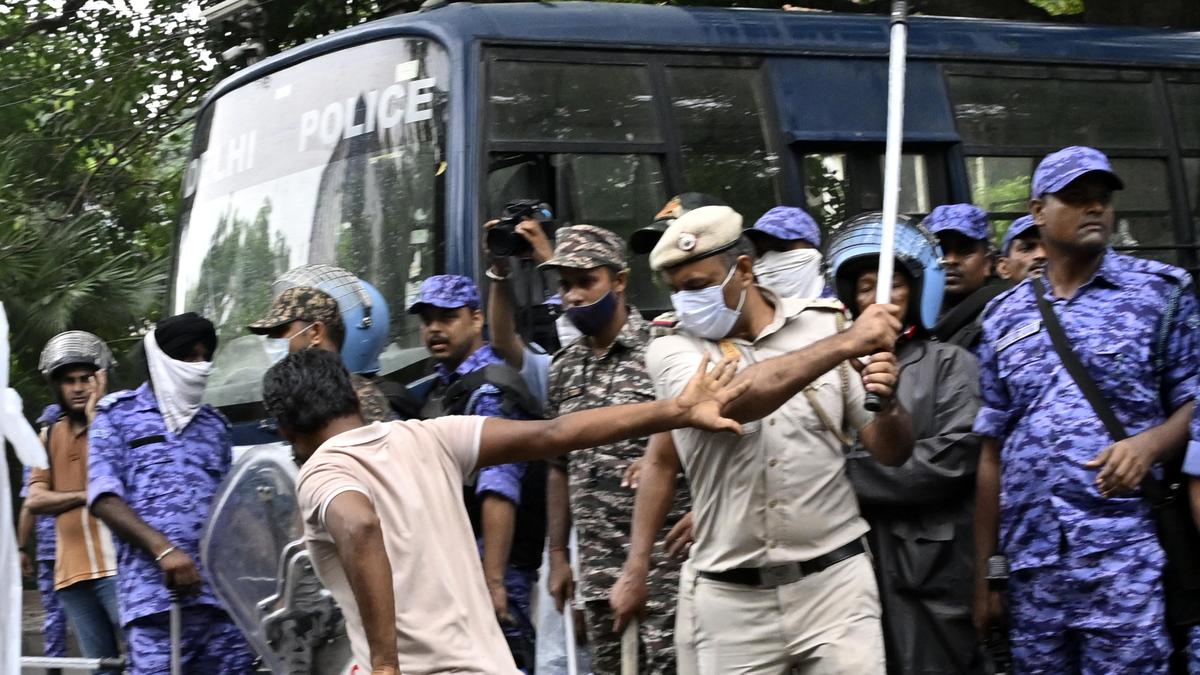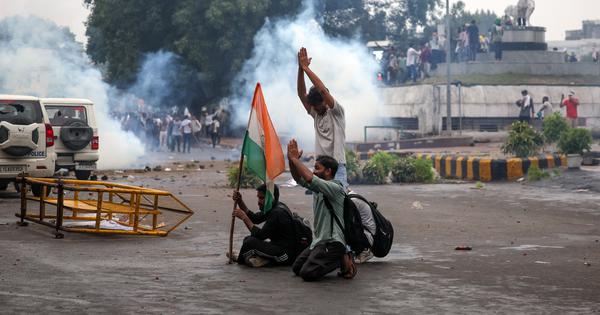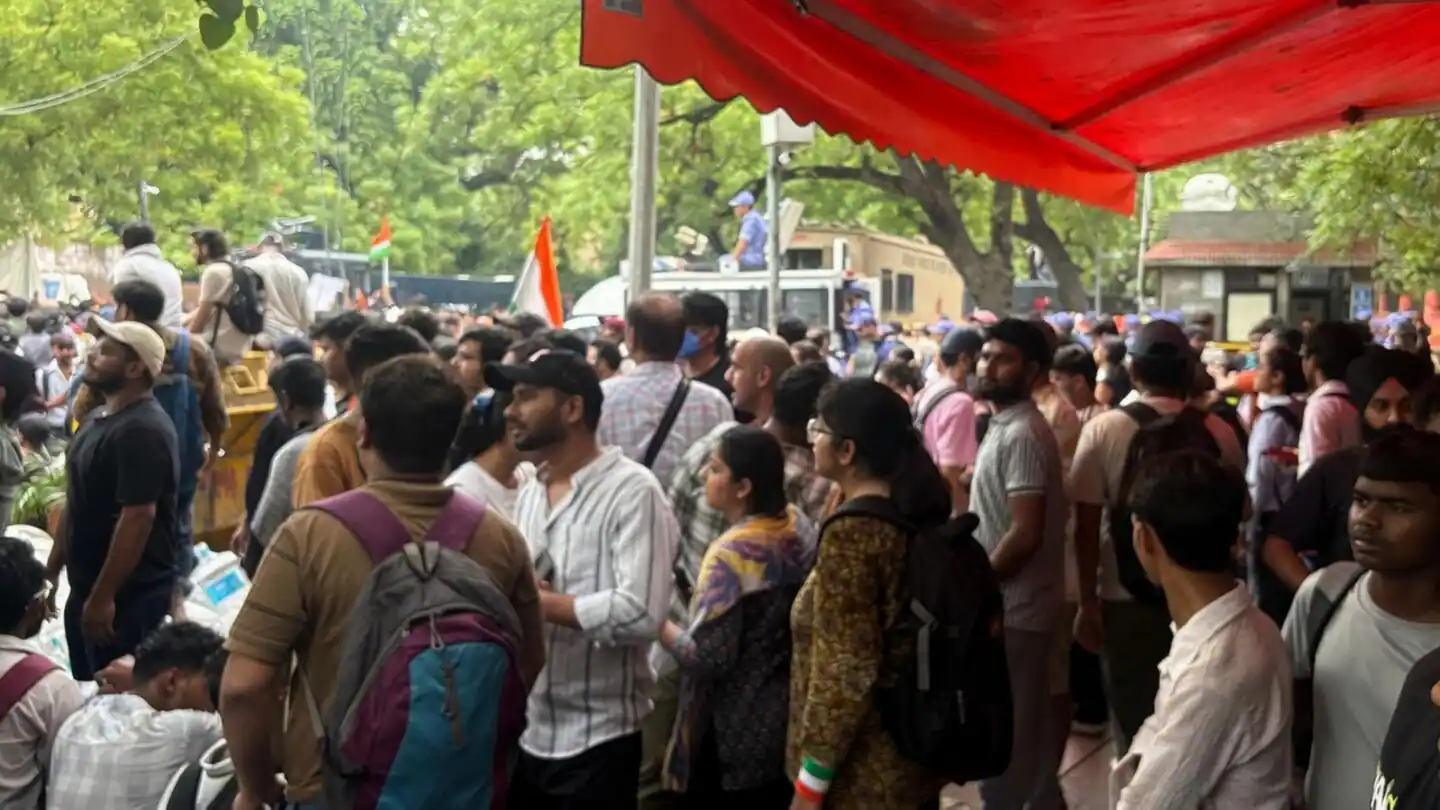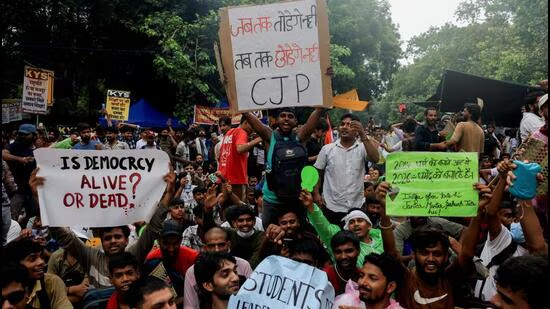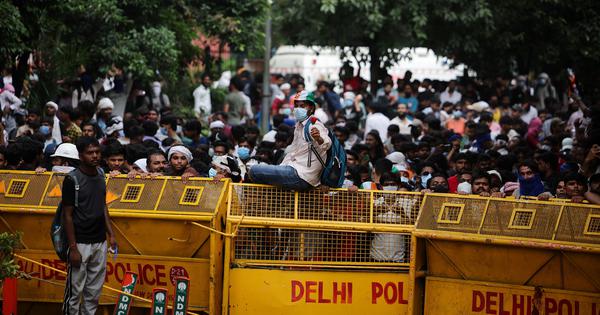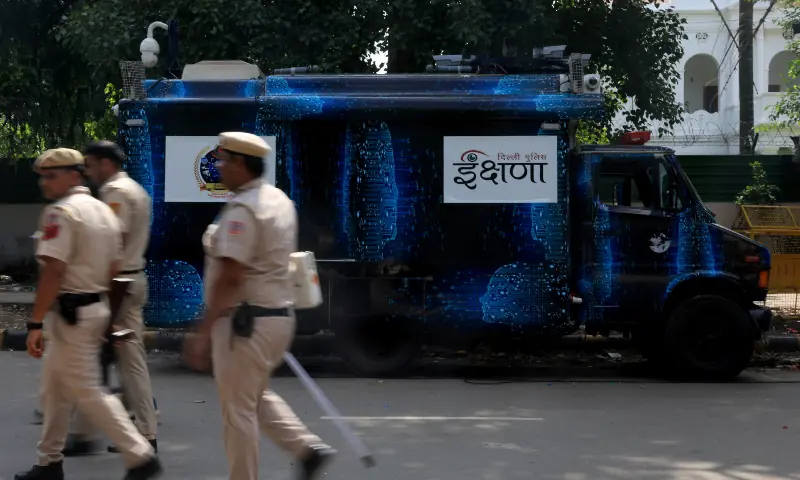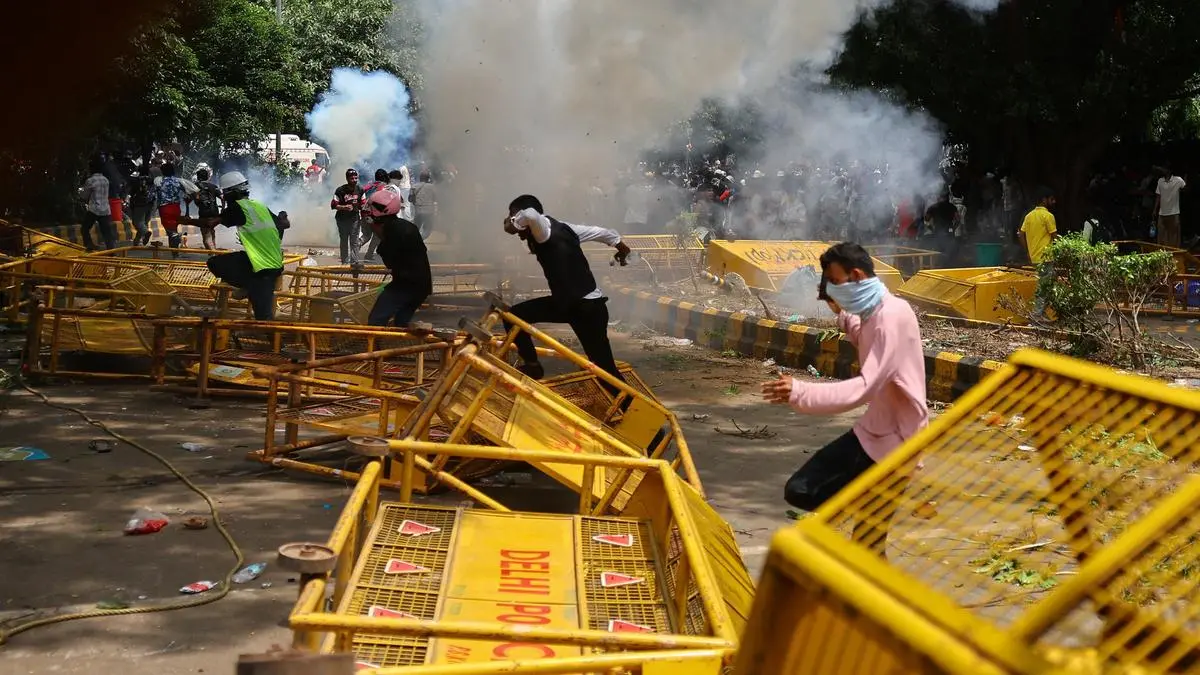
The Supreme Court on Tuesday observed that it would consider constituting a high-powered investigating team to conduct a “thorough, fair and independent” inquiry into allegations of police excesses during the recent student protests in Delhi and several other States, while ordering the immediate release of all minors arrested in connection with the demonstrations and restraining the police from taking coercive action against protesting students unless they had criminal antecedents.While underlining that the Constitution guarantees the right to peaceful protest, a Bench headed by Chief Justice of India (CJI) Surya Kant observed that an independent probe was necessary to examine the allegations of police violence through a “scientific” and “evidence-based” inquiry.“The allegations made by the petitioners prima facie make out a case for an independent probe into the incidents of violence," the Bench observed, adding that the proposed probe would also examine complaints by the families of police personnel who were allegedly injured during the protests.The interim directions came while the top court was hearing a batch of petitions alleging the use of disproportionate force by the police against protesters during demonstrations over the NEET examination paper leak, including the July 20 Parliament march in Delhi and subsequent protests in several States. The Hindu had earlier reported that at least four persons were struck by pellets during the Parliament march and that the Rapid Action Force (RAF) fired two rounds from an anti-riot gun on the directions of a Deputy Commissioner of Police (DCP)-rank officer.The Bench, which also comprises Justices Joymalya Bagchi and V. Mohana, issued notices to the Union government and the Chief Secretaries of Delhi, Maharashtra, Bihar, Assam, Kerala, West Bengal, Madhya Pradesh and Uttar Pradesh, indicating that it would decide whether to order an independent probe after considering the responses filed by the authorities.Preserve footage, release detained minorsTaking note of petitions alleging that student protesters had been illegally arrested and detained by the police, the top court directed the authorities to forthwith release all minors detained in connection with the demonstrations. It also restrained the authorities from taking any coercive action against students in relation to the agitation unless they had criminal antecedents.“The NCT of Delhi and other States may continue the investigation of the FIRs registered, but no coercive action shall be taken against the protesting students. Such relief shall not be extended to persons with criminal antecedents or anti-social elements,” the Bench said.As an interim measure, the Bench directed the police authorities to preserve all CCTV footage, drone recordings, body-worn camera footage, wireless communication records and PCR call records relating to the protests. It also ordered that while the police may preserve the digital data of protesters for the purposes of the investigation, they shall not disclose any personal information in the public domain.‘Fix responsibility’Senior advocate Gopal Sankaranarayanan, appearing for petitioner Shailendra Mani Tripathi, referred to videographic evidence allegedly showing the use of pellet guns and electric batons against protesters and urged the court to fix accountability. He also questioned the absence of any prohibitory orders in the Jantar Mantar area, the lack of name tags on police personnel and the deployment of officers in plain clothes for crowd-control duties.“We have named individual police personnel, with video, who are responsible for this action... These people behaved with a licence... We want responsibility placed above the ladder. Police think they can get away with this,” he said.Echoing these concerns, senior advocate Shyam Divan, appearing for one of the petitioners, placed on record photographs allegedly depicting the use of pellet guns and police personnel in plain clothes using force against protesters. “There are reports of electric shock weapons being used on protesters. The RAF has admitted the use of projectile-action guns (PAGs) against unarmed protesters. We have set out the details and placed credible media reports on record,” he submitted.Appearing for a law student who was allegedly illegally detained by the Bihar police, senior advocate Shadan Farasat submitted that nearly 150 individuals, most of them minors, continued to remain in custody.Acknowledging the concerns raised by the petitioners, the Chief Justice observed that an independent probe would look into the allegations and ensure that the law dealt with any excesses or atrocities found to have been committed by police personnel.“Whosoever has committed excess or committed atrocities on innocent people, the law will take care of them. For that, there needs to be a completely independent and fair investigation…Probe is meaningless if no responsibility is fixed,” he said.Notably, the court also indicated that it may revisit its earlier decisions governing police responses to public demonstrations, observing that a uniform protocol was required to regulate police conduct during such protests. It said the principles evolved in earlier decisions, including those arising from the 2011 Ramlila Maidan incident, may require reconsideration with the efflux of time.“The previous judgments, with the passage of time, may require some modifications... A time has come to collate all these principles and update them,” the Chief Justice said.‘Anti-social elements’Solicitor General Tushar Mehta, appearing for the Delhi Police and the Union government, submitted that he had no objection to the constitution of an independent probe. He also brought to the Bench’s notice that several police personnel had allegedly been injured by miscreants during the protests.“If students have suffered in any manner, perpetrators have to be brought to book,” he said, adding that “anti-social elements” may have infiltrated the demonstrations.The Bench observed that both “narratives” warranted a fair examination, cautioning that there was always a “danger” of discrediting a peaceful movement.“Use of pellet guns, electric batons and lathi resulting in life-threatening injuries are some of the issues... Excessive use of pellet guns is something that needs to be looked into,” the Bench added.The Bench posted the matter for further hearing on August 3, when it will consider the responses to be filed by the Centre and the States.Published on July 28, 2026
SC moots independent probe into police excesses, orders release of detained minors
Supreme Court considers independent probe into police actions during protests, orders release of detained minors, and ensures accountability.
973 words~4 min read