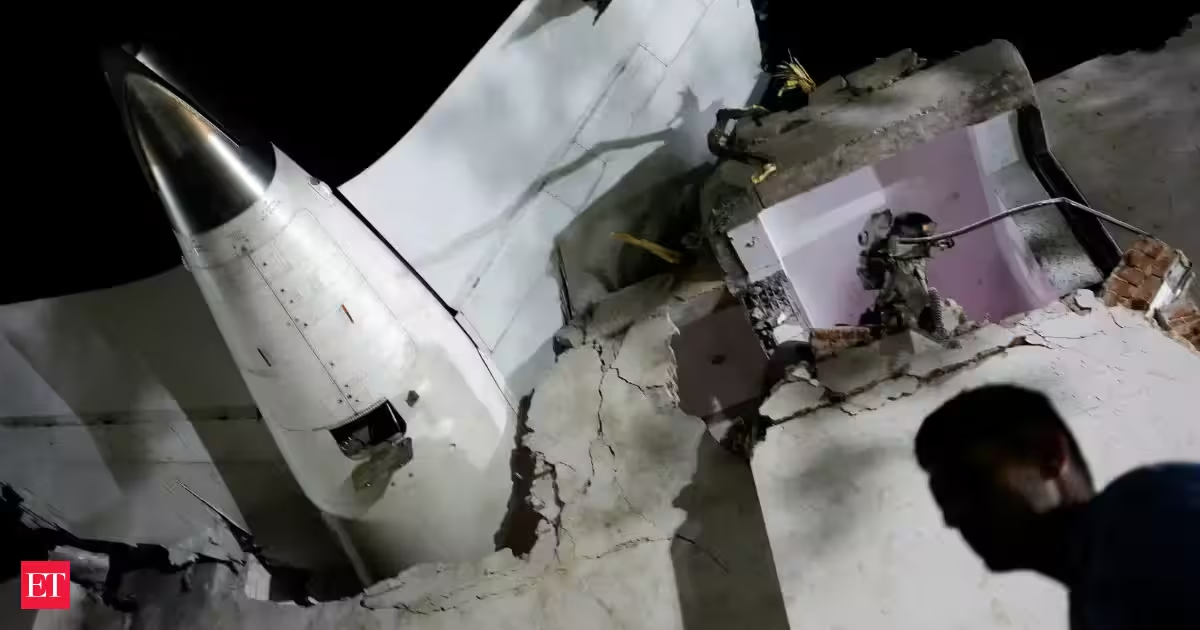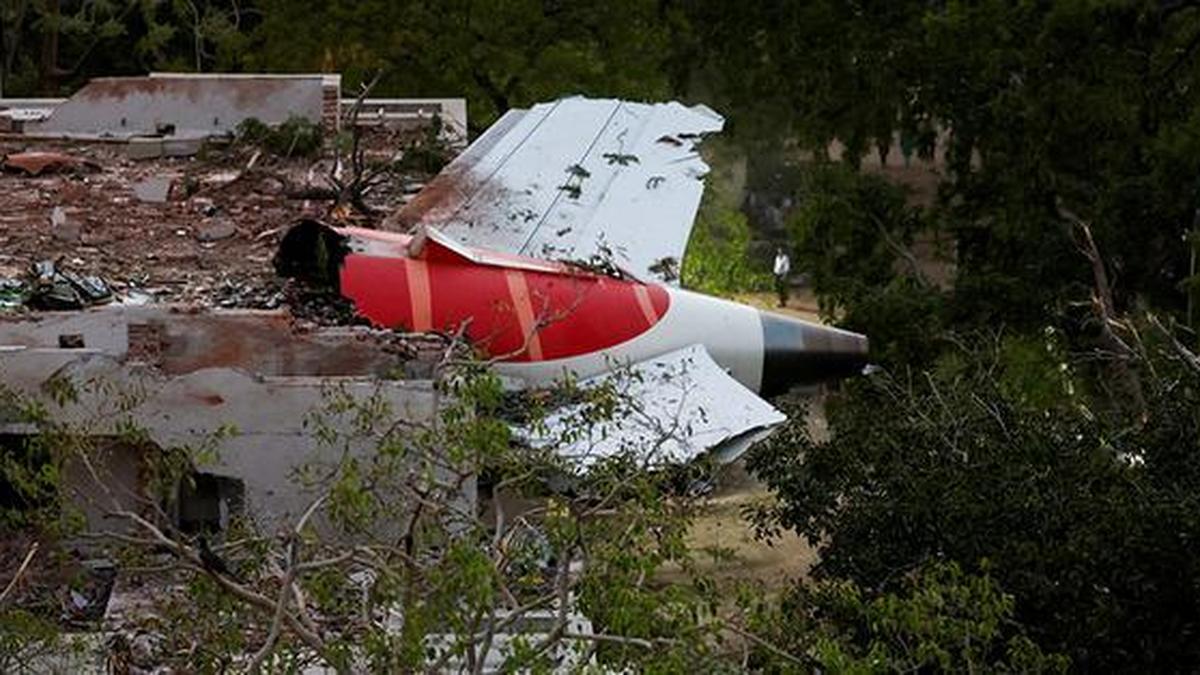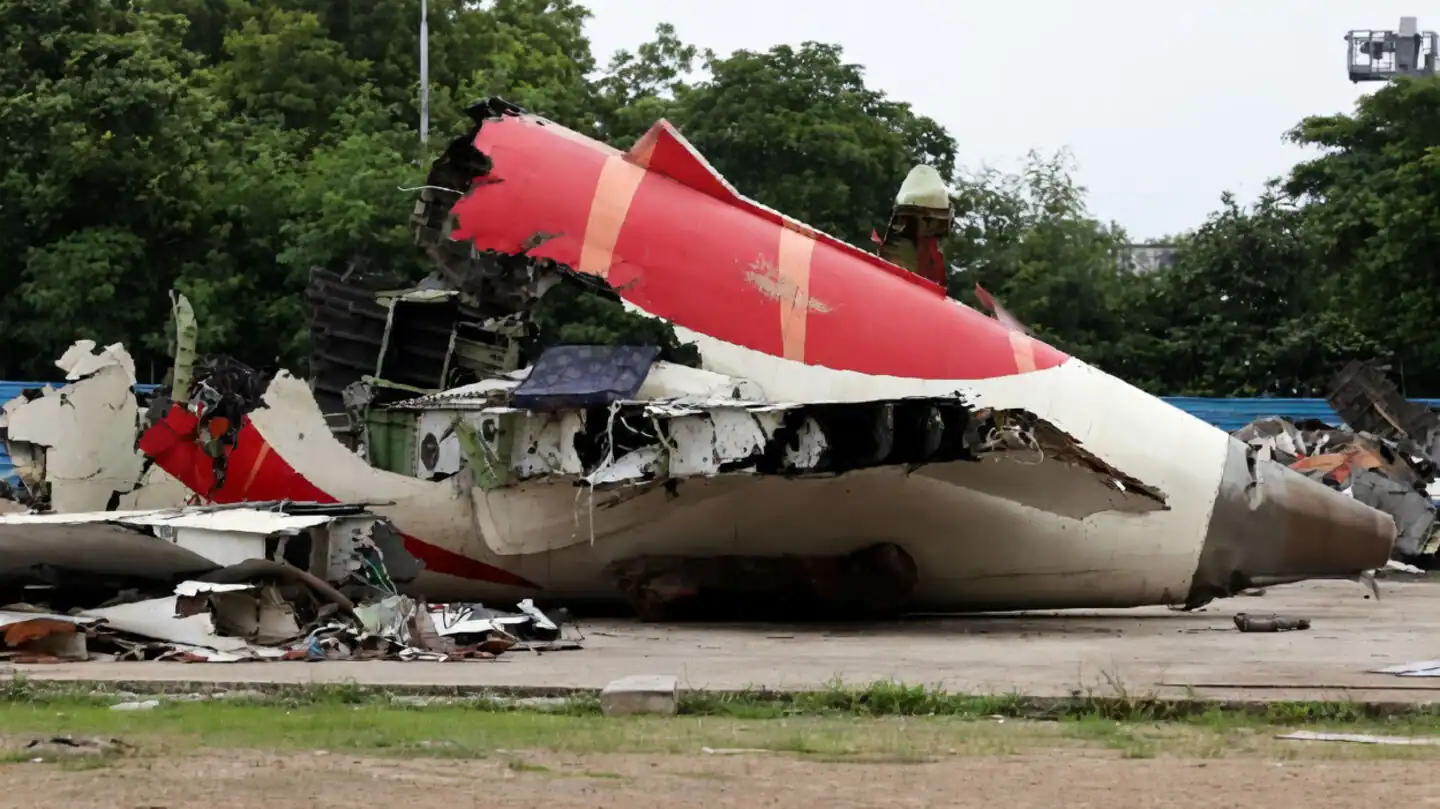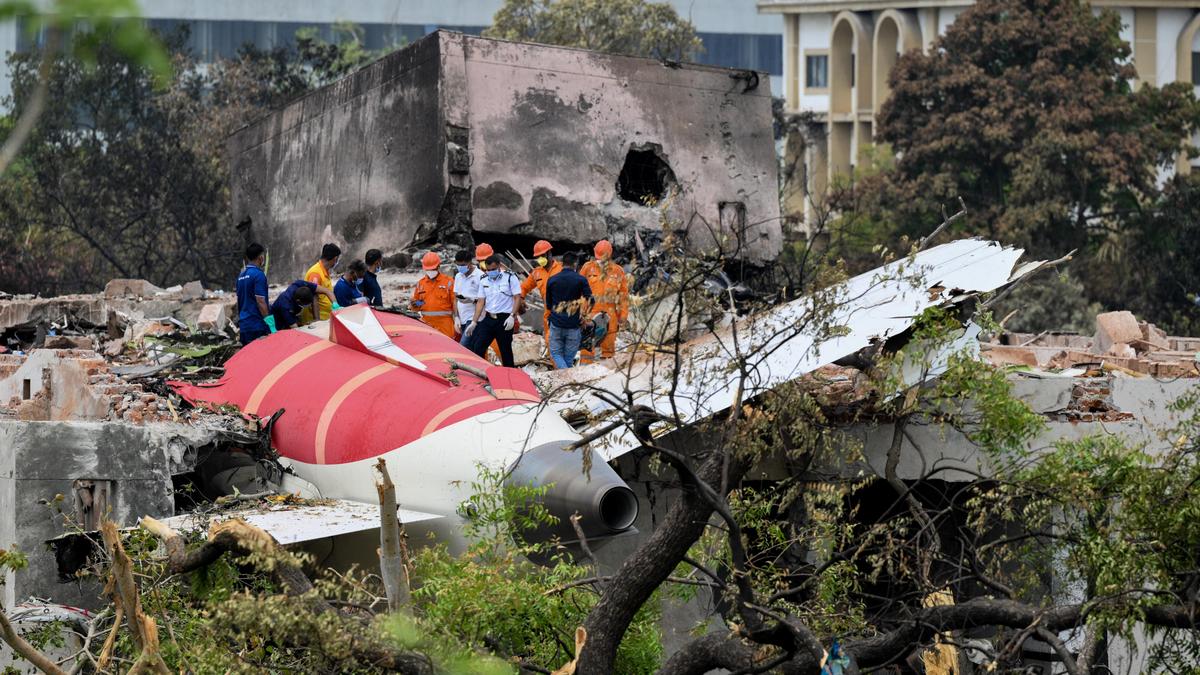
A fake image of the Air India AI-171 plane crash site in Ahmedabad, Gujarat. File.
| Photo Credit: PTI
The Supreme Court on Tuesday (July 28, 2026) chose to wait for the Aircraft Accident Investigation Bureau (AAIB) to publish the final report on the Air India Flight 171 crash anytime between the “middle of September”, with a buffer till the “end of October”.The crash at the Ahmedabad airport killed 12 crew members and 229 passengers on June 12, 2025.The court clarified that the plea for a Court of Inquiry or a “fair, transparent, and technically sound investigation” sought variously by petitioners, who include 91-year-old Pushkar Raj Sabharwal, father of Sumeet Sabharwal, one of the pilots on the ill-fated aircraft, was still very much alive, but on hold for the time being.The trajectory of the current litigation would depend on whether the AAIB report on the crash would be “well-merited and accepted”, a three-judge Bench headed by the Chief Justice of India Surya Kant said.Justice Joymalya Bagchi referred to submissions made from the “very first day” by the petitioners, who also include the pilots’ federation, that an investigation of such magnitude ought to have gone to an independent agency in accordance with international protocols to which India was a signatory. But the court had opted to not intervene as the AAIB probe had by then “substantially progressed”.Advocate Prashant Bhushan submitted that the probe has been on for over a year. He alleged “conflict of interest”, saying that out of the five members in the investigation team, three were from the Directorate General of Civil Aviation (DGCA). Even the AAIB’s rules mandated a permanent body without members from the DGCA, he said.Solicitor General Tushar Mehta, appearing for the government and the DGCA, objected to Mr. Bhushan’s submissions, saying an impression was being given as if the DGCA was concealing something. Experts from the countries to which some of the passengers had belonged too were involved in the investigation, Mr. Mehta submitted.“This is not like some in-house investigation here,” he said.The investigation had taken time as each component of the aircraft had to be sent to the manufacturers, wherever they were located, for checking, he said. “By the middle of September, the final report would be out… But keeping a buffer, by the end of October,” Mr. Mehta assured.Senior advocate Gopal Sankaranarayanan, appearing for Mr. Sabharwal, sought the AAIB report to be submitted in a sealed cover.The court directed the AAIB to take inputs from the pilots’ federation and consider “contemporaneous and technically grounded evidence” on the correctness of the Ram Air Turbine (RAT) deployment in the AI-171 flight. RAT is an emergency generator that automatically deploys when both primary and backup electrical systems fail in an aircraft.An application filed by Mr. Sabharwal alleged “premature activation” of RAT at take-off even before the pilots could have made any control inputs or touched the fuel switches, contradicting the AAIB’s preliminary report findings. Four sequential photographic frames obtained from the Ahmedabad airport CCTV/security camera depicted an object consistent with progressive RAT door opening and/or RAT deployment while the aircraft was rolling on the runway, Mr. Sabharwal said.“This premature activation is a direct indicator of an electrical or digital malfunction, contradicting the Report’s inference that pilot actions initiated power loss. Yet, the investigation fails to provide timestamped correlation between RAT deployment and crew inputs, and ignores the possibility that faults in the Common Core System, integrating avionics, flight controls, power distribution, and software, may have triggered the sequence of failures,” the application said. Published - July 28, 2026 07:36 pm IST