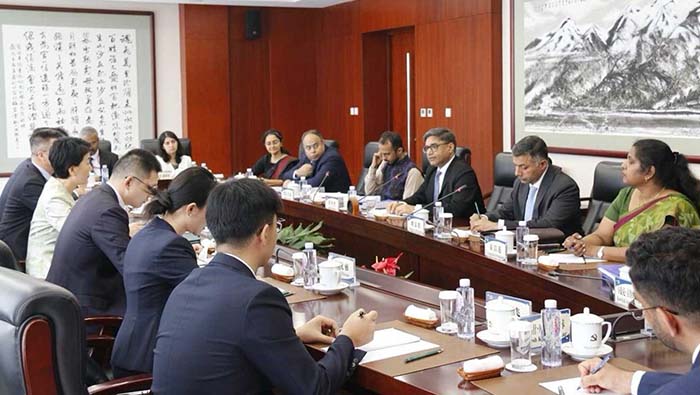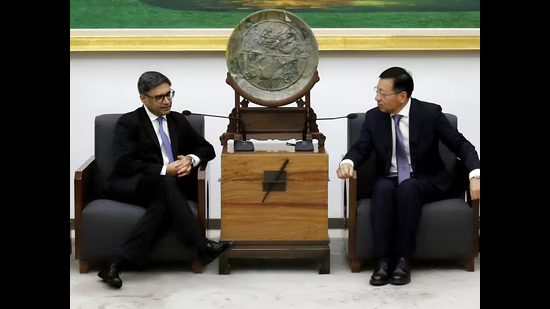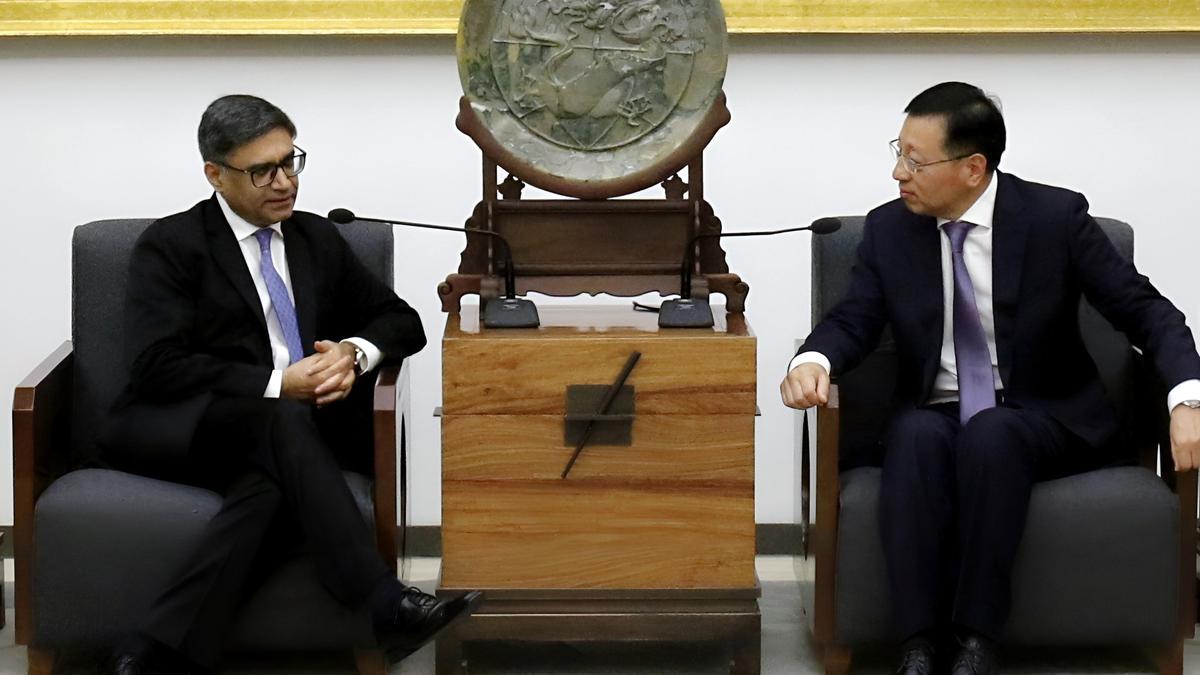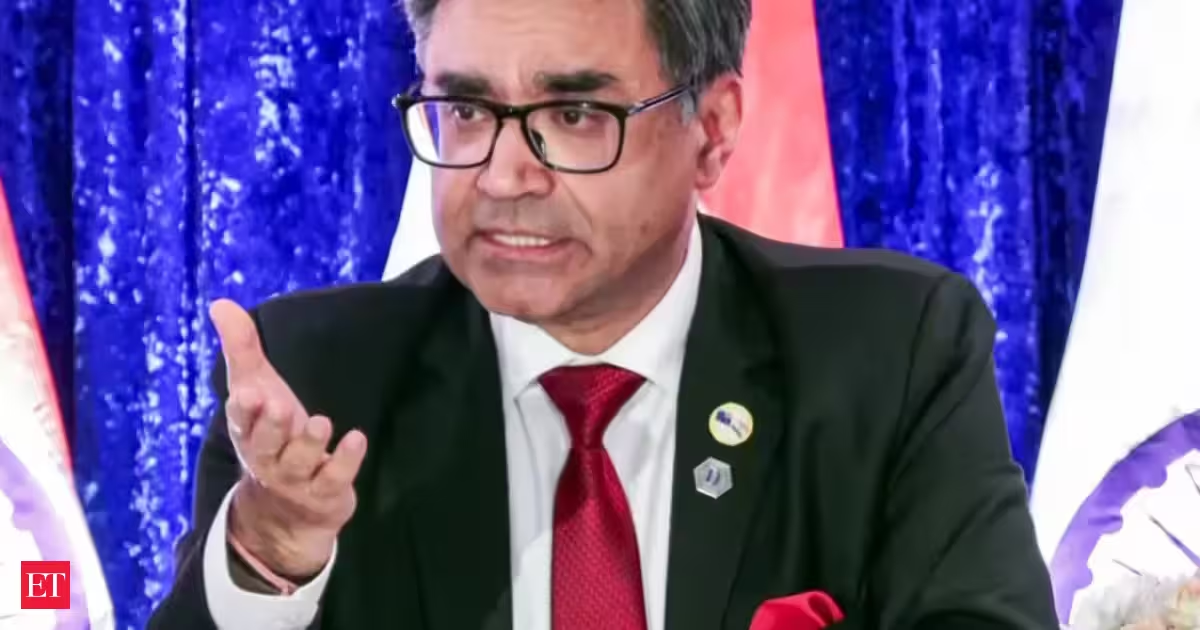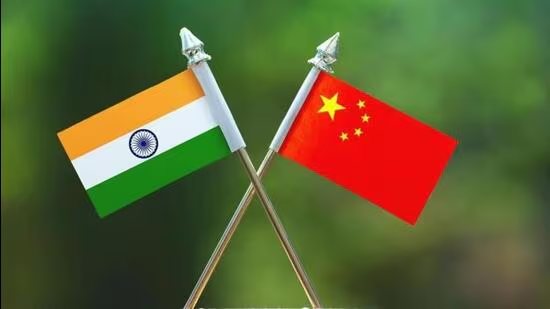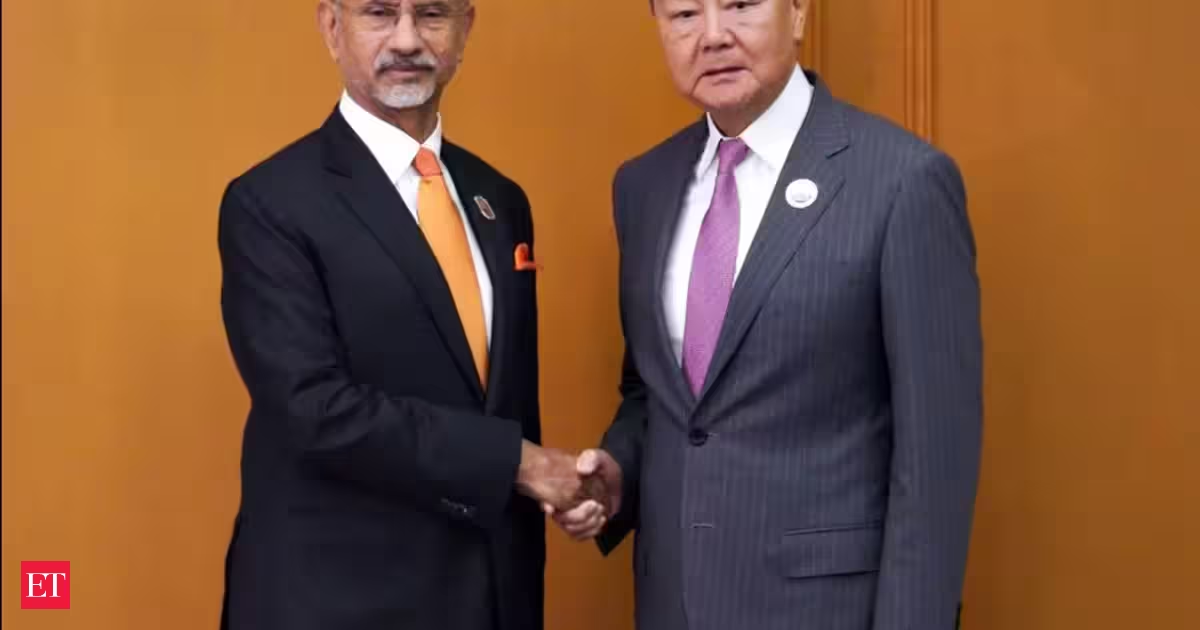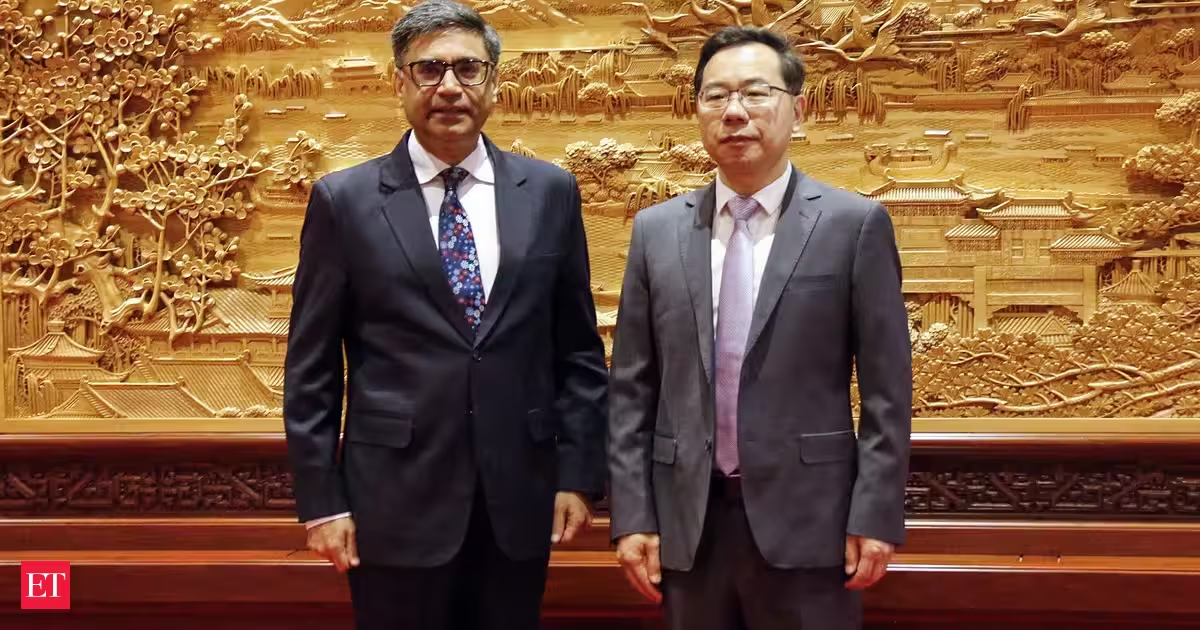
India and China have reaffirmed the importance of maintaining peace and tranquillity along the border during Foreign Secretary Vikram Misri's visit to Beijing, as the two sides reviewed the full spectrum of bilateral relations and explored ways to deepen cooperation.External Affairs Ministry spokesperson Randhir Jaiswal said the discussions reflected the shared vision of Prime Minister Narendra Modi and Chinese President Xi Jinping that India and China should view each other as partners in development while pursuing mutually beneficial cooperation.— EOIBeijing (@EOIBeijing) Misri is on a two-day visit to China from Monday. During the visit, he held talks with Chinese Vice Foreign Minister Hua Chunying and Sun Haiyan, Vice Minister of the International Department of the Central Committee of the Communist Party of China.Addressing a media briefing, Jaiswal said both countries recognised the significance of preserving peace and stability in the India-China border areas while discussing the overall trajectory of bilateral ties."Both sides discussed bilateral relations in its entirety and discussed means of advancing the vision of the two leaders (Modi and Xi) that India and China are partners and development opportunities for each other, including through mutually beneficial outcomes across trade and economic ties, culture and people-to-people exchanges," he said.Border trade among measures to normalise tiesResponding to a question on the resumption of border trade through Nathu La, Jaiswal said the move was part of an understanding reached between the two countries last year."This is matter which was agreed between two side last year. In August 2025, Both sides agreed to the re-opening of border trade through the three designated trading points, namely Lipulekh Pass, Shipki La Pass and Nathu La Pass," he said.The latest engagement comes as New Delhi and Beijing have rolled out a series of measures in recent months aimed at restoring normalcy in ties that had deteriorated during the more than four-year military standoff in eastern Ladakh.Diplomatic momentum follows Ladakh disengagementThe two countries had withdrawn troops from several friction points along the Line of Actual Control (LAC) in eastern Ladakh after multiple rounds of diplomatic and military negotiations.In October 2024, India and China finalised a disengagement agreement covering Depsang and Demchok, the last remaining friction points in eastern Ladakh.Shortly after the pact, Modi and Xi met in Kazan, where they took a number of decisions to improve bilateral relations. The leaders met again on the sidelines of the SCO summit in Tianjin in August last year, during which Modi said India remained committed to advancing ties with China on the basis of mutual trust, mutual respect and mutual sensitivity.
India, China put border peace at centre during Foreign Secretary Vikram Misri's visit to Beijing
India and China reaffirmed border peace during Foreign Secretary Misri's Beijing visit. Discussions covered bilateral relations and deepening mutually beneficial cooperation. Both nations recognized the importance of preserving peace along their shared border areas. Recent months have seen measures aimed at restoring normalcy in bilateral ties. Diplomatic momentum follows troop disengagement from eastern Ladakh friction points.
423 words~2 min read