Guest Post By Ian Foley
The biggest story in AI may not be AI at all. It may be the growing realization that silicon is running out of road.
The remarkable progress of AI over the past few years has relied largely on brute force, demanding ever more silicon, electricity and infrastructure to keep the next generation of models moving forward.
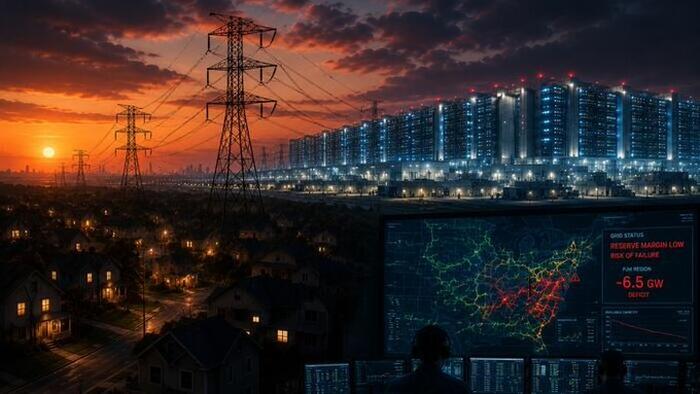
That explains why so much capital is now flowing into data-centre architecture, from bigger clusters to new power infrastructure. In the short term, this is necessary, because AI companies need capacity now and the market is rewarding whoever can deliver it fastest. But we are stretching silicon, electricity grids and classical computing architectures to do work they were never designed to handle at this scale.
The more important shift is not simply toward larger server farms, but toward a post-silicon computing stack in which AI, quantum computing and biocomputing reinforce one another. Quantum computing is aimed at problems classical machines struggle with, including molecular simulation, materials discovery and cryptography. Companies such as IBM, IonQ, Rigetti Computing and PsiQuantum are attacking the problem through different hardware paths, from superconducting qubits to trapped ions and photonics. As Google Quantum AI founder Hartmut Neven said after the Willow milestone, “useful, very large quantum computers can indeed be built.”