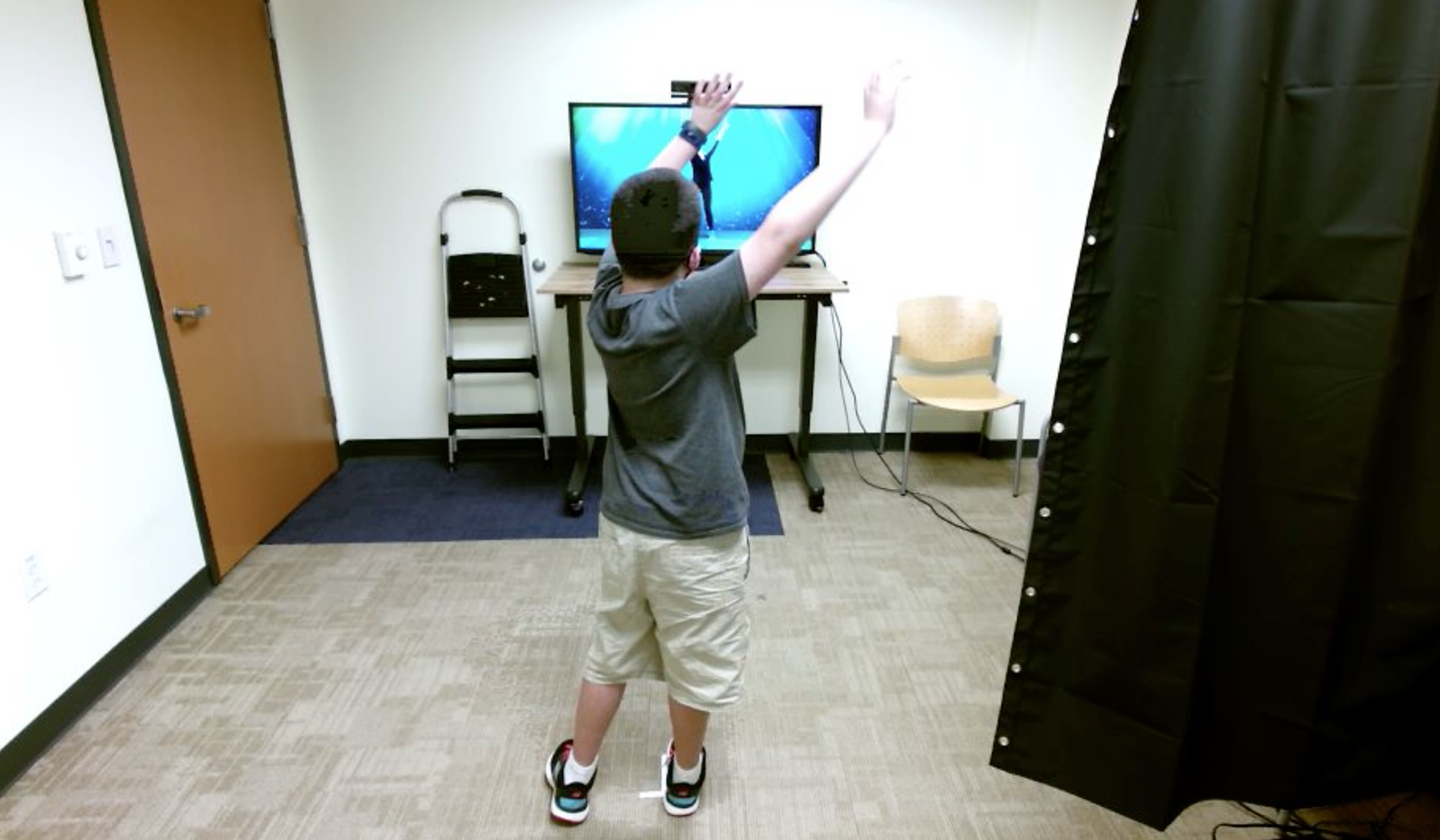
For a parent concerned about their child’s development, waiting months or longer for an autism evaluation can feel like an eternity. Early diagnosis opens the door to interventions that can improve long-term outcomes, but access to trained specialists remains limited, and many clinical assessments rely on subjective observations that can be expensive and difficult to scale.
Researchers at Penn Engineering and the Kennedy Krieger Institute are working to change that.
In a new study published in IEEE Transactions on Biomedical Engineering, René Vidal, Rachleff University Professor in Electrical and Systems Engineering in Penn Engineering and Director of the Innovation in Data Engineering and Science (IDEAS) Initiative, collaborated with lead author and Ph.D. candidate Kaleab Kinfu and Stewart H. Mostofsky, co-author and director of the Center for Neurodevelopmental and Imaging Research at Kennedy Krieger Institute, to develop an artificial intelligence system that measures a child’s ability to imitate simple body movements using nothing more than ordinary video. Their technology is referred to as Computerized Assessment of Motor Imitation, or CAMI, with CAMI-2DNet as their most recent iteration.