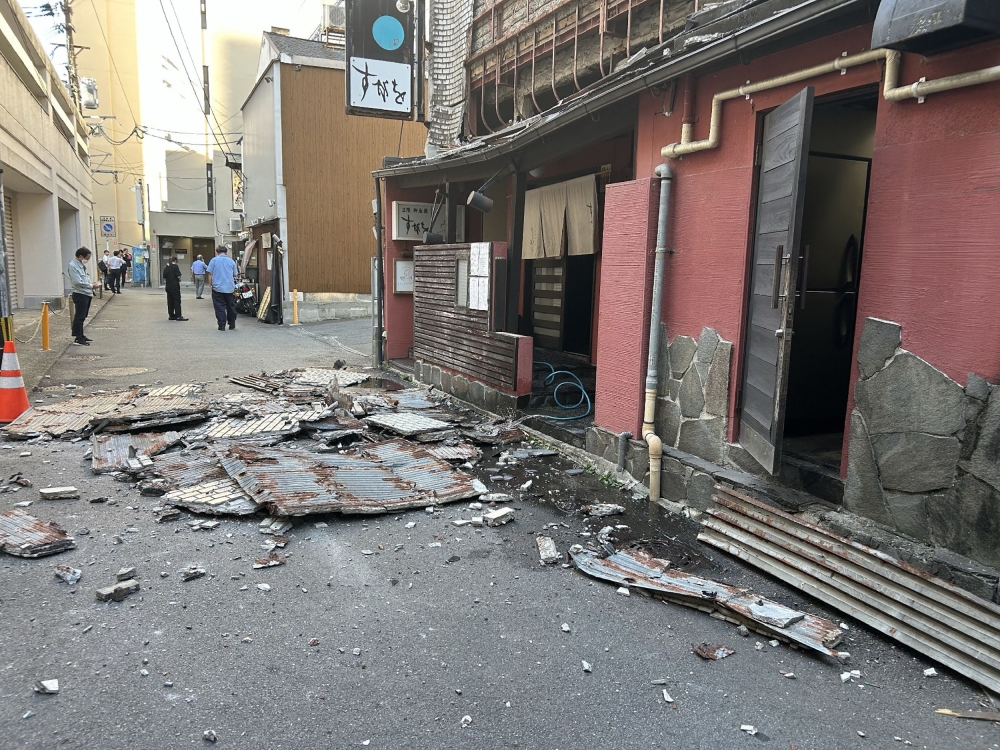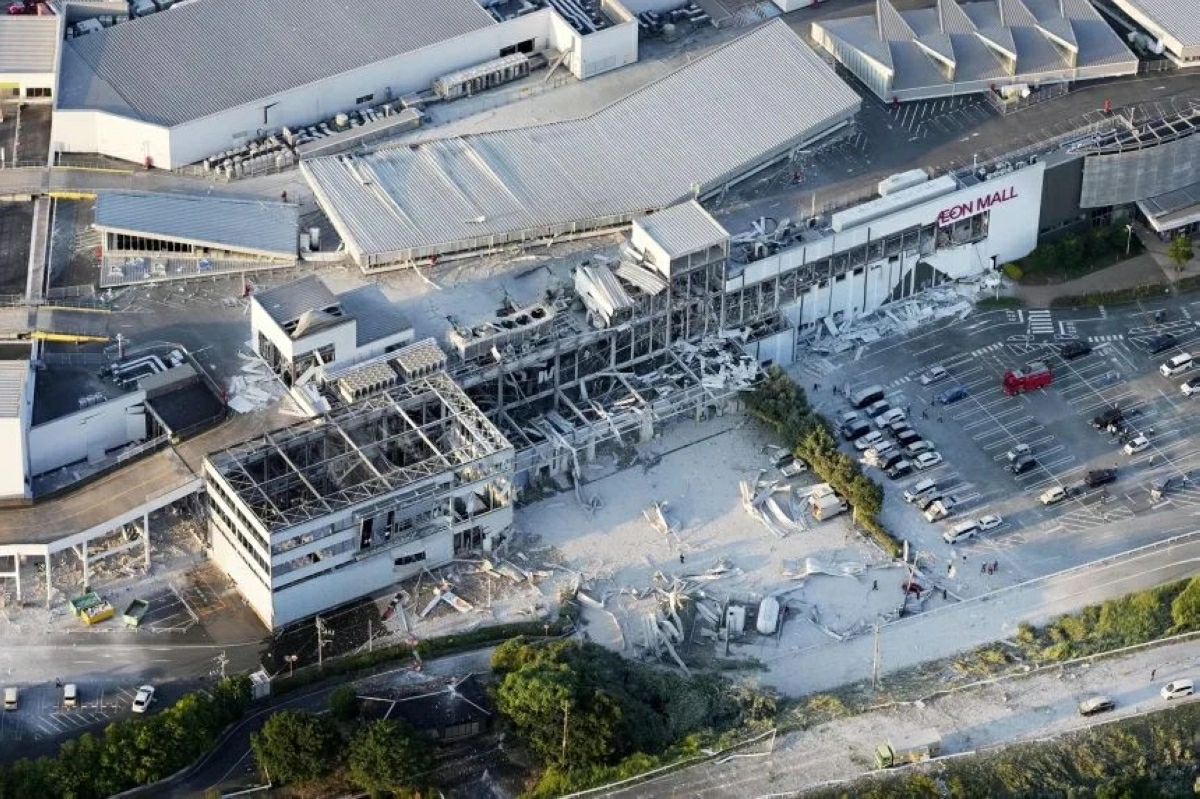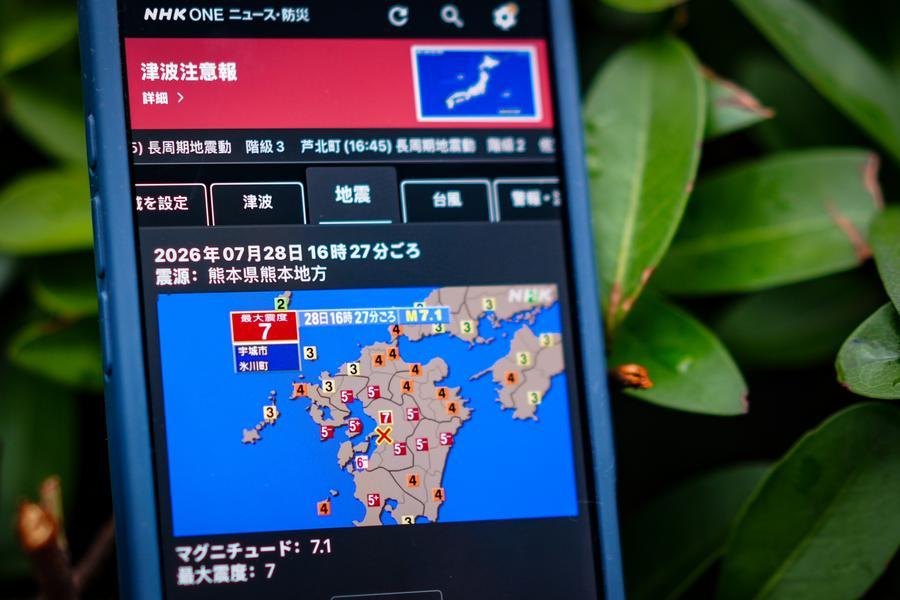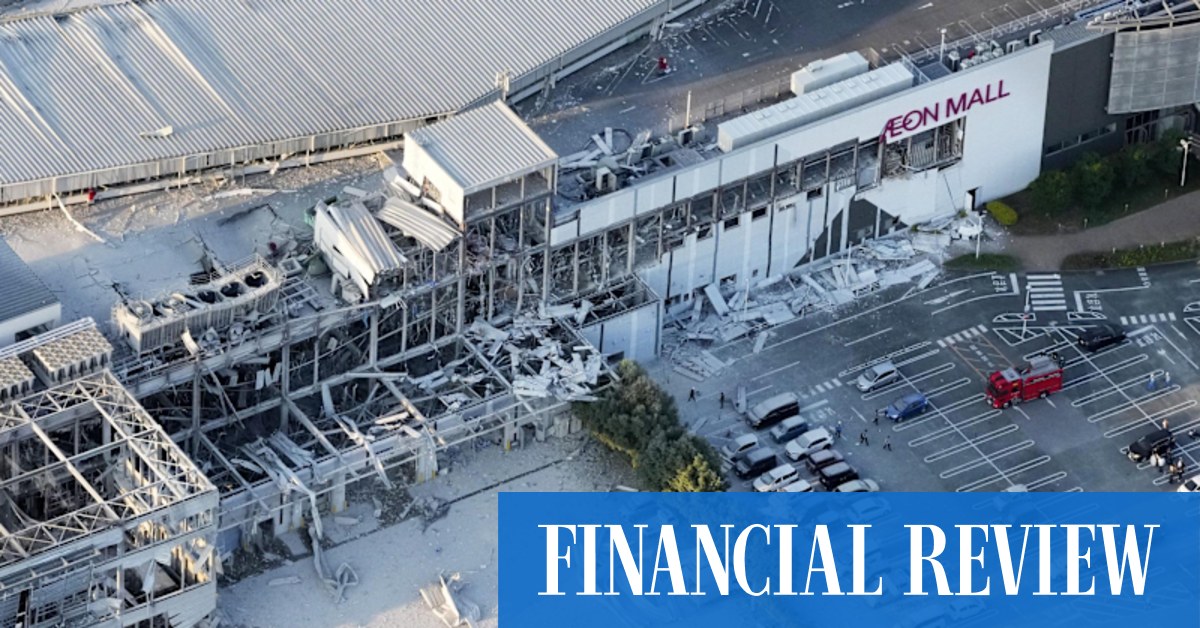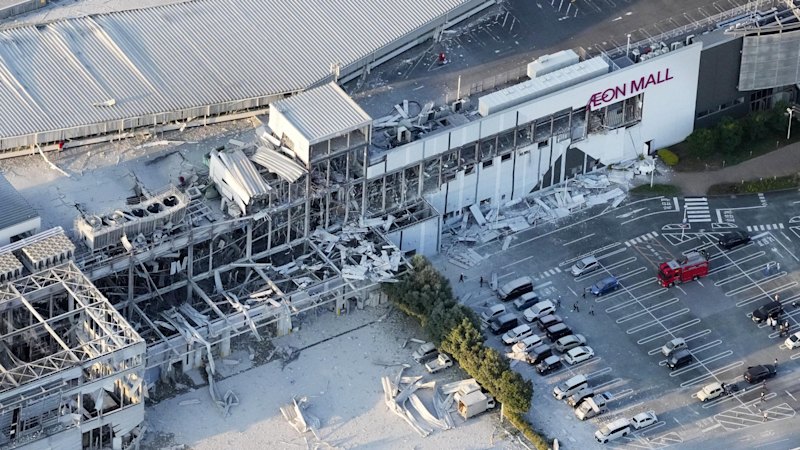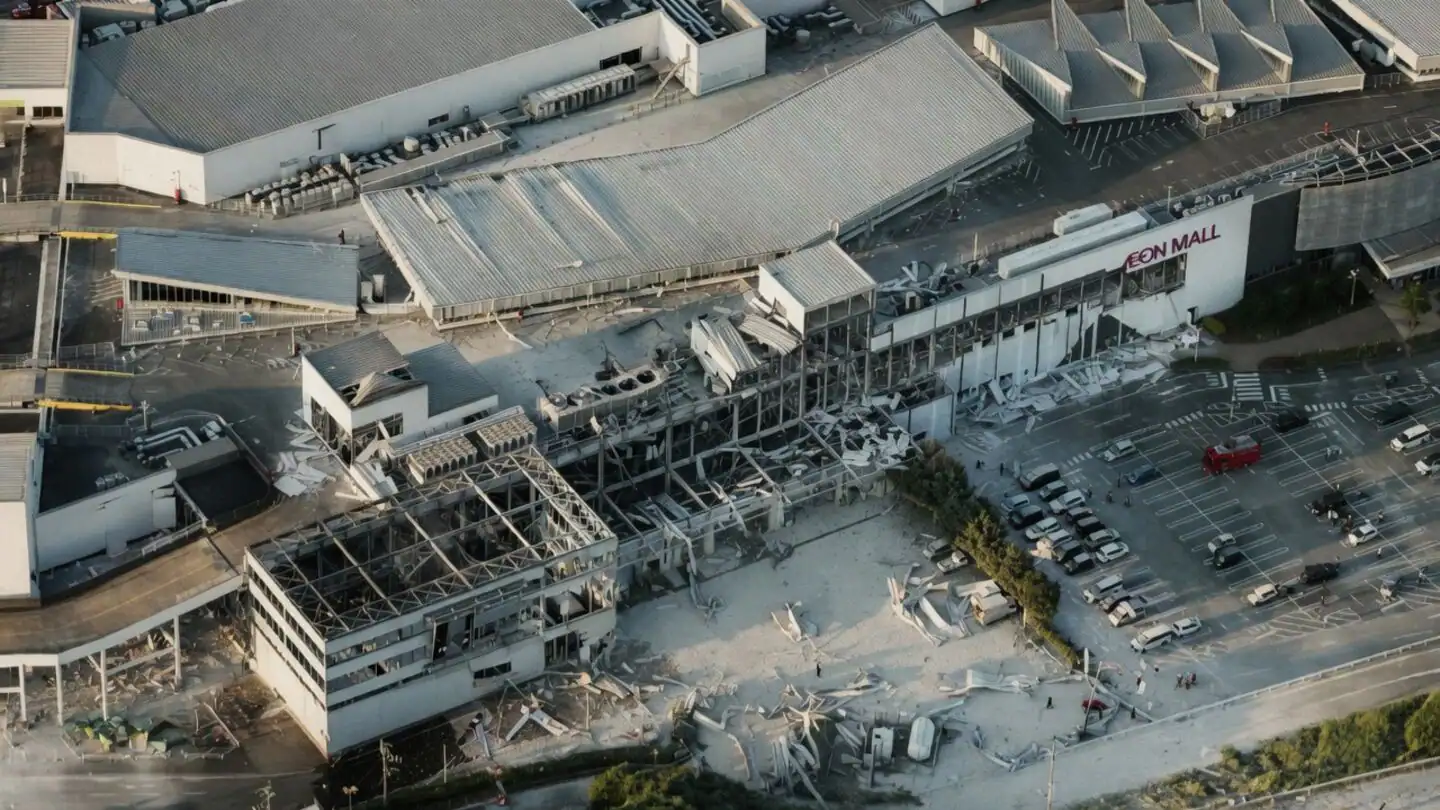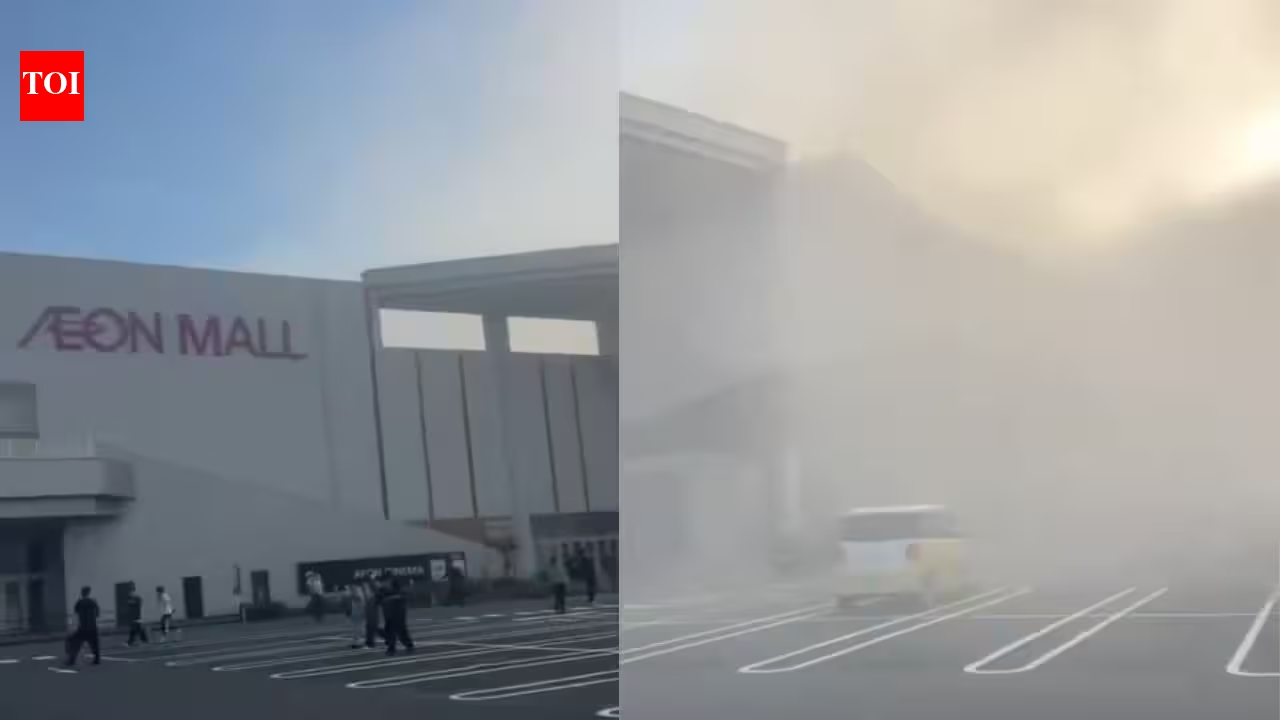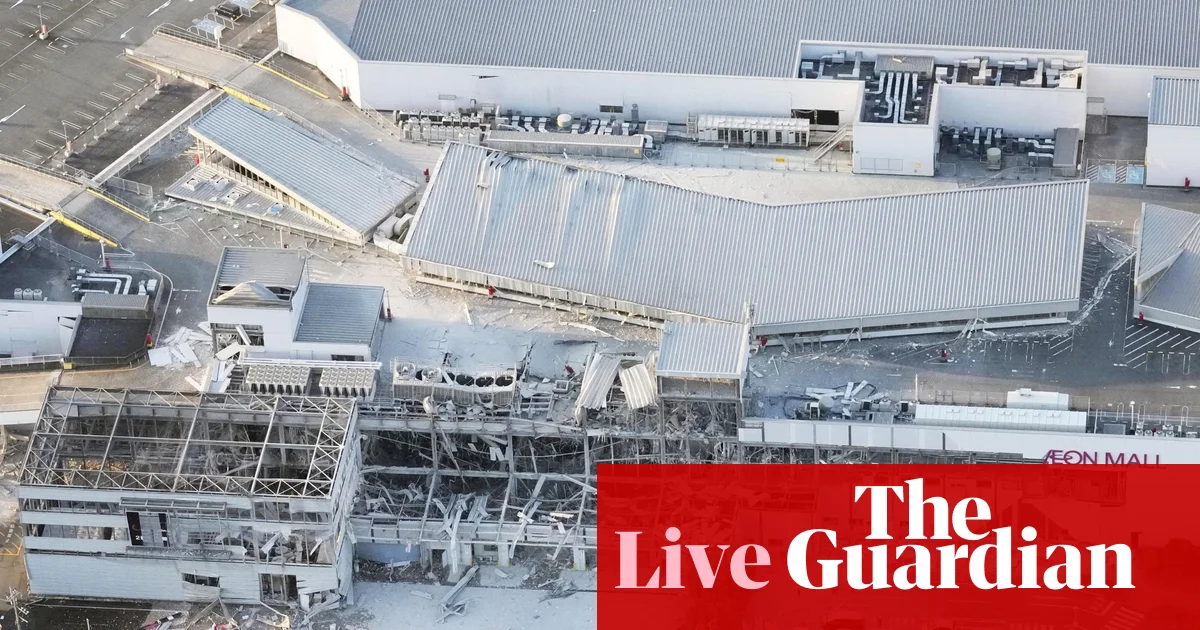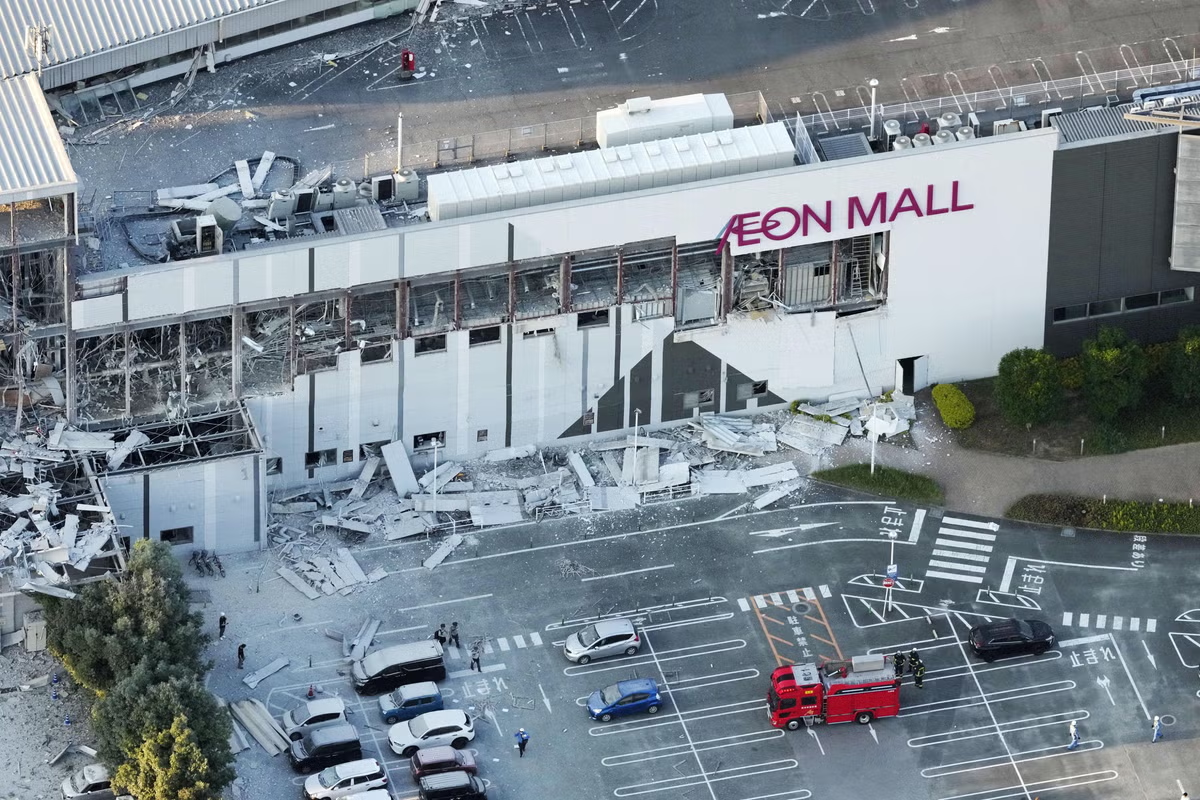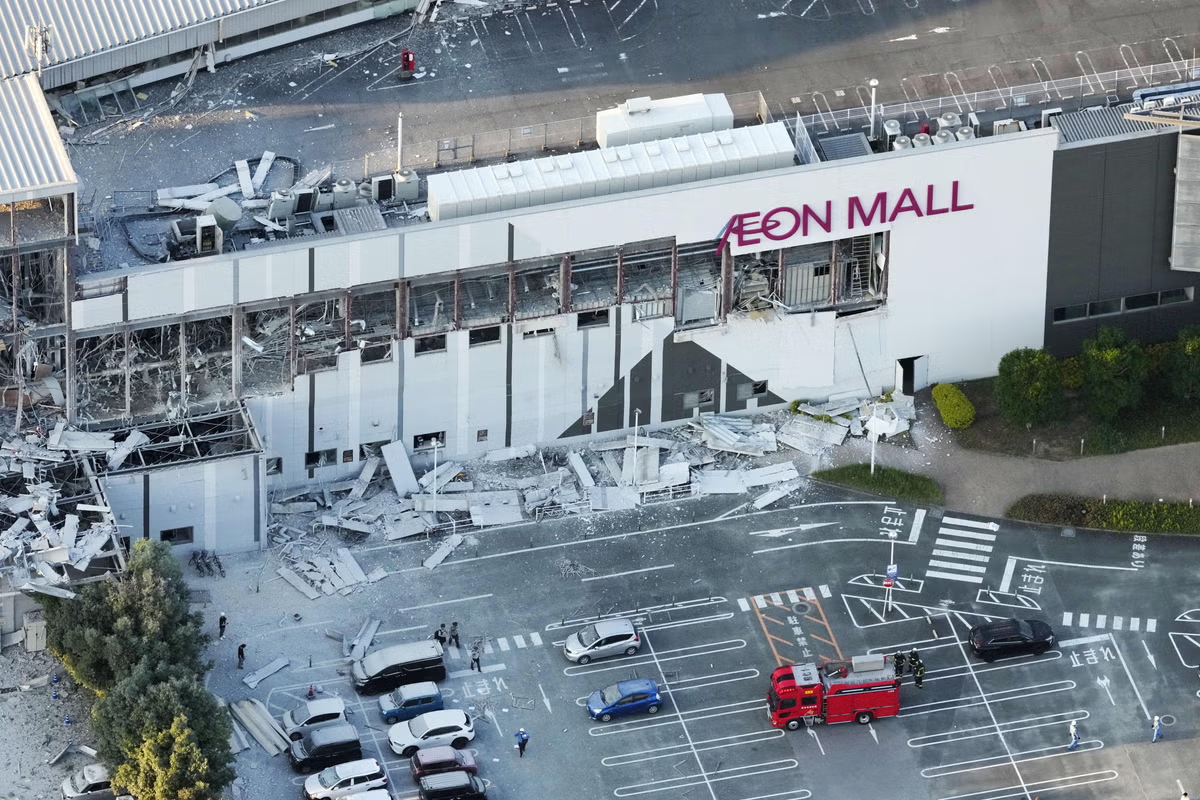
Dozens of people were injured and shoppers left trapped after a powerful earthquake struck south-western Japan and set off an explosion that tore through a shopping centre.The magnitude-7.1 quake hit Kumamoto prefecture, on the southern island of Kyushu, at 4.27pm local time (7.27am GMT) on Tuesday, registering the highest level on Japan's seismic intensity scale.Prime minister Sanae Takaichi said the full extent of casualties and damage was still being assessed but at least 50 people were taken to hospitals.The worst damage was at an Aeon shopping mall in the town of Kashima, where police and fire services received emergency calls reporting an explosion and white smoke rising from the building shortly after the quake. The second floor collapsed, "leaving many people trapped inside", the fire department said. Around 200 people had escaped to the mall's car park, according to the national broadcaster NHK.An aerial view shows the damaged Aeon Mall shopping centre after an earthquake with a preliminary magnitude of 7.1 struck Japan's southern Kumamoto prefecture (Reuters)Aerial footage showed sections of the mall's outer walls blown away and steel beams exposed, with part of the roof caved in. The cause of the explosion was still being investigated.The quake also damaged Kumamoto Castle, one of Japan's most famous historic landmarks, where sections of the centuries-old stone walls collapsed, an official at the castle said. The castle was badly damaged in a pair of earthquakes that struck the same region in 2016, killing more than 270 people, and had only recently been restored.Ms Takaichi, speaking to reporters in Tokyo, said: "We are still assessing the extent of injuries and property damage, but I have been informed that there have already been several injuries."About 10 of the injured were in a care home for older people, NHK reported, and several passengers on a high-speed train were hurt when the quake struck.The tremor knocked out power to thousands of homes, buckled roads and opened large cracks in an elevated motorway. Rail services across the region were suspended and flights grounded, while a goods train came off the tracks, NHK said. A tsunami warning was issued along the coast but lifted within the hour.Kyushu is a centre of Japan's semiconductor and electronics industry, and several major manufacturers halted work as a precaution. This aerial image shows the damaged AEON Mall after an earthquake in Kashima, Kumamoto prefecture, southern Japan, Tuesday, July 28, 2026 (AP)TSMC, the Taiwanese company that is the world's largest maker of computer chips and runs a large plant in the area, evacuated its workers, a spokesperson said. Sony and Fujifilm also cleared staff from their sites, according to the Nikkei newspaper.Chief cabinet secretary, Minoru Kihara, said rescue teams had been deployed, including troops from Japan's self-defence force, along with fire crews and the coast guard. He urged people in the worst-affected areas to follow evacuation instructions and stay calm."We urge residents in areas where the shaking was particularly severe to pay close attention to evacuation information issued by local authorities via radio, television and the internet, and to act calmly," Mr Kihara said.More than 150,000 people were told to move to evacuation shelters.The Japan Meteorological Agency warned of strong aftershocks in the coming days, noting that the quake had struck at a shallow depth of about 10km, which tends to produce more violent shaking at the surface.Japan is one of the most earthquake-prone countries in the world, sitting on the meeting point of several tectonic plates and recording about 1,500 tremors a year. Strict building codes mean most cause little serious damage, but the country remains scarred by the disasters that have broken through them, including the 2011 earthquake and tsunami that killed about 18,000 people.The Kumamoto region was struck by two powerful quakes within days of each other in April 2016, the second of magnitude 7.3, which together killed more than 270 people, injured thousands and forced tens of thousands into shelters. Kumamoto Castle, built in the 17th century, became a symbol of that disaster after its walls and turrets crumbled, and its repair has been a slow, painstaking project in the years since.
Shoppers trapped after explosion at Japanese mall as earthquake injures dozens
Aerial footage shows sections of mall's outer walls blown away and steel beams exposed
683 words~3 min read