UK Prime Minister Andy BurnhamSeeking to prepare Britain's workforce for an AI-driven economy, Prime Minister Andy Burnham on Tuesday unveiled plans to reshape secondary education by allowing students in England to combine traditional academic subjects with technical courses linked to local industries.The proposed reforms, expected to begin rolling out in some areas from 2028, come as Britain grapples with a sharp rise in the number of young people who are not in education, employment or training (NEET).More than one million people aged 16 to 24 fall into that category, with the NEET rate among 18- to 24-year-olds standing at 15.8 per cent, significantly higher than in several northern European countries.Focus on AI and local jobsUnder the proposals, pupils from Year 10 (around age 14) will continue studying English, maths and science while also taking technical subjects such as manufacturing and artificial intelligence. The courses will include employer-led projects, work experience and training tailored to local labour market needs.The government wants regional authorities, schools, colleges and businesses to jointly design programmes aligned with industries in their areas, arguing that advances in AI are reshaping the job market and increasing demand for technical skills.In an article for The Times, Burnham said Britain had become too focused on university as the main route to success, arguing that technical education should be valued on par with a university degree.Speaking later in Derby, he reiterated that Britain needed a more balanced education system that offered young people equal academic and technical pathways. Tackling a 'lost generation'The announcement follows a government-commissioned review that warned Britain risked creating a "lost generation" of young people disconnected from education and work.Ministers have increasingly looked to the Netherlands as a model after noting its far lower youth inactivity rate. Last month, the government announced plans to open nearly 180 Youth Hubs bringing employment, education, welfare and health services together under one roof.Work and Pensions Secretary Pat McFadden said AI was changing the nature of employment and making it essential to rethink vocational pathways."Perhaps the assumptions about what was a safe and secure job in the past no longer apply today," he said, describing AI as a technology that would both eliminate and create jobs.Builds on earlier reformsThe plans build on previous governments' efforts to strengthen vocational education, including the introduction of T-level qualifications and apprenticeship reforms. Earlier this year, the government also announced V-levels, which will allow post-16 students to mix academic and vocational subjects from 2027.Alongside curriculum changes, Ofsted is expected to begin assessing schools on technical education as part of its inspection framework.Questions over fundingWhile education leaders broadly welcomed the focus on vocational learning, they cautioned that the reforms would require significant investment.School leaders' organisations and teaching unions said schools already faced budget pressures and wanted greater clarity on funding, staffing and how the new courses would be delivered, particularly in areas with limited industrial activity.The opposition Conservative Party also questioned the impact of the proposals, arguing that improving vocational education alone would not address broader challenges in the youth job market.
Andy Burnham unveils technical subjects in UK schools to prepare students for AI-era jobs
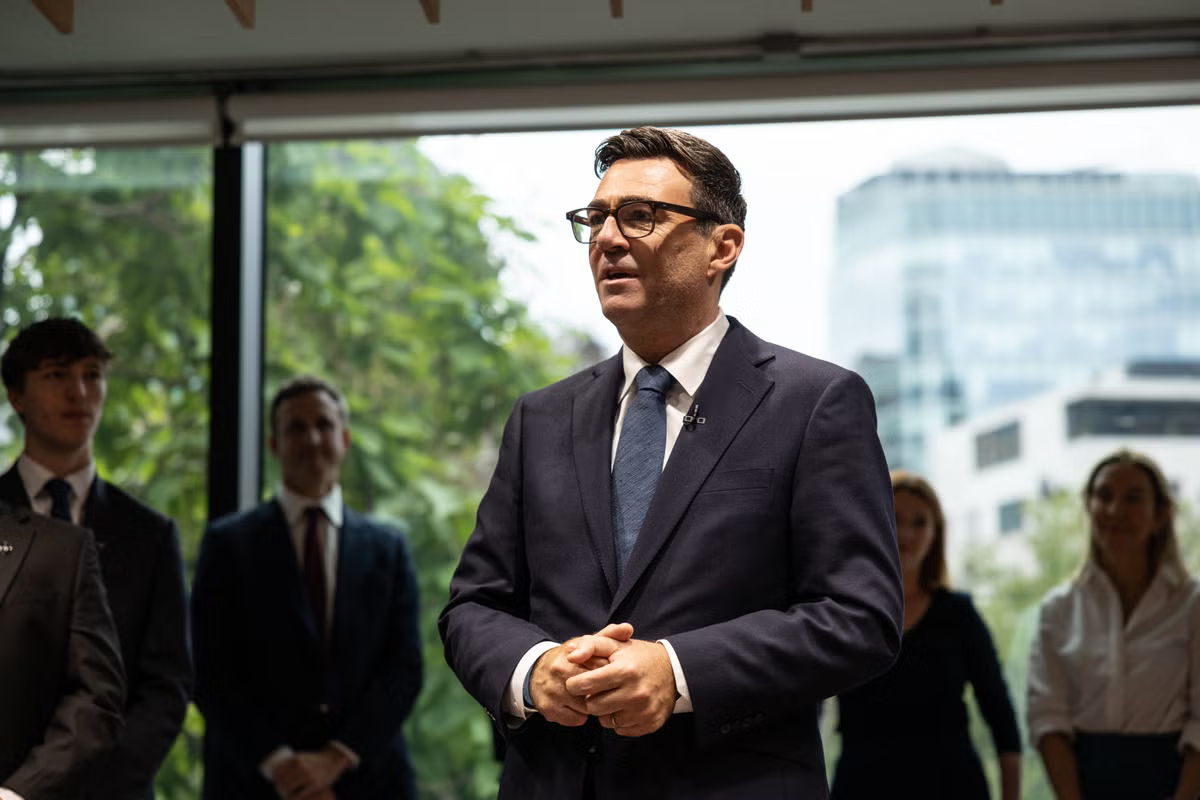
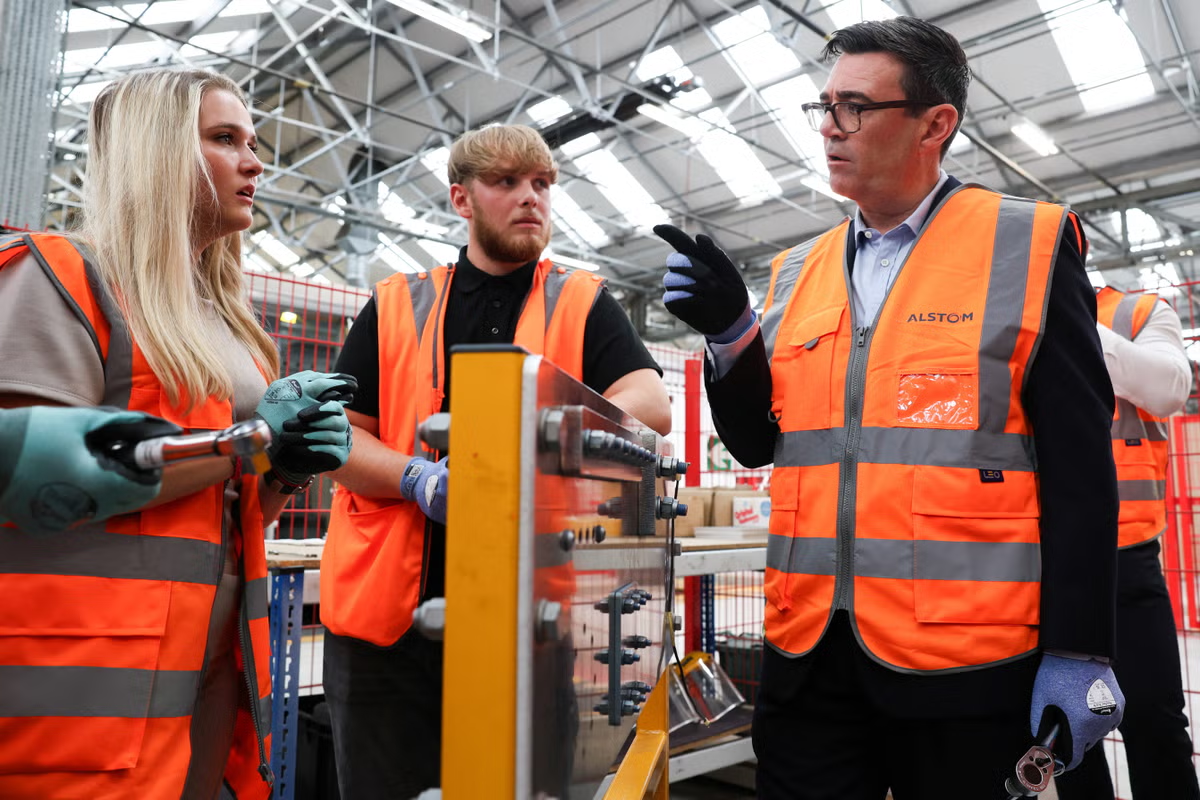
Seeking to prepare Britain's workforce for an AI-driven economy, Prime Minister Andy Burnham on Tuesday unveiled plans to reshape secondary education by allowing students in England to combine traditional academic subjects with technical courses linked to local industries.
TL;DRAI
PM Burnham unveils 2028 curriculum blending AI and technical subjects from Year 10, targeting UK's 1M+ NEET youth. Workforce shift: technical skills gain parity with degrees as AI reshapes hiring. CTO recruitment will depend on vocational-enterprise partnerships.
504 words~2 min read