Story audio is generated using AI
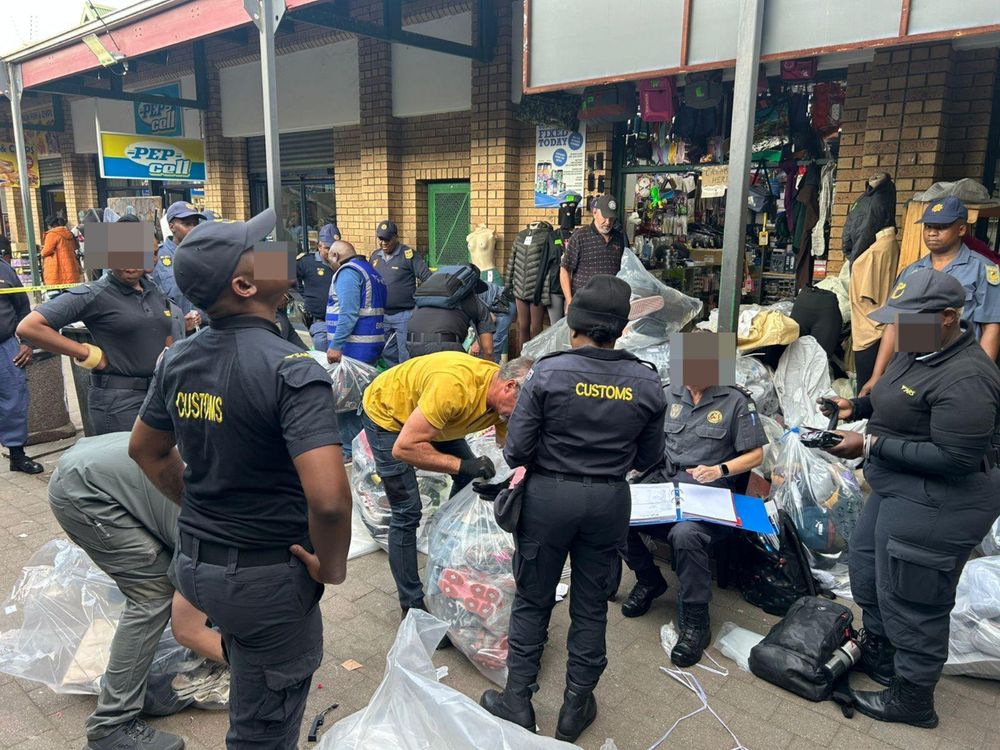
Finance minister Enoch Godongwana said the introduction of a specialised tax and customs division at the South African Revenue Service (Sars) has bolstered compliance revenue, raising more than R300bn in 2025/26.The minister was responding to written questions by MPs. DA MP Farhat Essack asked the minister for the full details of the capacity enhancements implemented at Sars to combat tax evasion and customs fraud.Godongwana responded by saying Sars had implemented a range of people, technology, organisational and partnership-based capacity enhancements to strengthen its ability to detect, investigate and disrupt tax evasion, customs fraud and other forms of organised non-compliance.He said the effects of the syndicated tax and customs crime (STCC) division and other customs and tax interventions have been reflected in compliance revenue of about R319.2bn in 2025/26, generated through targeted enforcement interventions and improved case selection. This demonstrates that organisational restructuring has materially strengthened Sars’ enforcement capability and revenue outcomes, the minister said.“These enhancements are anchored in an intelligence-led enforcement model and supported by the STCC, which focuses on combating organised tax and customs crime, illicit financial flows, illicit trade, VAT refund fraud, abusive tax schemes and other high-risk compliance threats,” said Godongwana. Capacity to manage the anti-illicit economy initiatives was strengthened through the deployment and prioritisation of specialist skills into the audit and investigative fields, resulting in the STCC staff complement increasing from 196 employees in 2020/2021 to 392 employees in 2025/2026— Enoch Godongwana, finance minister He said Sars has strengthened its organisational design by establishing and enhancing specialised enforcement, audit, investigation, legal, intelligence and customs capabilities that operate within an intelligence-led compliance framework. “The STCC serves as the central specialised capability for addressing complex and syndicated tax and customs crimes. Sars expanded specialist capacity in forensic auditing, financial investigations, criminal investigations, digital forensics and data analytics.”It has increased its staff complement from 196 employees in 2020/21 to 392 employees in 2025/26. “STCC also strengthened its future skills pipeline through graduate recruitment and development programmes, with 22 graduates recruited between 2023 and 2025, and 57 graduates currently undergoing specialised training,” he said.The STCC’s multidisciplinary teams combine tax, customs, audit, legal, intelligence, debt management and investigative expertise to address increasingly sophisticated tax and customs crime. “Sars has strengthened its technology capability through advanced analytics, data-driven risk engines, intelligence-led case selection and AI-enabled data analysis. Specialised investigative tools include crypto-asset analysis tools, open-source intelligence capabilities, digital forensic technologies, and these capabilities have enhanced risk detection, evidence gathering, complex investigation management and revenue recovery processes.”The minister said Sars enhanced specialised customs enforcement capabilities through dedicated functions focused on illicit economic activity in tax and trade, tactical analysis and investigations, focused investigative audit and digital forensic investigation functions, supported by multidisciplinary teams with customs, tax, audit, investigative and digital forensic expertise. Since the establishment of the unit in July 2020, the STCC has managed 35 projects comprising 559 active investigations into illicit economy activities— Godongwana“These capabilities target smuggling, undervaluation, misclassification, illicit manufacturing, prohibited and restricted goods, customs valuation fraud and trade-based illicit financial flows, with capacity directed to high-risk sectors and priority cases through intelligence-led case selection.”Godongwana said Sars has also strengthened its inspection, seizure and post-clearance audit capabilities to improve customs enforcement outcomes. “Capacity to manage the anti-illicit economy initiatives was strengthened through the deployment and prioritisation of specialist skills into the audit and investigative fields, resulting in the STCC staff complement increasing from 196 employees in 2020/2021 to 392 employees in 2025/2026.”He said Sars has strengthened operational partnerships with:the South African Police Service (SAPS);the Directorate for Priority Crime Investigation (Hawks);the National Prosecuting Authority (NPA);the Financial Intelligence Centre (FIC); and the Border Management Authority (BMA).“These partnerships enhance intelligence sharing, joint operations, criminal investigations and prosecution of complex tax and customs crime matters. Since the establishment of the unit in July 2020, the STCC has managed 35 projects comprising 559 active investigations into illicit economy activities. “The division has referred 165 cases to the NPA for prosecution, including 108 state-capture-related matters, with an estimated prejudice of R25bn. STCC conducted 5,613 illicit trade interventions, 3,684 detentions and 931 seizures.”Godongwana said these capacity enhancements collectively strengthen Sars’ ability to detect, investigate and disrupt tax evasion, customs fraud, illicit trade and organised financial crime through: specialised skills;modern technology; intelligence-led enforcement;enhanced customs capabilities; and strengthened inter-agency collaboration. TimesLIVE