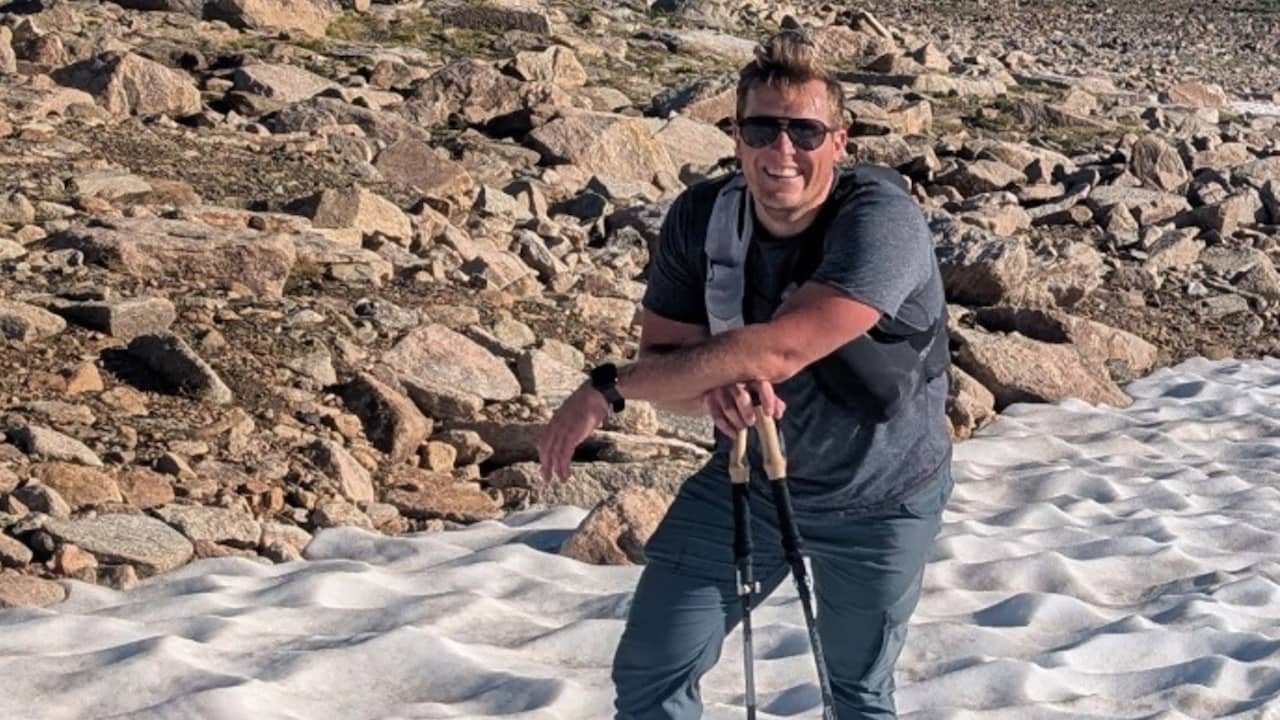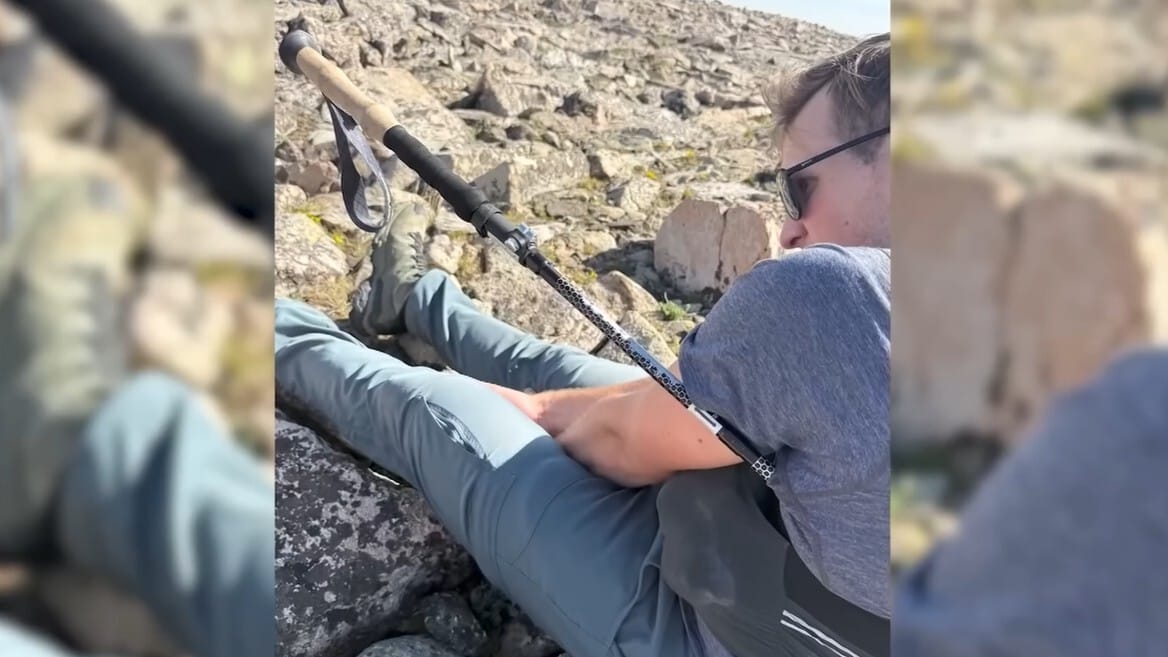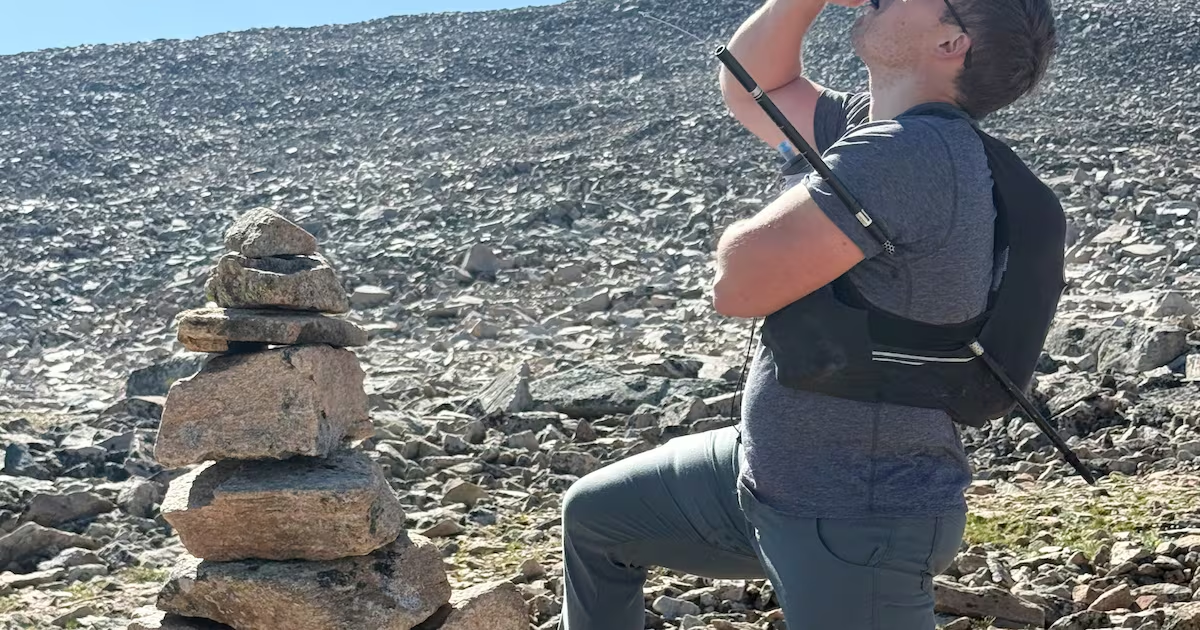
David Cifaldi and two of his friends had been hiking for about seven hours up Montana’s tallest mountain on July 20th when he slipped on a rock and fell. He saw one of his trekking poles on the ground, but the second one was nowhere to be found.Then he rolled over. Something wasn’t right.“Oh,” he recalled. “This thing is sticking out of me.”Cifaldi, who is 32, had impaled himself on the pole. He immediately went into nurse mode: Cifaldi is a wound nurse at St Vincent Regional Hospital in Billings, Montana, in the US.The pole was jutting at an angle into his left lateral muscle, below his armpit, and out through his back. He wasn’t in pain, there was no blood, he was able to take deep breaths and could feel the trekking pole through his skin. He was 2-3 miles (3-4.8km) from the summit of Granite Peak, elevation of about 12,800 feet.The three friends had started their ascent at 2am with plans to camp overnight at Froze-to-Death Plateau and then summit the mountain. Cifaldi had made it to the plateau a number of times, but never to the summit. His friend Jesse Ross, who had reached the top successfully, was leading Cifaldi and another friend, Brad Reich, up the mountain.They made it to the plateau by sunrise.“As you get up there, you feel like you’re in, like, The Lord of the Rings, or something like that,” Cifaldi said. “It’s just mountains and green.”Everyone was cruising at that point. The weather was perfect – and sunny, no wind – and the summit was in reach. Then Cifaldi lost his footing.David Cifaldi with his friends Jesse Ross and Brad Reich during a hike toward the summit of Granite Peak. Photograph: David Cifaldi/The New York Times While one friend sent an SOS signal on a GPS phone, the other took pictures of the wound so Cifaldi could assess it.“I was pretty confident it was not in my chest or lung,” he said.Hoping to avoid an expensive lift off the mountain via helicopter, he walked around and found he wasn’t lightheaded and told his friends, “I think we can get out of here”.And so they went.With search and rescue on standby, the three friends slowly made their way down the mountain, taking about six hours to reach the trailhead at Mystic Lake. Ross went ahead, warning any hikers that Cifaldi was coming down the trail with a “gnarly” looking injury but assuring them that he was otherwise okay. Reich was close behind monitoring the puncture after Cifaldi gave him a crash course in emergency medicine.They crossed boulder fields and stretches of snow, taking breaks every so often. By 3.30pm, after trekking about 10 miles (16km), Cifaldi was in an ambulance on his way to the nearest hospital.A view from the hike up Granite Peak, Montana’s tallest mountain, with an elevation of about 12,800ft. Photograph: David Cifaldi/The New York Times Even injured, Cifaldi felt safe: he had two “rock-solid friends” who never wavered once, he said. He knew he was going to be okay when they stopped about halfway down for a snack and “started making shish kebab jokes”, Cifaldi said. “By the end, they were calling me ‘Bob’ on the way out.”By the time Cifaldi reached a small hospital near the mountain, the pole had been inside him for seven hours. He begged a nurse practitioner to take it out, but she told him: “If you bleed, I can’t help you.”So they transferred him to a hospital he knew well – his own. He refused an ambulance and had his friends drive him there.When he arrived in the emergency room, Cifaldi said he was “a very popular guy”. They got to work on him quickly, taking X-rays and running blood tests. His doctors wanted to book him for surgery, but with another trauma case ahead of him, it would be a two-hour wait.“At that point I was fed up,” he recalled. “I was, like, please somebody just take this thing out of me.”So the doctors induced conscious sedation, in which the patient is awake yet fully anaesthetised, and pulled the pole out. As they removed it, doctors inserted a tube to drain the area.David Cifaldi sitting with part of a trekking pole stuck through his left side at the hospital where he works as a wound nurse in Billings, Montana. Photograph: David Cifaldi/The New York Times “When I came back to, that was the first time I had pain,” Cifaldi said. He was adamant about returning to work the next day, but doctors ordered him to rest for a week.Cifaldi returned to work Monday, a little sore, a little tired, but grateful. He talked to a therapist about the accident to help him process it all. Three centimetres farther in “and I’d be dead, or at least in grave peril”, he said.His biggest takeaway from the ordeal: have a way to contact emergency services.“I’m not an amateur hiker. I’m fit and active,” he said. “I was training to run a marathon when this all happened. And it was just a freak accident.” Having a way to reach out to a search-and-rescue team “made all the difference in the world”.In addition to being sore, Cifaldi feels badly that his friends didn’t make it to the summit.“We were going make it, 100 per cent, there was no doubt. Everything was perfect,” he said. “I’m hoping next year I’ll be able to say, hey, I went back and I did it.” – This article originally appeared in The New York Times
Man trekked 16km after impaling himself on pole during hike
David Cifaldi, a wound nurse, had been hiking Montana’s tallest mountain with friends
925 words~4 min read