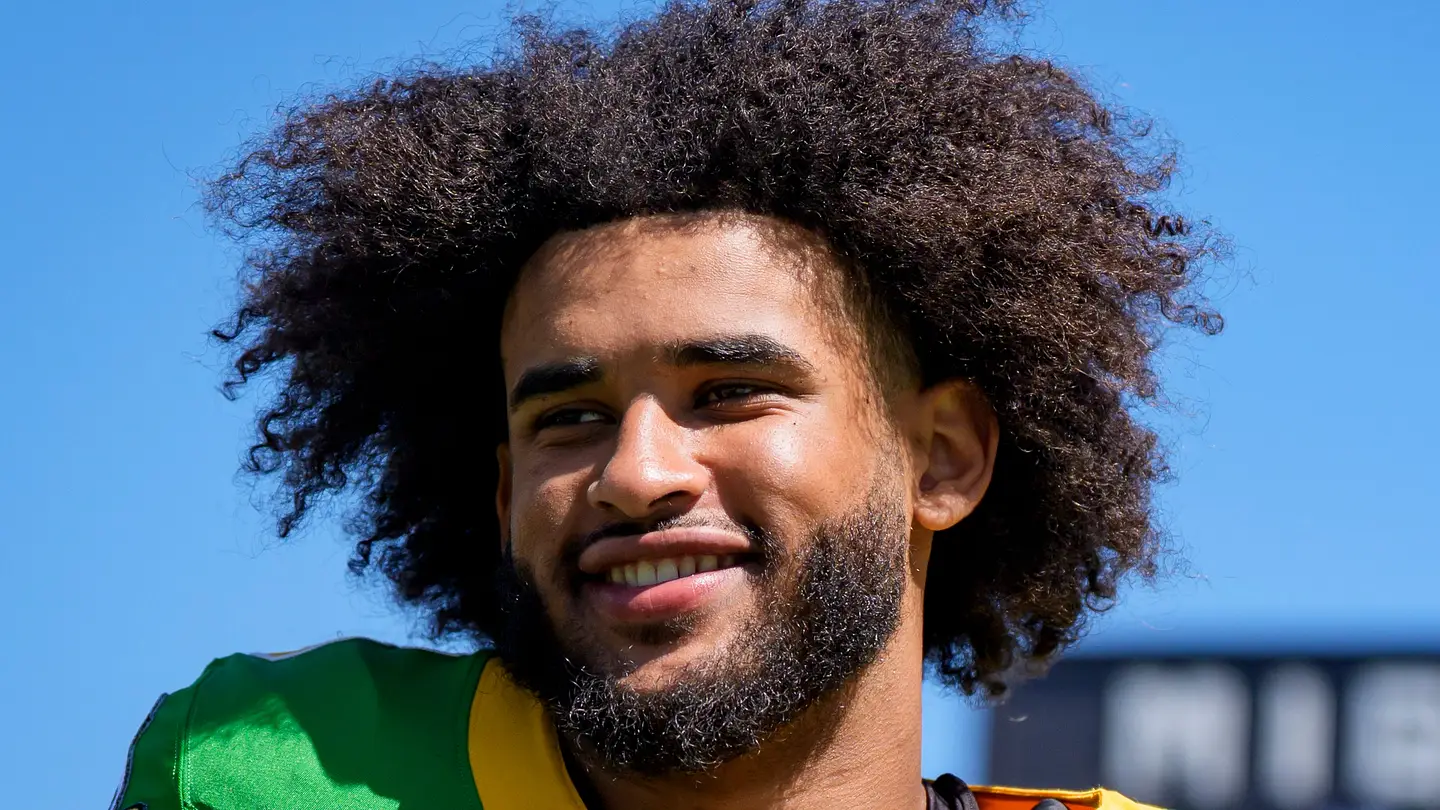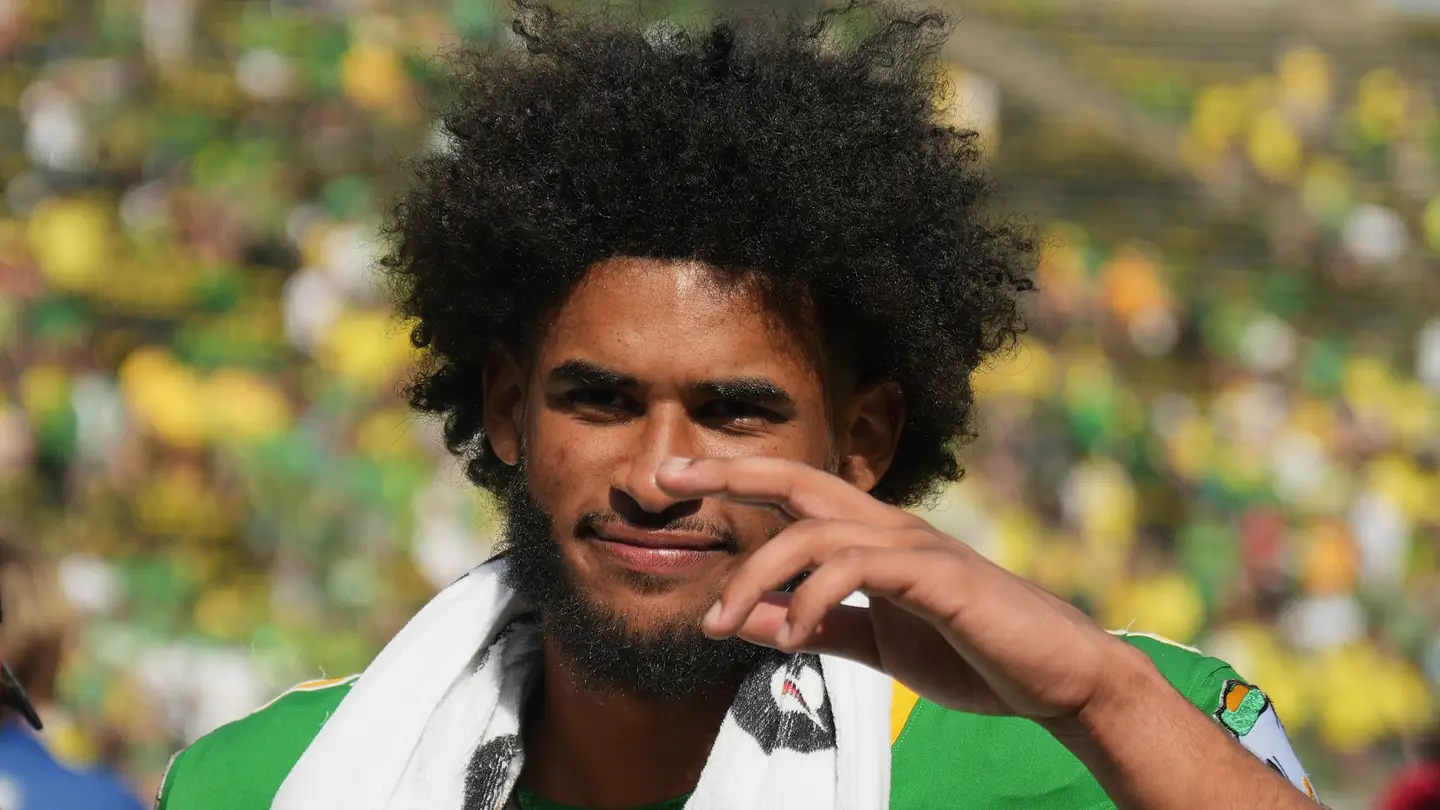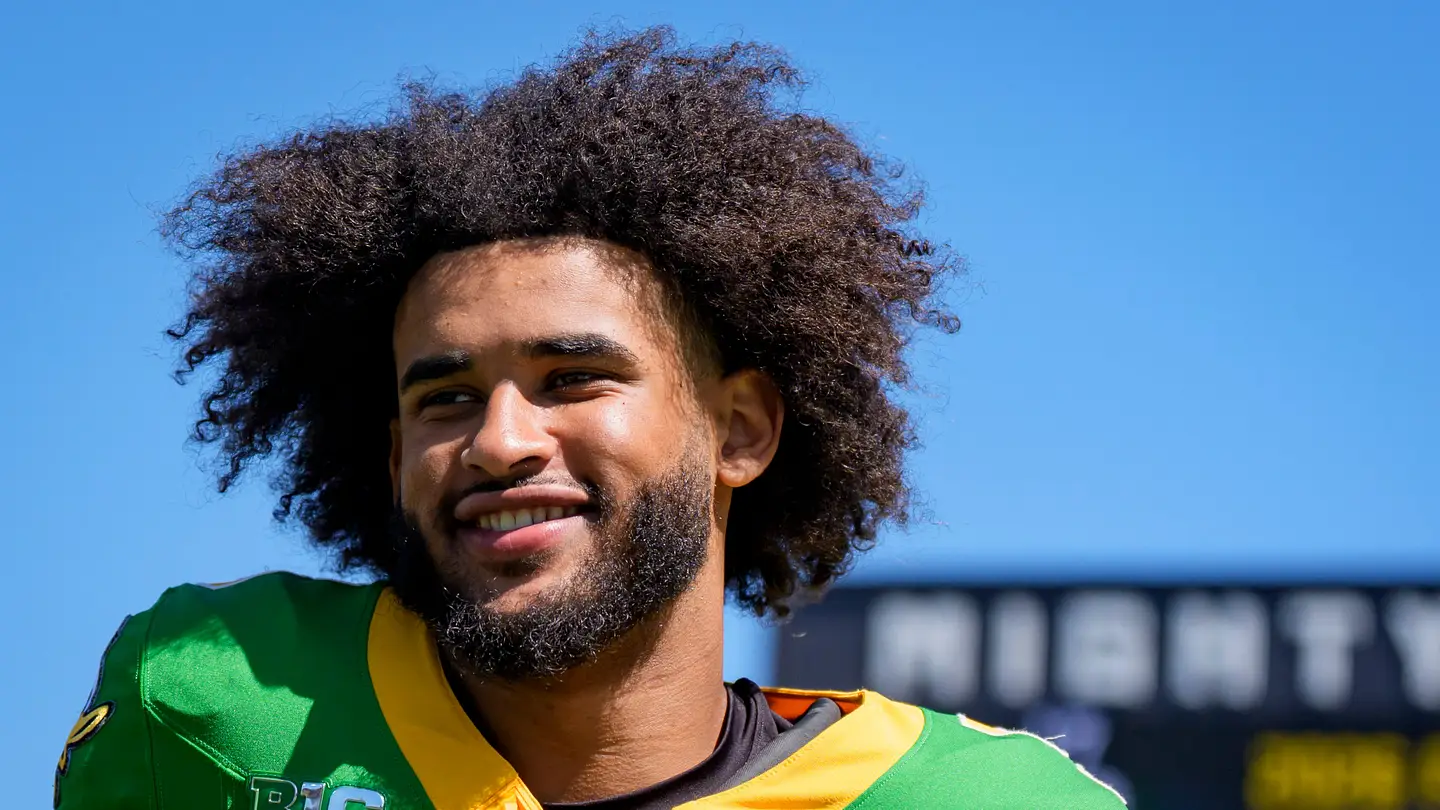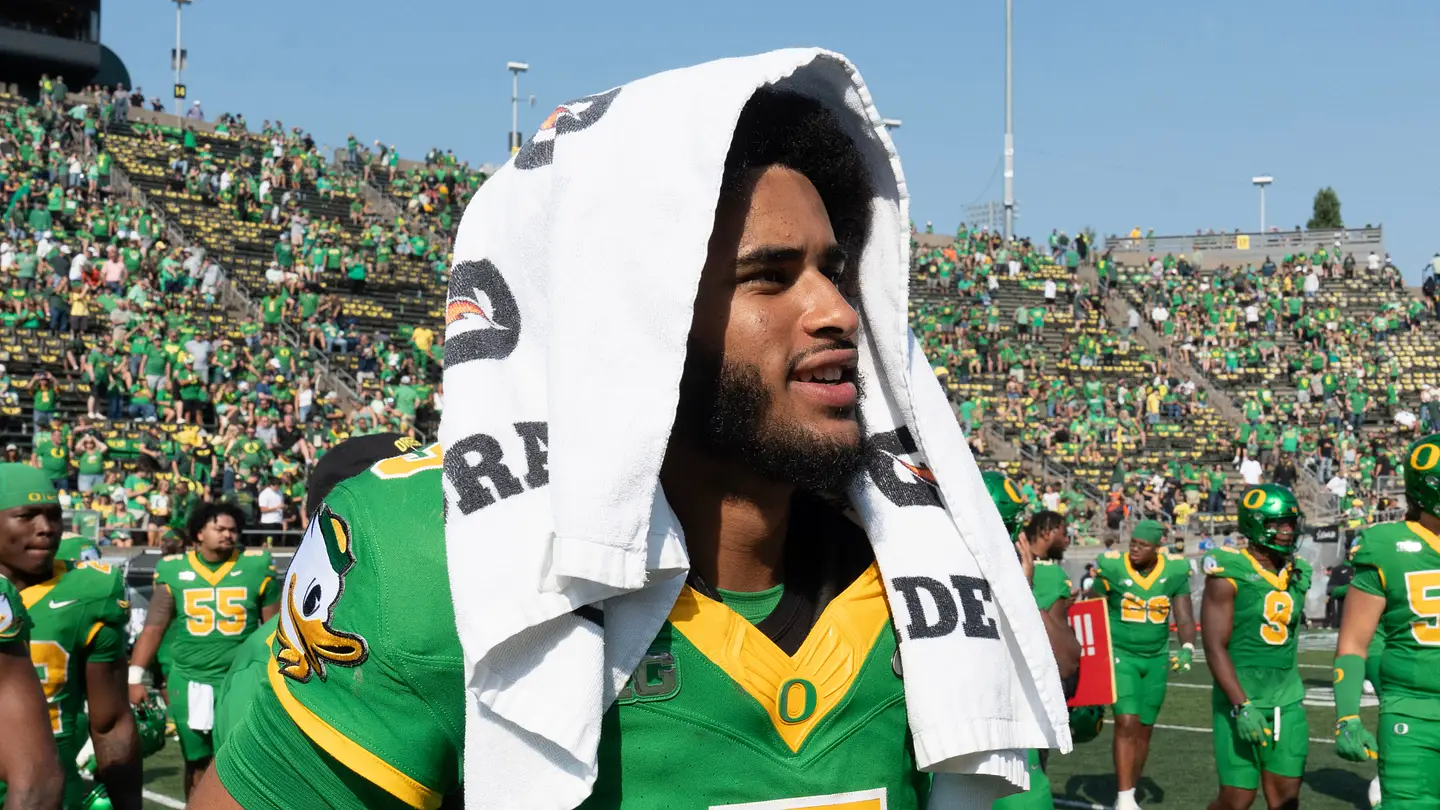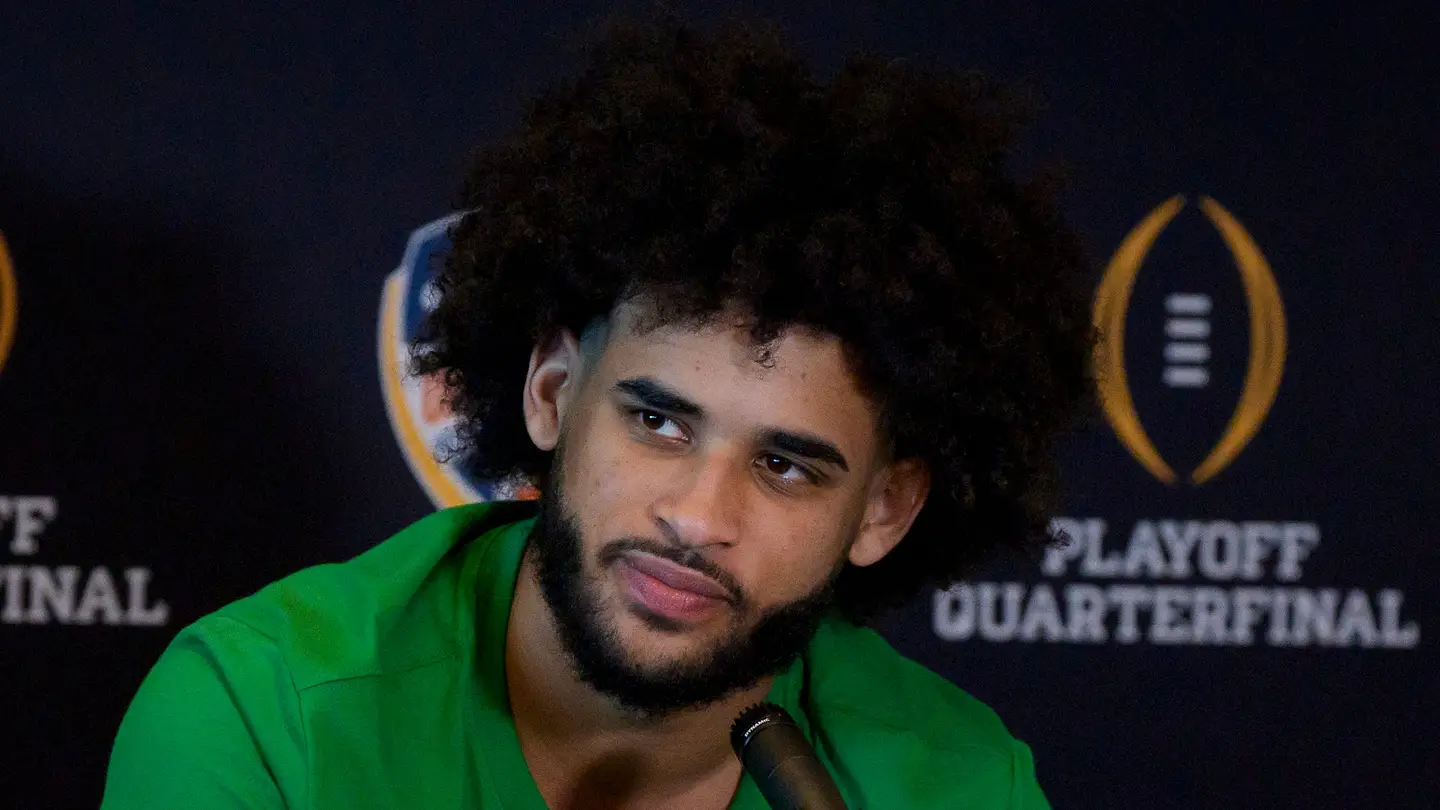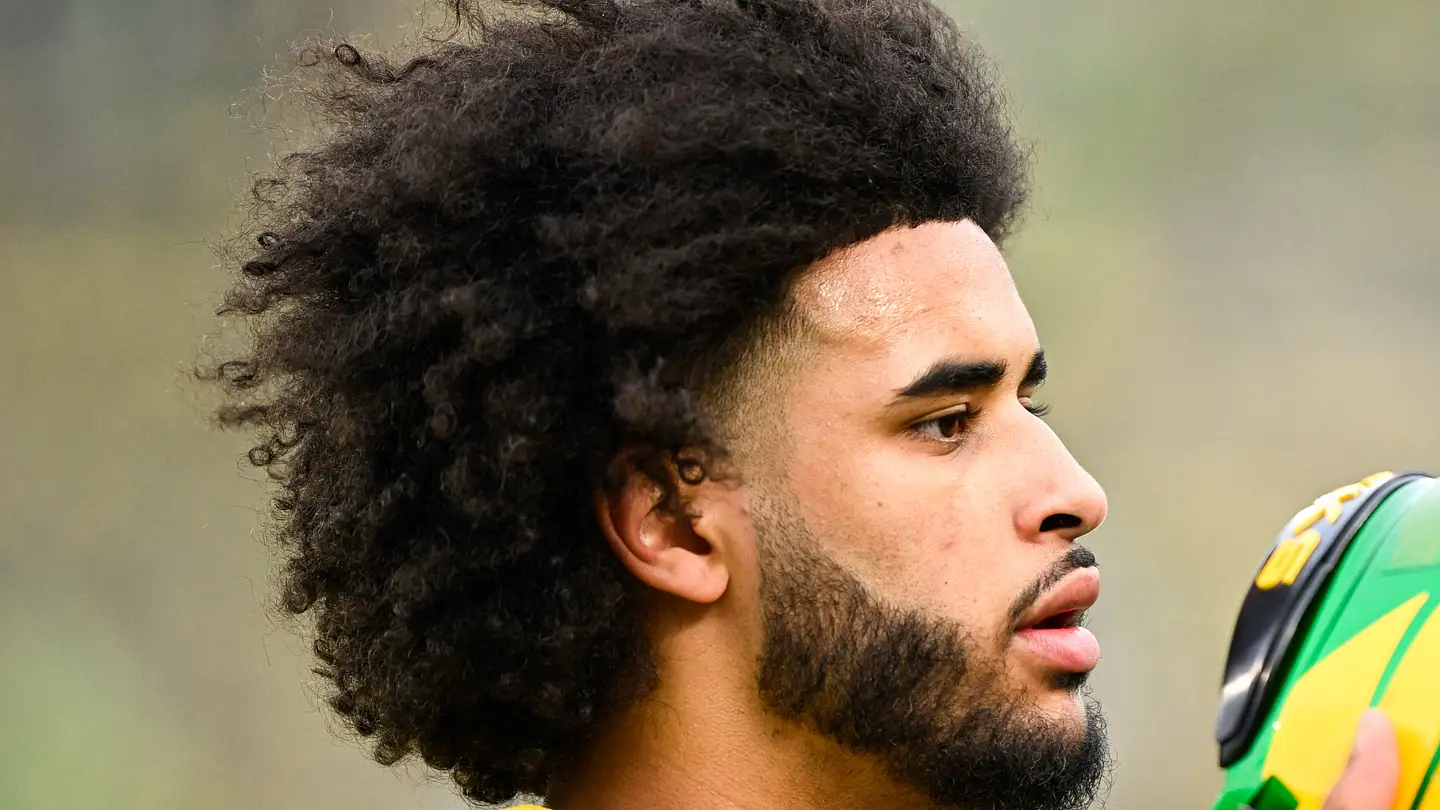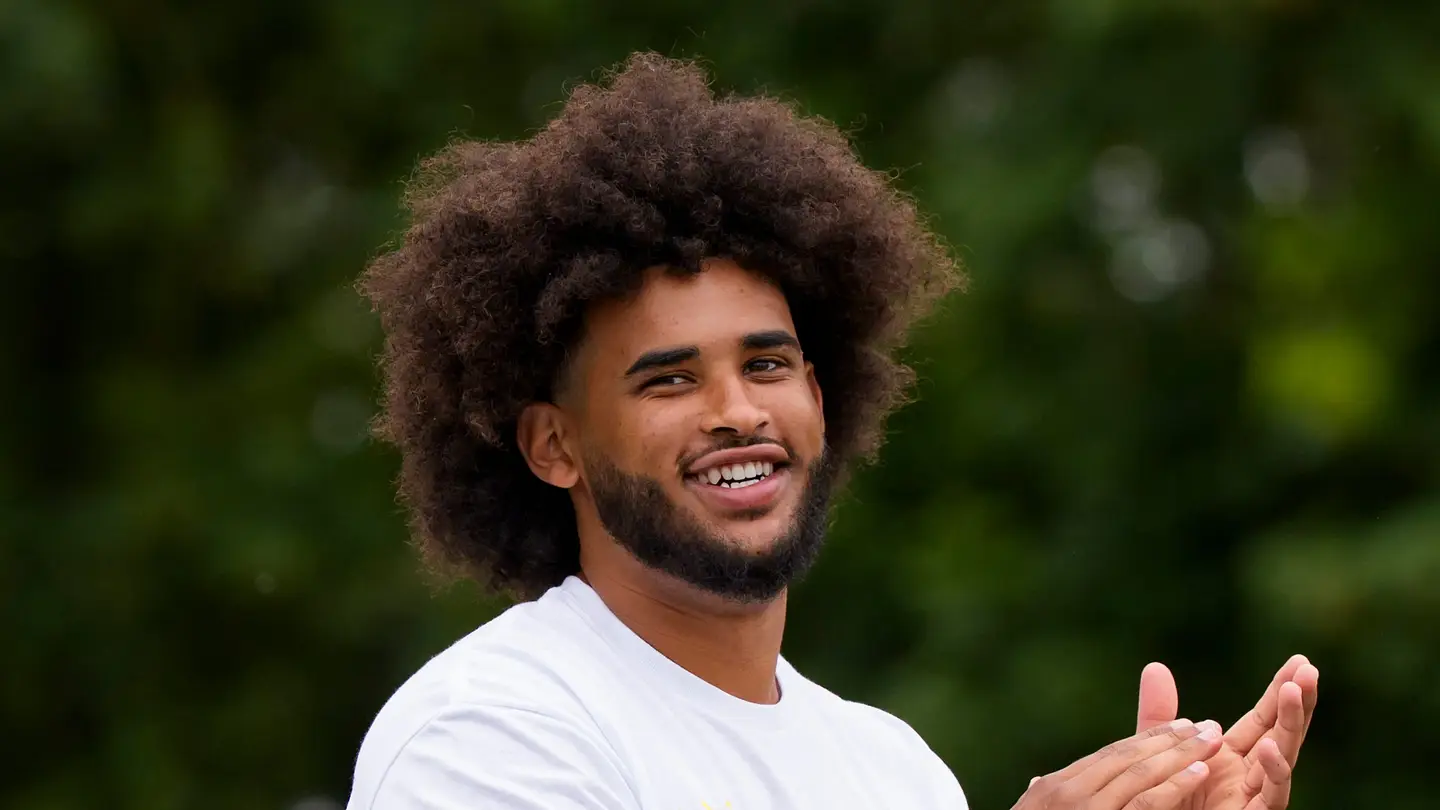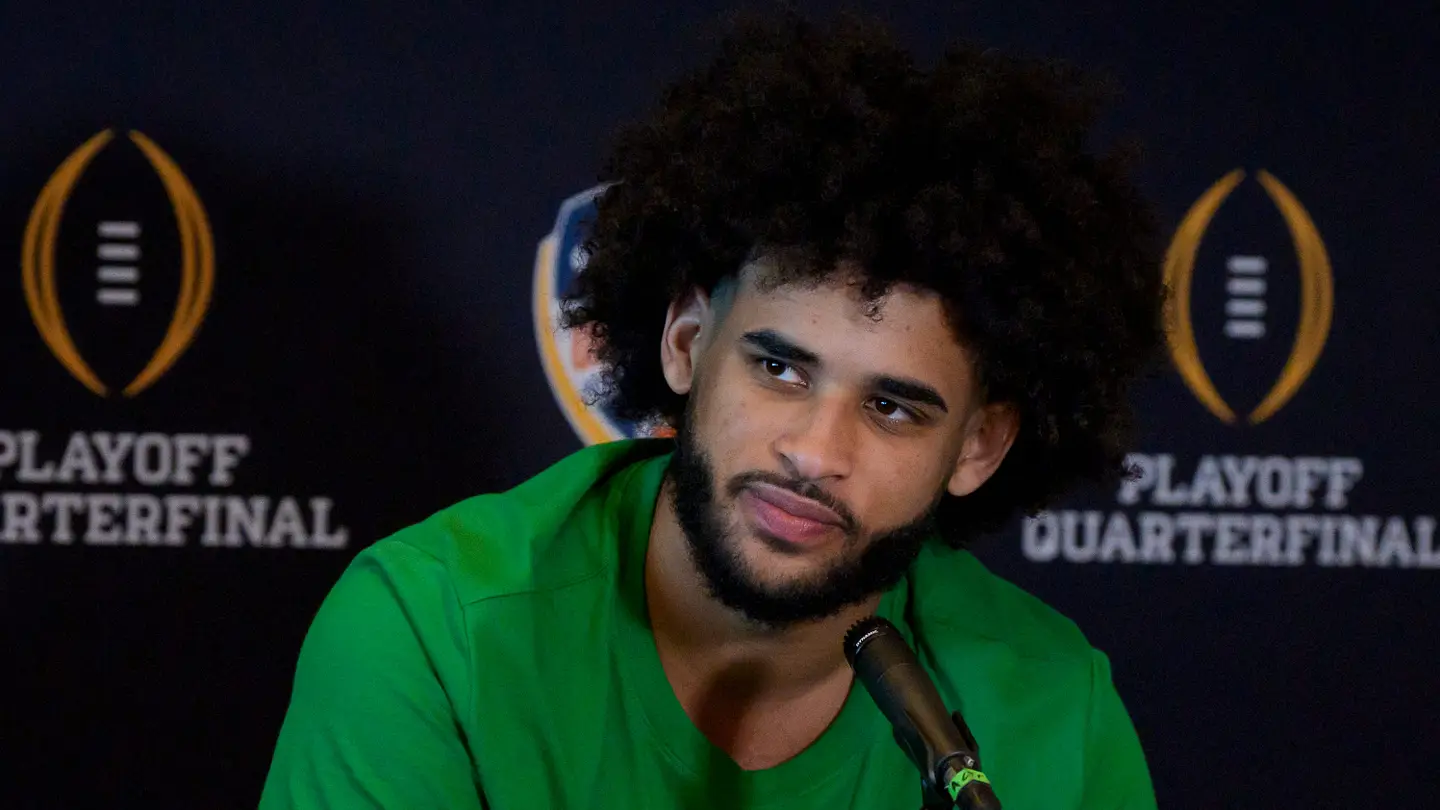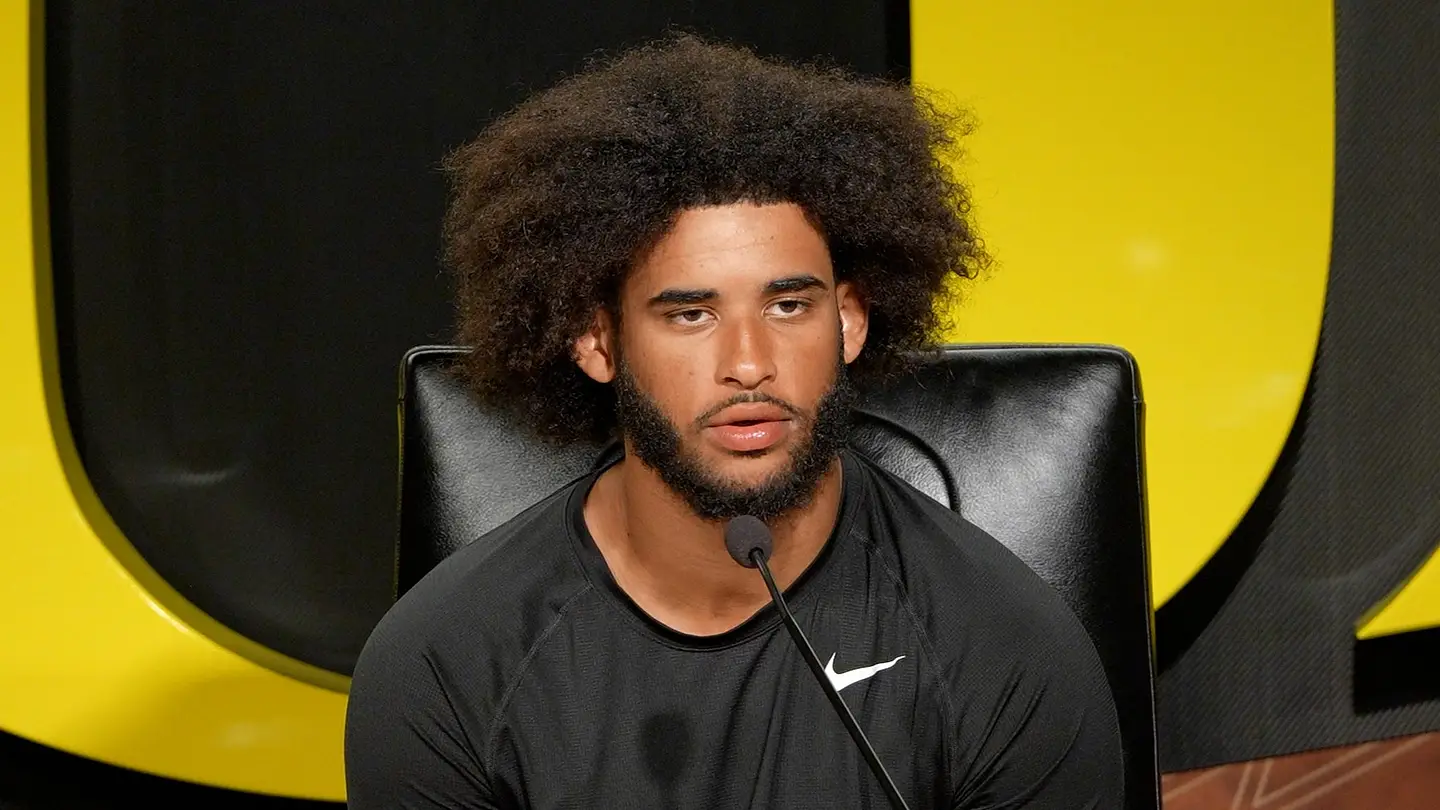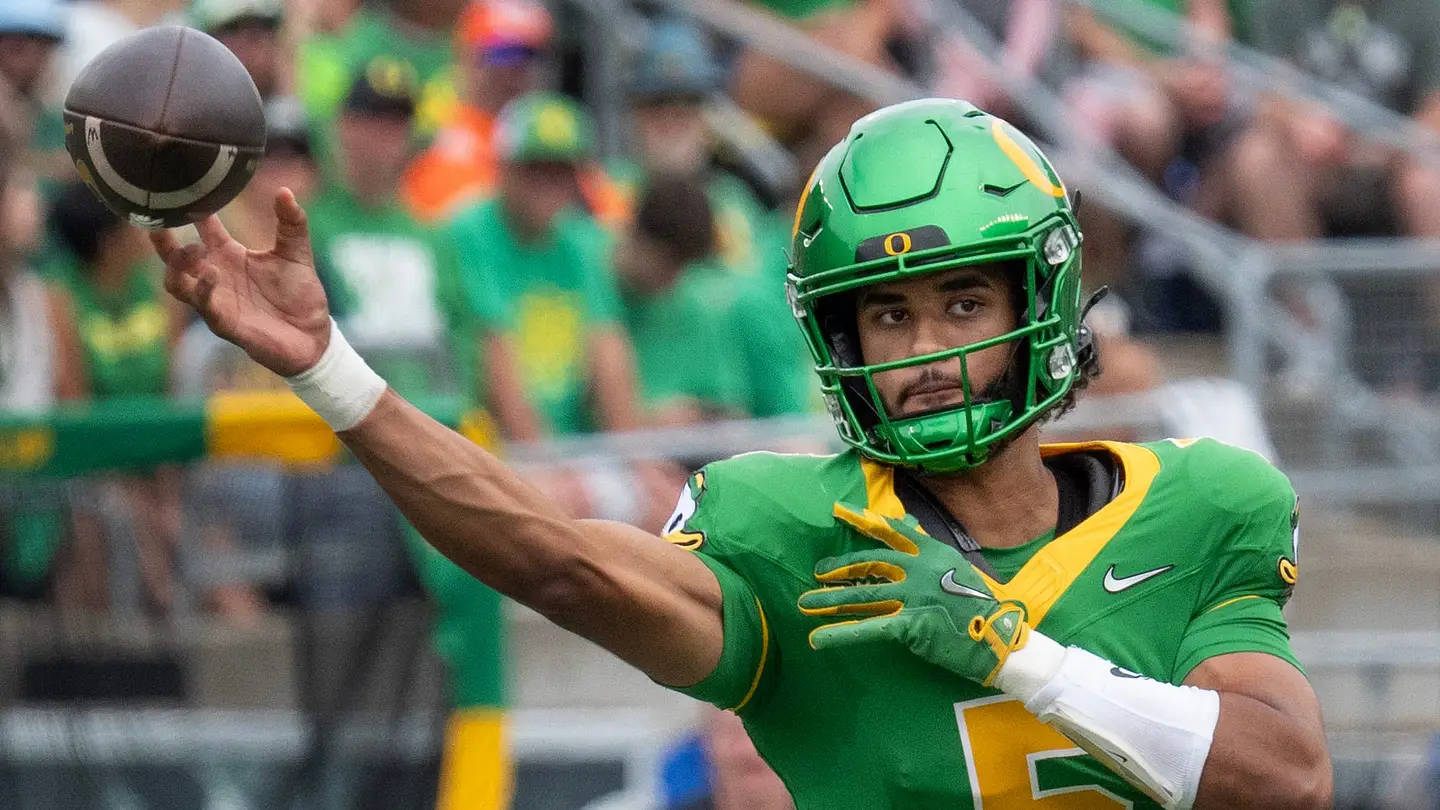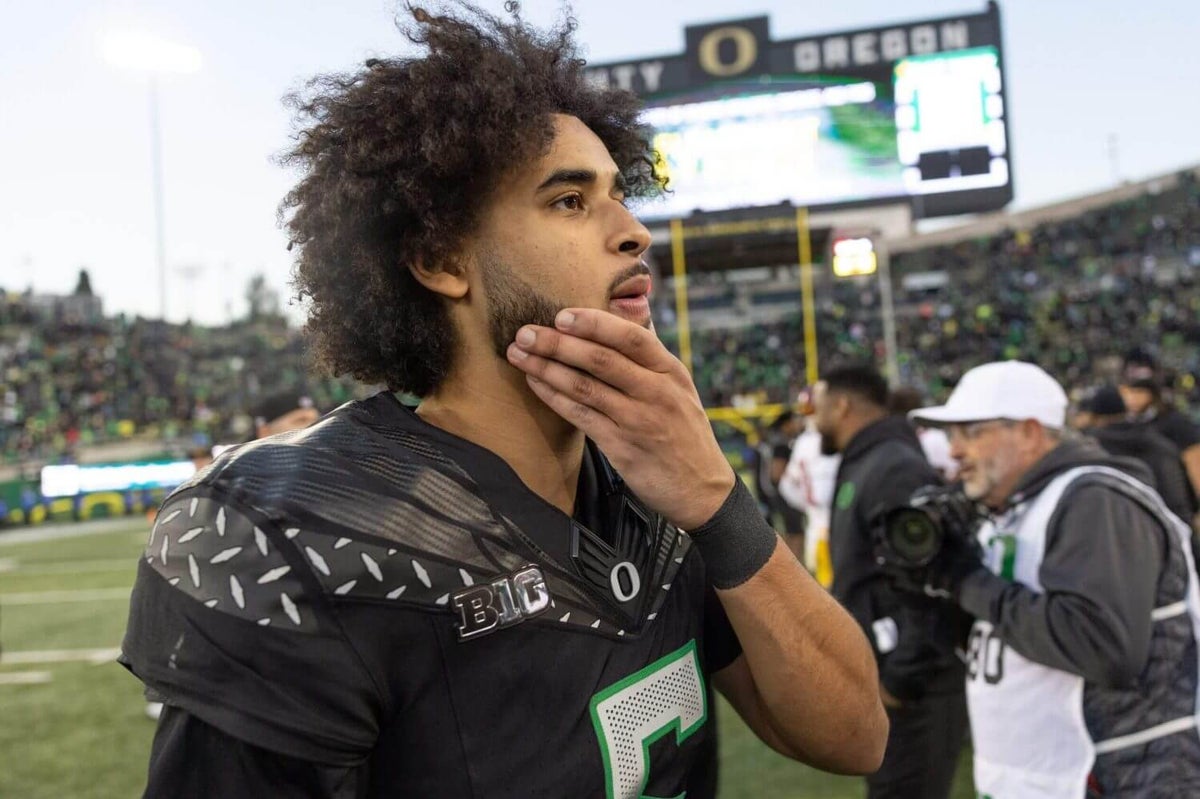
EUGENE, Ore. — The reason Dante Moore is here has nothing to do with the New York Jets, he says.Instead of preparing for an NFL training camp and due almost $50 million guaranteed, Moore is still the quarterback at Oregon, still in school, sitting here in his pads in the Oregon football building, covered in Duck logos and sweat after a spring practice. (He is still getting paid plenty, too.)Moore likely would’ve been the No. 2 pick in last spring’s NFL Draft, had he come out early. That pick was held by the Jets — a franchise most known for their organizational, um, ineptitude, especially with quarterbacks. While jokes that he stayed in college to avoid the rocky ride the franchise’s recent first-round quarterbacks, Zach Wilson and Sam Darnold, had experienced flew across social media, Moore insists that had nothing to do with the decision.“Not at all,” Moore told The Athletic.He wants to win Oregon’s first national championship. He wants to get better as a player, even as he sits at No. 2 in The Athletic’s ranking of all 138 Football Bowl Subdivision starters entering 2026. He likes college. And the ability to get paid in school in this new era of college sports made it a win-win for everyone.He’s not the first QB to return despite a top draft projection, but he’s one of the first to decide to come back with that projection while still being paid like some NFL starters.How much money Moore will earn in his final year at Oregon was not revealed by Moore or Oregon officials. College players typically sign several contracts of varying value, and their full compensation is rarely made public. Other top-level quarterbacks in college football are earning in the $5 million range, coaches, staffers and other industry analysts believe; Moore is likely there or higher. That would put him within shouting distance of what the Broncos’ Bo Nix or the Falcons’ Michael Penix are earning in the third year of their rookie deals.Still, No. 1 pick Fernando Mendoza just agreed to a four-year deal worth $57,271,500 guaranteed, an average of more than $14 million per year. So while Moore is making plenty, he is certainly making less than he could have. An injury or a fast riser in next year’s deep QB draft class could complicate his impending NFL payday.“Of course there was $50 million on the line, a lot to help support my family, but at the end of the day, I don’t play the game for money,” Moore said. “I play the game to tell myself I’ve got a lot to improve. I had a chance to come back and learn more. So when I take that next step next year, I’ll be more prepared for those moments in my life.”Moore’s path has included surprising decisions before. He earned the starting job at UCLA as a true freshman, before transferring to Oregon to back up Dillon Gabriel for a year. With only 20 starts in his college career, Moore and his advisers entered the winter looking toward what would get him the all-important second NFL contract, when the even bigger payday comes.“He didn’t want to let $50 million get in the way of $600 million,” said Brandon Grier, Moore’s agent who has known the family for years in Detroit.College QB Tiers: Which quarterback has the highest ceiling?Antonio Morales and Sam Khan Jr.Moore consulted with the likes of Drew Brees, Patrick Mahomes and Nix about his decision. It’s a small fraternity of people who have been in his exact position — players like Peyton Manning, Matt Leinart, Sam Bradford and Andrew Luck who in the last 30 years have turned down a top draft projection to come back to college. Just a few years ago, Justin Herbert made a similar move to stay at Oregon as the top QB prospect.Luck described his own decision in 2011 as “easy.” He knew he hadn’t maxed out his college ceiling as a player and he could make a run at a national title, but he also enjoyed school life and being with his friends.“I wasn’t ready to leave. I wasn’t ready to go get an apartment by myself in another city and pay utilities,” Luck said. “I think sometimes in our world, we want to grow up so stinking fast. In many ways, I wasn’t ready for that.”Moore had similar reasons for staying, but after being largely raised by a single father, then enduring his mother’s recent battle with breast cancer (she was declared cancer-free in the summer of 2024), passing on guaranteed NFL money was still a weight, even if he’s made a lot of money already.“He’s not Peyton Manning or Andrew Luck, coming from families that are well-off already,” Grier said. “He’s the first one that’s going to get to change the path of his family. NIL has given him the opportunity to separate the two decisions and do what he feels is best for him long term.”There were also on-field reasons. Moore said NFL coaches and scouts told him to improve his pre-snap reads and be 100 percent confident on where he’s going with the ball. The game-opening pick six in the Peach Bowl blowout loss to Indiana showed Moore and the rest of the sport he still had room to grow.Despite that need for growth, “he would’ve been the highest guy on the board (after Mendoza),” one scout told The Athletic, speaking on condition of anonymity because they were not permitted to speak publicly for their team.That Peach Bowl highlighted a troubling pattern for Oregon under head coach Dan Lanning. In each of the past three years, the Ducks have lost a rematch game (Washington, Ohio State, Indiana). The last two have come in the College Football Playoff, by a combined score of 97-43. The combined halftime score of those Ohio State and Indiana CFP losses was 69-15.The Ducks have to finish the season stronger.“The (last) two teams we lost to won the national championship,” Lanning said. “I think the common denominator is we’re playing really good teams. That being said, yeah, there’s certainly some lessons to learn. There’s some teams that we studied this offseason that have been really good in rematches. What are some things that we can do different as a coaching staff? It’s a new year. It’s a new time.”Lanning is 48-8 in four seasons as head coach, and while his team has finished ranked in the top six in each of the last three years, the Ducks haven’t gotten over the hump. Of the eight losses, six of those teams played for the national championship (2022 Georgia, 2023 Washington twice, 2024 Ohio State and 2025 Indiana twice). The other two losses came against top-20 opponents.Yes, Oregon keeps running into really good teams, but Oregon has invested for years to become one of those teams at the end. Getting leapfrogged by Indiana shocked the world. How will the Ducks respond?Lanning promoted from within after both of his coordinators took head coaching jobs, with Drew Mehringer taking over the offense and Chris Hampton the defense. The Ducks return the 11th-most production in the country, according to ESPN.“I think this is a team that’s built for it and ready to go attack that,” Lanning said.Having Moore back will be a big help. Lanning didn’t know for sure that Moore would return until the QB made his January announcement on “SportsCenter,” while Lanning sat one room over in Oregon’s football building watching on TV.“When he said he wanted to make the announcement at the school, I felt like that was a good thing,” Lanning said. “But I didn’t know.”The rising price of elite quarterbacks in college football has led people to wonder whether situations like Moore’s will happen more frequently in the future. Former Alabama quarterback Ty Simpson revealed that Miami (Fla.) offered him $6.5 million to stay in college and transfer. He considered it but stayed in the draft and became the No. 13 pick, where he’ll average $6.3 million per year on his rookie deal.“People around (the NFL) are having a hard time believing this, but now there’s a real decision to be made about money,” former NFL executive and agent Andrew Brandt said.Brandt, who now teaches at Villanova and consults with schools on player contracts, recounted his work with former Texas running back Ricky Williams. The star back nearly went pro after his junior year in 1997 but decided to return to Austin because he wasn’t ready for a professional life. As a friend, Brandt supported it. As a business manager, he didn’t. (A year later, Williams left Brandt to be represented by Master P.) If Williams could’ve made millions to stay in school, Brandt’s recommendation would’ve been different.“Then it’s not just about coming back to Austin because he loves it there,” Brandt said.While Moore will continue to make money at Oregon — he has an injury insurance policy this season — it is still a risk to come back. It’s something Luck thought about, too. Or rather, didn’t think about, after a conversation with Manning.“Peyton was like, ‘Don’t slow down, go as fast as you can,’” Luck recounted. “Don’t let your foot off the pedal. That’s how you get hurt in football, when you’re slowing down. If you’re thinking about getting hurt, the odds are you will get hurt.”Luck didn’t reach his goal of a national title, but he stayed healthy and became the No. 1 pick by the Colts the following season. In fact, Manning, Luck, Bradford, Leinart and Herbert all ended up as top-10 picks, and the first three of those were selected in the top two. The Athletic’s Dane Brugler projects Moore as the No. 3 pick in his first 2027 draft lookahead.Oregon will be a preseason top-five team, and Moore’s Heisman Trophy betting odds are in the top five as well. It’s all set up for a big year.While history says Moore’s decision will pay off — or at least not cost him — the final determination on that will come nine months from now. What matters most now is what comes next in pursuit of getting Oregon to the top, because the way last season ended hasn’t faded.“It’s just fuel to the fire,” Moore said.
Why is Dante Moore still playing college football? It’s about Oregon, not the Jets
While history says Moore’s decision will pay off — or at least not cost him — the final determination on that will come nine months from now.
1,707 words~8 min read