JSON Web Tokens (JWTs) are one of the most popular authentication methods for modern web and mobile applications. Whether you're building REST APIs, Flutter apps, React frontends, or microservices, JWT authentication offers a lightweight, stateless, and scalable solution.
However, JWTs are only secure when implemented correctly. I've reviewed many production applications where seemingly secure authentication flows contained mistakes that could lead to token theft, account takeovers, privilege escalation, or unauthorised access.
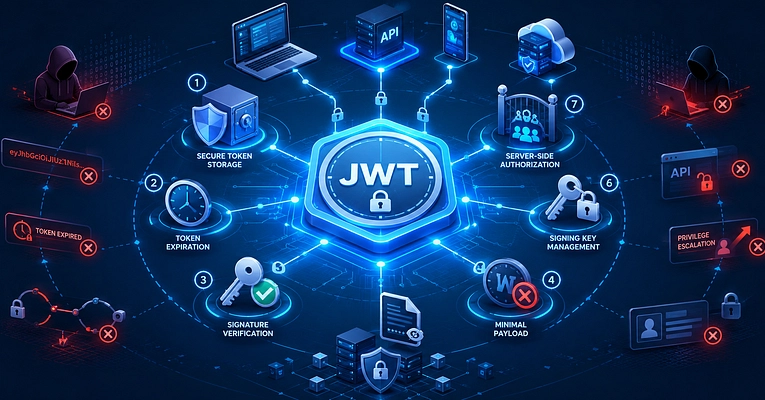
Here are seven common JWT authentication mistakes—and how to avoid them.
One of the biggest security risks is storing access tokens in locations that can easily be compromised, such as localStorage, plain-text files, or unencrypted mobile storage.
Store tokens using secure mechanisms like: