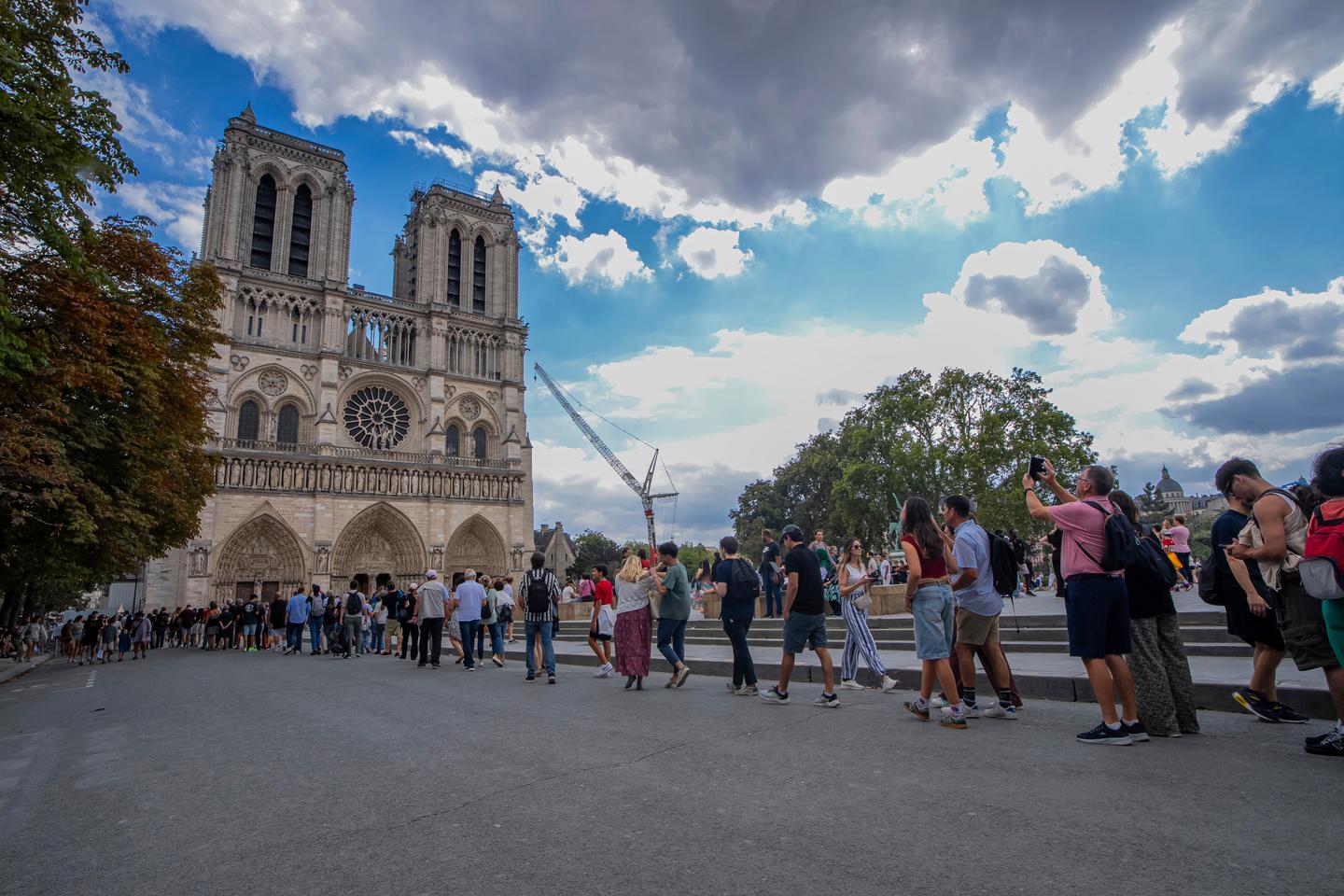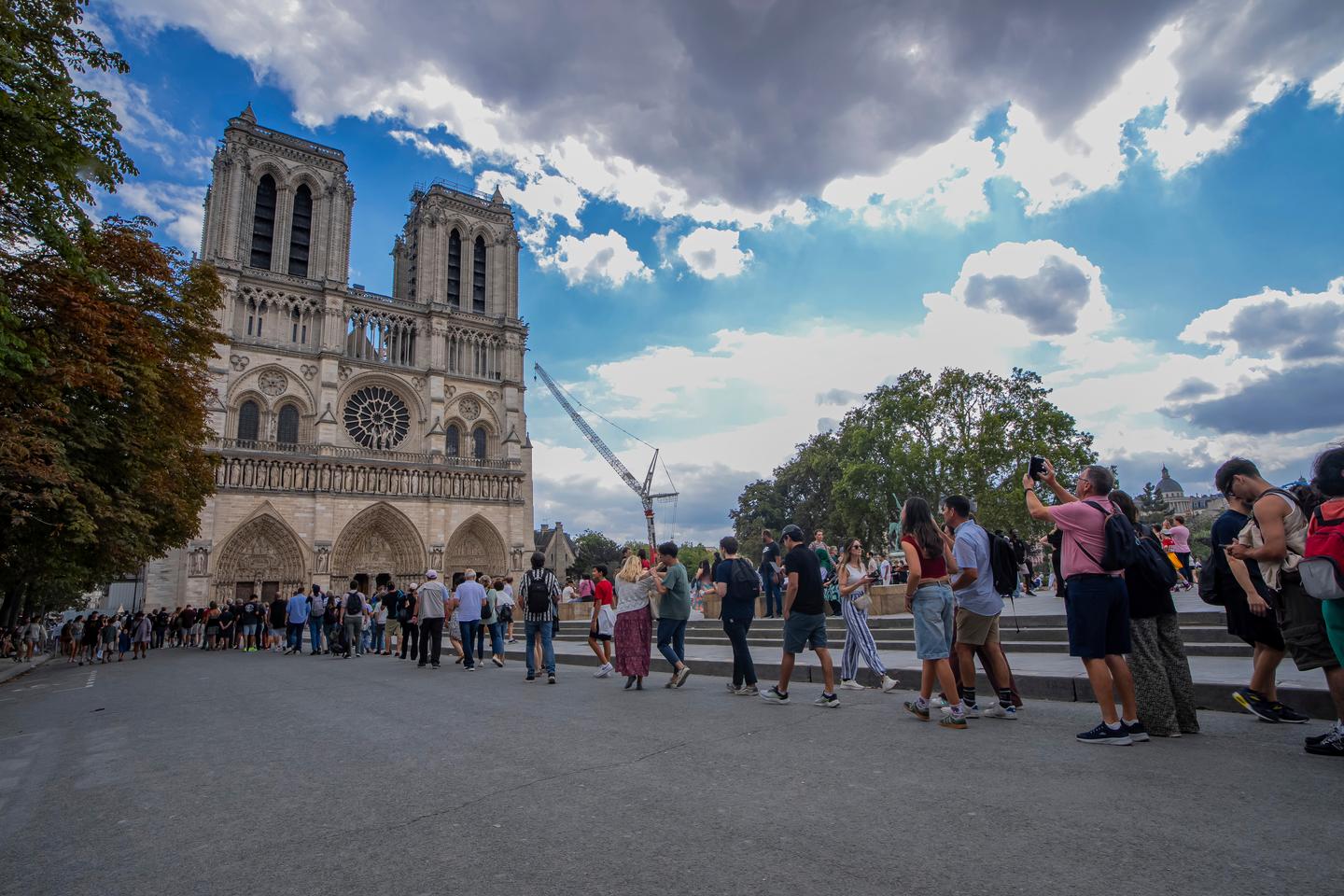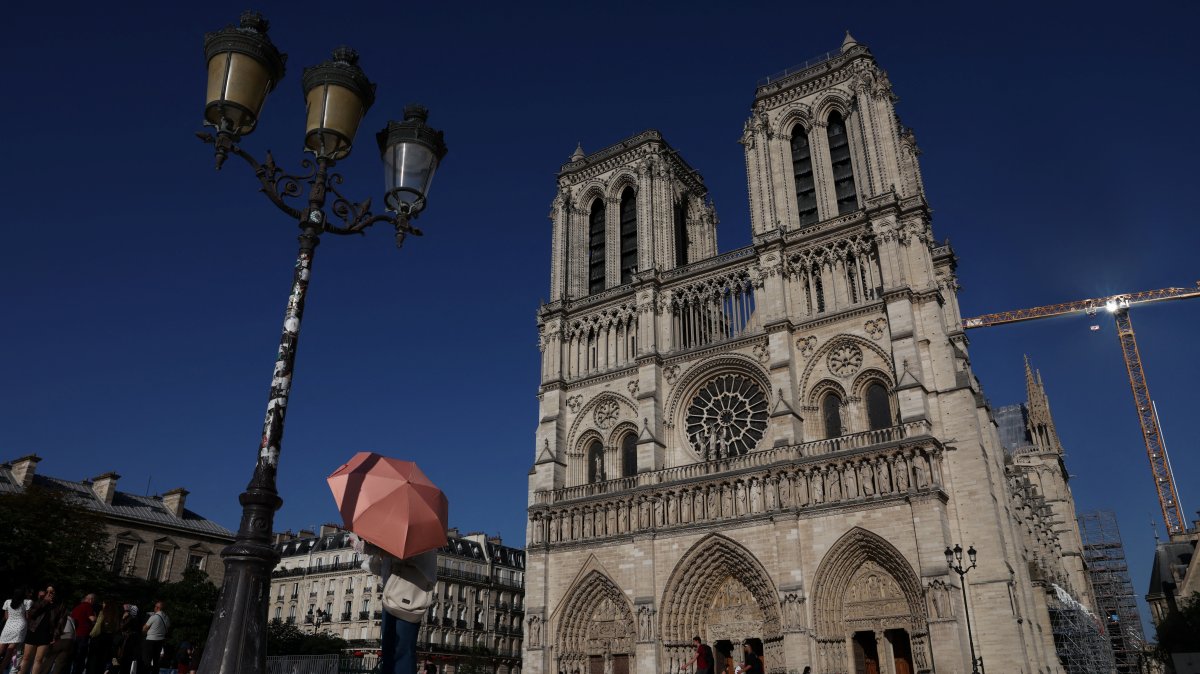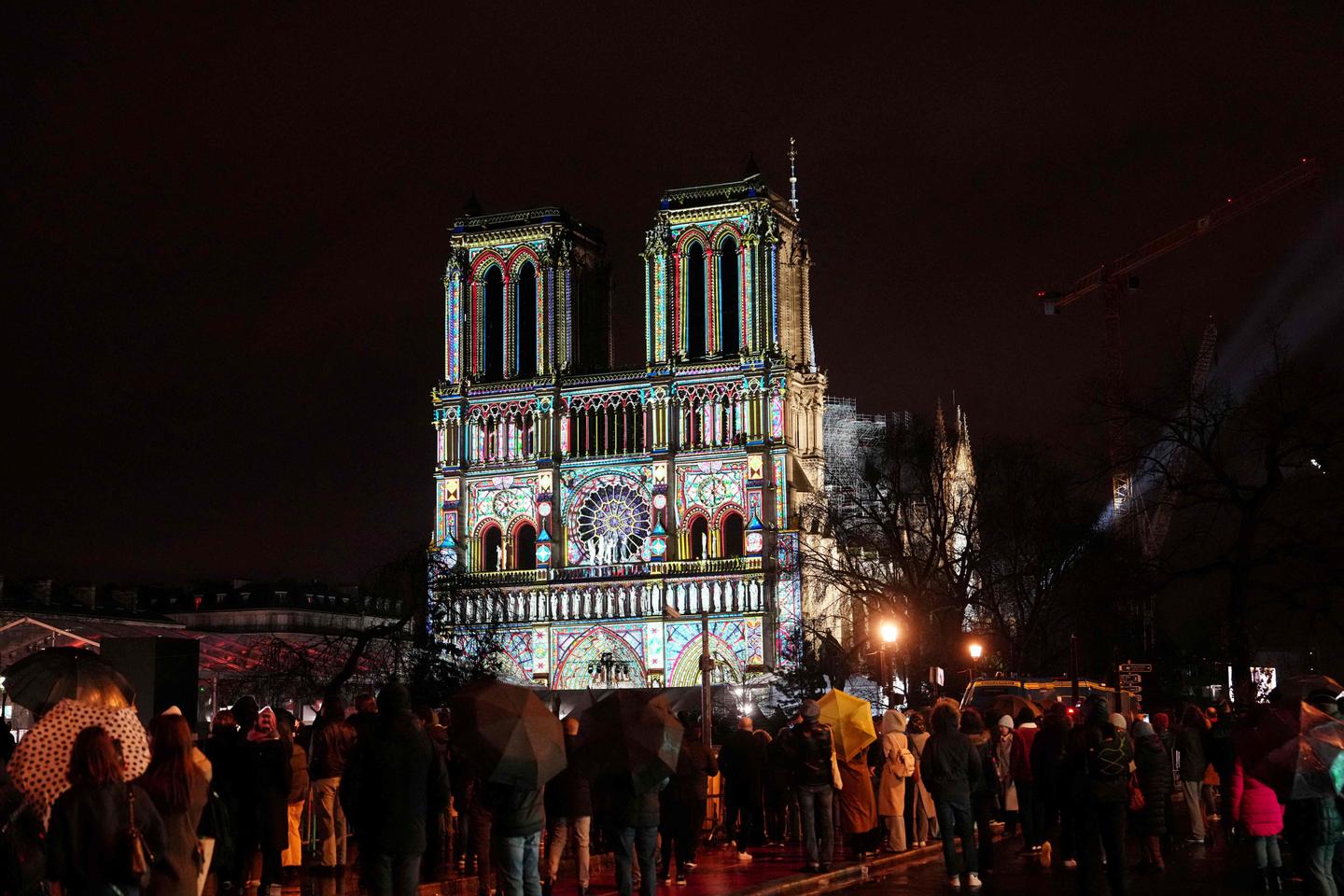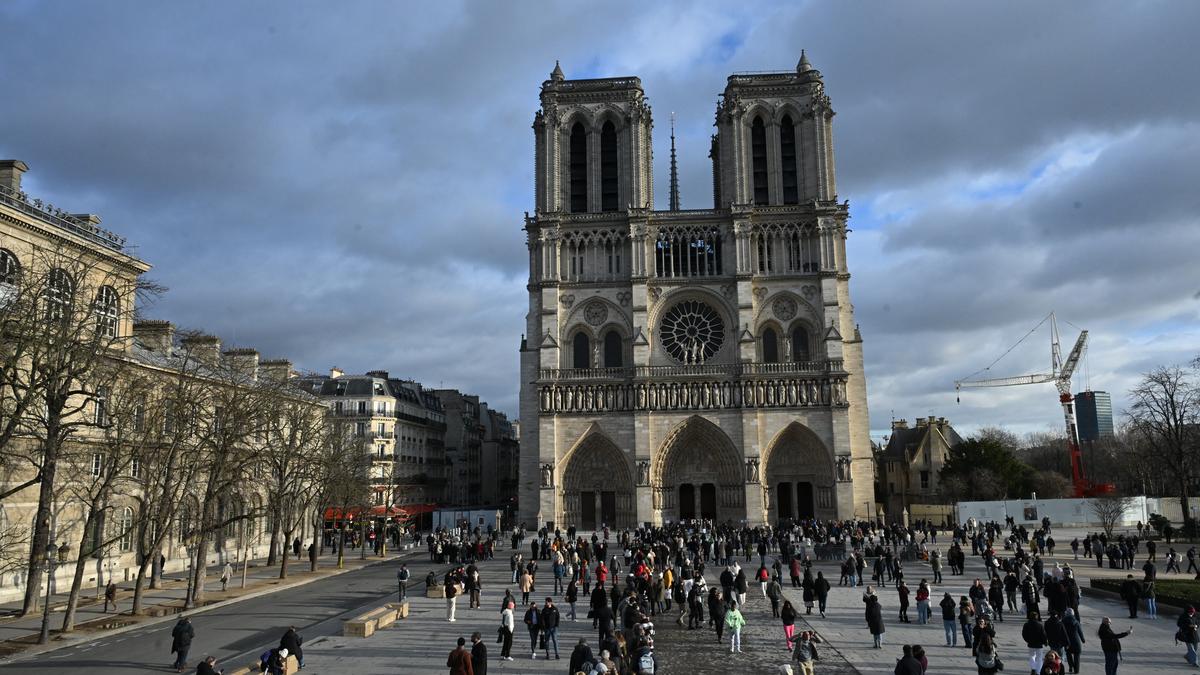
Notre Dame caught on fire just days after I accepted the offer to teach at The American University of Paris. Hence, for most of my Parisian years, the cathedral has been inaccessible. But that has never stopped it from attracting crowds. For years now, I have seen tourists line up along the river to take pictures of the scaffolded façade. I’ve walked past it a hundred times, but now that it was finally open, I decided it was time to pay a visit.
On September 20, the Towers of Notre Dame, with its chimera gallery, will open to the public.
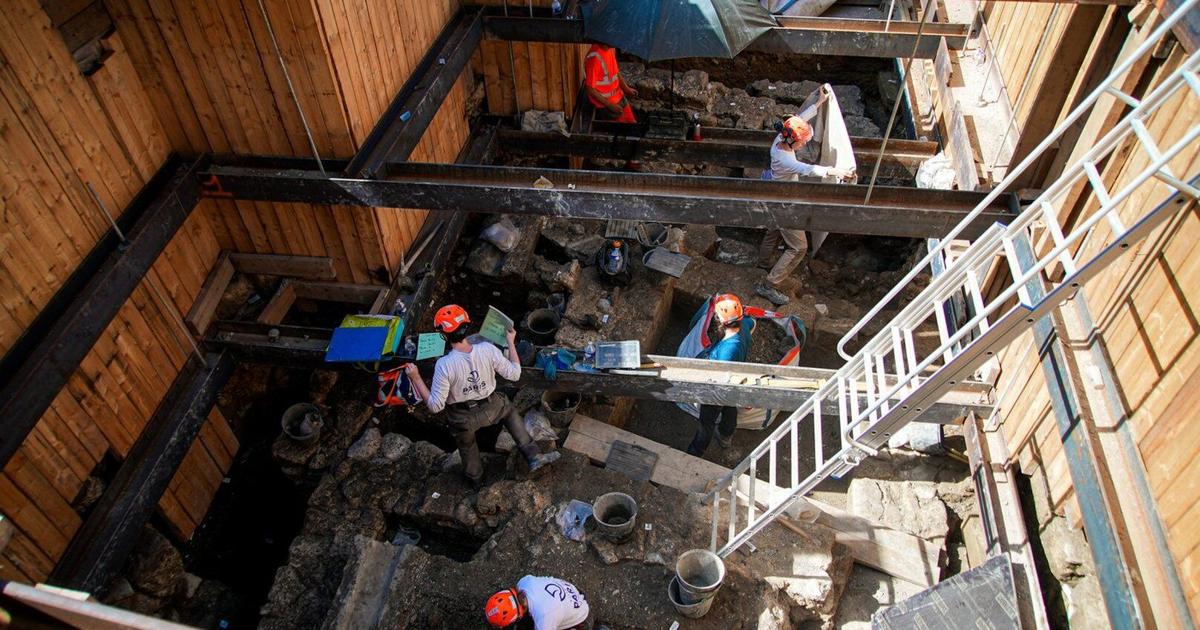
Notre Dame stands on the tip of an island, the Île de la Cité, the ancient heart of Paris. The Romans were here in 500 BC. Construction of the church began in 1163 under Maurice de Sully and ended a hundred years later, and there would be no major work until the French Revolution, when much of the bronze, lead, and precious metals were removed and melted down. Major restoration was done to the church in the mid-19th century. And in 2019, the fire happened.I can’t imagine what it must have felt like to look out your window and watch the cathedral burn. And what it must be like now, after years of construction, to watch it come back to life. The fire pushed the cathedral into another round of upkeep. To rebuild the historic roof called “Le foret” or the forest, 1,000 historic oak trees from 200 French forests were selected and sacrificed — a move that was sharply criticised. At the same time, artisans from all over France gathered to restore the cathedral, and continue to do so daily. During the time of writing this article, statues that belong up on the famous spire have been restored. On September 20, the Towers of Notre Dame, with its chimera gallery, will open to the public. And soon the wooden shafts on which the two bells, Emmanuel and Marie, are suspended will be replaced.