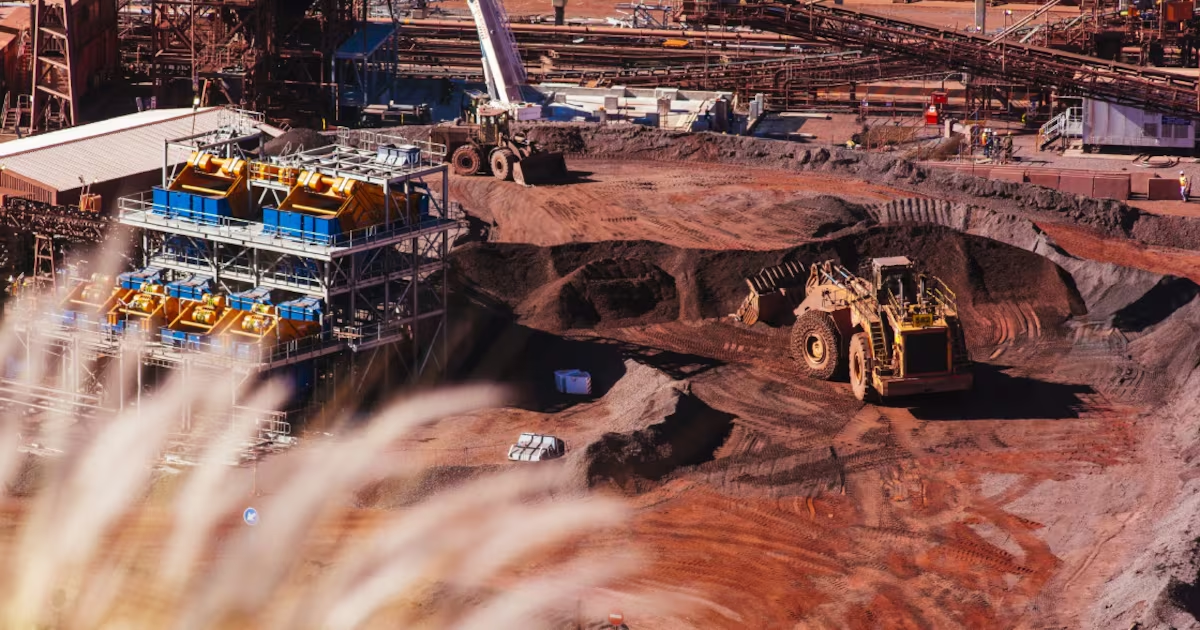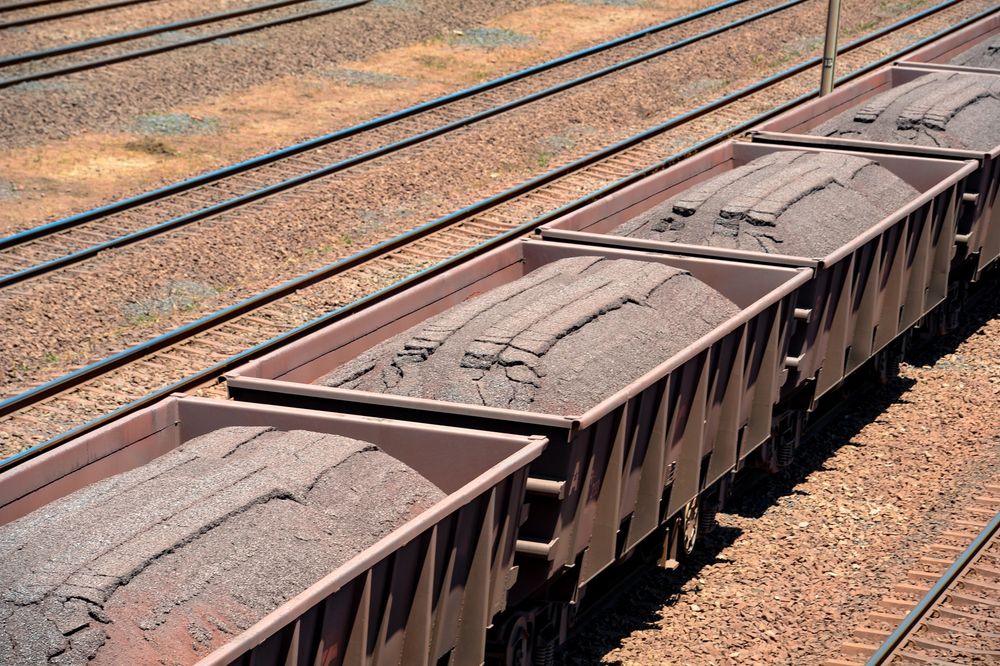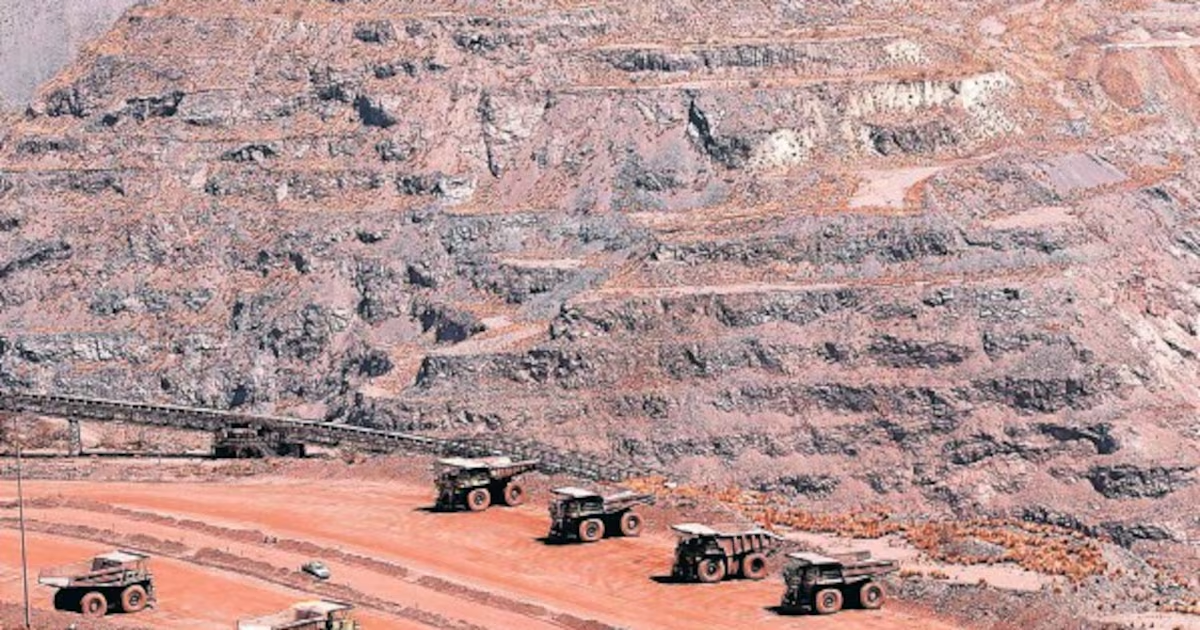
Kumba Iron Ore’s earnings declined by almost a third in the first half of the year as the combination of external headwinds of a stronger rand, weaker prices and lower sales volumes weighed on its performance.The Anglo American-owned group said on Tuesday that revenue for the six months to end-June declined 11% to R30.9bn. The 11% stronger average rand-dollar exchange rate reduced revenue by R3.2bn, and a 1% decrease in the average realised free on board (FOB) iron ore export price to $90 per wet metric tonne, resulting in an almost R1bn impact on revenue.In addition, slightly lower sales volumes of 18.6-million tonnes (Mt) had a R0.3bn effect on revenue.Earnings before interest, tax, depreciation and amortisation (ebitda) declined by 32% to R10.9bn, resulting in the ebitda margin narrowing to 35% from 46% a year ago.HEPS fell by 41% to R13.24 and an interim dividend of R7.90 per share was declared, returning 60% of HEPS, or R2.5bn, to shareholders.Kumba generated cash from operations of R10.1bn, and attributable free cash flow decreased to R1.9bn from R7.9bn before, primarily reflecting higher capital expenditure (capex) to sustain and grow the business.Operating expenses increased, driven by inflation and above-inflation escalation on key mining input costs linked to the Middle East conflict, as well as higher freight rates during the period, Kumba said.CEO Mpumi Zikalala said the first-half performance reflected the impact of a challenging external environment and difficult operating conditions.“We remain focused on cost optimisation, capital allocation discipline and enhancing cash generation to support sustainable shareholder returns,” she said.Zikalala said operating conditions were expected to be better in the second half of the year as weather conditions improved, supporting a progressive recovery in waste mining to within the full year 2026 guidance of 180Mt–195Mt.Total production decreased by 3% to 17.7Mt compared with the first half of 2025, reflecting a softer contribution from Kolomela, partly offset by a solid operating performance at Sishen.Kumba’s production guidance for 2026 of between 31Mt and 33Mt is due to the main tie-in of the ultra-high-density media separation (UHDMS) project at Sishen in the second half.Sales are not expected to be affected, owing to the planned drawdown of finished stock during the tie-in, it said.Kumba is investing in UHDMS technology at Sishen to boost the quality of iron ore and extend the mine’s operational life. It expects its new UHDMS technology to triple the proportion of premium-quality ore production at Sishen, Business Day reported previously.Zikalala said last week that the first UHDMS modules are in the first phase of commissioning, and pre-shutdown work is on track for the main plant tie-in starting in August.Finished stock will be drawn down to supplement production and deliver the full year sales guidance of 35Mt–37Mt, she said.This takes into account the demonstrated rail performance on the ore export channel in the first half, and the two Transnet logistics maintenance shutdowns in May and October this year. “The cost environment remains volatile, with risks associated with ongoing developments in the Middle East. We remain focused on mitigating these risks through strong cost discipline and our operational efficiency drive,” she said.The group’s capex guidance remains at between R13.2bn and R14.2bn for the year.Business Day
External headwinds hit Kumba’s first-half earnings
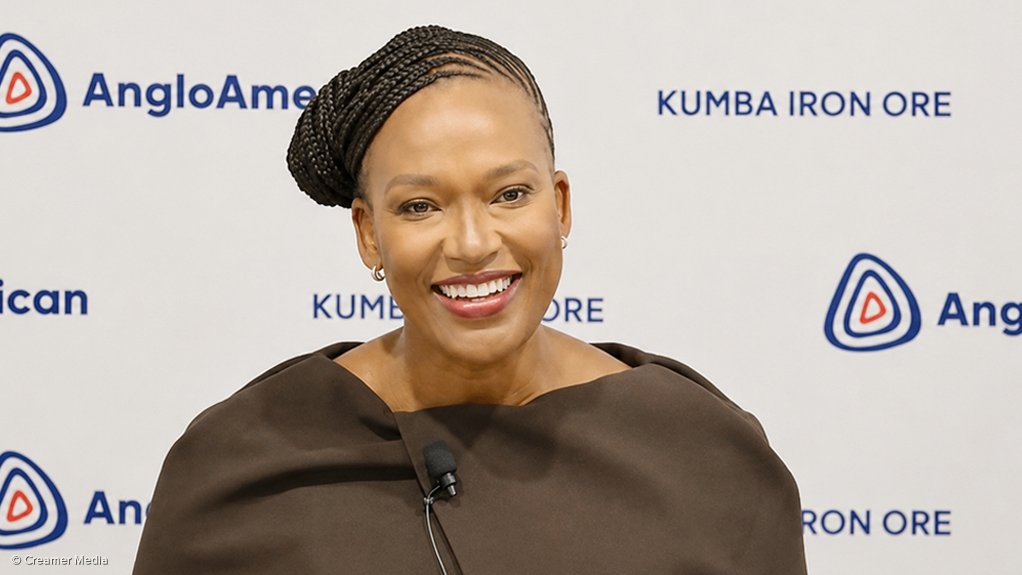
Kumba Iron Ore CEO Mpumi Zikalala expects conditions to improve in the second half of the year
527 words~2 min read