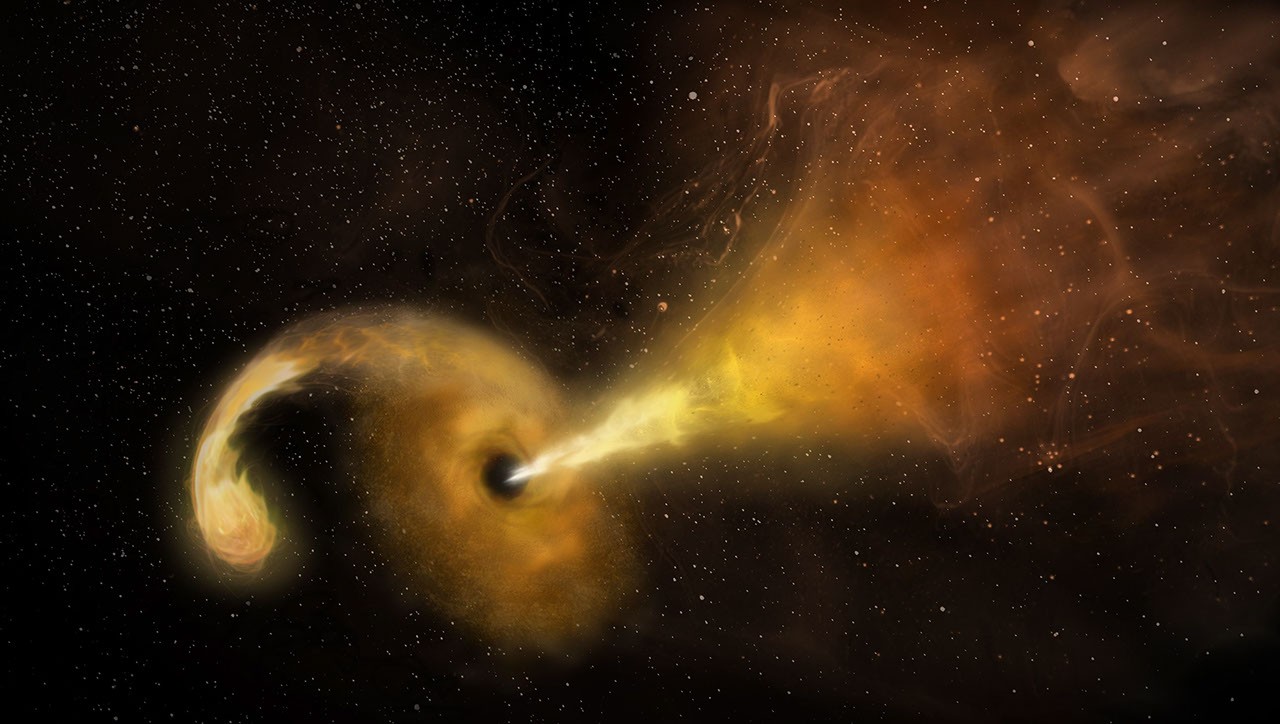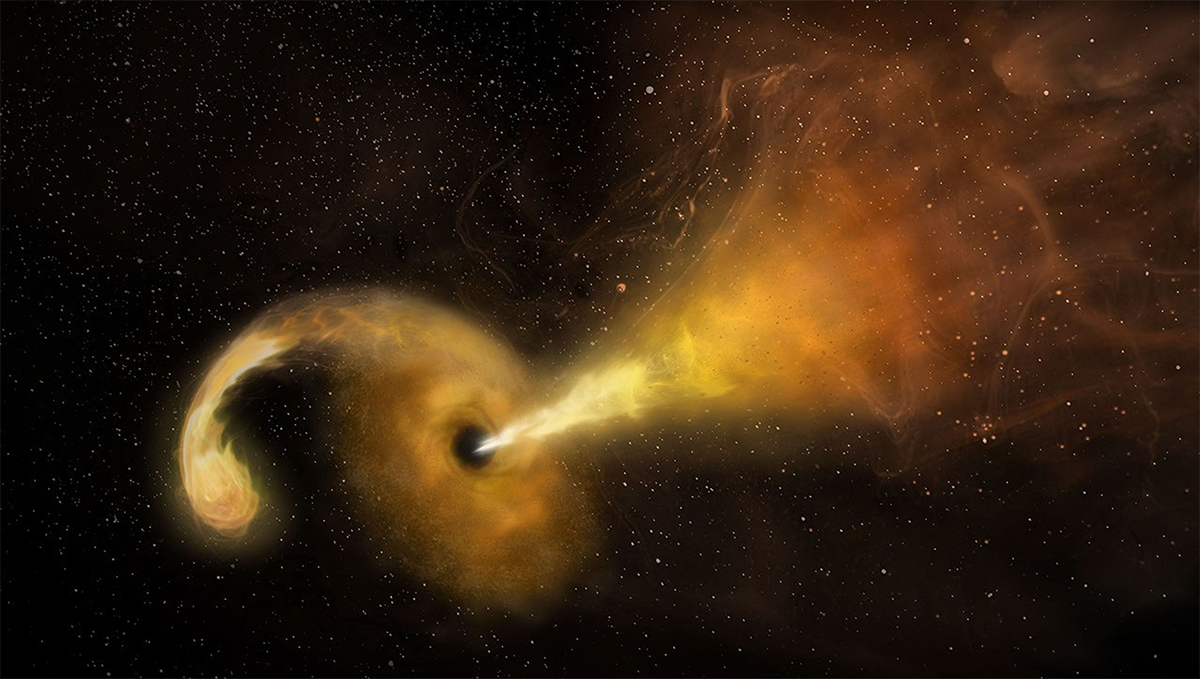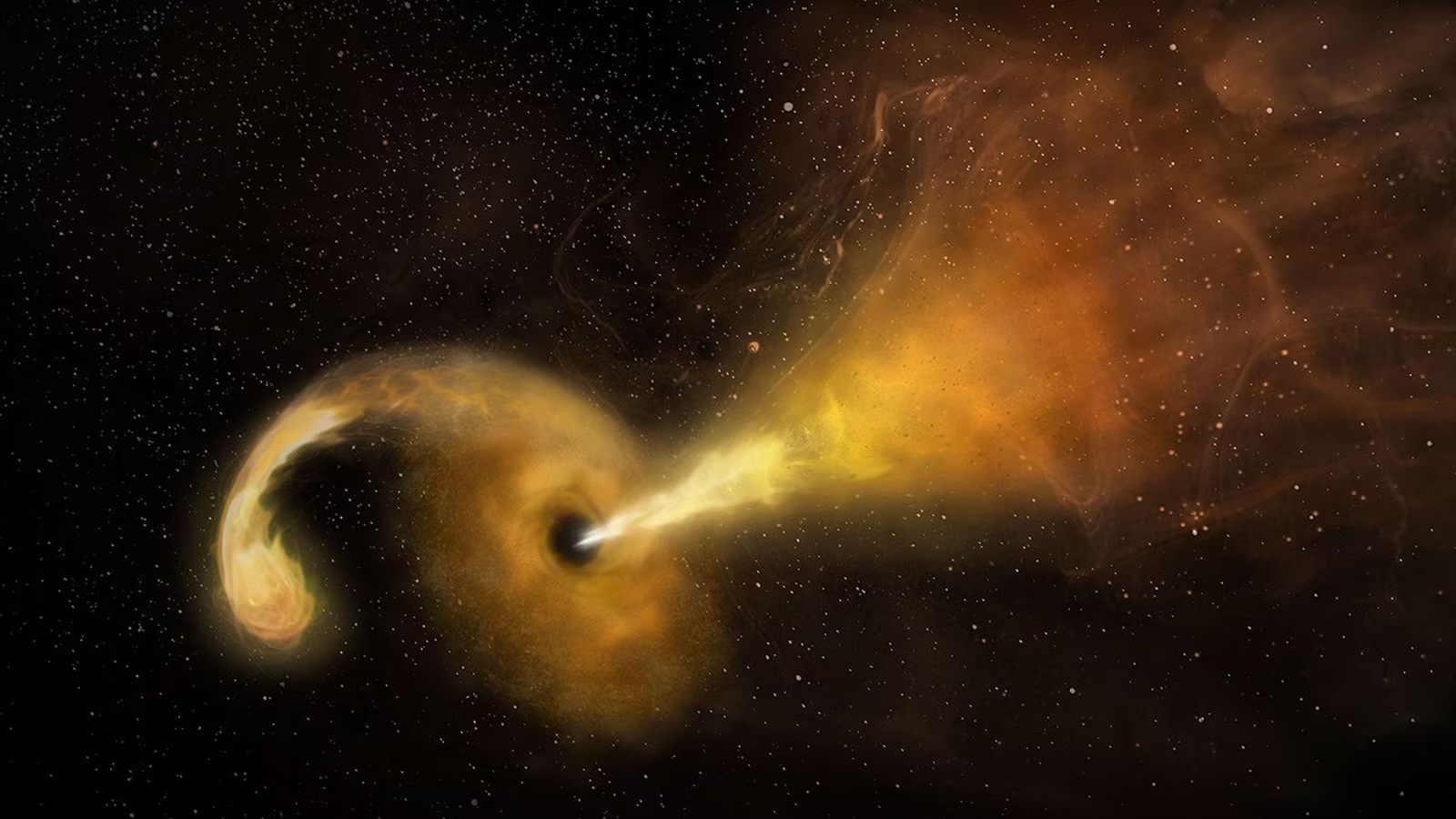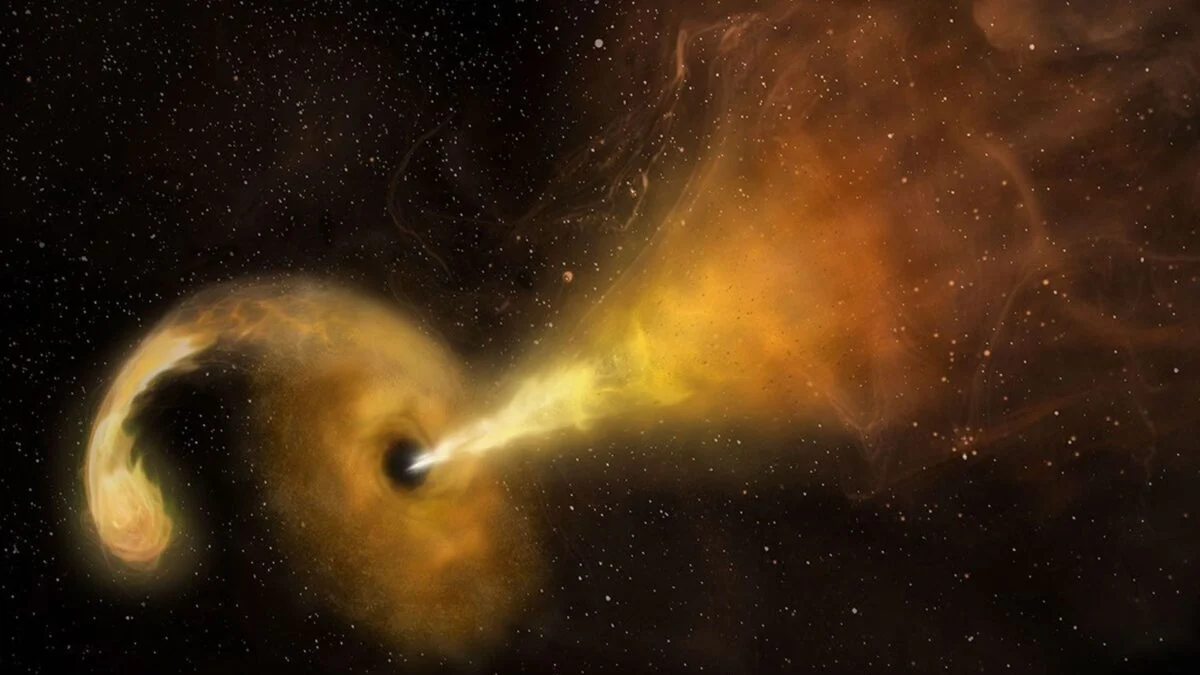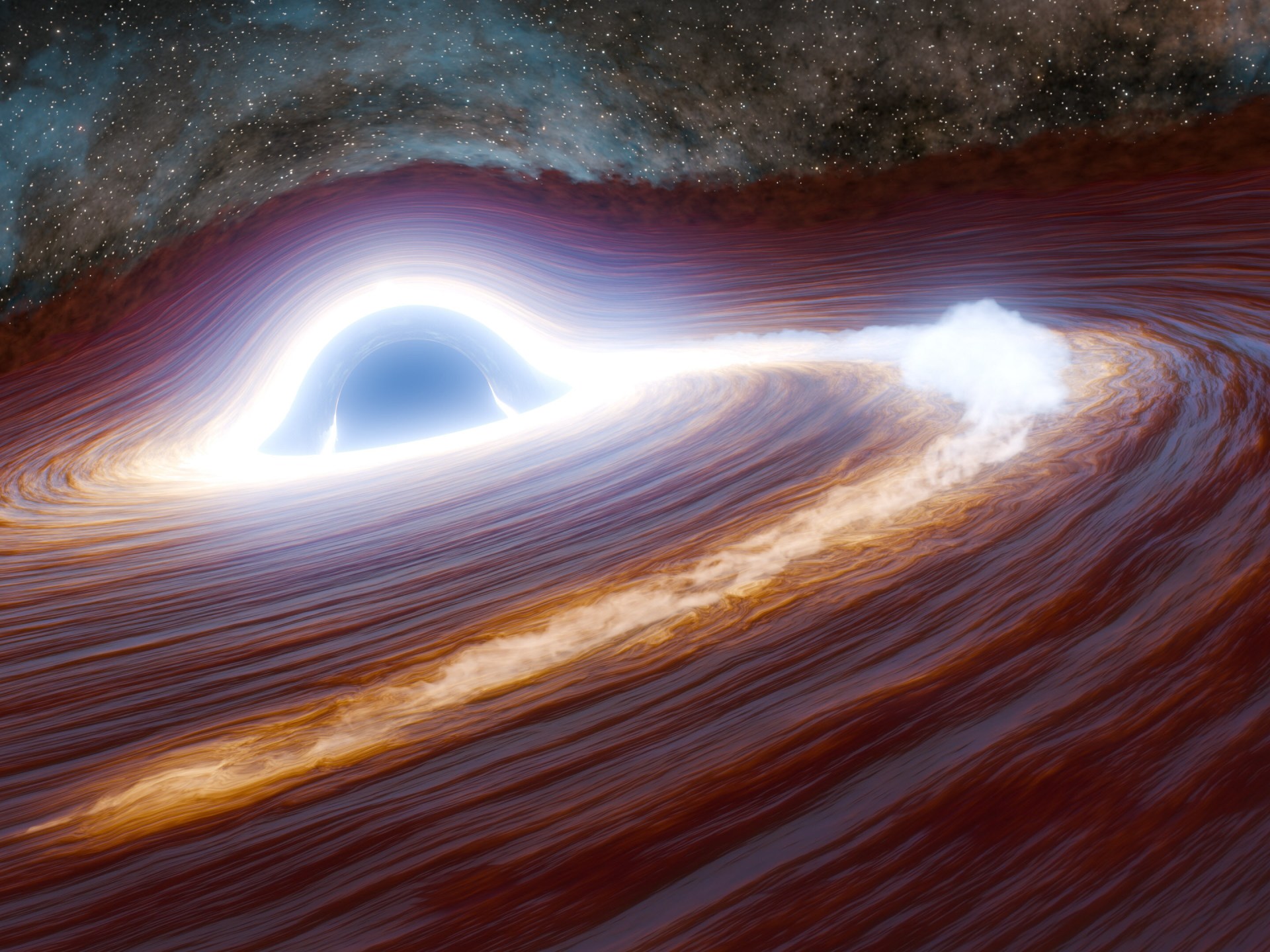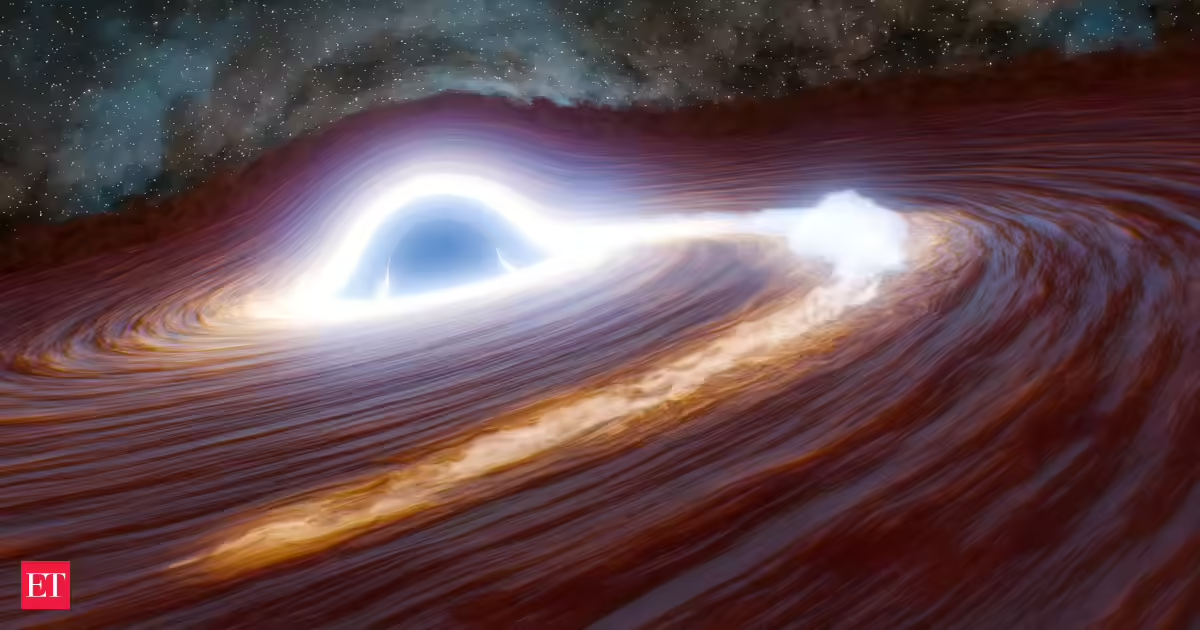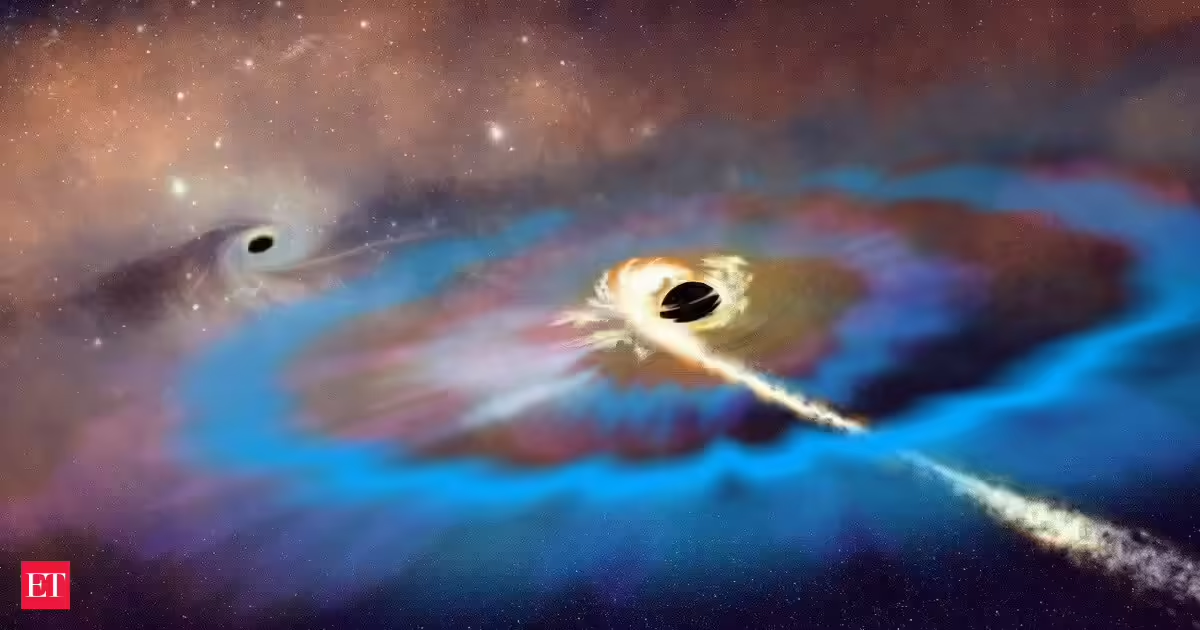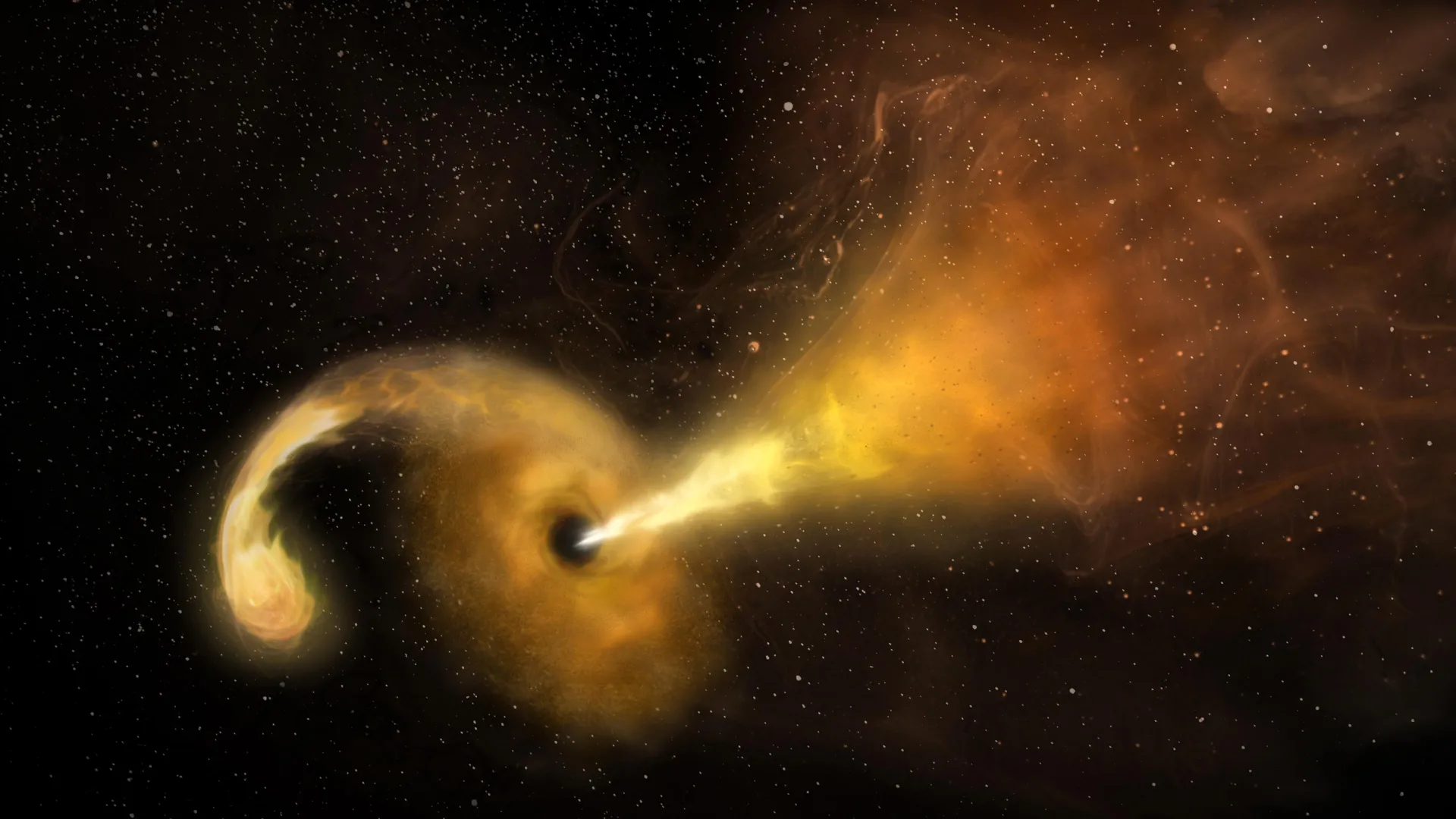
NASA's Neil Gehrels Swift Observatory has observed a rare supermassive black hole far from the center of a distant galaxy as it tore apart and consumed a star. Astronomers describe it as an apparent "orphan" because it sits unusually far from the galactic core, where supermassive black holes are normally found. No previous event of this kind had been detected at such a great distance from a galaxy's center.
"We were looking for these star-shredding events as a way to find otherwise invisible supermassive black holes wandering away from the galactic cores where they usually reside," said Robert Stein, a research fellow at The University of Maryland, College Park and NASA's Goddard Space Flight Center in Greenbelt, Maryland. "With this discovery, which is one of just a couple that have been confirmed so far, we've validated a new technique and can use it to hunt for more."
A paper describing the results, led by Stein, was published on July 27 in The Astrophysical Journal Letters.
A Star Shredded by a Hidden Black Hole
The discovery began with an exceptionally bright flare produced when a star wandered too close to a massive black hole and was ripped apart by its intense gravity. Astronomers call this type of event a tidal disruption event.