Preface:
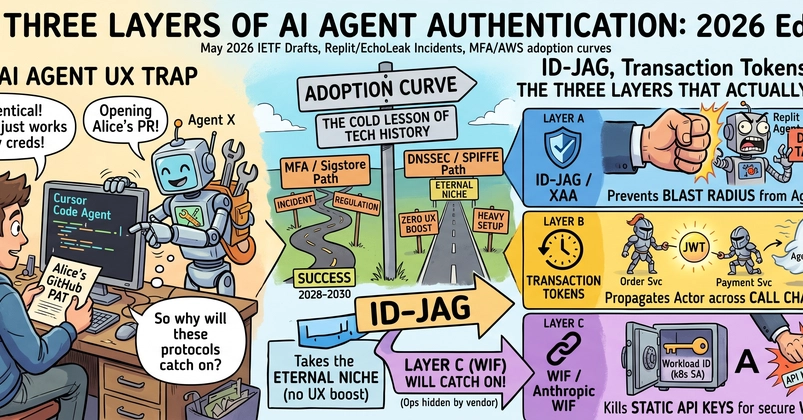
In the past six months or so, connecting AI Agents directly to internal systems to help get things done is no longer news. However, if you think one step further: in "whose identity" should the Agent call those APIs? If the permissions it receives are as broad as a human's, once it is tricked into performing an operation it shouldn't, the consequences could be more severe than a human's accidental slip.
This is exactly the problem that ID-JAG (Identity Assertion JWT Authorization Grant) aims to solve. I recently organized the principles of this mechanism and re-implemented the MCP Server from the tutorial repo athenz-community/id-jag-the-hard-way using Go: kkdai/id-jag-mcp. This article aims to clarify the technical principles of ID-JAG: which RFC standards it is built upon, how it differs from OAuth2 / PKCE that I've written about before, what the actual token exchange flow looks like, and finally, a demonstration of how to run and test this Go project.
TL;DR
This article will introduce the following in order: