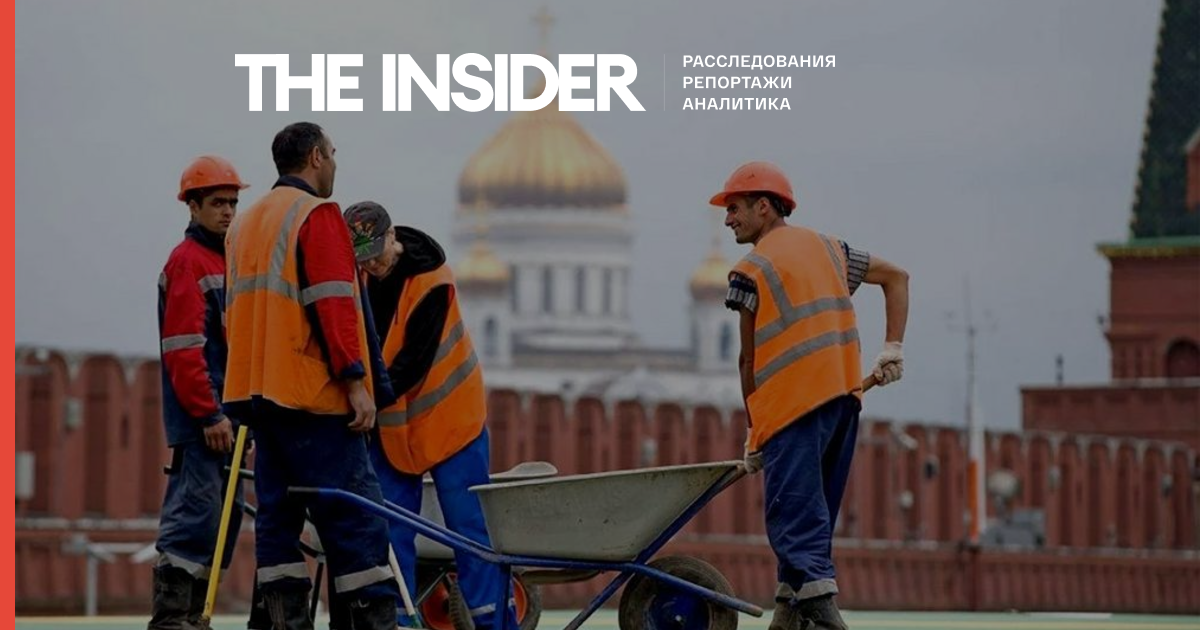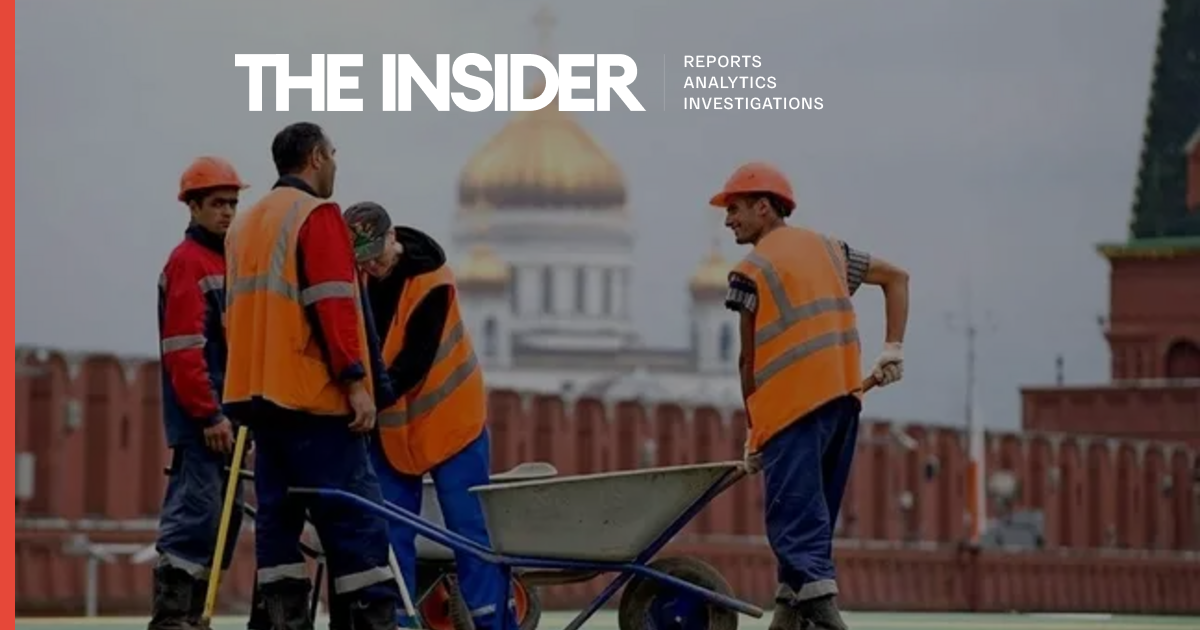
#SPECIAL PROJECT ON MIGRATIONIn July 2026, the deputy head of Russia’s Interior Ministry announced plans to require all migrants to buy phones equipped with a special app that will track their movements and prevent them from leaving their region of official registration. The measure, reminiscent of peasants being tied to the land under serfdom, represents a further tightening of Russia’s migration policy. This process began after the Crocus City Hall terrorist attack in March 2024 and has seen authorities deliberately restrict migration from CIS countries while seeking to attract more migrants from elsewhere — in the hope that these migrants will be easier to control and generate less social tension. A similar migration model is currently in use in several Persian Gulf states, where migrants arrive under quotas and are entirely dependent on their employers. However, this model is far less manageable than it might seem: 20–40% of migrants in the Gulf ultimately end up living there illegally, leading to a range of problems that includes increased corruption, human trafficking, and drug smuggling.Contents1.What has changed in Russia’s migration system2.Migration without integration in the Gulf states3.The risks of a restrictive migration policy4.The impact of migration on Russia’s demographic situationWhat has changed in Russia’s migration systemAfter the Crocus City Hall terrorist attack of March 2024, Russian authorities began restricting migration from visa-free countries while trying to attract laborers from farther afield. Migrants from the visa-free states of the former Soviet Union have traditionally been able to enter Russia, obtain an official permit (known as a patent), and work for any employer in the region where the patent was issued. This made the labor market fairly flexible — both for migrants and for the businesses that employ them.Migrants from countries requiring visas, by contrast, must first receive a job offer inside the country and then apply for a visa. Their stay in Russia is entirely dependent on their employment.Since 2024, Russia has passed at least 30 anti-migration laws — reducing the visa-free period of stay from 180 to 90 days, introducing a tracking app for migrants, complicating their children’s access to Russian schools, and introducing a register of monitored persons that restricts access to financial transactions and employment for anyone who has an expired visa, an expired work patent, or who has committed any other violation of Russia law. Migrants are also required to earn at least the subsistence minimum for themselves and any dependent family members. In addition, they have faced extra checks and police raids — during which some have been pressured into signing military contracts.The Crocus City Hall terrorist attack triggered a new tightening of migration policyAs a result, the number of foreign nationals in Russia in the first quarter of 2026 fell by 10% year-on-year — from 6.8 million to 6.1 million, while the number of foreign nationals entering the country fell by 15%. The number of temporary residence permits and permanent residence permits issued dropped by a quarter, while the number of valid work patents declined from 2.1 million in 2023 to 1.7 million in 2025. Most of this decline was due to a drop in migration from Tajikistan, whose citizens were accused of carrying out the Crocus City Hall terrorist attack. Migration from Uzbekistan, meanwhile, continued to grow. In 2025, at a meeting with the leaders of State Duma factions, Putin even suggested that lawmakers consider abolishing the patent system.At the same time, the Labor Ministry scrapped the requirement that migrant workers pass a Russian language exam and increased the number of quotas for foreign workers from countries requiring visas to 279,000 (it had been 124,000 in 2023). The largest increase was seen in visas for workers from India, unsurprising given the intergovernmental agreement on the recruitment of migrant workers that the two countries signed in 2025.The makeup of workers from non-visa countries has changed dramatically in recent years. In 2024, China led in the number of work permits issued, with 62,000. It was followed by India at 36,000 and Vietnam with 25,000. No other country received more than 3,000 permits.By 2026, however, India had moved into first place with 90,000 quotas, compared with 89,000 allocated to China. And North Korea has again become an important source of labor for Russia: until 2018, when the UN tightened its sanctions regime, between 12,000 and 15,000 workers arrived from the country each year; then, after the start of Russia’s full-scale invasion of Ukraine, Moscow resumed the recruitment of North Korean workers at roughly the same level as before.Migration without integration in the Gulf statesThe Russian authorities are probably seeking not so much to replace one model of labor migration with another as to bring the two closer together. The Concept of State Migration Policy for 2026–2030 calls for accelerating the “transition to targeted, organized recruitment of foreign workers (primarily those arriving without visas),” meaning the introduction of quotas for visa-free countries as well.These changes clearly take their cue from the experience of the Persian Gulf states and the migrant employment system widely used there, known as “kafala.” This model is cited, for example, by Leila Turayanova, a researcher at the Russian Academy of Sciences’ Institute of World Economy and International Relations, and nationalist commentator Yegor Kholmogorov. Russian media, meanwhile, compare the migrant dormitories being opened in the country to those in Dubai.The Persian Gulf states bring in large numbers of migrant workers (also chiefly from India) under government quotas allocated to businesses. Companies recruit workers themselves, issue them invitations, and help them obtain visas. But if they lose their jobs, these migrants are required to leave the country. As a result, they become entirely dependent on their employers, a fact that regularly leads to violations of workers’ rights and criticism from international humanitarian organizations.Migrants in the UAEFor nationalist-minded citizens, this model of labor migration — without integration, and without labor rights — may sound appealing, as it supposedly isolates migrants from the local population and reduces ethnic tensions and crime. In practice, however, control over migrants is far weaker than it might appear at first glance. The Gulf states have a combined population of 58 million, of whom 30 million are migrants. In Saudi Arabia, they make up around 38% of the population; in Kuwait, 70%; and in Qatar and the UAE, 90%. At the same time, according to some estimates, anywhere from 20% to 40% of these migrants are living in their countries of residence illegally.The Gulf states have a combined population of 58 million, of whom 30 million are migrants, with 20–40% of them living there illegallyThis illegal status is largely a product of the system itself. Because employers are required to submit applications for migrant worker quotas before the start of the year, many companies have gone into the business of selling visas: they obtain quotas and sell visas based on fictitious employment arrangements, allowing the migrants to look for work informally once they arrive. However, this means the migrants are working illegally, since working for an employer other than the firm that requested their visa is a criminal offense. Many migrants resort to absconding after encountering unscrupulous employers who violate their rights. In addition, local migration laws have fueled human trafficking and sexual exploitation.The risks of a restrictive migration policyInevitably, having so many migrants living outside the law contributes to higher crime rates. Undocumented migrants most often commit “subsistence crimes,” the majority of which are thefts. Others become involved in illegal activities such as drug dealing and smuggling.The Gulf states do not publish crime statistics broken down by type of offense and offenders’ nationality. It is therefore impossible to assess the actual scale of crime among migrant groups in the region. Nevertheless, the Global Organized Crime Index shows that all Gulf states face high levels of crime related to drug trafficking, human trafficking, and sex trafficking, as well as gang activity in migrant ghettos. Experts also warn that labor camps, social deprivation, and informal religious networks in the Gulf states provide a rich environment for the radicalization of migrants and their recruitment by terrorist groups.Given the sheer number of migrants these countries bring in, it is hardly surprising that many ultimately decide to stay despite having little prospect of fully integrating. The Gulf states are already home to second- and third-generation migrants, and thousands of migrant children have irregular status, with no access to healthcare or education. The authors of the Global Organized Crime Index also note that migrant children are exploited for labor in the Gulf, particularly as beggars working during religious holidays.Thousands of migrant children in the Gulf states live without legal status or access to healthcare and educationIt is difficult to find a country that has successfully brought in migrant workers and then managed to send them home. Germany provides an excellent example of such an attempt. Facing a labor shortage after World War II, the country brought in Turkish guest workers with the expectation that they would leave once their contracts expired. But the migrants stayed, and due to the lack of integration, the crime rate among people of Turkish origin was long one of the highest of any migrant group in the country.Russia also has experience with a restrictive migration system based entirely on visas and quotas. From 2002 to 2007, the country had a migration system more similar to those of the Gulf states. Employers had to obtain government approval in advance to bring in migrant workers within quotas set by the authorities. During this period, Russia encountered similar problems: an inflexible labor market, corruption surrounding the sale of work permits, the emergence of mafia networks, human trafficking, slave-like exploitation of migrant labor, and high levels of unregistered migration.After the migration system was liberalized in 2007, the number of legally employed migrants doubled, increasing tax revenues. In 2008, migrants’ contribution to the Russian economy was estimated at 6–8% of GDP.The impact of migration on Russia’s demographic situationRussia currently needs migration to replace its shrinking workforce. The country’s fertility rate began falling below replacement level as early as the 1960s, and in the early 1990s, the trend towards natural population decline was further exacerbated by the collapse of the Soviet Union. A significant share of this decline was subsequently offset by ethnic Russians returning from former Soviet republics, as well as Ukrainians and Belarusians moving to Russia. But by 2000, this source of migration had been exhausted, and the share of migrants from Central Asia began to increase. Between 1991 and 2016, Russia’s natural population decline totaled 13 million people, while net migration amounted to 9.3 million. Migration thus offset around 70% of the country’s demographic losses over this period.Throughout the 2010s, Russia experienced a significant outflow of people. In the 10 years preceding the full-scale invasion of Ukraine, around three million people left the country. Another 500,000 to 1.3 million left after the invasion began — 86% of them under the age of 45.Without migrants who actually integrate into Russian society, the country will inevitably face depopulation and economic decline, similar to what is now happening in Japan. Russia is already experiencing a record labor shortage due to mass emigration, declining immigration, and the large number of citizens employed in the war effort and war-related industries. In 2025, Deputy Prime Minister Alexander Novak said that the country was short 1.5 million workers, while unemployment had fallen to a record low of 2.1%, compared with the 3–5% level considered optimal.Without migrants who integrate into Russian society, Russia will inevitably face depopulation and economic declineThe countries of the South Caucasus and Central Asia have provided Russia with a unique pool of workers who have relatively close cultural ties to Russia thanks to their shared Soviet past and the widespread use of the Russian language. However, as the economies of Kazakhstan and Azerbaijan have grown, these countries have themselves gone from exporters to importers of labor. They are now beginning to draw workers away from neighboring countries and compete for them with Russia, much as the EU attracted workers from Eastern Europe after the collapse of the Soviet Union. In addition, the demographic transition in Central Asian countries is nearing completion, and their populations are also ceasing to grow.The populations of countries farther afield, such as India, are still growing, so Russia also needs to develop labor migration ties with them. However, because of their cultural and geographic distance — factors that increase the costs for employers and society as a whole — they cannot fully replace workers from the post-Soviet countries. Moreover, the scale of visa-based migration is still nowhere near that of visa-free migration. China, one of Russia’s main sources of workers among countries requiring visas, will soon begin facing labor shortages of its own, meaning it, too, will become a destination for migrants.When it comes to Russian policy, developing the visa-based channel for labor migration should complement the visa-free channel rather than replacing it. In any case, restricting labor migration will lead to a rise in illegal migration, corruption, and informal employment, as well as greater social isolation, marginalization, and radicalization among migrants, pushing more of them into criminal activity.
Serfdom for migrants: Why Russia’s new migration policy is so ineffective
In July 2026, the deputy head of Russia’s Interior Ministry announced plans to require all migrants to buy phones equipped with a special app that will track…
2,181 words~10 min read