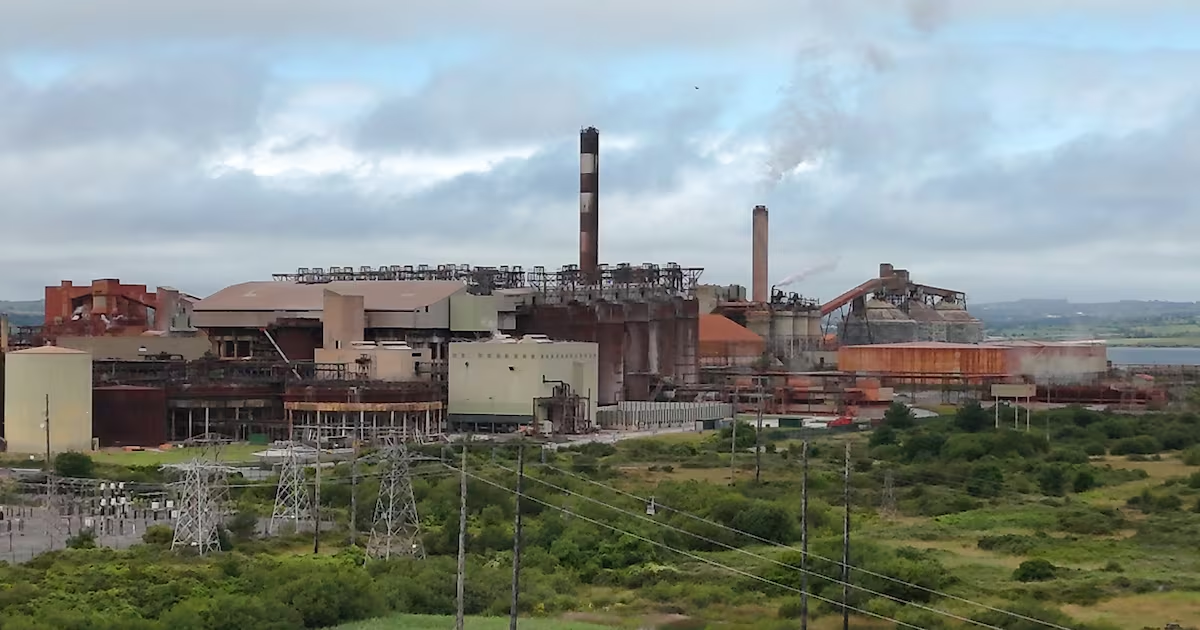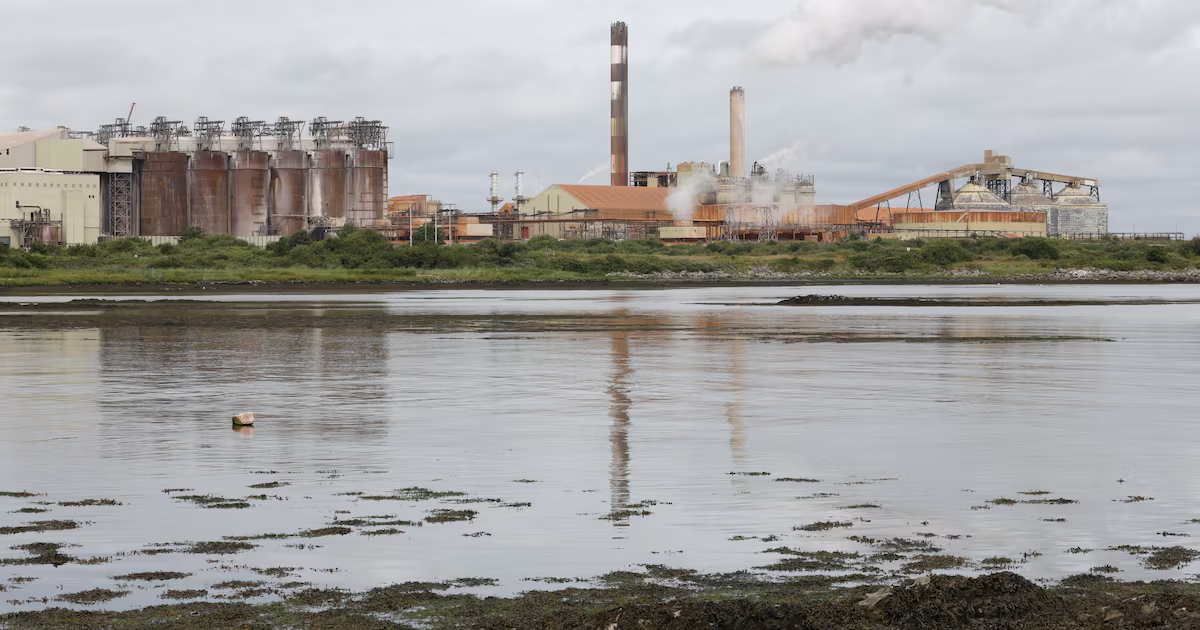
Aughinish Alumina will, under a new oversight arrangement, be expected to provide the Government with regular evidence its products are not supplying the Russian military.This will include documentary evidence gathered by SGS, a Swiss auditing company hired by Aughinish, which will examine the Co Limerick plant’s supply chains in Russia.However, Irish officials have not ruled out taking enforcement action if evidence emerges that Aughinish is supplying material that ends up in Russian weapons.The action plan is laid out in a confidential report completed last week. It arises from an investigation into disclosures by The Irish Times that Irish alumina is being sold in large quantities to smelters that sell finished aluminium to a company supplying the Russian arms industry.From the Shannon to Siberia: How alumina from a Limerick refinery enters Russia’s weapons supply chainAughinish Alumina in Co Limerick supplies vast amounts of raw materials to Russian aluminium smelters, according to an investigation by The Irish Times and the Organised Crime and Corruption Reporting Project (OCCRP).Read the full investigation here.The Government has declined to release a report on the findings of its investigation, but a copy obtained by The Irish Times states there is not enough evidence to conclude Irish alumina is ending up in Russian weapons but neither is there enough evidence to rule it out.According to the report, Aughinish will contract SGS to travel to smelters in Russia to monitor and document supply chains and ensure Irish alumina is being used solely for civilian and export markets. “The company will be expected to provide documentation from the auditor to the department periodically for assessment,” the report by the Department of Enterprise states.SGS describes itself as “the world’s leading testing, inspection and certification company”. Unlike many European companies, SGS continues to operate in Russia and has a large number of staff in the country.The department’s report also raised concerns about the due diligence employed by Aughinish Alumina, noting that in the past it did not have written procedures regarding sanctions. This left “a potential gap in the application of sanctions due diligence”.[ European Commission will not rush into decision on possible Aughinish sanctionsOpens in new window ]The Irish company has since rectified this “with written procedures which they have agreed to review on a yearly basis”, the report states. It concludes that Aughinish is so structurally integrated into its parent company Rusal “that it cannot realistically operate as a stand-alone entity”.It notes the company has struggled to keep European customers due to its Russian ownership and has filled this gap by increasing exports to Russia.If the goal is to diversify Aughinish’s customer base, the report says the Government and European Commission will have to work with the company “and the limited numbers of potential customers within the EU” to achieve this.The department said there is not enough evidence to take legal action against Aughinish, but it has left the door open to using newly passed legislation to prosecute the company if new evidence emerges.The legislation, passed earlier this year, grants authorities powers to prosecute companies suspected of breaching sanctions and to direct them to comply with export conditions.“The department will continue to monitor developments relating to the sale and movement of alumina produced by the company and will assess any credible information concerning potential sanctions breaches that comes to its attention,” it stated.[ Fianna Fáil Minister says redirection of Aughinish Alumina exports a ‘simplistic’ solutionOpens in new window ]The report also raises concerns about incorrect export data provided by the company to Revenue, which was then supplied to the Central Statistics Office. Aughinish told investigators this error resulted from a new employee inputting alumina exports as tonnes instead of kilograms.“The question arises as to how such a major error could be performed in the reporting of sales. This is especially so when considering the scrutiny that the company has been under since the initial US sanction imposition of 2018,” the report states.The company has agreed to implement a new system to prevent this happening in future. Officials said it may also be advisable for Revenue to carry out “regular cross checks” on these figures to ensure it “accurately reflects the actual export data”.
Aughinish Alumina will have to prove its products are not supplying Russian army
Aughinish to hire Swiss firm to travel to Russian smelters to ensure Irish alumina is being used solely for civilian and export markets
693 words~3 min read