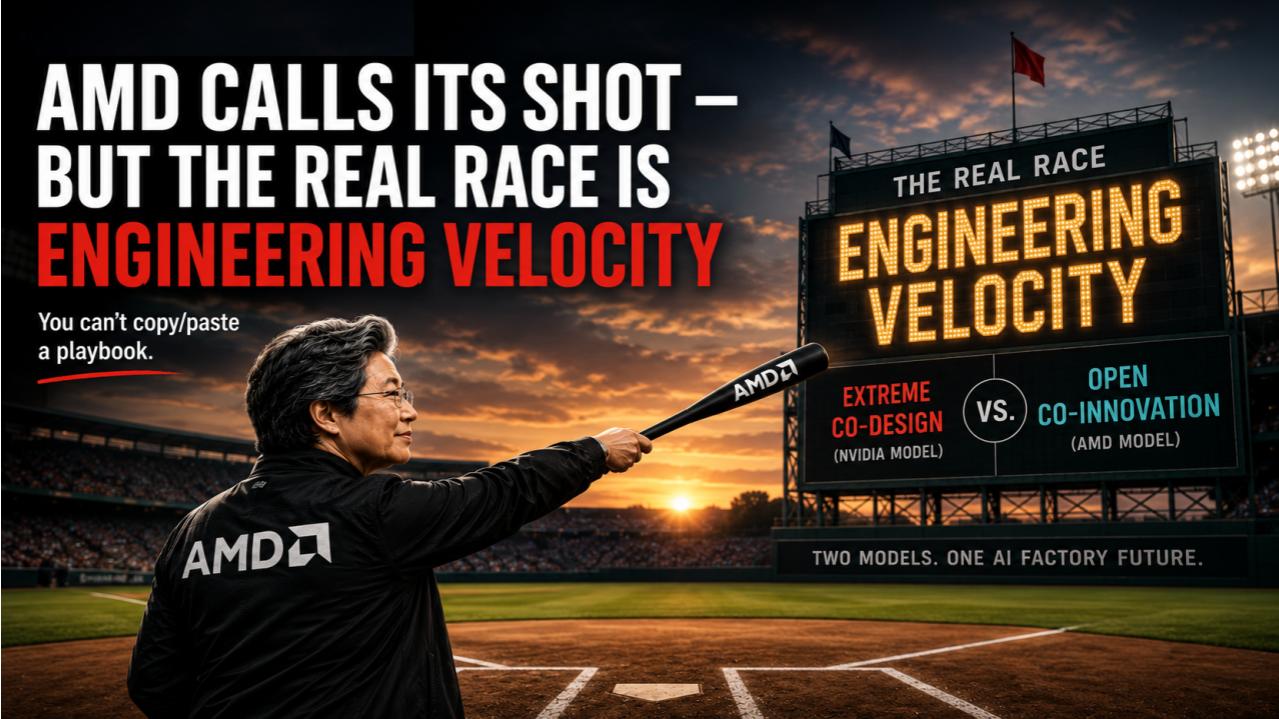
AMD calls its shot, but the real race is engineering velocity
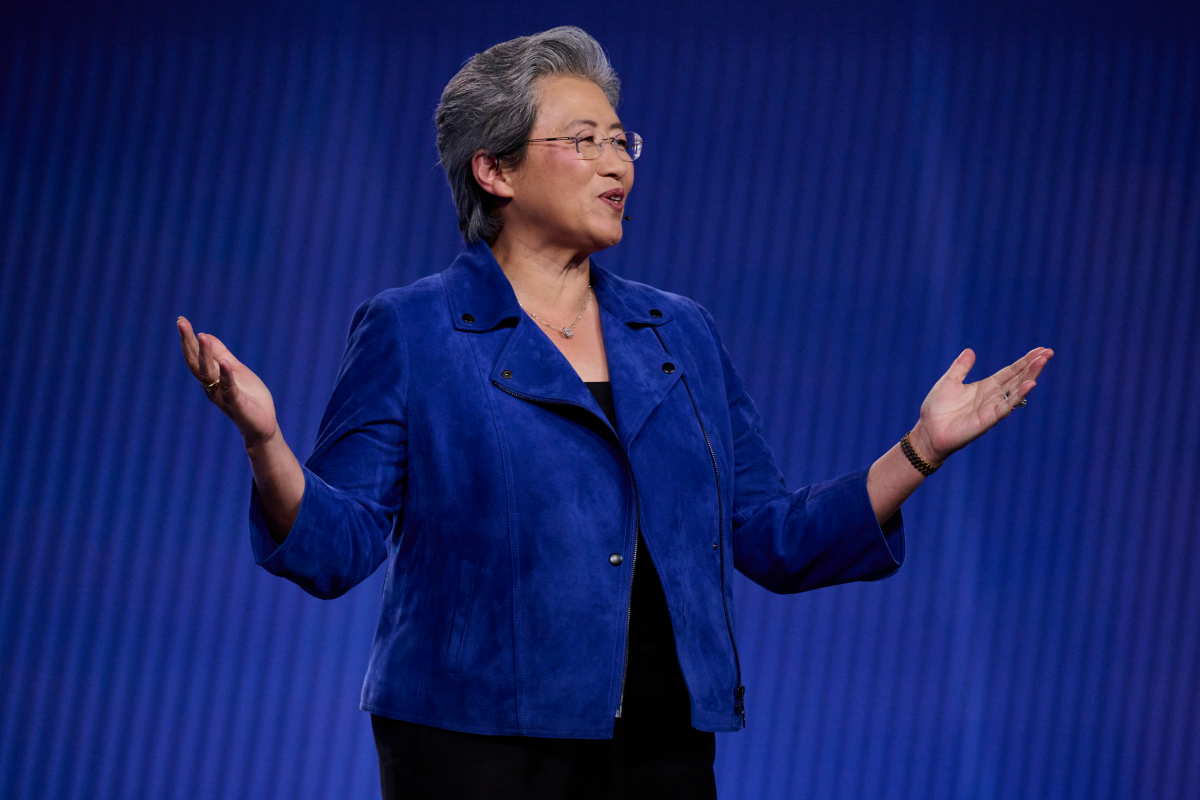
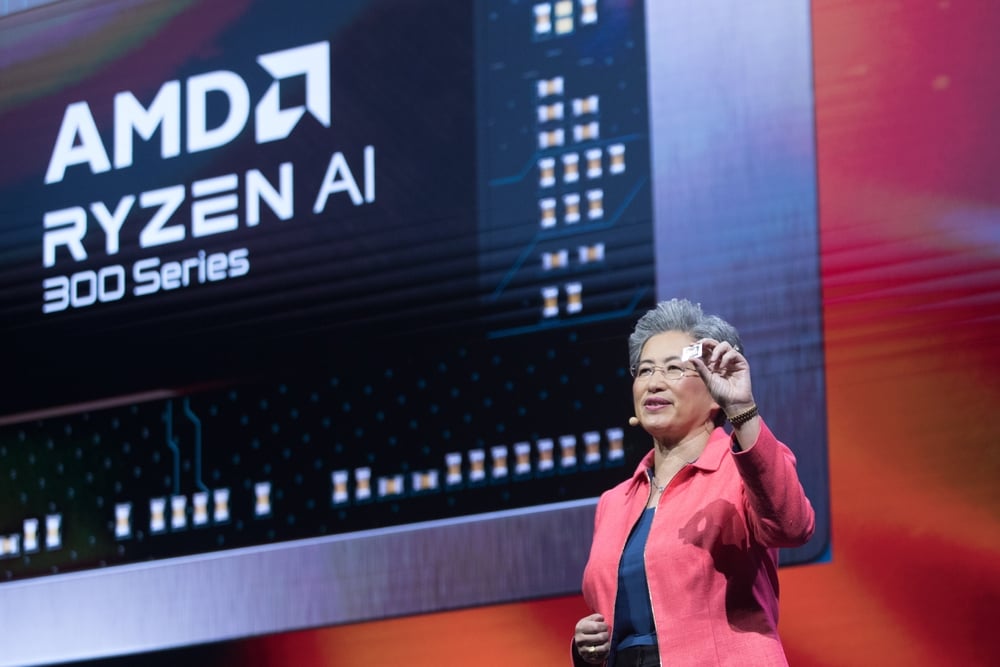
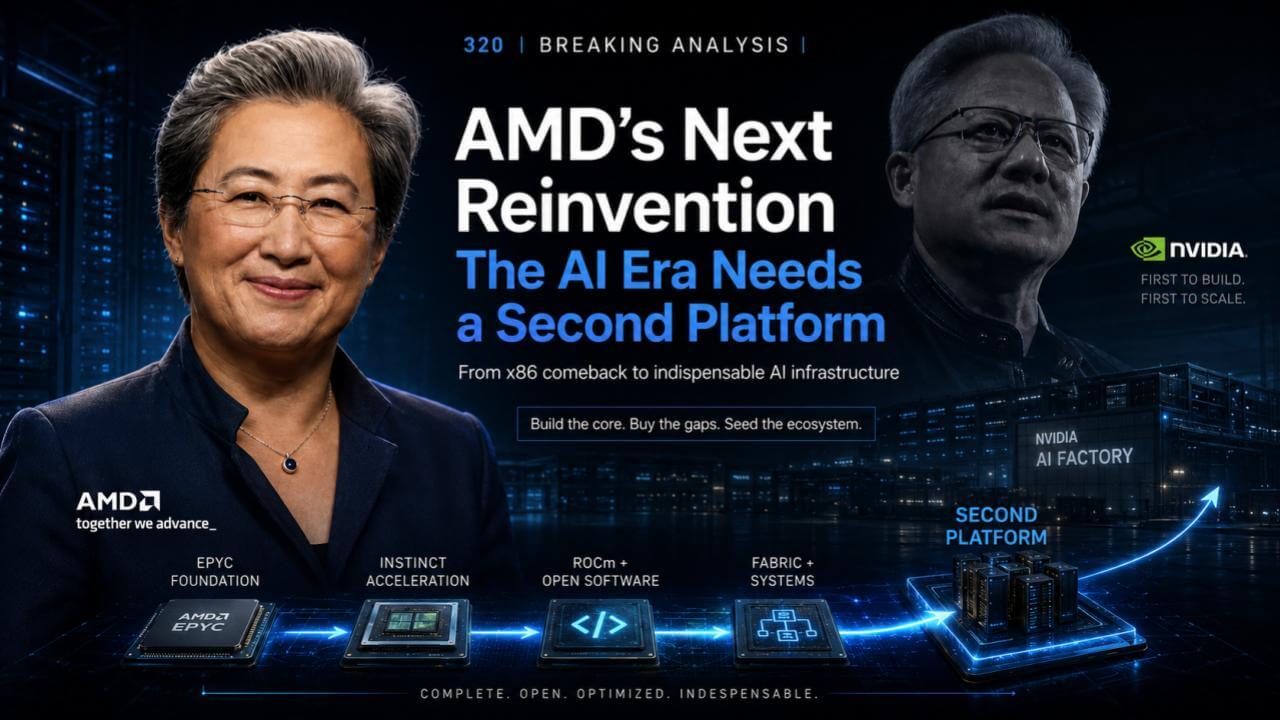
At AMD’s Advancing AI event, Lisa Su called her shot – just like Babe Ruth. The question now is whether AMD has built the engineering machine to hit it. Last week, we argued that AMD’s next reinvention did not require it to beat Nvidia. Rather, we said, the company needed to become the indispensable second platform in a rapidly expanding AI infrastructure market. That thesis was well received. But at Advancing AI, Lisa Su raised the stakes considerably.
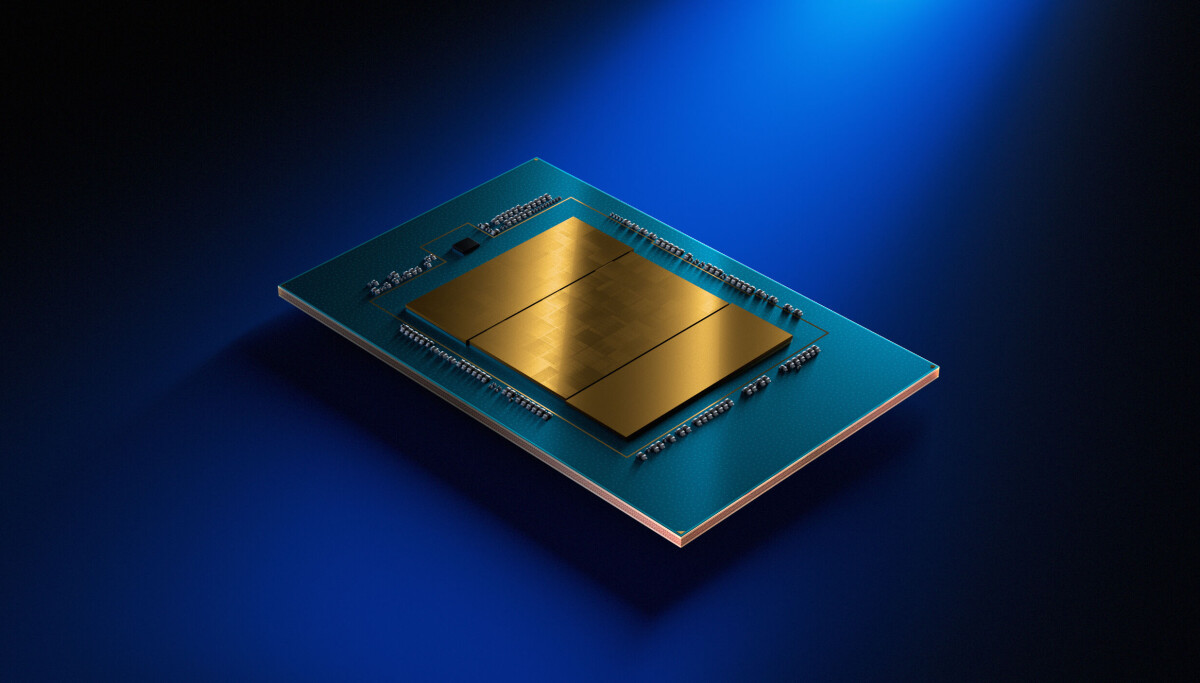
AMD didn’t present its new products like Venice, Instinct MI455X, Helios and ROCm as “respectable alternatives.” It claimed outright leadership across CPUs, GPUs, rack-scale performance, memory capacity, network bandwidth and tokens per dollar. And it extended the argument across enterprise AI, robotics, ultra-low-latency inference and a rapidly expanding partner ecosystem.
The obvious narrative coming out of the event is whether AMD’s model of Open Co-Innovation can match Nvidia’s Extreme Co-Design. We initially framed the debate that way ourselves. But we now believe that is only a surface-level debate.
In fact, we think the real race is what we’re calling Engineering Velocity – i.e. which organization can turn silicon, software, development infrastructure, automated validation, customer feedback and increasingly AI-assisted engineering into the fastest continuously improving platform.