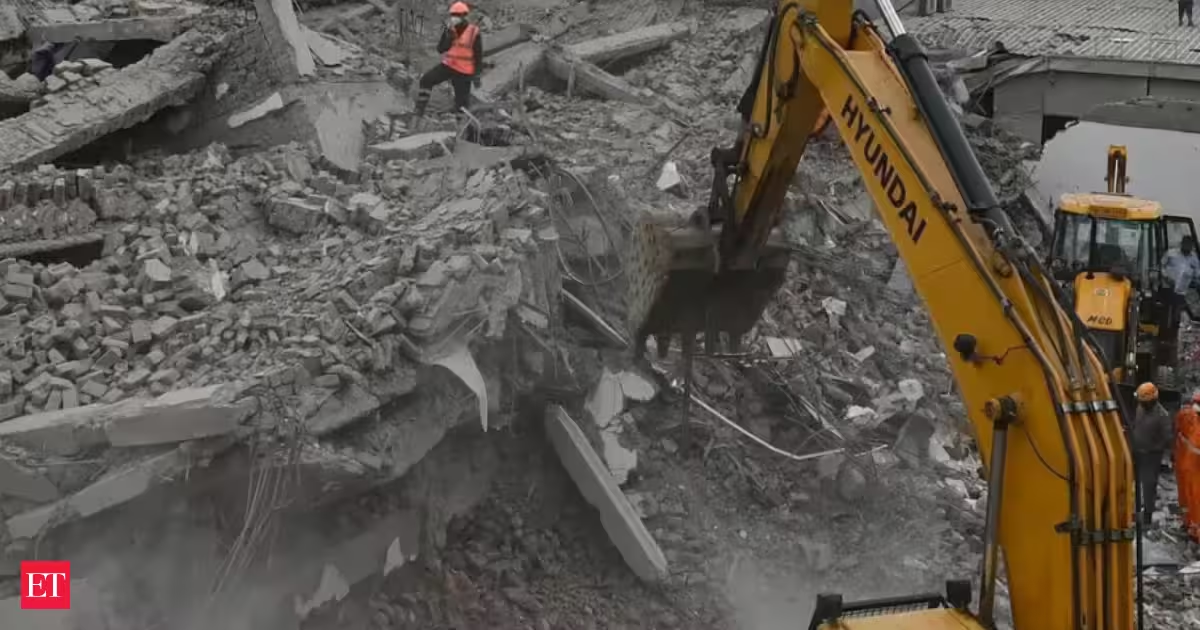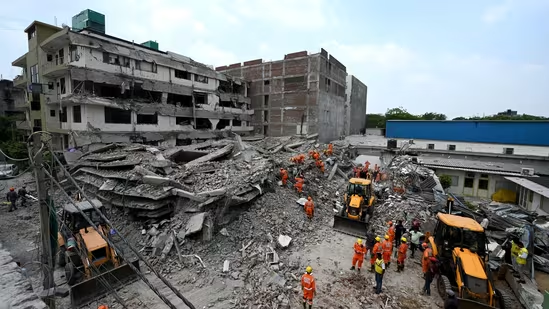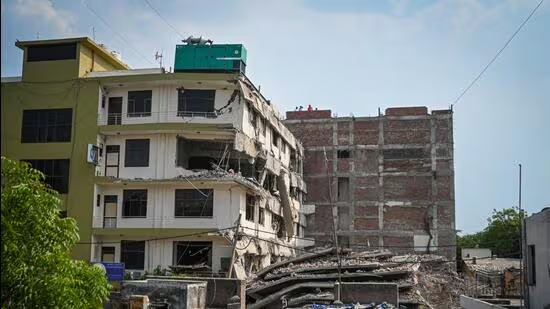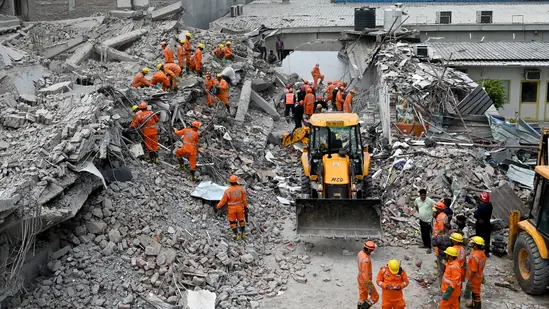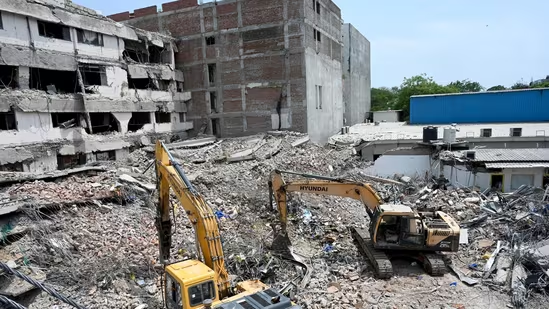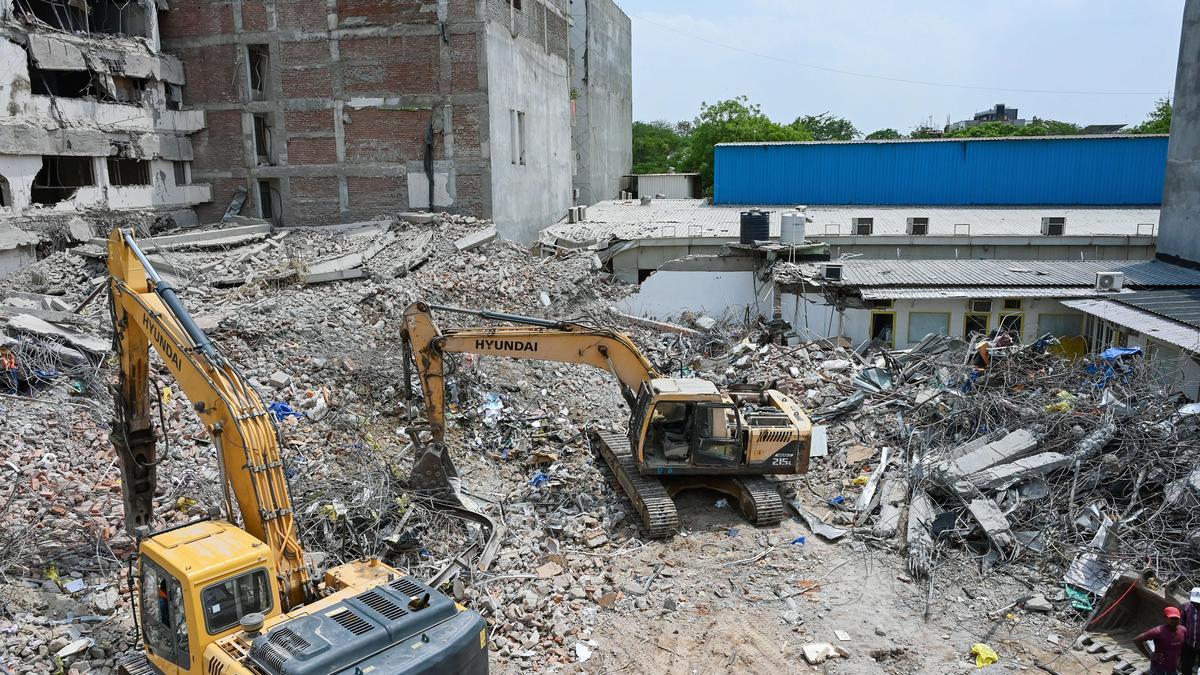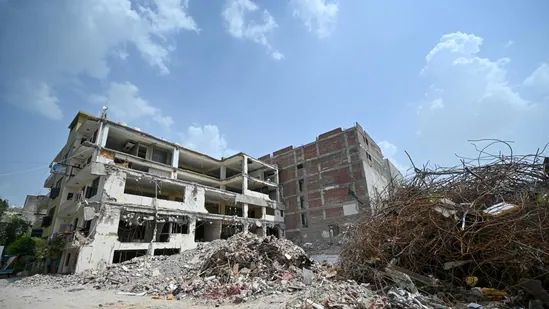
Officials of the Municipal Corporation of Delhi didn’t monitor or crack down on illegal construction, sat on multiple complaints, failed to enforce norms and later fabricated retrospective inspection records to mislead investigators, a magisterial inquiry into the collapse of an unauthorised building in south Delhi’s Saidulajab in May has found.The Saidulajab site where a building collapsed in May this year that killed 6. (Sanchit Khanna/HT Photo)The 80-page inquiry report into the accident — where a four-storey building collapsed on May 30 when two additional floors were under construction, burying a canteen, damaging a neighbouring coaching institute, and killing six people — concluded that the disaster was preventable.It cleared the Delhi Police, Delhi Jal Board and power discom BSES of any wrongdoing, but flagged that one person was shuttled between multiple hospitals in the critical hours before his death.“The collapse primarily resulted from unauthorised structural additions and inadequate regulatory enforcement...most significant deficiencies were found in the monitoring and enforcement mechanism of the Municipal Corporation of Delhi,” said the report, submitted by the district magistrate (south) to the chief secretary earlier this month and seen by HT.Also read: NEET paper leak case: First fast-track court hearing adjourned as CBI counsel skips proceedingsMCD under fireThe report also questioned what it described as attempts by the MCD to shift responsibility for the collapse by attributing it to the excavation of an underground water tank without technical evidence, saying such conclusions appeared to be based on assumptions rather than verified findings.MCD officials did not respond to HT’s queries for a comment on the report.Those killed in the tragedy comprised Ravi Prakash (26), a doctor; Ekta (23); BTech graduates Kapil (26), Alok Verma (23) and Nalin Rai (23); and Parvati Ojha (39), who ran the small eatery where several people were present when the collapse occurred. The incident exposed multiple violations, with the most blatant one being the illegal expansion of the building, police found. Constructed 13 years ago, its third- and fourth-floors were newly constructed, according to a June MCD report. The building owner, Karamveer, and two contractors, Manish Khatri and Avinesh Gupta, were later arrested.Also read: Bihar govt relents, to withdraw youth protest-linked cases, release all arrested after CJP, Oppn threaten new stirThe collapse was part of a larger string of accidents, building collapses and blazes — including the June 3 Hauz Rani fire in which 23 people died, the July 8 Rohini Sector 16 twin building collapse (3 dead), the May 3 Vivek Vihar fire (9 dead) and the March 18 fire at a residential-cum-commercial building in Palam (9 dead) — that underscored poor monitoring, lax regulations and flagrant flouting of rules by multiple agencies and the police.On July 25, HT reported that the magisterial inquiry into the deadly Hauz Rani fire indicted multiple government agencies for failures that allowed an illegally expanded building to continue operating as a bed-and-breakfast despite repeated warnings.‘Conceal their lapses’The Saidulajab report said “certain officials” appeared to have “created false and fabricated official documents” — show-cause notices dated May 27 and a work-stop notice dated May 29 — after the building had already collapsed.Also read: Supreme Court says Ram temple donation case must have 'speedy, qualitative, impartial probe' in timely manner“The apparent purpose of preparing these documents retrospectively was to mislead the inquiry, create a false record of official action and conceal their lapses, negligence and failure to discharge their statutory duties,” the report said.The report noted that the unauthorised third and fourth floors were acted against by MCD only on May 27, three days before the collapse though the illegal floors were flagged earlier in March.According to the report, the MCD received a complaint regarding unauthorised construction on March 9, which was forwarded to the concerned officials on March 12. However, the civic body failed to produce any records before the inquiry committee “showing any inspection, verification, booking, demolition action or preventive measures taken pursuant to the complaint for more than two months”.Describing this as evidence of possible administrative failure, the report said, “this indicates possible inaction on the complaint received”, while also pointing to “inadequate field monitoring”.Also Read | Major changes in security, darshan arrangements at Ram temple likely ahead of Kanwar YatraDuring his deposition before the inquiry committee, the junior engineer said he could not inspect the site because of a lack of time and other official responsibilities.Victim referred to multiple hospitalsThe report also highlighted that the building’s actual height and structural condition were never properly verified. It said the MCD’s responses did not indicate any “proactive mechanism” adopted “to identify structurally unsafe buildings or dangerous construction activities, especially in densely populated areas”.The inquiry also examined the medical treatment provided to Kapil, one of the deceased, noting that he underwent multiple referrals before receiving definitive care.An autorickshaw driver, who appeared as a witness, told the inquiry that he first took Kapil to a nearby hospital, which allegedly refused treatment. The hospital, however, denied that the patient was ever brought there. Kapil was subsequently taken to Pt Madan Mohan Malviya Hospital, which referred him to Safdarjung Hospital, where he was declared dead.“While it cannot be conclusively stated, in the absence of expert medical opinion, that the patient would certainly have survived, it cannot be ruled out that timely admission, prompt stabilisation and appropriate emergency management at the earliest stage could have materially improved the patient’s chances of survival,” the report said.The inquiry concluded that effective enforcement of structural safety norms could have prevented the tragedy and recommended fixing accountability not only on field-level officials but also on supervisory officers who failed to exercise effective oversight.Recommendations of the reportAmong its recommendations were mandatory structural safety audits of old, high-risk and unauthorised buildings, stricter inspections, and joint inspection teams comprising the MCD, Delhi Fire Services, Delhi Police, the Disaster Management Authority and power utilities.It also recommended GIS-based mapping, digital monitoring of vulnerable structures, periodic field inspections, risk categorisation of unsafe buildings, and immediate demolition or evacuation wherever necessary.The report further called for a public grievance portal and a dedicated helpline to report unsafe constructions.On emergency medical response, the inquiry said both government and private hospitals should be equipped to handle critically injured patients, noting that delays in diagnosis and treatment can significantly reduce survival chances. It also recommended stronger coordination among hospitals, police and emergency services, along with preservation of CCTV footage and medical records.Invoking the Disaster Management Act, 2005, the report recommended disciplinary action against officials responsible for negligence and called for regular training, public awareness campaigns and strict implementation of disaster management guidelines.It said stronger institutional accountability and preventive enforcement are essential to prevent similar tragedies.
‘Fabricated inspection records to mislead investigators’: South Delhi building collapse report flags MCD lapses
The 80-page inquiry report into the accident — where a four-storey building collapsed on May 30 – concluded that the disaster was preventable. | India News
1,100 words~5 min read