In which a 1990s two-bus video mixer is reduced to a reducer, and the operating manual turns out to be a test suite.
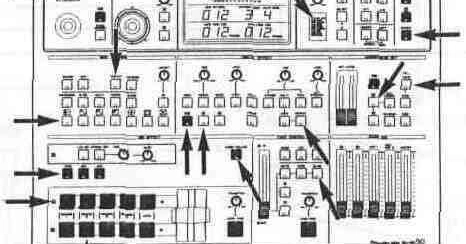
The Panasonic WJ-MX50 was a desktop digital A/V mixer sold in the early 1990s for wedding videographers, cable-access studios, and anyone else doing A/B-roll editing on S-VHS decks. Two buses, four sources, 287 wipe patterns, a chroma keyer, a downstream keyer, eight event memories, and a joystick. The whole thing was defined by a 40-page operating manual that is unusually precise about behavior: which button blinks when, which effect excludes which, how many frames an auto-fade may take (0 to 510, in steps of 2 — not 1, not 5).
That is what Panasonic sold it for. It is not what we used it for. Well into the 2000s, this thing was on stage with us in techno clubs, doing VJ duty for hours at a stretch. Two of its four channels were fed by computers running VJ software; the others carried digital video players and stills, depending on the club setup. The computers generated the material, but the MX50 is where the performance happened. Used that way, it stops being an editing appliance and becomes an instrument: the lever is played, not set; the joystick throws a mosaic block around the screen in time with the kick; Auto Take with the transition control at minimum is a percussion button. It is a profoundly interactive way to do visuals — interactive enough that people watching us work the panel regularly mistook us for the DJs, or for a live act. Nobody mistakes a laptop VJ for anything.