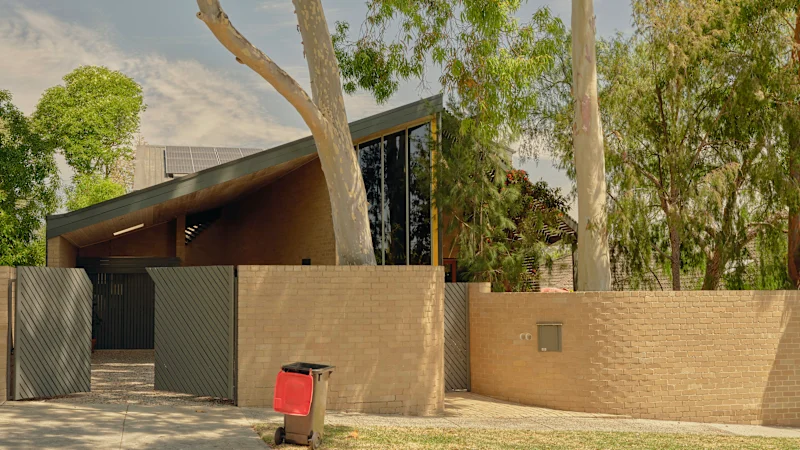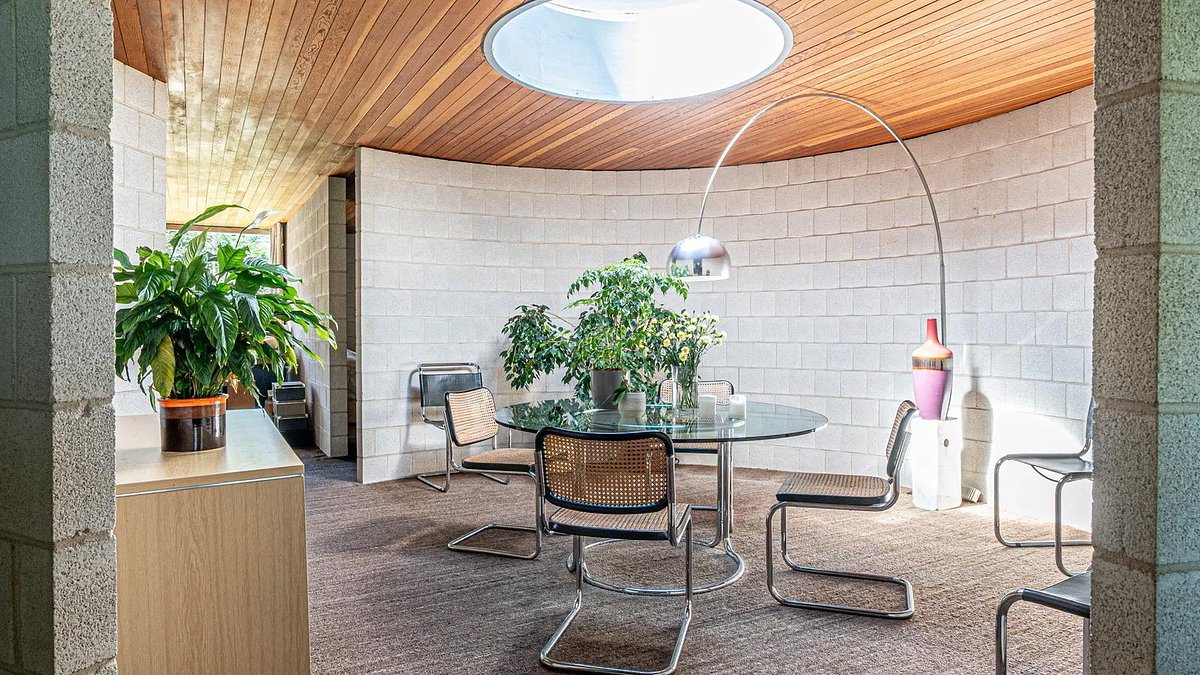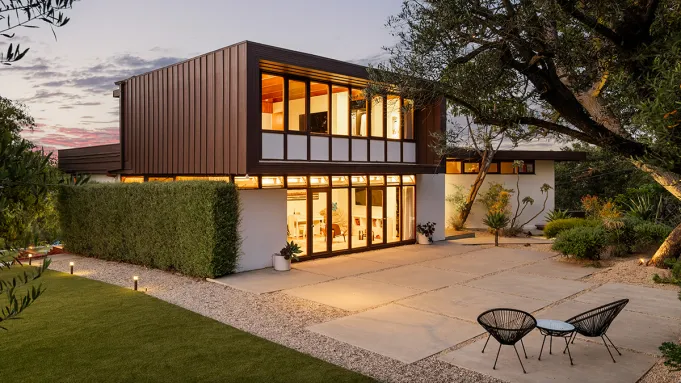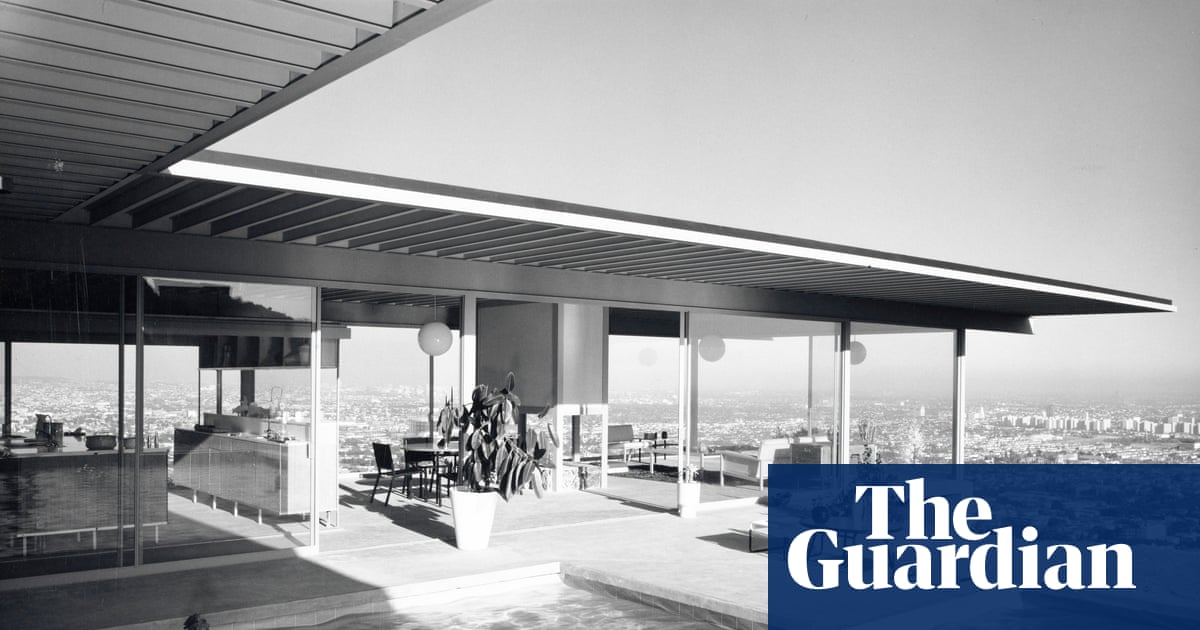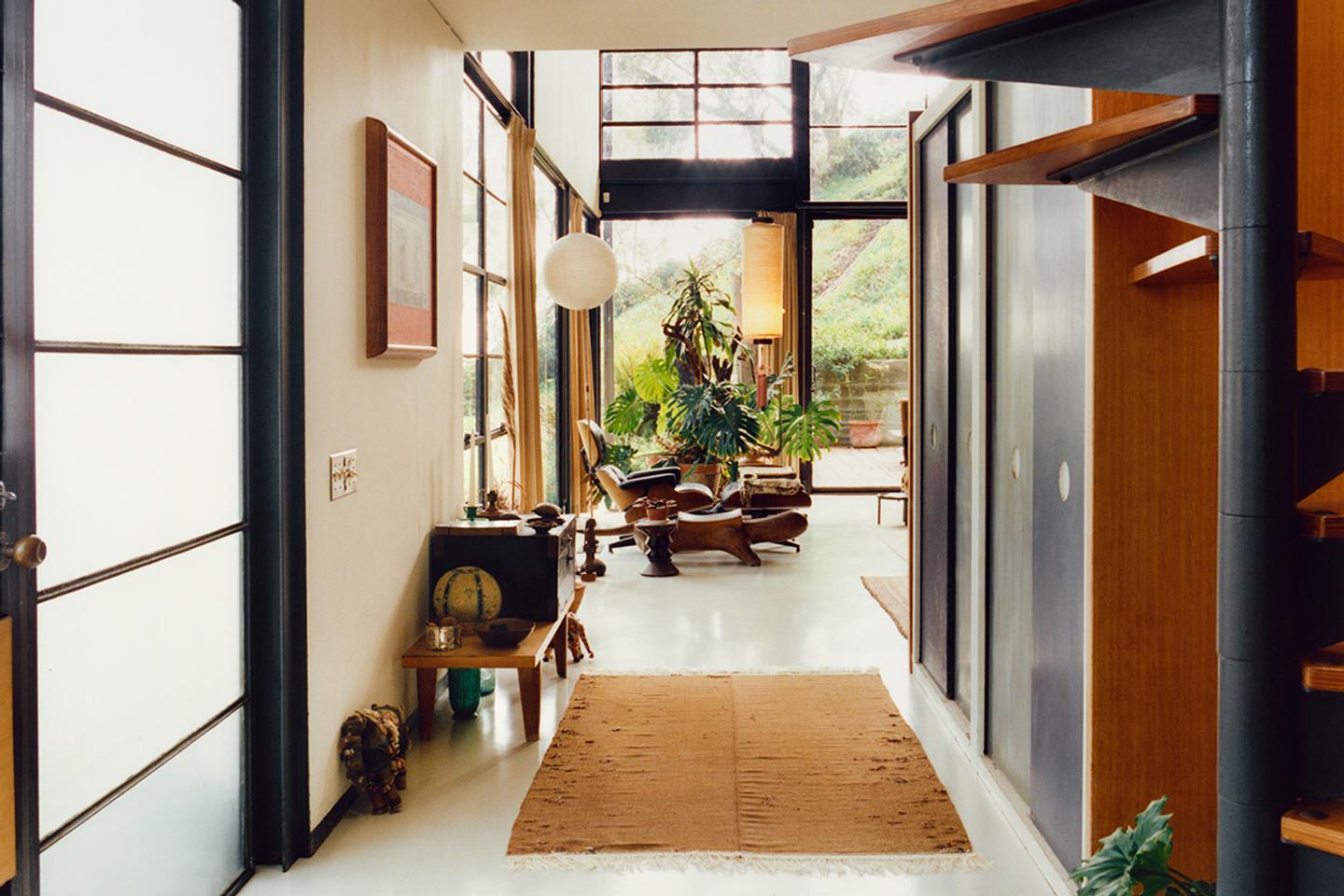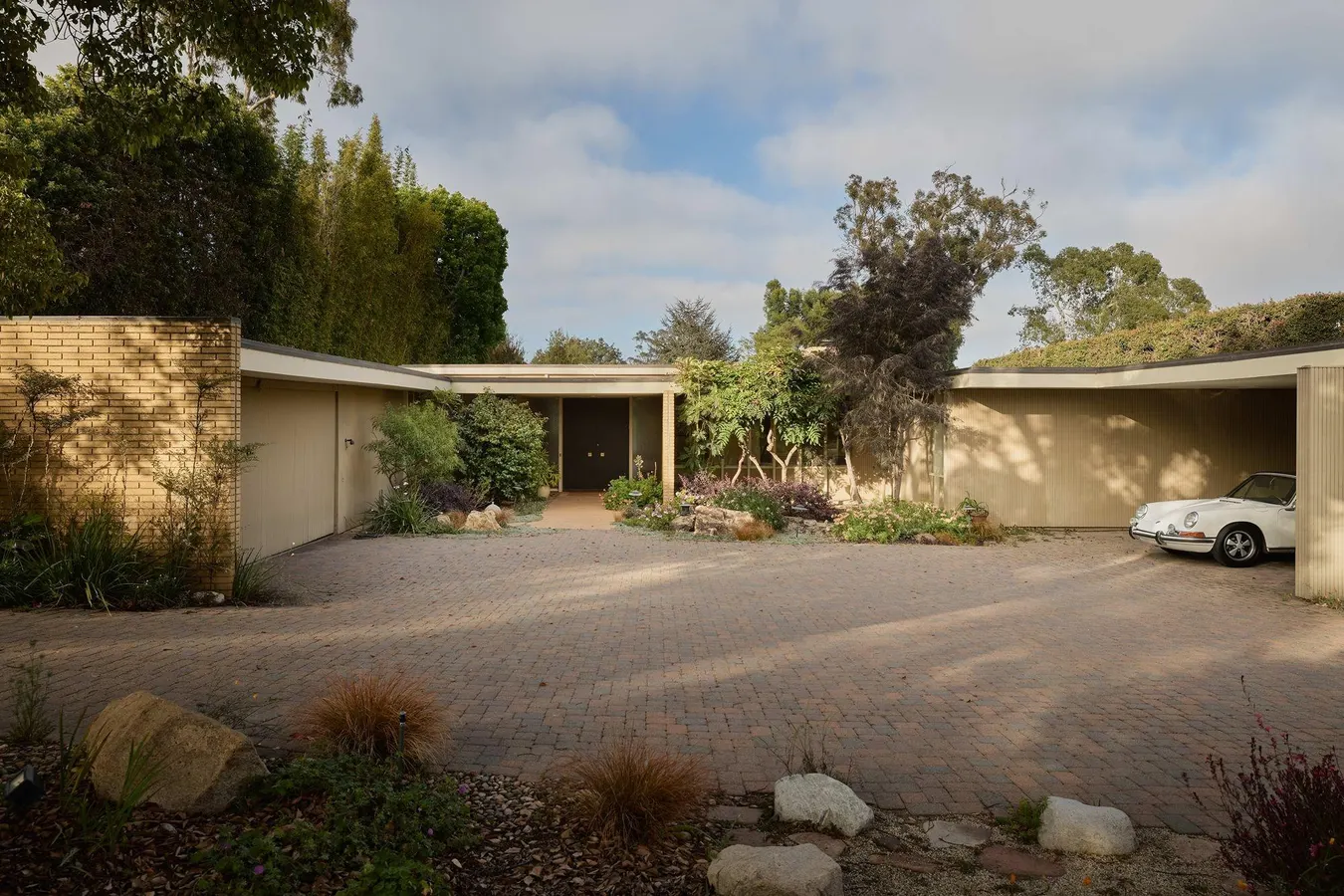
Midcentury modernism still exerts an outsize pull on contemporary taste. This 4,100-square-foot residence presents the style in remarkably intact form.Courtesy Carolwood EstatesIn 1960, a film called The Time Machine, adapted from the H.G. Wells novella, showed moviegoers what time travel might look like. Apparently, the fourth dimension would be reached aboard a machine created by a fan-boat manufacturer with help from a slot-machine designer.That same year, another time machine was completed at 344 South Cliffwood Avenue in the Brentwood neighborhood of Los Angeles. No levers. No flashing lights. Its engine: preservation. Its working parts: walnut, glass and an exacting midcentury plan. For 66 years, the house traveled forward at the speed of ordinary life without leaving 1960 behind. The return trip today requires no machinery. You need only walk through the front door.Fads come and go. Good composition and generous natural light are always in demand.Courtesy Carolwood EstatesOn the market for the first time, the residence still carries the name of those who commissioned it: Dr. E. Raymond Borun and his wife, Ruth. By the time the house was completed, the family was already woven into Los Angeles life. Raymond’s father and uncle founded Thrifty Drug Stores, the homegrown chain remembered with particular tenderness for dispensing ice cream in improbably perfect cylinders. Raymond chose a different counter, becoming one of UCLA’s early cardiologists. He and Ruth raised their family at the Borun House and Garden and remained there for more than six decades.Simplicity governs the interiors, where restraint does the expressive work.Courtesy Carolwood EstatesArchitects D. Wallace Benton and Donald G. Park, both former colleagues in the office of A. Quincy Jones and Frederick Emmons, gave the residence the long, composed silhouette of postwar California modernism. Beneath a broad roof, the single-story plan stretches low across the parcel. Deep eaves shelter walls of glass. Vertical wood siding adds rhythm, while bands of blond Norman brick provide weight and warmth.Some details reveal their era, but quality and careful preservation have kept the home remarkably fashionable.Courtesy Carolwood EstatesInside, walnut wraps the living-room fireplace and continues across cabinetry concealing a bar between the living and dining areas—preserving the clean lines without pretending domestic life has no need for storage, or a drink. Custom Sam Maloof furnishings deepen the home’s root in California design. Glass then opens the composition outward. Floor-to-ceiling panes pull the garden into nearly every room, making the landscape the house’s most persistent piece of decoration.Greenery gives outdoor spaces not only shade but shape.Courtesy Carolwood EstatesIt earns the attention. Garrett Eckbo, a defining influence in modern American landscape architecture, designed the original grounds across the more than 26,000-square-foot, street-to-street parcel. Curving lawns and brick paths loosen the architecture’s strict geometry. Patios, trellises and a wisteria-covered cedar arbor divide the property into a succession of smaller outdoor rooms, with a swimming pool occupying the central grounds.The interiors may practice restraint but the gardens answer with abundance—lush and layered, yet composed with the same exacting care.Carolwood EstatesRuth spent decades cultivating Eckbo’s framework. A devoted gardener and inveterate plant hunter, she traveled widely to study inventive landscapes and devoted weekends to tracking down rare and unusual specimens. Working with landscape designer Christine Rosmini, a Southern California Horticultural Society Horticulturist of the Year, she transformed that curiosity into a garden of international note. It appeared in Sunset and the Los Angeles Times and was one of only three American gardens included in Christopher Lloyd’s Other People’s Gardens, first published in 1995.Homeowner and koi alike are given a stylish place to swim.Courtesy Carolwood EstatesOver time, the garden has slipped free of its era and aged into timelessness. The house, in places, still announces exactly when it was built. Popcorn ceilings remain, along with finishes that may prompt affectionate recognition or an immediate call to a contractor. But while the ceilings may require a measure of historical sympathy, the plan does not. Built-in storage, warm woods, abundant daylight and rooms that treat the garden as part of the interior remain fixtures of contemporary residential design. Sixty-six years later, architects are still revisiting ideas Benton and Park had already resolved. Brentwood’s quiet residential streets provide an ideal setting for the home’s particular brand of serenity.Courtesy Carolwood EstatesLos Angeles designated the Borun House and Garden a Historic-Cultural Monument in 2020, recognizing its unusually intact architecture and landscape. Yet intact doesn’t quite capture the achievement. This is preservation born not of curatorial distance, but of care. The Boruns plainly loved their home and saw no reason to edit away the qualities that had made it theirs. Over six decades, the house became a time machine of a more personal kind, each room offering passage not merely back to 1960, but through the life they had built there. Priced at $9.95 million, the listing for 344 South Cliffwood Avenue is held by Alex Soriano and Linda May of Carolwood Estates. Carolwood Estates is a member of Forbes Global Properties, an invitation-only network of top-tier brokerages worldwide and the exclusive real estate partner of Forbes.
This $9.95 Million Los Angeles Landmark Time Travels To Midcentury Design’s Heyday
Remarkably intact, this 1960 residence in L.A's Brentwood neighborhood returns us to midcentury modernism at full stride.
832 words~4 min read