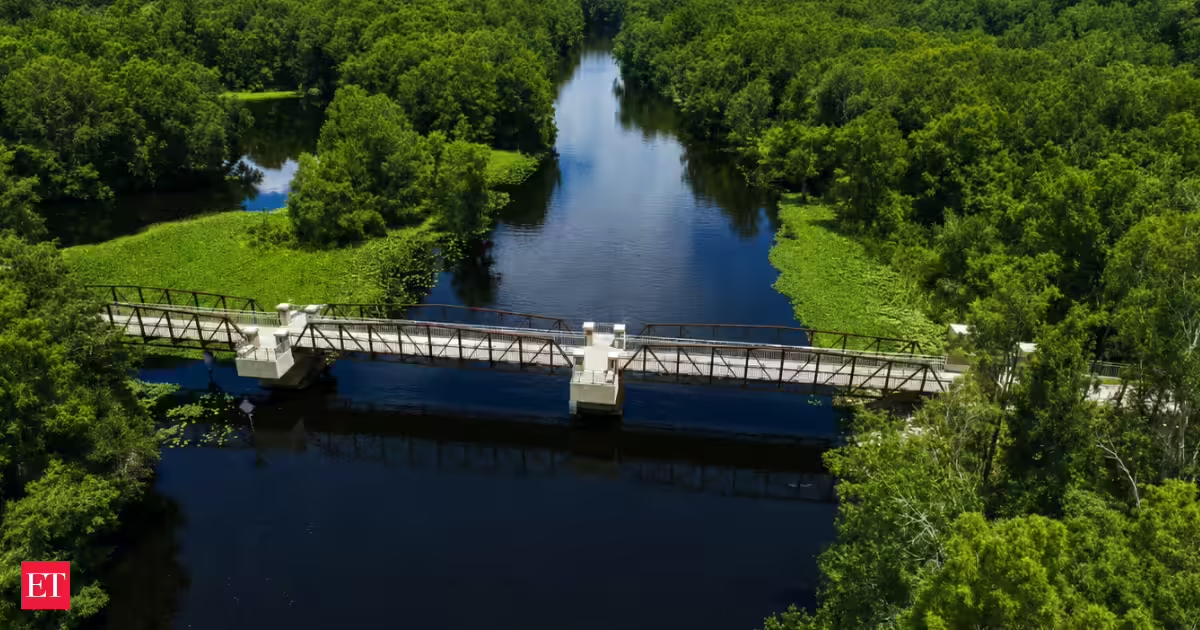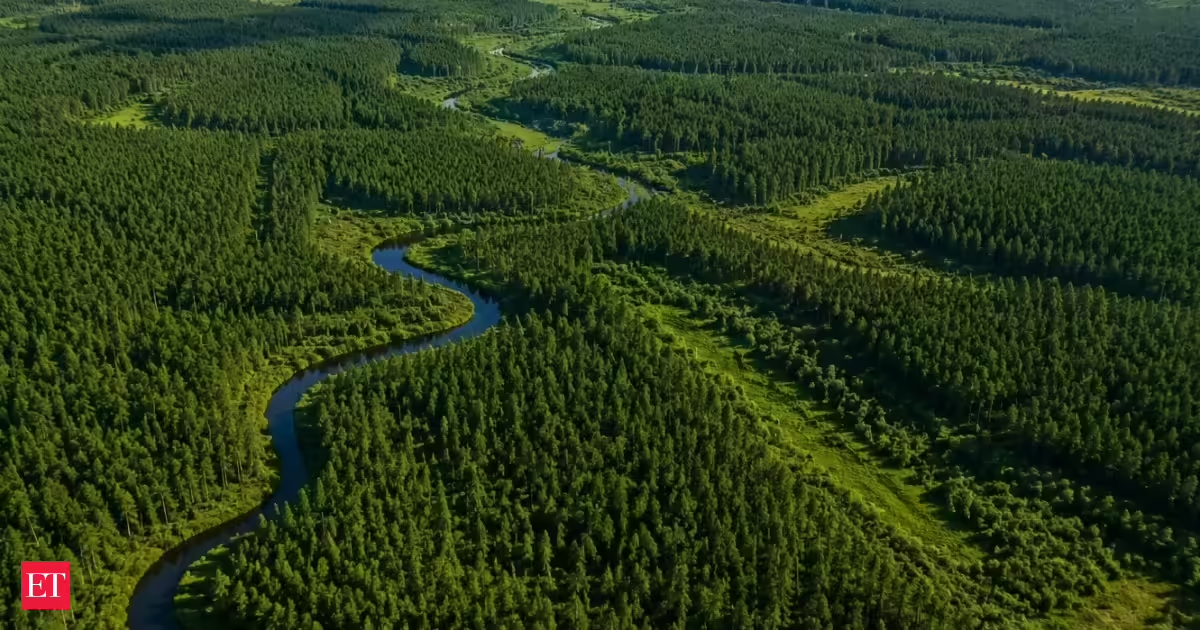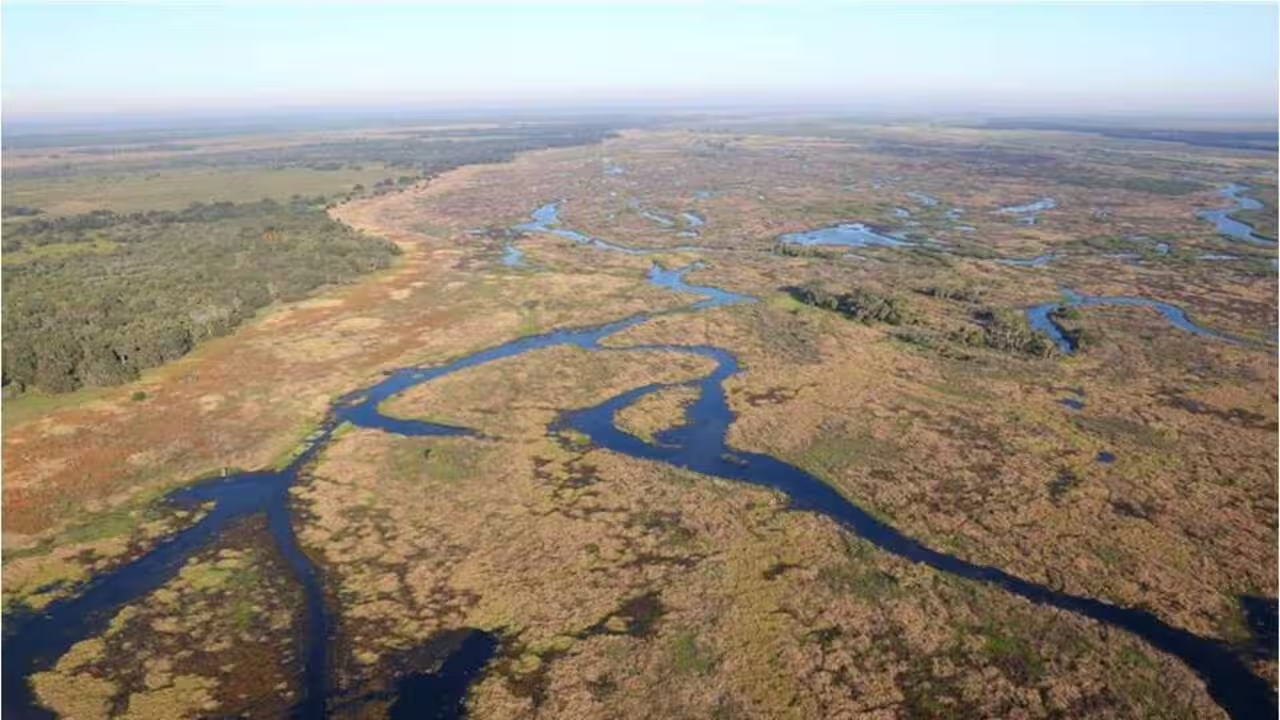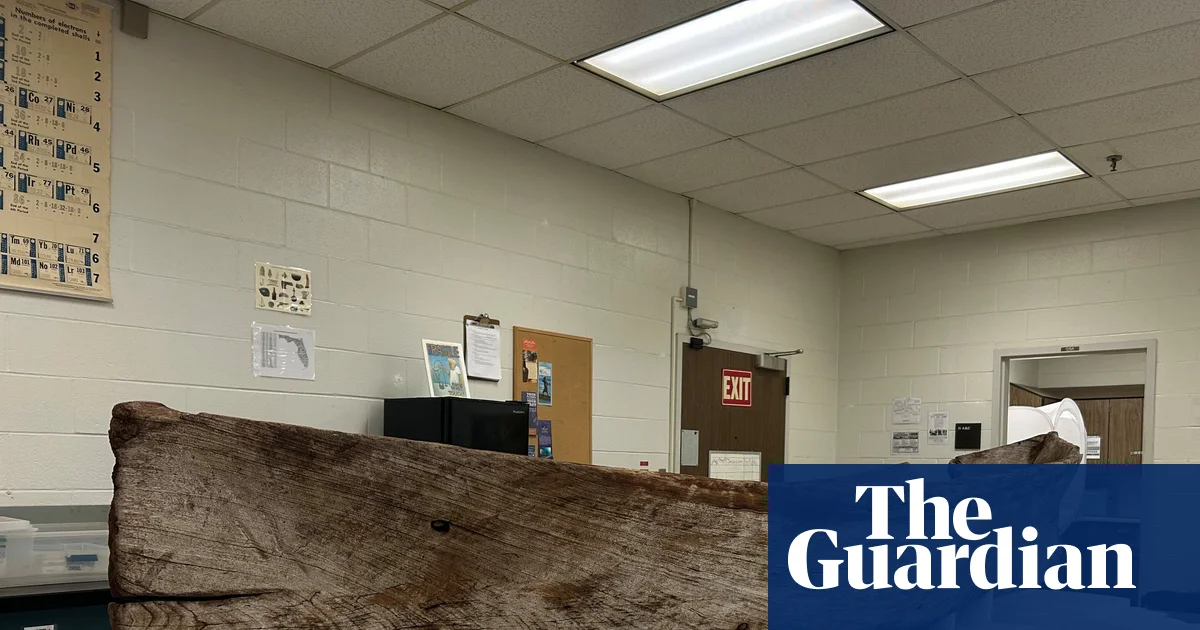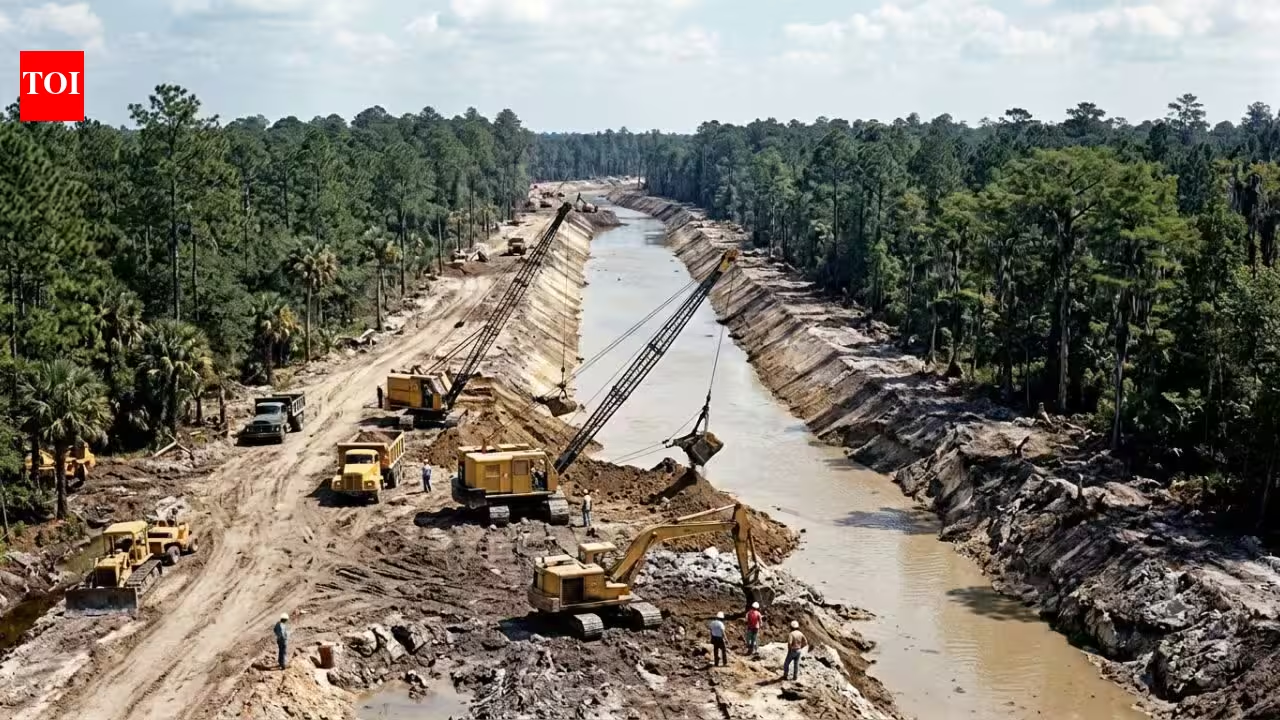
Across central Florida, long stretches of forest, quiet waterways and walking trails follow a route that was never supposed to look this way. Beneath the trees lie the remains of one of the state's most ambitious engineering schemes, a canal that was intended to cut directly across the peninsula and link the Gulf of Mexico with the Atlantic Ocean. For decades, the proposal attracted political support, public funding and high expectations. It also drew persistent criticism from people who feared lasting damage to Florida's rivers, wetlands and underground water supply. By the early 1970s, the project had come to a halt, leaving behind an unfinished landscape that would eventually take on a very different purpose.How the Cross Florida Barge Canal was supposed to work The Cross Florida Barge Canal was conceived as a shipping route that would allow vessels to avoid the long voyage around the southern tip of Florida. Instead of travelling through the Florida Straits, barges would move inland, passing through a connected system of rivers, lakes, locks and artificial channels before reaching the opposite coast.Supporters believed the canal would shorten journeys by several days. Faster shipping was expected to strengthen trade, reduce transport costs and encourage industrial growth across inland Florida. Ports, manufacturers and business groups viewed the proposal as an investment that could reshape commerce across the region.Rather than digging a single uninterrupted trench, engineers planned to combine existing waterways with newly excavated sections. Locks and dams would lift and lower vessels where water levels changed, making navigation possible across the peninsula.The canal proposal that refused to disappear The ambition to create a passage across Florida long predates modern construction equipment. Early European explorers recognised that the narrow peninsula stood between shipping routes linking the Gulf and the Atlantic, and proposals for a canal surfaced repeatedly over the following centuries.The project gained real momentum during the 1930s, when the federal government approved funding under President Franklin D. Roosevelt's New Deal. At a time of widespread unemployment, large infrastructure schemes were intended to create jobs while improving the nation's transport network.Construction began, but progress proved difficult to sustain. Financial support eventually ran out, and work stopped after only a few years. Questions had also begun to emerge about whether the canal justified its cost and whether altering Florida's landscape on such a scale would create problems that had not been fully understood.Revival during the 1960sThe proposal returned to the national agenda three decades later. In 1964, President Lyndon B. Johnson authorised renewed federal investment, allowing construction crews to resume work along the planned route.Backers argued that the canal would stimulate economic development while providing strategic value during the Cold War. Roads, bridges, locks and excavation projects advanced across parts of central Florida as sections of the future canal slowly took shape.Even as construction continued, resistance was becoming more organised. Scientists, conservationists and local campaigners increasingly questioned the environmental consequences of cutting a shipping corridor through sensitive ecosystems. Concerns extended beyond wildlife, focusing on possible changes to groundwater movement and the risk that saltwater could affect Florida's aquifer.Environmental concerns change the project’s futureBy the late 1960s, environmental protection had become a far more prominent public issue across the United States. The Cross Florida Barge Canal found itself at the centre of that shift.Critics argued that the canal would permanently alter natural water flows and fragment habitats stretching across central Florida. Others warned that disturbing underground water systems could have consequences reaching well beyond the construction corridor itself.Those concerns eventually reached the White House. In 1971, President Richard Nixon ordered construction to stop while environmental reviews continued. The decision effectively ended the project before it could be completed.By then, only around 28 per cent of the canal had been built despite tens of millions of dollars already having been spent.From abandoned construction site to protected landscapeThe unfinished route did not remain an industrial scar forever. Much of the land reserved for the canal was gradually incorporated into a conservation and recreation corridor that now stretches across central Florida.Today, the area is known as the Marjorie Harris Carr Cross Florida Greenway, honouring the environmental campaigner whose efforts played an important part in opposing the canal. Instead of commercial barges, the landscape now attracts hikers, cyclists, horse riders and people exploring Florida's natural habitats.The Greenway extends for more than 110 miles and covers over 70,000 acres. Hundreds of miles of trails pass through forests, wetlands and open countryside, while the protected corridor also allows wildlife to move between habitats that might otherwise become isolated by development.One of its most recognisable features is a land bridge spanning Interstate 75. Built to carry both wildlife and the Florida Trail across the busy motorway, the crossing reflects how the purpose of the corridor has changed over time.An unfinished project that still shapes FloridaAlthough ships never travelled from one coast of Florida to the other through the canal, the project continues to occupy an important place in the state's environmental history.It marked a period when large engineering projects were increasingly measured against their ecological consequences rather than their economic promise alone. The remains of locks, excavated channels and embankments still stand in parts of central Florida, offering visible reminders of an undertaking that began with plans to transform transportation but ended by helping preserve a broad corridor of protected land.The Cross Florida Barge Canal was never completed, yet its influence extends well beyond the unfinished construction itself. It remains part of a wider story about changing attitudes towards development, conservation and the long-term value of Florida's landscapes.
In 1964, Florida began building a canal across the state. The $110 million project failed but created an unexpected legacy
Across central Florida, long stretches of forest, quiet waterways and walking trails follow a route that was never supposed to look this way. Beneath the trees lie the remains of one of the state's most ambitious engineering schemes, a canal that was intended to cut directly across the peninsula and link the Gulf of Mexico with the Atlantic Ocean.
922 words~4 min read