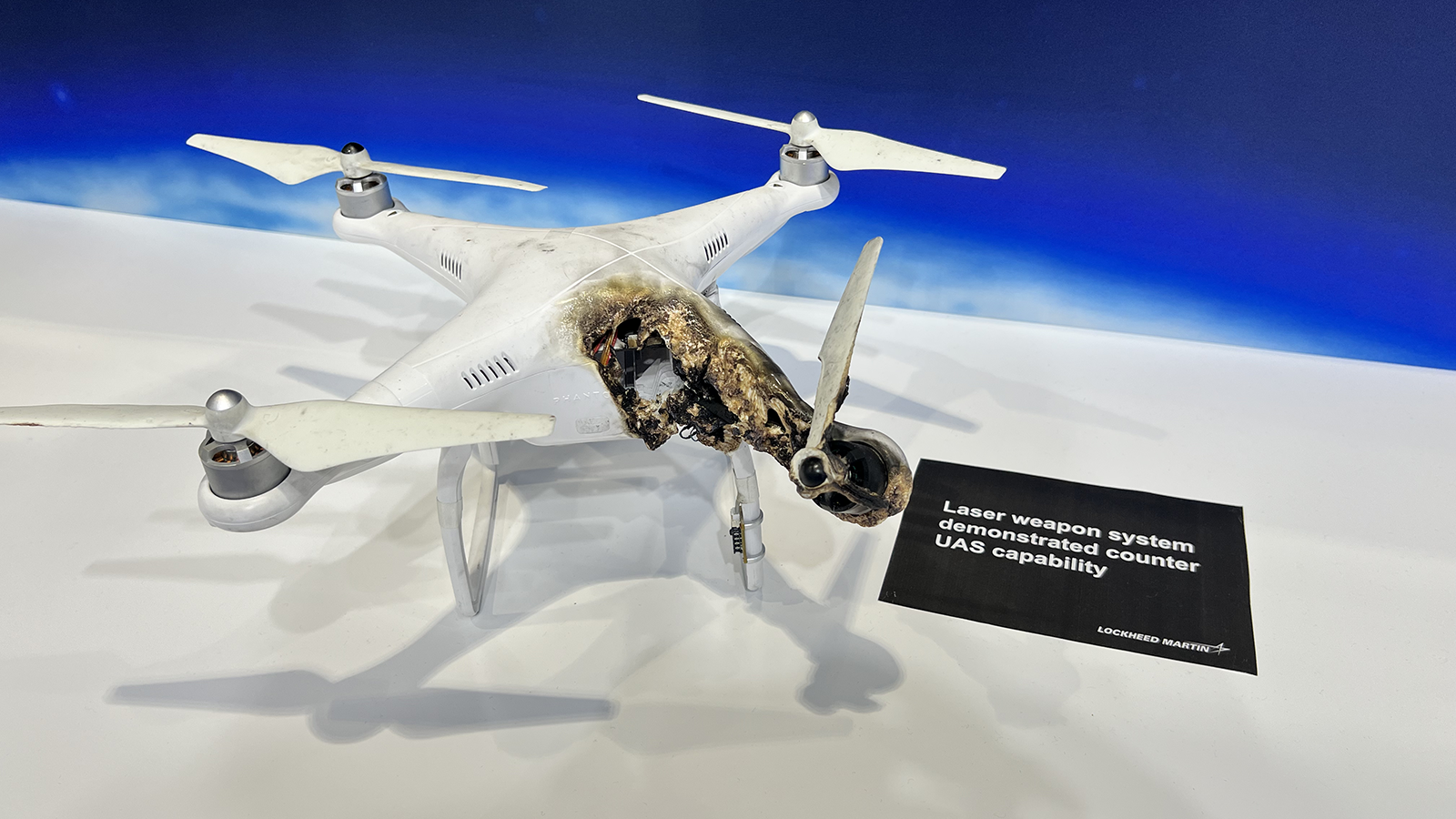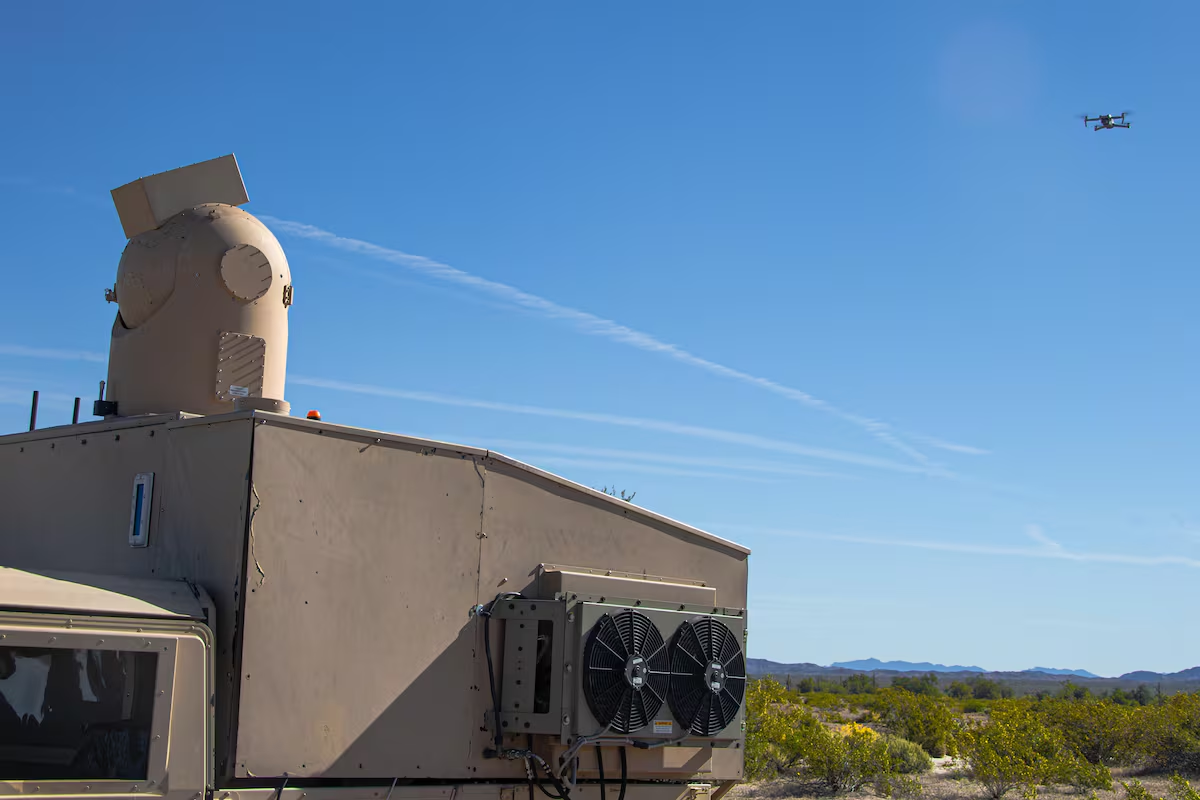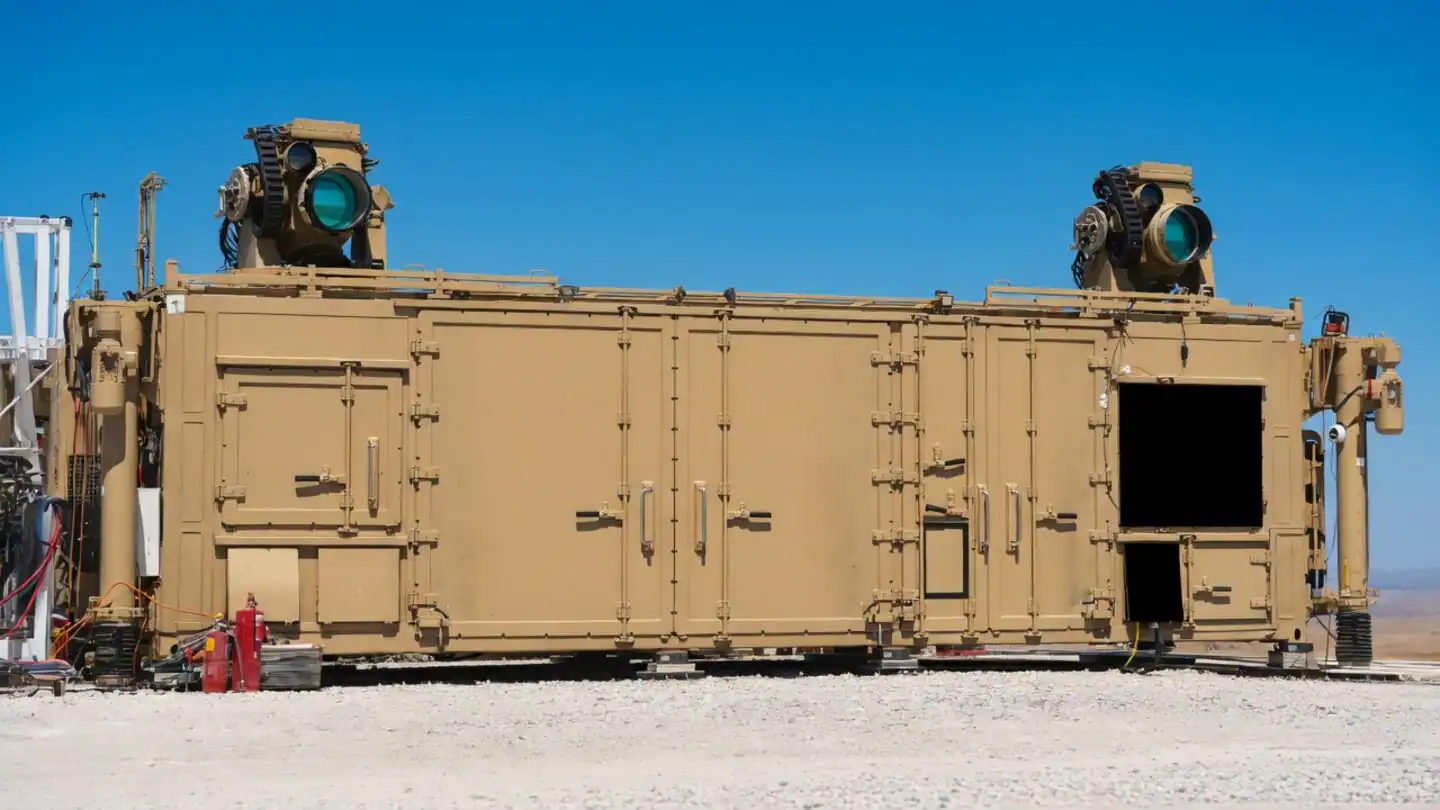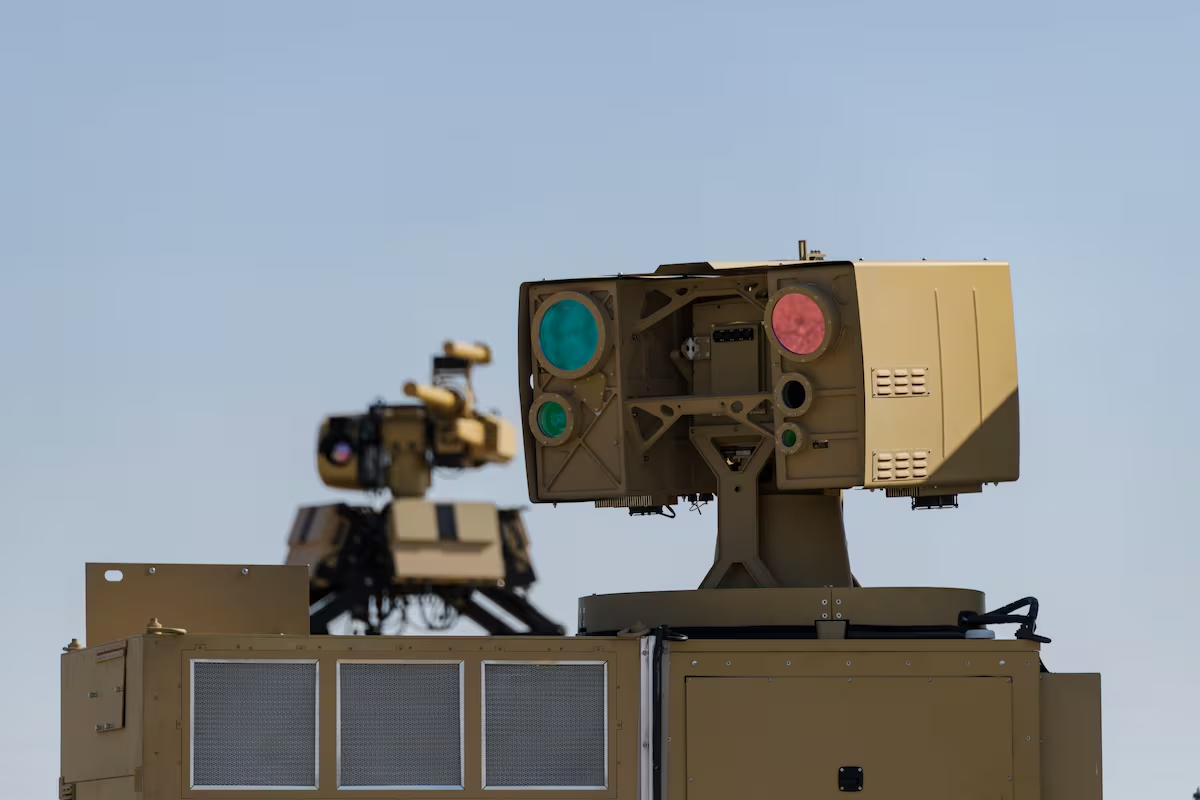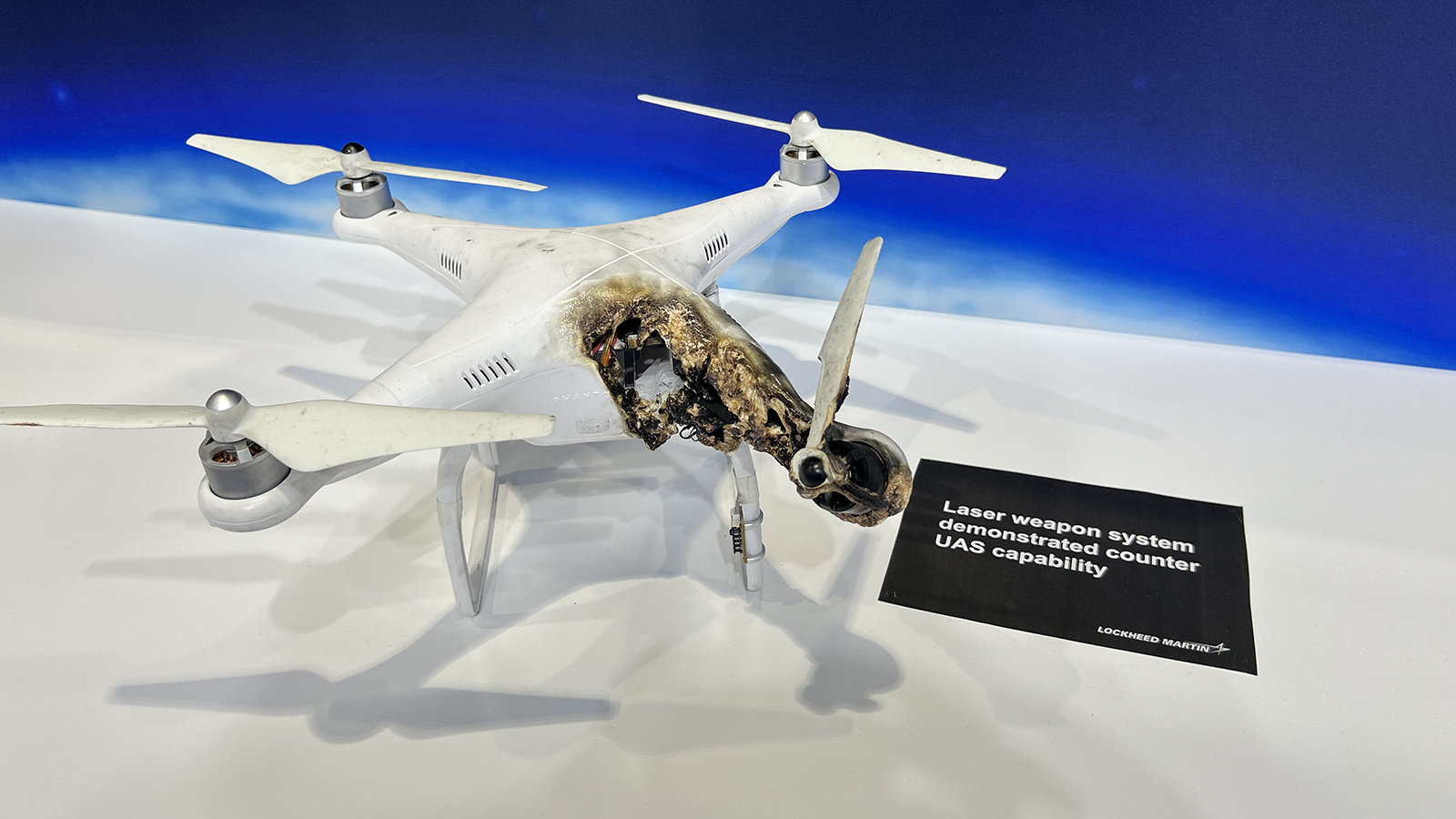
FARNBOROUGH — The Pentagon should have high-energy lasers that can melt inbound aerial threats by 2030, a top Lockheed Martin executive told Breaking Defense.
“They’re here, they’re effective, and they are working,” Stephanie Hill, president of Lockheed’s rotary and mission systems division, said in an interview at the Farnborough Airshow on July 21. The company has successfully demonstrated “a number” of laser intercepts, she said, predicting that the directed-energy weapons would be ready for operations “before the end of the decade.”
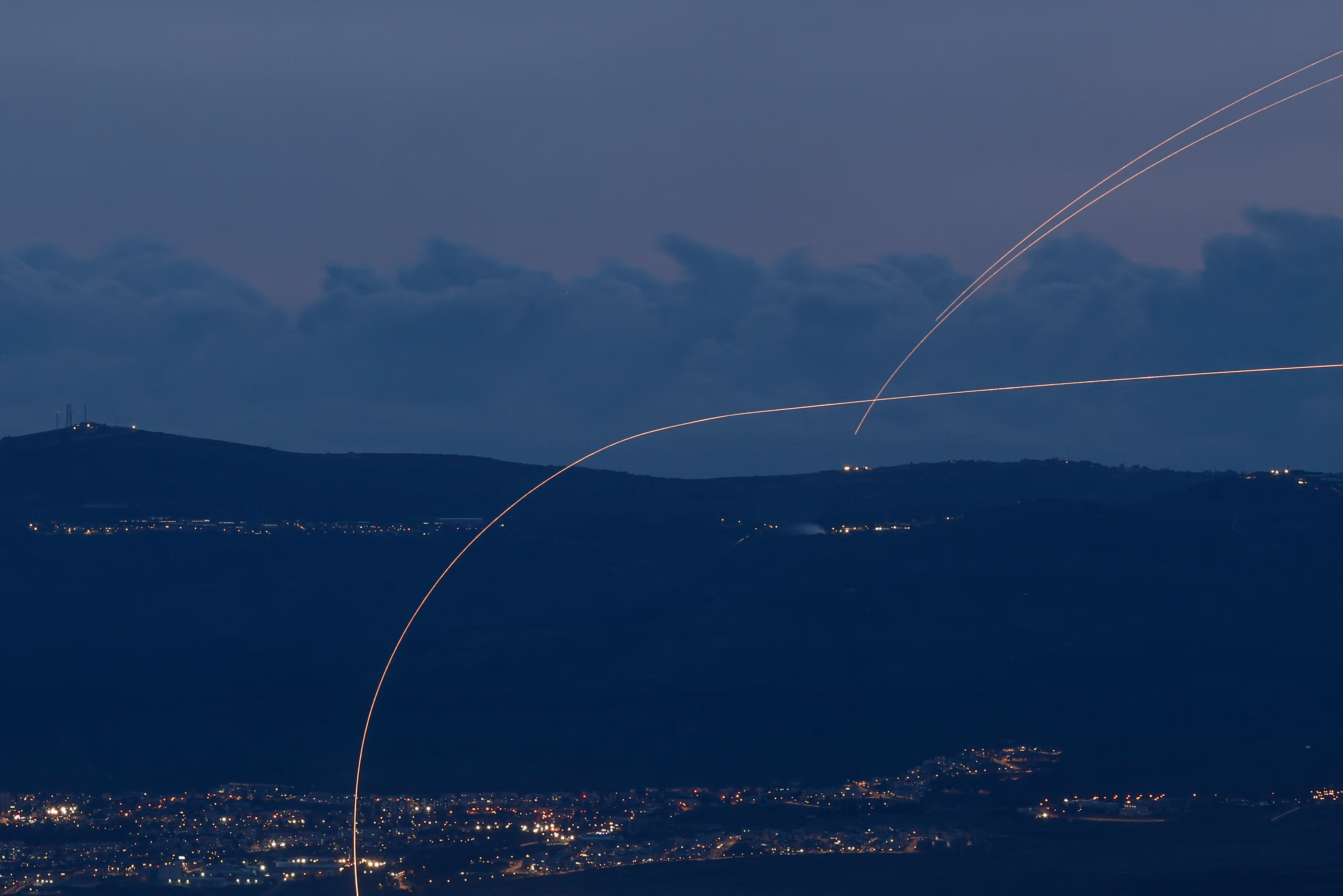
Laser systems are often seen as a holy grail for air defense. They’re a cheaper way to knock down weapons like missiles and drones than the pricey interceptors the US has burned through in recent conflicts. The Pentagon has pursued defensive directed-energy weapons for years even as technical problems surfaced, but the potential upside has kept the department invested in solutions.
“If you have power[…] you have basically an infinite magazine,” Hill said. “So highly effective, highly cost-effective as well.”
An arm of Lockheed Martin earlier this month secured a major Pentagon contract to get some of those laser systems into the hands of troops. In parallel with the specialist firm nLIGHT, Lockheed under the Joint Laser Weapon System program will develop a prototype system with 150 kilowatts of power for “urgent operational demands,” which can then be scaled up to as high as 500 kW for cruise missile defense, the Pentagon announced. (The contract award did not specify a period of performance, and Hill did not comment directly on the program.)