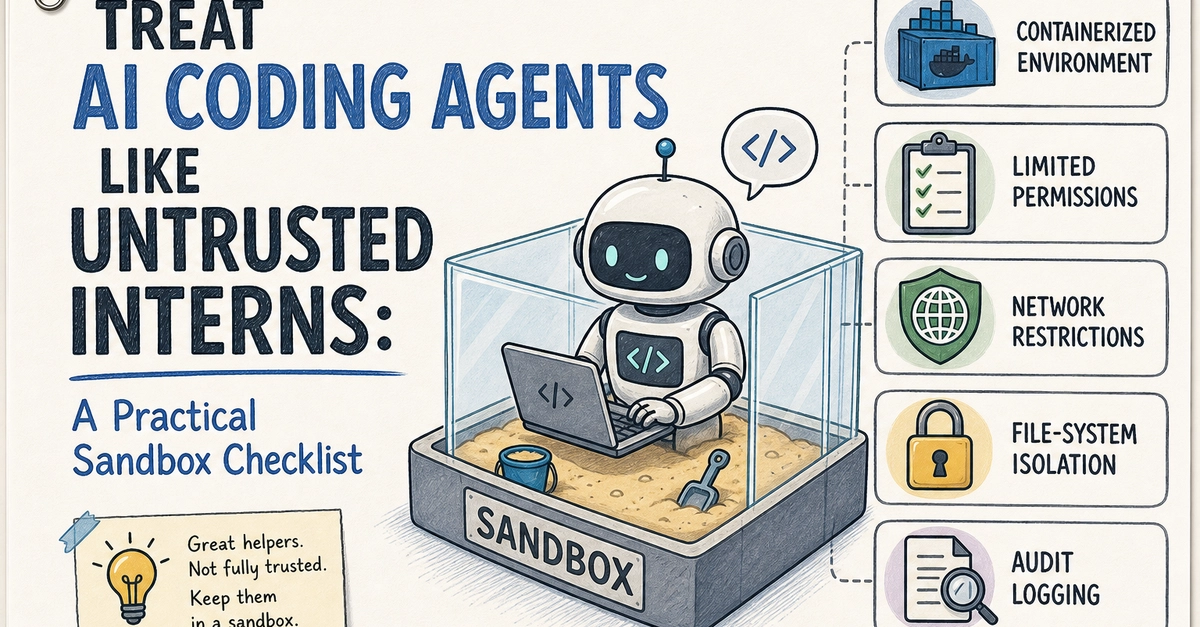
A while back I wrote about running local AI agents on your own code, and it became the most-read thing I've published. The most common follow-up question, by a wide margin: "okay, but you gave it write access to your disk, doesn't that terrify you?"
It should, a little. The first week I had a local agent with real filesystem tools, it "cleaned up" a directory by rewriting a config file I hadn't asked it to touch. Nothing was lost, git had my back, but I sat there looking at the diff thinking: this thing was three characters away from editing .env instead. A 7b model doesn't need to be malicious to hurt you. It just needs to be confidently wrong once, with write permissions.
So this is the follow-up: the patterns I actually use to give local agents filesystem access without holding my breath. None of this is exotic. All of it is the same boring security thinking I apply to smart contracts, pointed inward.
The threat model is dumber than you think
With cloud agents people worry about prompt injection and exfiltration. Those matter locally too, especially if your agent reads untrusted files (a cloned repo can absolutely contain text aimed at your agent, I see variants of this in the wild through my repo-scanner work on Argus Lens). But for local agents the dominant risk is more mundane: the model misunderstands, and its misunderstanding is executed with your permissions.