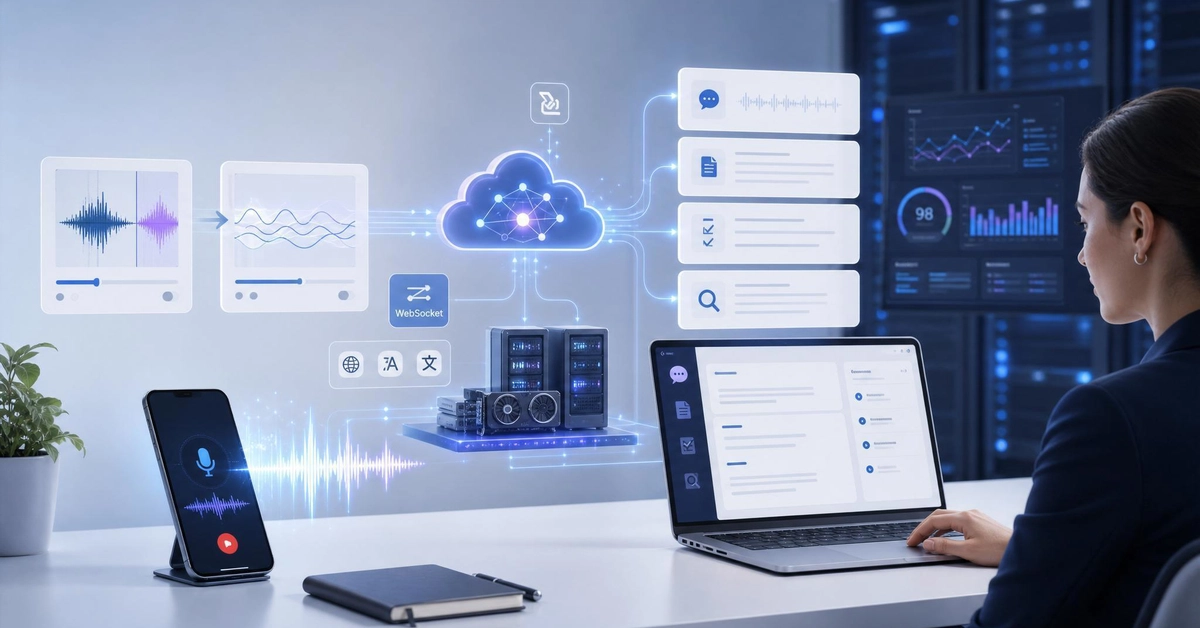
The first successful voice feature usually looks unimpressive: one audio file goes in, and one useful transcript comes out.
That is not a toy result. It is the shortest route to the questions that decide whether a voice product will work. Does the transcript preserve names and numbers? Are speaker turns separated? Are timestamps useful downstream? Can the system handle the audio your users will actually produce?
It is tempting to begin with live microphones, persistent connections, partial transcripts, browser permissions, and animated interfaces. Those pieces feel like voice AI. They also make failures harder to isolate. A safer rule is simple: prove the transcript’s value first, then earn the complexity of streaming.
Start with the product’s clock
The important architectural choice is not Python versus another language. It is batch versus real time.