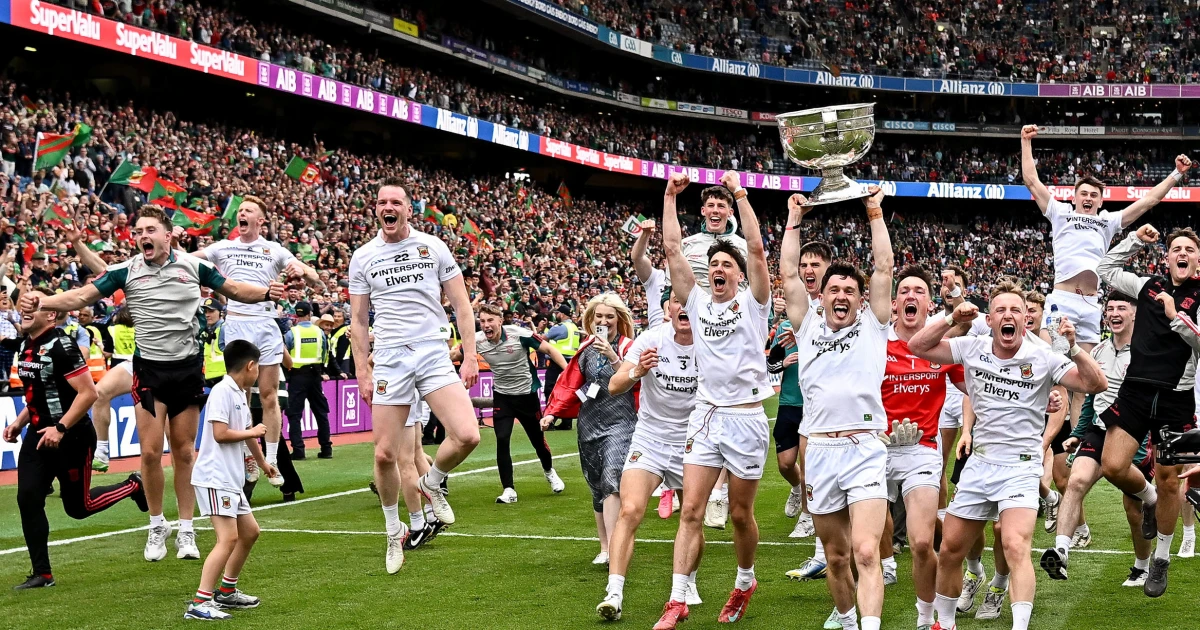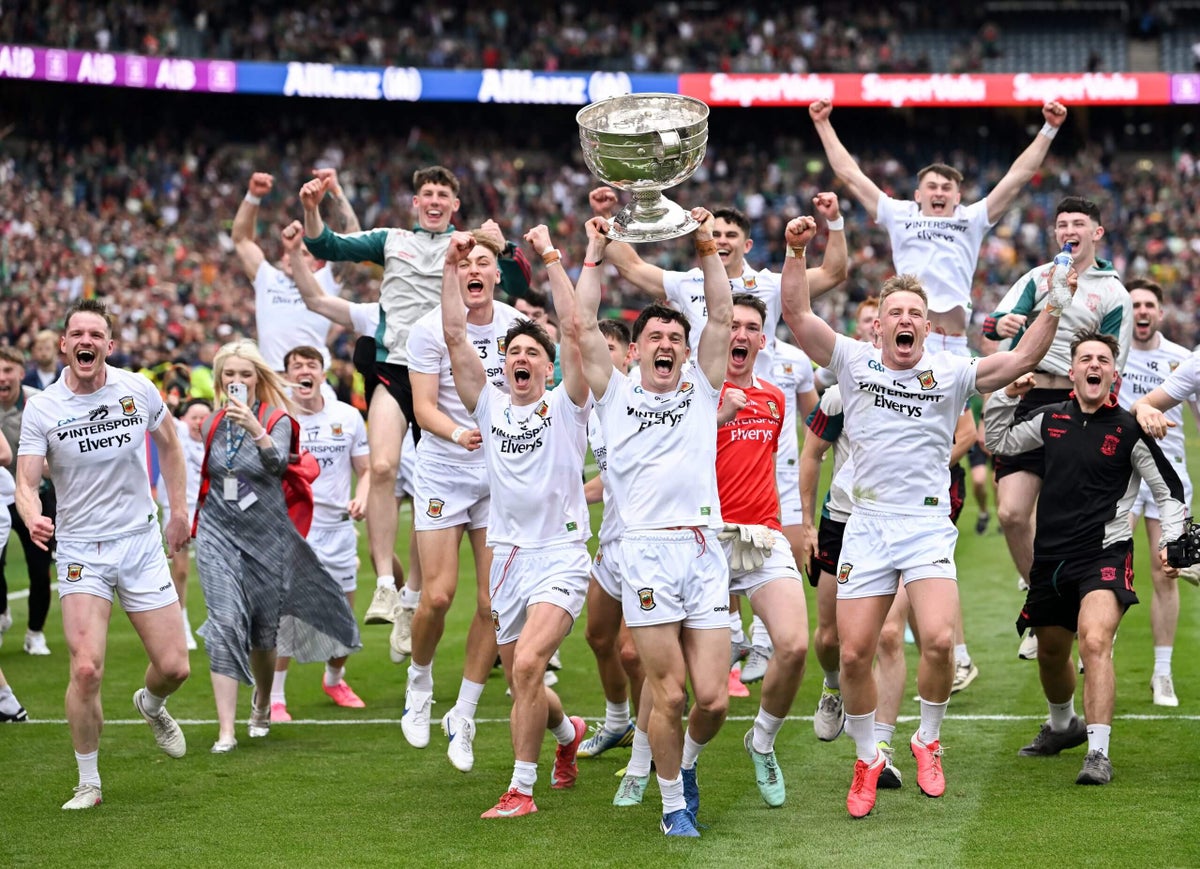
The curse, the curse, the curse – the wider world is obsessed with that damn curse. After Mayo’s win over Kerry in Sunday’s All-Ireland football final, let it be put to bed at long last - but maybe keep the team bus away from any funeral cortege, just in case.For anyone particularly averse to the GAA-related delirium that grips the public consciousness around the All-Ireland finals, even leaving the country wouldn’t have offered a satisfactory escape as news of Mayo’s win spread around the world.“Euphoric players cavorting in disbelief, long-suffering fans crumpling to their knees in tears, commentators’ voices cracking at the drama of it all,” Conor O’Neill writes in The New York Times of the scenes after the final hooter on Sunday.We’ll forgive him for describing football as “a hybrid of soccer, rugby and basketball” - how else can we expect for Americans to wrap their heads around it, you need to meet them where they’re at. By that measure, he says: “Like the Boston Red Sox and the ‘curse of the Bambino’, Mayo’s long years of heartbreak come wrapped in a cloud of superstitious folklore,” adding that while the story of Mayo’s curse is “almost certainly untrue”, “it is an irresistibly evocative tale, a quaint pastiche of rural Catholic Ireland in the 20th century”.A little closer to home, the BBC gave Mayo the explainer treatment. “What do a former US president, the Canadian prime minister and two of the world’s biggest rock stars have in common?” Adam Mandeville poses. “They’re all celebrating after their Irish county Mayo overcame a 75-year-old ‘curse’ and finally broke its barren run in one of Ireland’s biggest sporting occasions.”(If you are wondering who the luminaries referred to above are, the answer is Joe Biden, Mark Carney, and Noel and Liam Gallagher.)[ Former presidents, current prime ministers and Britpop kings celebrate Mayo’s All-Ireland triumphOpens in new window ]Again, knowing his audience, Mandeville contextualised the achievement for the uninitiated: “In May 2026, Arsenal won the Premier League title. It had been 22 years. In June 2026, the New York Knicks won the NBA championship. It had been 53 years. For Mayo fans, the wait had been even longer. And the celebrations are only just beginning.”For Fox Sports, Dane Heverin made a right go of it, his homework clearly done.“The county of a little less than 150,000 people in Ireland’s west, where Gaelic football is like a religion, have been beaten in 11 finals in the last 75 years. Ten of those final defeats have come in the last 30 years,” he says.For anyone particularly averse to the GAA-related delirium that grips the public consciousness around the All-Ireland finals, even leaving the country wouldn’t have offered a satisfactory escape. Photograph: Tom Maher/Inpho Full marks to Heverin for recognising the GAA’s All-Ireland day trump card, Marty Morrissey, “who has become a social media sensation for his iconic voiceovers of All-Ireland finals”. Marty will be chuffed.He adds: “It is safe to say that many supporters in towns like Westport, Castlebar and Claremorris will not be turning up for work on Monday. The pubs will be full for days as celebrations of Mayo’s fourth All-Ireland title, and the curse finally being broken, will certainly be long.”Stereotypical? Yes. True? Also, yes. Can we confirm The Irish Times’ Mayo contingent is all accounted for? Mind your business.Speaking of those from this parish, our Washington correspondent Keith Duggan got a roundabout mention on NBC News, their piece from Reuters – “From Joe Biden to Oasis, Mayo’s famous win shatters Irish curse and reverberates far and wide” – referencing his book House of Pain in explaining the ”long-suffering” county’s 75 years of woe.County Mayo has won the Gaelic Football Championship, breaking a 75-year losing streak that locals attributed to a curse imposed by a Catholic priest in 1951. pic.twitter.com/KUVSLxkd31— 7NEWS Sydney (@7NewsSydney) July 27, 2026
Wider world ready to put the Mayo curse to bed after joining in on All-Ireland celebrations
With coverage reaching the far shores of Australia, communities around the world have welcomed the spirit of the GAA
771 words~4 min read