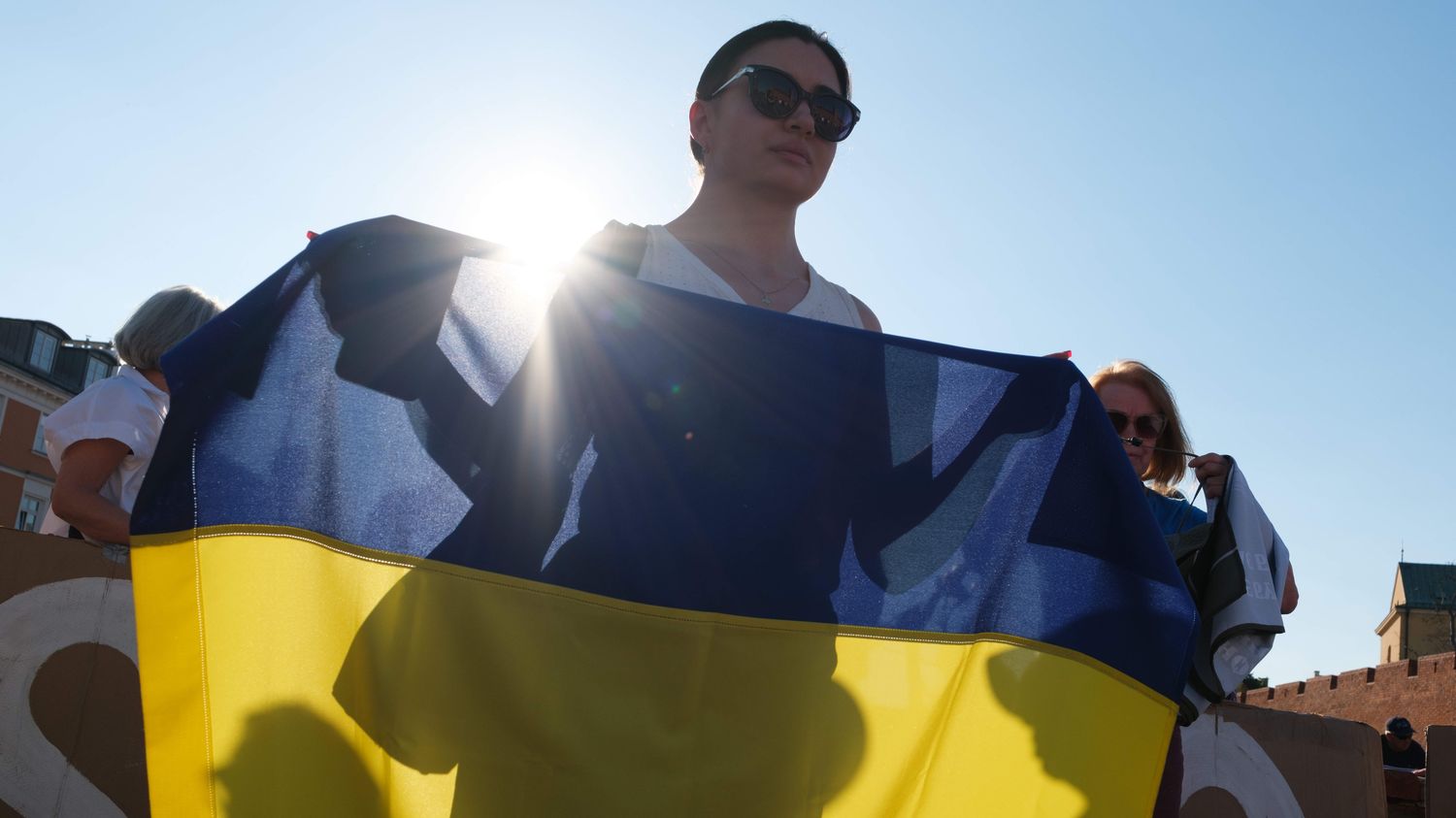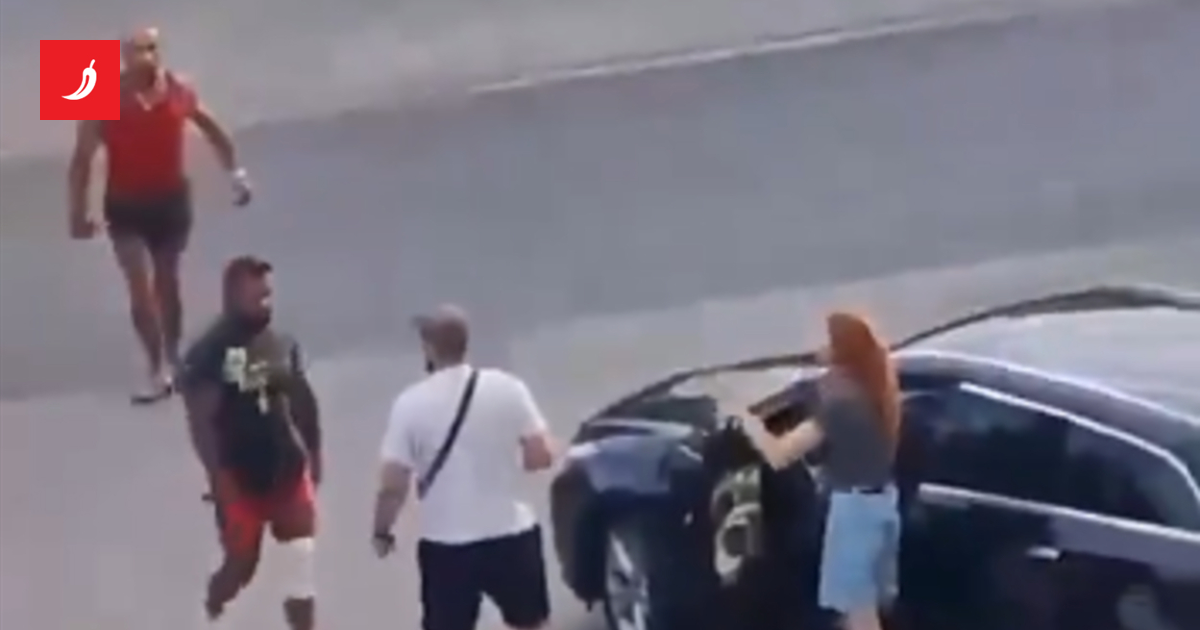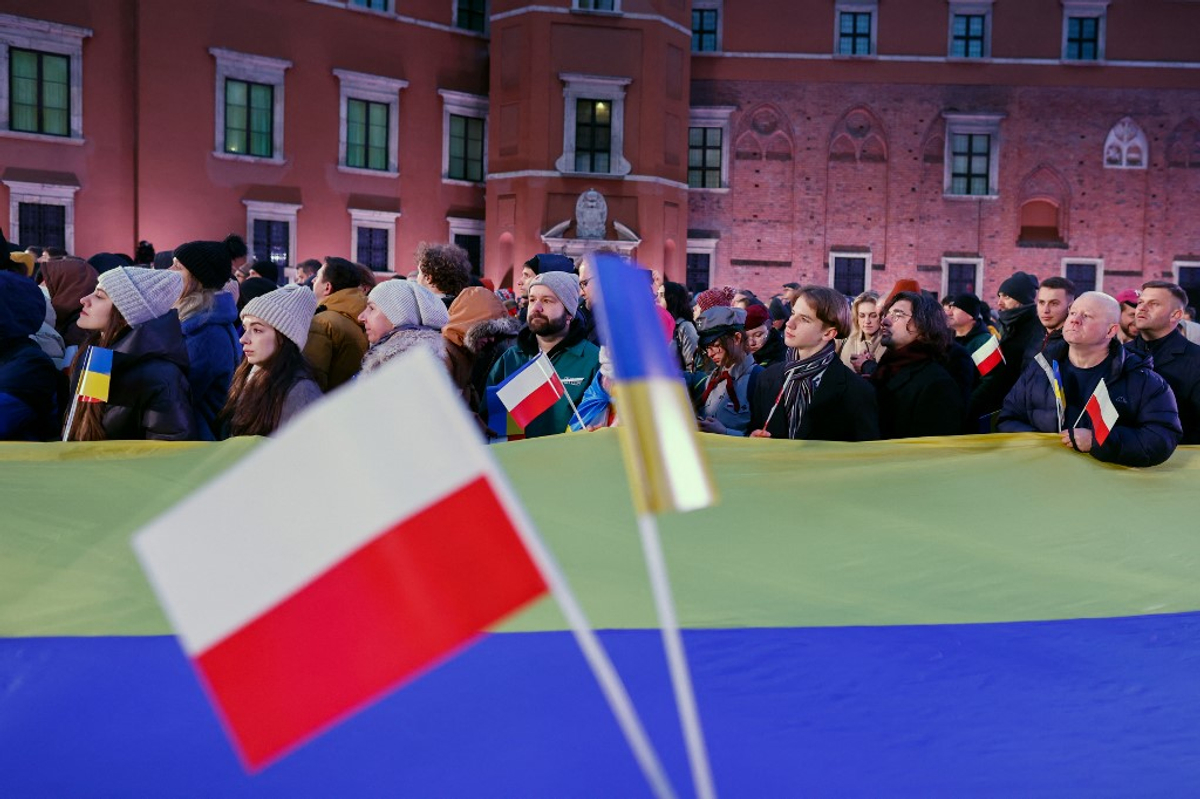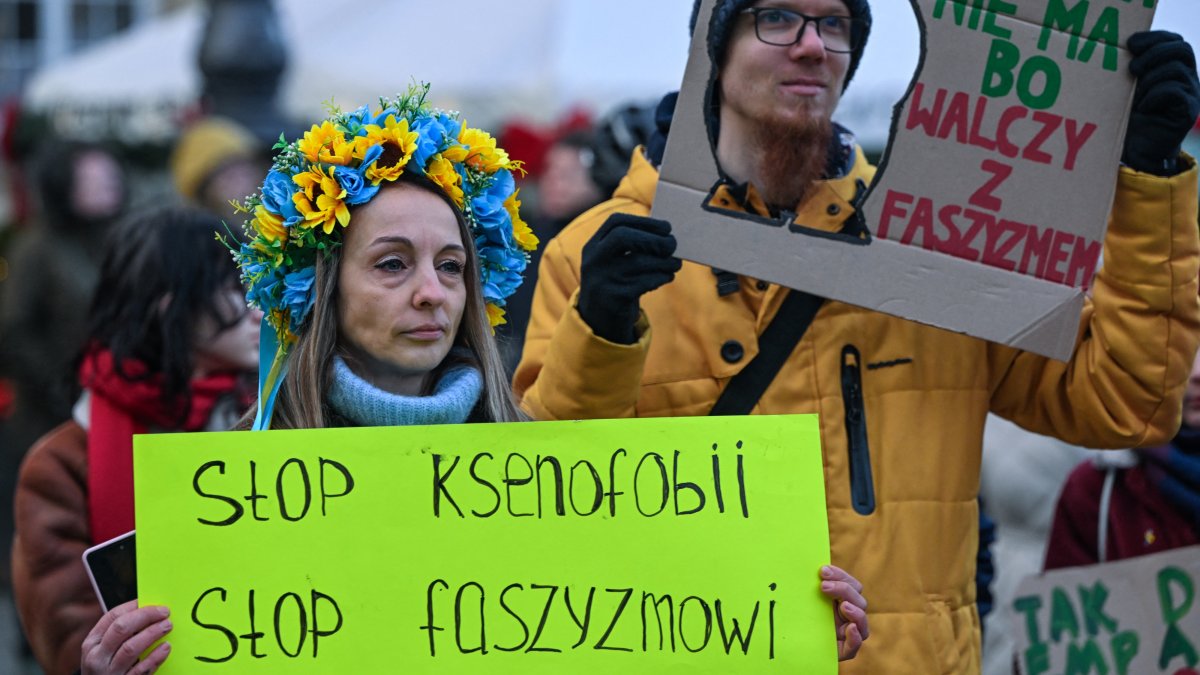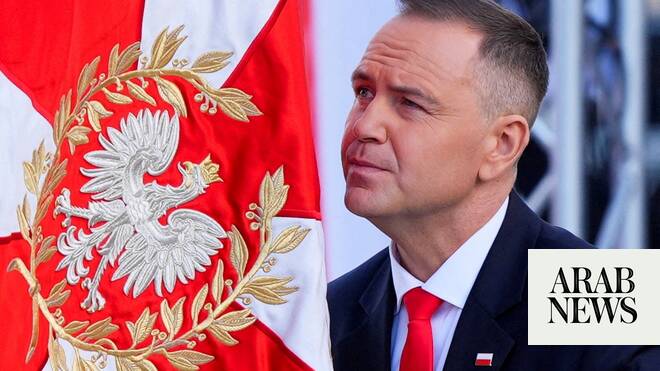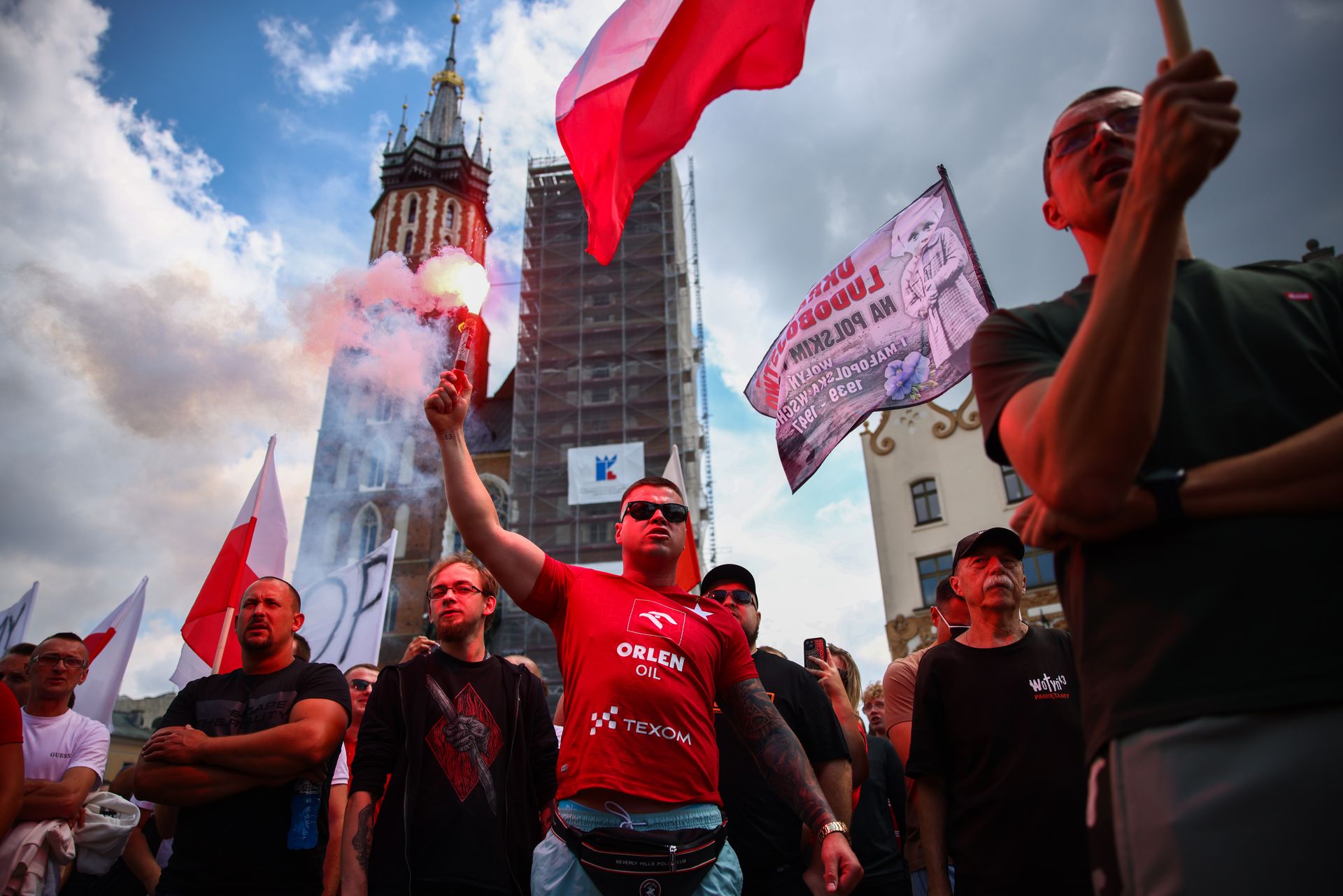
An anti-immigration protest at the Main Square in Krakow, Poland, on July 19, 2025. (Beata Zawrzel / NurPhoto / Getty Images)As Ukrainian-Polish relations took a nose-dive, war refugees and other Ukrainian migrants in Poland are feeling the impact.Nationality-based attacks against Ukrainians, ranging from verbal abuse to physical assault, have been on the rise.Experts say that disinformation — including Moscow's direct efforts to inflame relations between the two neighbors further — certainly plays a role.But that is only part of the story. Ukrainian refugees have become caught in the crossfire of diplomatic disputes between Kyiv and Warsaw, historical grievances, and domestic Polish politics.A surge in hate crimesOn July 26, in Wroclaw, three men physically assaulted a Ukrainian couple, in an attack the police identified as nationality-based.A few weeks earlier, in Bielsko-Biala, a 54-year-old man hurled insults at a group of Ukrainians, including two 11-year-old girls, one of whom recorded the incident on her phone.In Poznan, on July 3, two men associated with the Polish far-right — including an ex-soldier suspected of espionage for Russia — confronted a Ukrainian woman who runs an office providing legal assistance to Ukrainians, demanding entry and questioning her whether she "supports Stepan Bandera."Numbers show that these are not isolated cases.The Polish police received 180 reports of hate crimes against Ukrainians in the first half of 2026, an increase of over 30% compared to the same period last year, the Rzeczpospolita newspaper reports.This dire statistic emerged as Polish-Ukrainian relations hit rock bottom after Ukraine named one of its military units after the World War II-era Ukrainian Insurgent Army (UPA).The UPA is viewed in Ukraine as a resistance movement against Soviet rule, but in Poland it is chiefly remembered for its role in the Volyn massacres, the mass killing of Poles in what is today western Ukraine.The move sparked widespread outrage among the Polish public and led Polish President Karol Nawrocki to strip his Ukrainian counterpart, Volodymyr Zelensky, of the highest state honor.Polish President Karol Nawrocki in Krakow, Poland, on June 6, 2026. (Marcin Golba / NurPhoto / Getty Images)More than half of Poles said their view of Ukraine and the Ukrainians has worsened due to the UPA name dispute, according to a June poll.Another survey showed that, for the first time since the measurement began in 2014, the majority of Poles oppose taking in Ukrainian refugees.Poland currently hosts more than 900,000 people who fled Russia's full-scale invasion, the second-largest Ukrainian refugee population in the EU, and the country's largest ethnic minority.And this minority is now an increasingly popular target of hate speech and disinformation online.The Kremlin plays a roleSince last year, Polish fact-checkers have noted a significant increase in disinformation aimed against Ukraine and Ukrainian refugees."The main topics are crimes allegedly committed by Ukrainians," Pawel Cymbor from the FakeNews.pl fact-checking group told the Kyiv Independent."Very often, any report of a violent crime is circulated on social media as if the perpetrator were Ukrainian, regardless of whether this is true or not," Cymbor said."This gives rise to a great deal of fake news in which blame is wrongly attributed to Ukrainian citizens."Ukrainian refugees arrive at the Medyka border crossing in Poland, on March 10, 2022. (Daniel Cole / AP)One claim, spread in recent months, falsely accused a "Ukrainian couple" of setting fire to a housing complex in the Warsaw suburb of Zabki last July, even though investigators ruled out arson as the cause.Even the attacks against Ukrainians in Poland are twisted to lay the blame on the victims.Some social media accounts alleged that the Ukrainians accosted by the 54-year-old Pole in Bielsko-Biala provoked the incident, even though video footage proves otherwise.Another claim that spread across social media platforms alleged that a Ukrainian refugee woman murdered a Polish man who sheltered her for three years. According to the Demagog.pl fact-checking group, the story was completely fabricated.Russia would certainly benefit from further driving a wedge between Ukraine and its allies, and at least some of these activities bear a Russian trace.Many stories, including the one above, were traced by fact-checkers to Vietnam-based online content farms that monetize fake news through ads.Social media analyst and disinformation expert Anna Mierzynska suggests that these farms may be employed in Moscow's disinformation operations, given their recent pivot toward fake anti-Ukrainian and pro-Russian content.Russian handiwork was also found in several videos, recently spread on Russian Telegram channels, of alleged "Ukrainian patriots" trampling on Polish flags.
Attacks on Ukrainians in Poland are rising. Disinformation fuels the flames
As Ukrainian-Polish relations took a nose-dive, war refugees and other Ukrainian migrants in Poland are feeling the impact. Nationality-based attacks against Ukrainians, ranging from verbal abuse to physical assault, have been on the rise. Experts say that disinformation — including Moscow's direct efforts to inflame relations between the two neighbors further — certainly plays a role. But that is only part of the story. Ukrainian refugees have become caught in the crossfire of diplomatic dis
1,291 words~6 min read