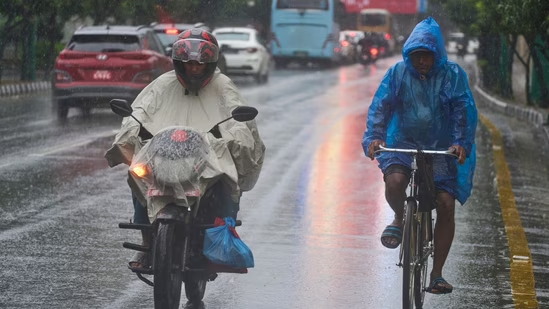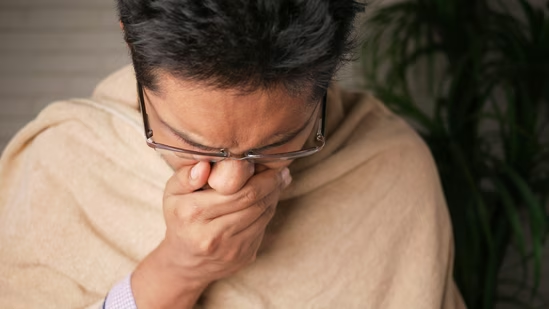
People often feel under the weather in the monsoon. (Pexel) The first 72 hours after falling sick is the most crucial for treatment. Dr Dutta shares five things to do and avoid in such a situation. Monsoon is the season in which an increasing number of people feel under the weather. In an interaction with HT Lifestyle, internal medicine expert Dr RR Dutta shared that the hospitals see a familiar pattern at this time.Also Read | How to recognise head and neck cancer? Oncologist Dr Mandeep Singh Malhotra shares early warning signsPatients often seek medical care only after two or three days of persistent fever, having relied on paracetamol and home remedies in the hope that it would subside on its own. While many viral fevers do resolve without complications, delaying medical evaluation can carry great risks.It is the season in which diseases such as dengue, malaria and water-borne infections are on the rise. The first 72 hours after symptoms appear are not a waiting period. As per Dr Dutta, “They are a diagnostic window, and how they are used often decides whether an illness stays manageable at home or turns into a hospital admission.”Why the first three days matterDengue, malaria, typhoid and leptospirosis all begin the same way: fever, body ache, headache, fatigue. Dr Dutta noted that this is precisely what makes the early phase dangerous to ignore.“A high, continuous fever that does not respond to standard antipyretics within 48 hours needs a blood test, not another day of observation,” stated the physician. “Platelet counts often only begin to drop after the third day of fever, which means waiting for a rash or a dramatic symptom to appear before testing means losing the very window when treatment is simplest.”What to do within 72 hoursAccording to Dr Dutta, the following steps should be followed within the first 72 hours of consistently feeling under the weather in the monsoon.Do not ignore a fever lasting beyond 24 hours. A complete blood count (CBC), dengue NS1 antigen test, and a malaria smear or rapid diagnostic test form the basic evaluation for monsoon-related fevers.Stay well hydrated. Sip oral rehydration solution (ORS), coconut water, or plain water frequently throughout the day. Avoid sugary or caffeinated beverages, which can contribute to dehydration.Take your temperature regularly. Make a record of your temperature periodically rather than relying on your sense of “how a fever feels.” Keeping a record of your temperature will help your physician assess the course of the illness.Prioritising rest is essential within the initial 72 hours. Do not perform any work in the office, engage in any strenuous exercise, or undertake any journey. Exerting yourself during the crucial time frame for diseases like dengue can lead to complications.Seek medical attention immediately if you are at higher risk. People with diabetes, chronic kidney disease, weakened immunity, or those who are pregnant should consult a doctor on the very first day of fever, as they can deteriorate more rapidly and may develop severe illness with fewer warning signs.What should be avoidedThe physician advised avoiding the following things during the same period.One should not take antibiotics without consulting a doctor. (Pexel)Avoid aspirin and ibuprofen for fever management. If the illness turns out to be dengue, these medicines can increase the risk of bleeding, one of the disease's most serious complications.Do not take antibiotics without a confirmed bacterial diagnosis. Viral infections such as dengue and most seasonal viral fevers do not respond to antibiotics. Unnecessary use can also mask symptoms and delay accurate diagnosis, particularly in suspected typhoid.Avoid mixing multiple over-the-counter medications. Taking different fever or cold remedies without medical advice can make it harder for doctors to identify the underlying illness and may increase the risk of adverse effects.Avoid the consumption of street food and cut fruits during the rainy season, which pose greater chances of contamination of food and water sources, leading to infections like typhoid, hepatitis A, and gastroenteritis.Don’t go on assuming you are safe just because the fever subsides. In dengue, commonly, the critical phase starts after the fever comes down, so you still need close observation and medical check-ins, even when the person seems more or less better.Symptoms that need immediate medical attentionCertain warning signs require immediate medical attention, regardless of how many days the fever has lasted. These include:Bleeding from the gums or nosePersistent vomitingSevere abdominal painDifficulty breathingExtreme drowsiness or confusionNoticeable reduction in urine output“These symptoms should never be observed at home overnight in the hope that they will improve. In dengue, the most critical period often begins after the fever subsides, not while it is at its peak. This is when complications such as plasma leakage and shock are most likely to occur, making close medical monitoring essential even if the patient appears to be recovering,” shared Dr Dutta.Note to readers: This article is for informational purposes only and not a substitute for professional medical advice. Always seek the advice of your doctor with any questions about a medical condition.Dr RR Dutta, MD (Medicine), MBBS, serves as the Head of the Department of Internal Medicine at Paras Health in Gurgaon. With over two decades of experience, Dr Dutta is an expert in his field, particularly in the areas of bone marrow and stem cell transplantation.Debapriya Bhattacharya is a Content Producer at Hindustan Times. He started his career in 2022, working in newsrooms in beats like education, US news, trending stories, and entertainment. In his new role in the lifestyle desk, he seeks to deliver a balanced blend of research-driven reporting and creative storytelling from health and recipes to art and culture. Science, philosophy, food and pop culture are what pump his veins and help bring heart to his stories. Debapriya tries to see out subjects that will allow him and readers to explore new frontiers and improve the quality of life for all. The explorations can be both external and internal, as thoughts seek to be as chaotic as the greater universe. As a citizen of the world, Debapriya has been fascinated by the lives of people across the globe throughout time. His curiosity leads him to explore new linguistic and cultural landscapes to broaden his horizons and deepen his understanding of global narratives. Beyond the newsroom, Debapriya loves to participate in debate and theatre, spaces that he considers to be holy grounds for nuance and self-expression. A graduate from Ashutosh College, University of Calcutta, Debapriya completed his Master's degree from the same university in 2022. An ambiverted bibliophile, he loves his solitude as much as he adores stimulating conversations. And despite his reverence for tech, libraries continue to be his favourite place for research.Read MoreMalariaDengueHealthMonsoonCatch every big hit, every wicket with Crick-it, a one stop destination for Live Scores, Match Stats, Quizzes, Polls & much more. Explore now!.Catch your daily dose of Fashion, Taylor Swift, Health, Festivals, Travel, Relationship, Recipe and all the other Latest Lifestyle News on Hindustan Times Website and APPs.See Less
Worried about monsoon illness? Dr RR Dutta shares what to do and what to avoid in the first 3 days
The first 72 hours after falling sick is the most crucial for treatment. Dr Dutta shares five things to do and avoid in such a situation. | Health
1,153 words~5 min read