There is a common belief about why experienced developers get better results from AI. The belief is that they write better prompts. More precise instructions. Better context. A sharper sense of how to phrase a request so the model understands what is actually needed.
This belief is not entirely wrong, but it misses the actual mechanism behind the difference. Watch a senior developer work with AI over an extended period and the pattern that emerges is not primarily about prompt quality. It is about what happens before the prompt gets written at all.
Junior developers tend to approach each session as a fresh negotiation. Write a prompt, see what comes back, correct what is wrong, ask again if needed. This is a reasonable way to work when you do not yet know what tends to go wrong repeatedly. Every project feels new. Every session is its own isolated interaction.
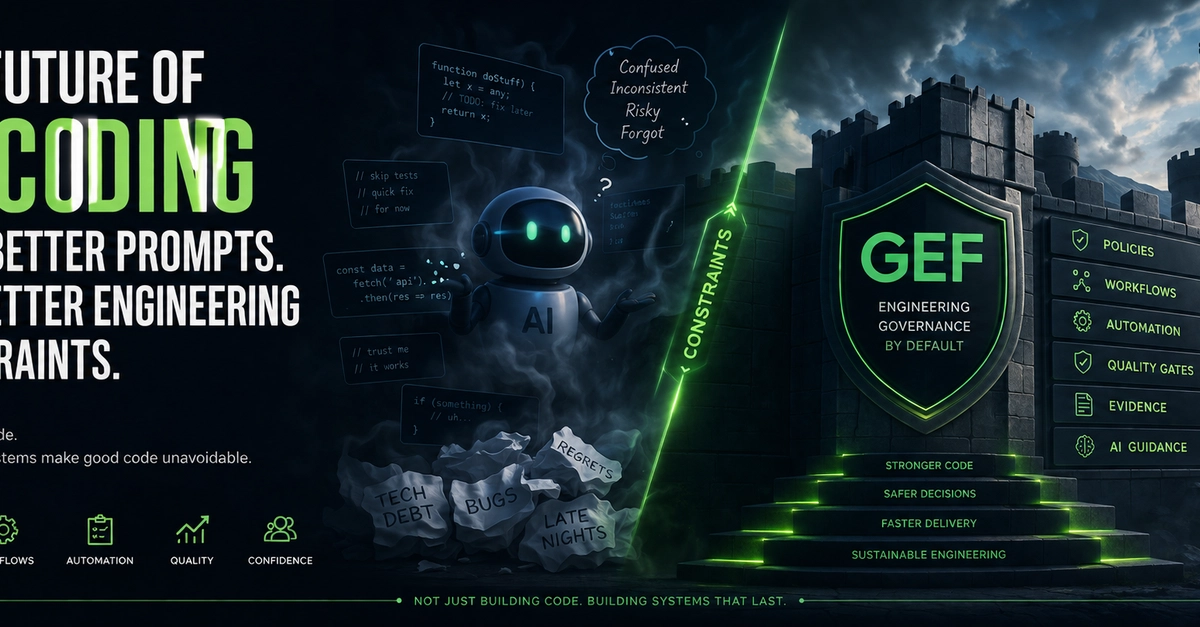
Senior developers, after enough repetitions of the same corrections, stop treating each session as a fresh negotiation. They notice the same categories of mistake appearing across projects and across time, and instead of continuing to correct them one at a time, they write the correction down once and stop hoping the AI will guess correctly going forward.