At Dugway Proving Ground in Utah, on ground the Army's own contracting documents describe as previously used for grazing, a company owned by two of the largest investment firms in the world is preparing to build a data center. That site sits about an hour's drive from the nearest community, on the installation where the U.S. military conducts its primary chemical and biological weapons testing. Three parcels there total roughly 3,466 acres. One of them, about 1,201 acres, is already spoken for. It is one of at least a dozen military installations the Army and the Department of the Air Force have opened to commercial data center developers over the past year and a half. Two of those deals are real; the rest are still proposals.
A free-ranging wild horse crosses the range as the sun sets near U.S. Army Dugway Proving Ground, Utah. (AP Photo/Rick Bowmer)
Land-for-Computing
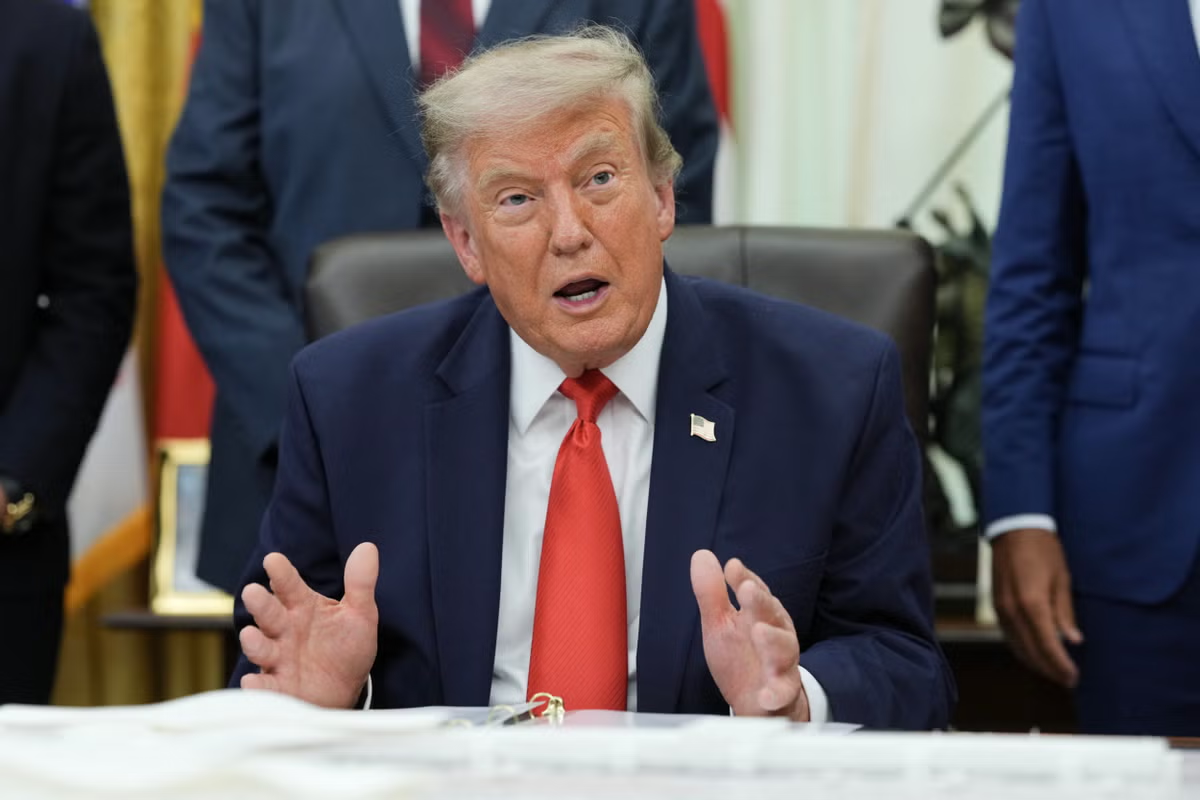
In late March, the Army conditionally selected two companies to enter exclusive negotiations to build and operate commercial hyperscale data centers on Army land. Carlyle, the global investment firm, was picked for roughly 1,384 acres at Fort Bliss, Texas. CyrusOne, a data center operator jointly held by funds managed by KKR and BlackRock, was picked for the parcel at Dugway. Each project is estimated to cost about $2 billion, according to the Financial Times. The companies will be responsible for financing, building, operating, maintaining and eventually decommissioning the facilities, the Army said, on what it called "underutilized but non-excess Army land at no upfront cost to taxpayers." In exchange for the land, the service gets access to computing power. It all runs through the Army's Enhanced Use Lease program, driven by a Trump executive order directing agencies to open non-excess federal land to data center development. The U.S. Army Corps of Engineers is handling lease negotiations and environmental review. "AI is a strategic asset for the Army," Army Secretary Dan Driscoll said in the March announcement. "It is a force multiplier, supports future transformation and requirements, keeps the Army ahead of our adversaries, and generates resiliency across the force." Driscoll told the Wall Street Journal that the Fort Bliss facility would be "the first hyper-scale data center that the Pentagon has ever done."