576 individuals reported income above ₹100 crore in AY26, up from 142 in AY22
| Photo Credit:
iStockphoto
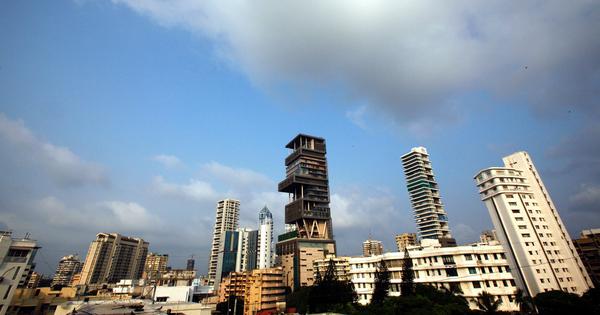
The number of billionaires in India has surged over four times in the last five years, data presented along with written response by the Finance Ministry in the Lok Sabha on Monday showed. However, government used various indicators to explain that income inequality has come down.According to data, part of the written response by Minister of State in the Finance Ministry, Pankaj Chaudhary, the number of individuals having reported gross total income of ₹100 crore or more in the income-tax returns (ITRs) filed for assessment year 2021-22 was 142, which surged to 576 in assessment year 2025-26, showing a growth of over 300 per cent.“Wealth-Tax Act, 1957 was abolished with effect from April 1, 2016, and the government does not maintain data on aggregate wealth of taxpayers,” Chaudhary said. Meanwhile, he emphasised that the government has taken several measures to reduce income and wealth inequality, promote broad-based employment generation and foster inclusive economic growth which include a progressive Income-tax structure and increased spending on food, health, education, housing and social security.Income inequalityHe also highlighted various indicators showing reduction in income inequality. As per the latest Household Consumption Expenditure Survey 2023-24, the Gini Coefficient for rural and urban areas is 0.237 and 0.284, respectively, down from 0.266 and 0.314 in 2022-23. “This shows that the rural-urban gap is narrowing,” Chaudhary said. Gini Coefficient is one of the most widely used measures of income inequality. The Gini Coefficient score lies between 0 and 1, where complete equality would result in a Gini Coefficient of zero and complete inequality would result in 1. Further, the Annual Periodic Labour Force Survey (PLFS) report shows that labour markets have recovered beyond pre-Covid levels in both urban and rural areas. The unemployment rate for individuals aged 15 and above has decreased to 3.1 per cent in 2025 from 3.6 per cent in 2022. Further, as per the discussion paper on Multidimensional Poverty in India since 2005- 06, published by NITI Aayog, multidimensional poverty in India is estimated to have declined from 29.17 per cent in 2013-14 to 11.28 per cent in 2022-23 indicating that 24.82 crore people have escaped poverty during this period., Chaudhary said.Impact of West Asia CrisisMeanwhile, in a separate written response, the Minister said quoting Reserve Bank of India’s Financial Stability Report (June 2026), the recent geopolitical developments in West Asia led to an increase in international crude oil prices which has widened the crude oil import bill for India, with implications for current account deficit, similar to the experience during previous oil price shocks. However, the average Indian crude oil basket prices have eased significantly to $77.6 per barrel in July 2026 (up to July 22) from $114.5 per barrel in April 2026.“The decline in crude oil prices, together with sustained growth in services exports and remittance receipts, is expected to support the external sector and mitigate pressures on the current account. Further, the recent measures announced by the government and the Reserve Bank of India are expected to bolster capital inflows and help meet India’s external financing requirements,” he said.Published on July 27, 2026