On the outskirts of the tiny rural community of Barnard, the road narrows to a gravel lane where an unassuming gate marks the entrance to Monsalvat Farm, one of Vermont’s great estates.
Named after the mountain fortress where the Holy Grail was kept in Richard Wagner’s final opera, Parsifal (1882), the property embodies a strong sense of permanence through its use of regional stone, artisanal craftsmanship, and a collection of historic residences.
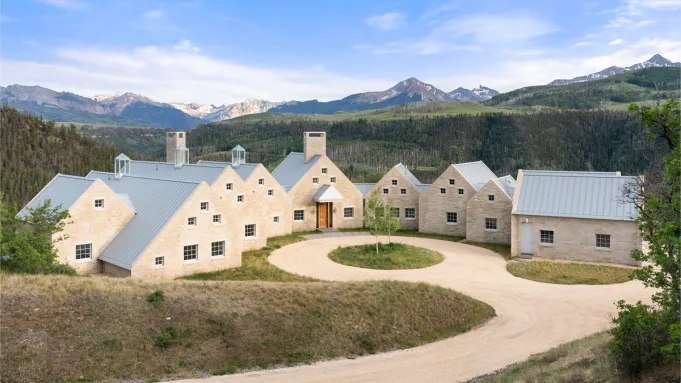
The primary residence, known as the Sanctuary, was completed in 2009.
Jen Cypress of Dwelling Photography
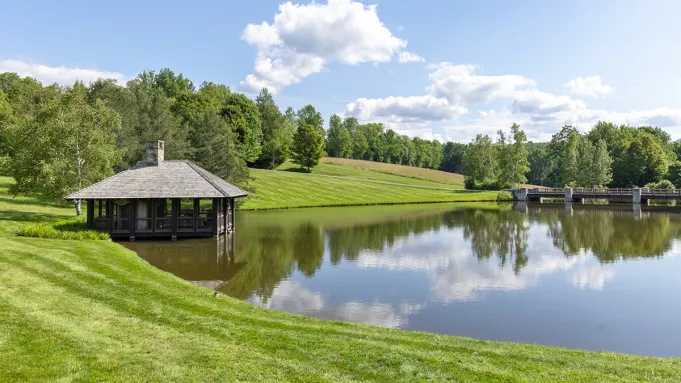
Giving a sense of arrival and procession, the driveway crosses a bridge spanning a spring-fed pond, where water cascades over a stone spillway into a series of pools before winding through the forested terrain toward the main house, dubbed the Sanctuary. Designed by Ralph L. Duesing of Dallas, Texas, and completed in 2009, the home is crafted from New Hampshire granite, clad in cedar shingles, and capped with a Vermont slate roof. Every detail is carefully considered and expertly executed, from hand-forged iron railings engraved with the name Monsalvat Farm to hand-planed white oak floorboards and a wrought-iron chandelier in the dining room fashioned as an upside-down tree, with pinpoints of light discreetly embedded into its branches.