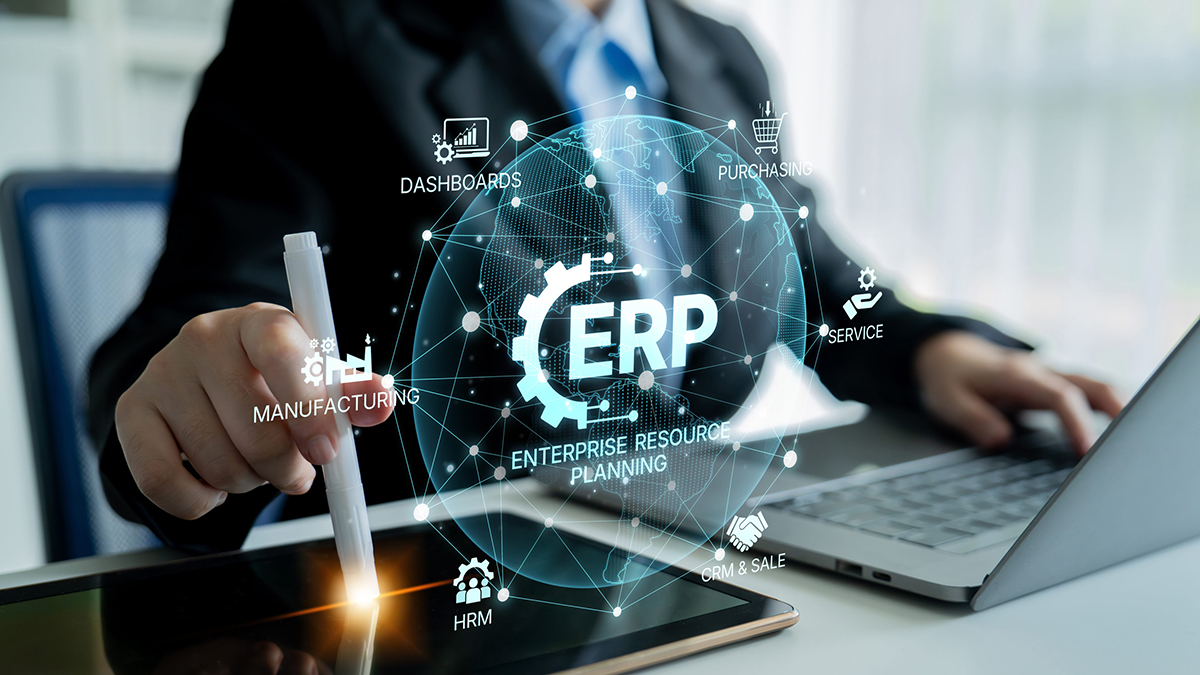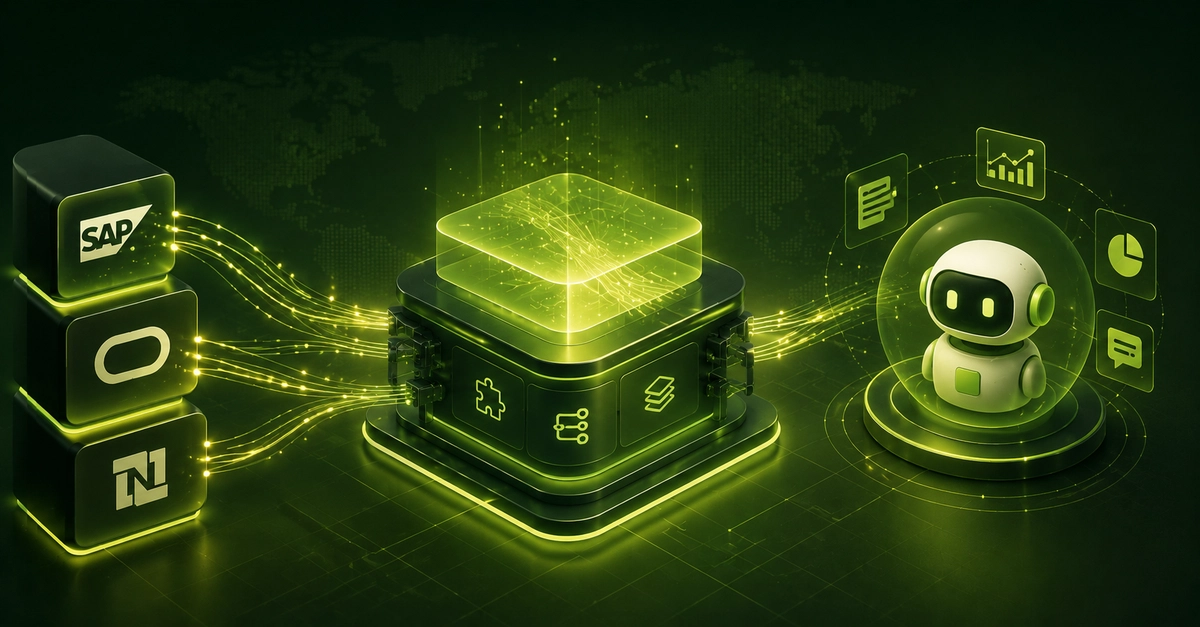
ERP still records the business. Its more important role is helping organizations decide and execute what happens next.gettyFor nearly three decades, I have watched Enterprise Resource Planning (ERP) evolve through three distinct eras. It began with transaction processing, then expanded into visibility through analytics and dashboards. In both eras, people still made most operational decisions and manually moved work forward. ERP has now entered a third era, becoming the execution layer of the enterprise.This is more significant than adding generative AI features or embedding copilots into existing screens. It changes the role ERP plays inside an organization. Instead of mainly documenting decisions after people make them, modern ERP can recognize what changed, determine which process is affected and initiate the next authorized action.Major ERP vendors are moving in this direction. Their language and architectures differ, but they are solving a similar problem by moving ERP from recording work to helping organizations execute it.When competitors with different histories converge on the same architecture, I pay attention. The important question is not whether agentic ERP is coming, but why vendors and customers now expect ERP to participate in decisions and execution rather than simply record what happened.Disclosure: KramerERP provides paid research, advisory and consulting services to technology companies, including ERP and data vendors listed in this article.MORE FOR YOUERP Has Entered Its Third EraERP became essential because it connected transactions, standardized processes and created a reliable operational record. That responsibility remains essential but ERP is becoming something more.A system of record explains what happened. An execution layer helps determine what should happen next. Traditional ERP processes followed predictable sequences. People entered transactions, routed approvals, interpreted conditions and kept the work moving while the system documented each step.That model becomes harder to sustain when decisions must happen continuously. A delayed shipment can affect production, customer commitments and transportation costs within hours. A supplier disruption may require sourcing, inventory and production changes before the next planning meeting.More dashboards do not solve that problem. Visibility tells someone that a condition changed. Execution determines what the organization does about it.Modern ERP combines transactional data with APIs, events, workflow automation, process context and AI. That allows the system to recognize an exception, evaluate possible responses, request approval and carry out an action within defined controls.The result may be an alternative supplier recommendation, a matched payment or an order rerouted before it misses its promised date. The value comes from reducing the distance between information, decision and action.Enterprise Operations Forced The ChangeERP vendors did not create this need. The way businesses operate forced the software to evolve. Supply chains have become less predictable, manufacturing more automated and customers more demanding. Finance teams are being asked to close sooner while labor constraints make it harder to solve every exception by adding another person.At the same time, the technology environment became more fragmented. A single operational decision may depend on information spread across ERP, supply chain management, CRM, data platforms, human capital management and industry applications.Most business problems ignore those application boundaries. An order that cannot be fulfilled is not only an ERP problem. It may involve demand planning, warehouse capacity, supplier performance, transportation availability, customer commitments and cash flow. Each system may hold part of the answer, but someone still has to connect the information and coordinate the response.In the first article in this series, Why Sports Has Become a Blueprint for Real-Time Enterprise Execution, I used sports to show what happens when decisions operate on a visible clock. Industries such as manufacturing, distribution, healthcare and finance must understand events and respond proactively to influence outcomes before it’s too late.Organizations are trying to shorten the time between a signal and a controlled response. ERP is moving closer to the center because it already manages many of the transactions, processes, permissions and business relationships needed to act.Why ERP Vendor Are Building AgentsWhat caught my attention was not one vendor announcement. It was how many vendors arrived at the same destination at nearly the same time.SAP is connecting Joule agents with its applications and data foundation while adding governance around them. Oracle is embedding coordinated agents across Fusion workflows. Microsoft is extending agents across Dynamics 365 and the broader Copilot environment. Infor, IFS and Epicor are applying agents to industry-specific and operational processes. Sage, Acumatica, QAD, NetSuite and Odoo are bringing similar capabilities to midmarket customers.These providers serve different segments, but the direction is consistent. Most customers want systems that move work forward, not simply display more information.A common architecture is emerging. It begins with trusted business context across customers, suppliers, products, employees, assets, transactions and policies. It requires orchestration to coordinate work across systems. It also needs execution capabilities to update records and initiate workflows, along with governance that determines what an agent can access, which actions it can take and when a person must intervene.The competitive issue is not which vendor announces the most agents. It is which platform can give them the right context, operate across the customer’s real technology environment and execute work without weakening control.The Real Product Is Trusted ExecutionAn AI assistant that summarizes a report creates limited operational risk. An agent that changes a purchase order, releases inventory, adjusts production or posts a journal entry is participating directly in the business.The standard must be different because the consequences are different. Before an agent acts, the organization needs to know what informed the decision, which policy authorized it, who owns the outcome and how the action can be stopped or reversed. It also needs an understandable audit trail.The most important element of agentic ERP is not the model. It is the context, permissions, workflow controls, monitoring and accountability surrounding it. Bad data is expensive when it produces an inaccurate report. It becomes operationally dangerous when an autonomous system acts on it.The same is true of unclear processes. An agent cannot fix a process the business has never agreed upon. It may automate the disagreement faster. Software does not eliminate operational complexity. It exposes it.The real product is not AI. It is trusted execution.The Real Constraint Is ReadinessERP vendors are moving faster than many customers can absorb these capabilities. Fragmented data, weak governance and unclear operating models remain major barriers to scaling agentic AI.In my experience, readiness depends on several connected conditions. Processes must be stable enough to automate. Master data must be consistent enough to support decisions. Integration must carry business meaning across systems. Decision rights must define who or what can approve, execute, escalate and reverse an action. Security must treat agents as identities with specific access. Employees must understand how their work changes when they move from processing transactions to reviewing recommendations and managing exceptions.ERP modernization can become a data modernization effort because execution depends on context that is accurate, current and understood across the business.Cloud modernization matters because many new agent, event and orchestration capabilities are delivered through current cloud platforms. Yet a migration can still carry weak processes, inconsistent master data and unnecessary customization into a newer environment.The value comes from using modernization to simplify the operating model, clarify ownership and create a stronger foundation for execution. As I pointed out in Why AI Requires a New Enterprise Operating Model, AI creates value when ERP, supply chain, data and security work as one connected environment. A decision may begin with data, be evaluated by AI, execute through ERP and affect the supply chain, with security and accountability applied throughout.People remain central to that model. In People, Process, Technology and the Shift Nobody Saw Coming, I discussed how transformation begins with the way people respond to uncertainty, risk and the loss of control. Teams need to understand why the change matters, when to trust or challenge a recommendation, how to manage exceptions and who remains accountable when automation is wrong.Software is often the easier part of modernization. The difficult work is making the process explicit, cleaning the data, defining decision rights and helping people operate differently.Four Questions CIOs Should AskThe first question should not be, “How many agents does the vendor offer?” CIOs and business leaders should begin with four questions:Which decision or process are we improving? Start with a specific operational problem, not a broad mandate to deploy AI.Can we trust the data and context? Identify the required information, its owners and any unresolved issues with quality or definition.What authority will the agent have? Be explicit about whether it recommends, approves or executes, who owns the result and how exceptions are handled.How will value and risk be measured? Track business outcomes such as cycle time, exception volume, inventory performance, close delays, premium freight and service levels, along with the ability to explain or reverse an action.These questions shift focus from capability counts to readiness. Begin with a single decision, test tough scenarios and prove the operating model before expanding. The goal is not full autonomy overnight. It is better execution with control.From My Vantage PointERP did not stop being the system of record. It has become the execution layer because AI needs a place where business context, processes, permissions and transactions come together.That makes ERP more relevant, not less.The next stage of competition will be determined by which providers can connect trusted context to controlled action across the customer’s actual environment and prove measurable outcomes in production.Customers ultimately determine whether these capabilities succeed. Organizations can’t solve issues such as inconsistent data, fragmented processes, unclear ownership or resistance to change by purchasing technology. Organizations can buy the tools to support execution, but not the discipline required to govern and use them effectively. The industry has made significant progress in building ERP systems that support real-time execution. The harder challenge is governing those capabilities and integrating them into how the business operates. Technology can be purchased. Readiness has to be built.Organizations that understand the difference will use ERP, data and AI to improve decisions while keeping people accountable for the outcome. Those that do not may license the same capabilities and see little improvement in execution.
Why ERP Became The Execution Layer, Not Just The System Of Record
ERP has entered its third era, moving from transaction to execution layer. It uses AI, APIs and automation to detect changes, identify processes and initiate actions.
1,662 words~8 min read