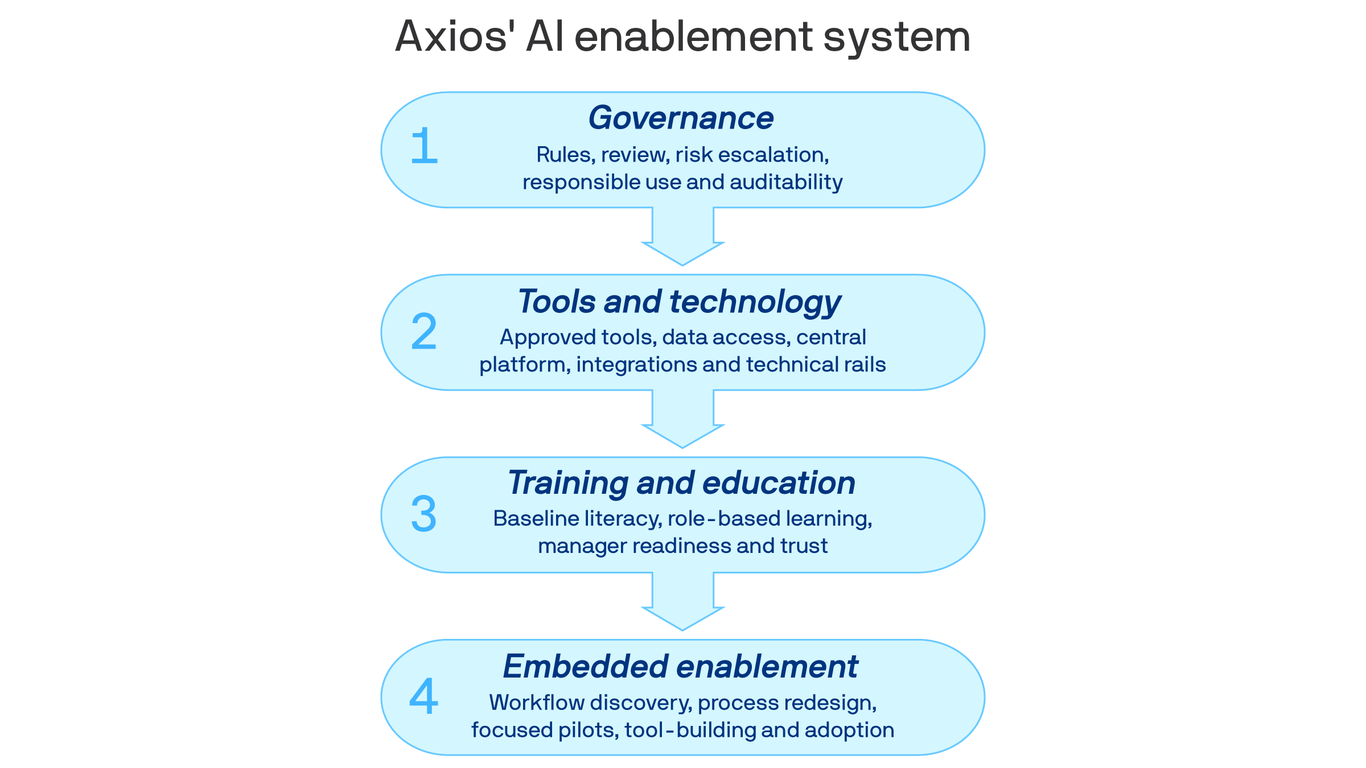
Adapted from Dan Cox. Chart: Erin Davis/Axios VisualsHere's some good news about deploying AI inside your company: It's easier to find, train and redeploy existing staff to help implement AI than we thought possible.Why it matters: We were early to AI at Axios and found there are existing staff outside of traditional tech fields who naturally get it and almost instantly and intuitively automate things.These people tend to have structured minds, think in terms of solutions and systems and show the patience and persistence to make fine AI solutions great and workable.It's a great way to show staff AI can be additive and offer new opportunities, not just threaten their jobs.We've embedded AI enablement leads within our editorial, events and revenue teams.They're builders, not just teachers, empowered to interface between the people doing Axios' core work and our tech team to connect new solutions to our existing systems.They report to our CTO but work inside specific teams for sustained periods of time.Their responsibilities include:Working directly with people who understand department workflows.Mapping how work happens and identifying where AI can help most.Building automations, tools, prompts and agents.Plugging those into our broader systems, then moving on to the next automatable task.The bottom line: Some version of this is the structure of the future — smaller teams, working with true AI experts (often self-trained), moving faster and smarter.📈 If you're a CEO or on a CEO's team: Ask to join Jim's new weekly Axios C-Suite newsletter.
Axios C-Suite: An AI enablement plan
Existing staff are a huge help in tackling this.
TL;DRAI
Axios embedded AI enablement leads across teams, finding existing staff can quickly build automations and agents without tech backgrounds. The model signals a future of smaller teams with distributed AI experts embedded in business units, enabling faster deployment outside tech silos.
243 words~1 min read