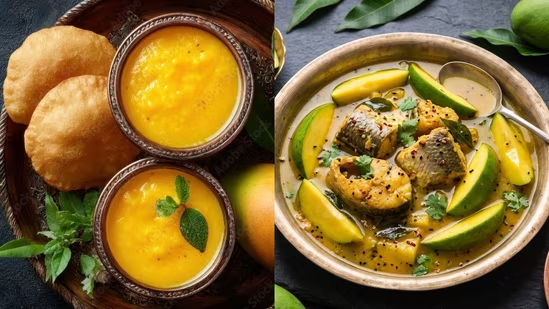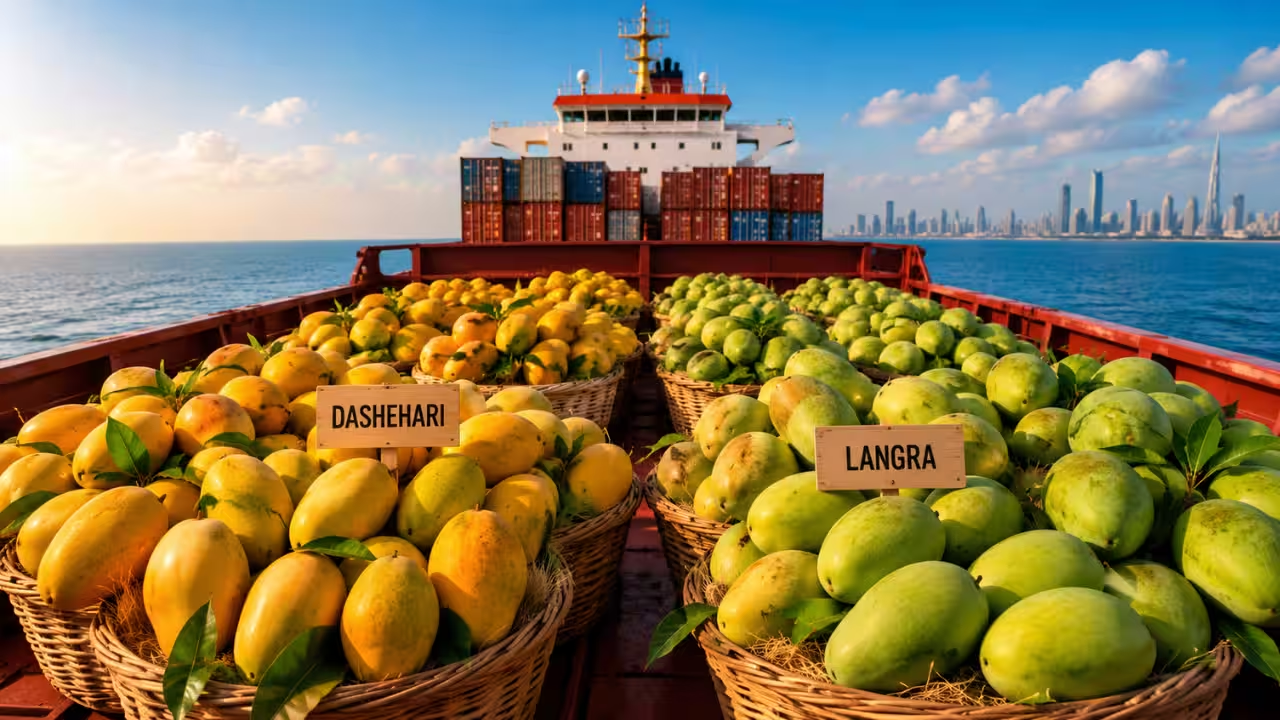
I was grabbing my post-workout shake from a juice shop when the lady behind the counter announced, to the delight of everyone, that mangoes were due to arrive soon. I was already surprised to see this place open late in suburban Melbourne – the joy of the crowd intrigued me even more.The following week, I saw boxes of mangoes selling like hotcakes at a price I hesitated to pay. I had a lifelong privilege of enjoying the finest of them back in Pakistan at a much cheaper rate. I asked the lady if they were indeed “chaunsa” mangoes – the ultra-sweet aromatic variety from Pakistan. She checked the labels, replied, “Yes, they are,” and passed one to me – knowing that they are impossible to resist.It was worth every dollar given the nostalgia associated with that honey-like sweetness, buttery flesh and almost addictive taste of these species thousands of miles away from here in Australia. Behind me in the queue were two young people. We struck up a conversation about summers and monsoons, mangoes eaten over kitchen sinks and family gatherings. They insisted that alphonso mangoes from Mumbai were the superior variety. I disagreed, just as passionately.Beneath the mock rivalry was something deeper: a shared love that ignored borders.It took me down memory lane to Jakarta more a decade ago where I was visiting with other cadet journalists from the Asia-Pacific as well as India, Pakistan and Afghanistan. It was just months after the horrible Mumbai attacks that left scores of innocent people dead. Fingers were being pointed at Pakistan for orchestrating it. But even then I remember colleagues from the two countries coming together in defence and praise of their mangoes during drinks and fruits breaks.Later, when I moved to Germany, a colleague from Lahore at the public broadcaster Deutsche Welle invited me to join an amateur theatre club of a few local, British, Greek and south Asian enthusiasts to stage some German adaptations. My cherished memories from there are the rehearsals we did with slices of chaunsa and alphonso on the side.Ages before modern borders, mangoes trace their origins back more than 4,000 years to the Indian subcontinent, where they were cultivated and revered as symbols of love and prosperity.Now, living in Melbourne, I still love them. A cricket mate from New Delhi threw a mango music party. In the Australian winter it could have not got any better than gathering to enjoy this summery delight of a fruit that transcends boundaries. The historic animosity between nuclear-armed neighbours India and Pakistan remains. But if there is one sweet thing between them, it is definitely a mango!In the home countries of many of those at the mango party, politics and the vicious cycle of death and destruction has pushed people into silos. Millions of people have grown up hating each other without knowing enough about each other. Over time, some move to places like Germany, Australia or elsewhere where they get better opportunities to meet people from across the border – at a mango party, for example.Here, feelings and behaviours might soften given common interests and values. Of course, the chances of this changing the course of history and politics are slim but for a few moments it liberates people from the weight of their bitter past.At this Melbourne party, the lovely music was one binding force but the host’s idea of adding a mango flavour made it one to remember.
Sweet, fragrant, impossible to resist – south Asian mangoes in Australia’s winter summon memories and unite historic enemies | Shadi Khan Saif
At a party in Melbourne hosted by a cricket mate we celebrate this summery delight of a fruit that transcends borders
572 words~3 min read