”It staggered me to think that perhaps I had always missed what made poetry poetry.”
This first appeared in Lit Hub’s Literary History newsletter—sign up here.
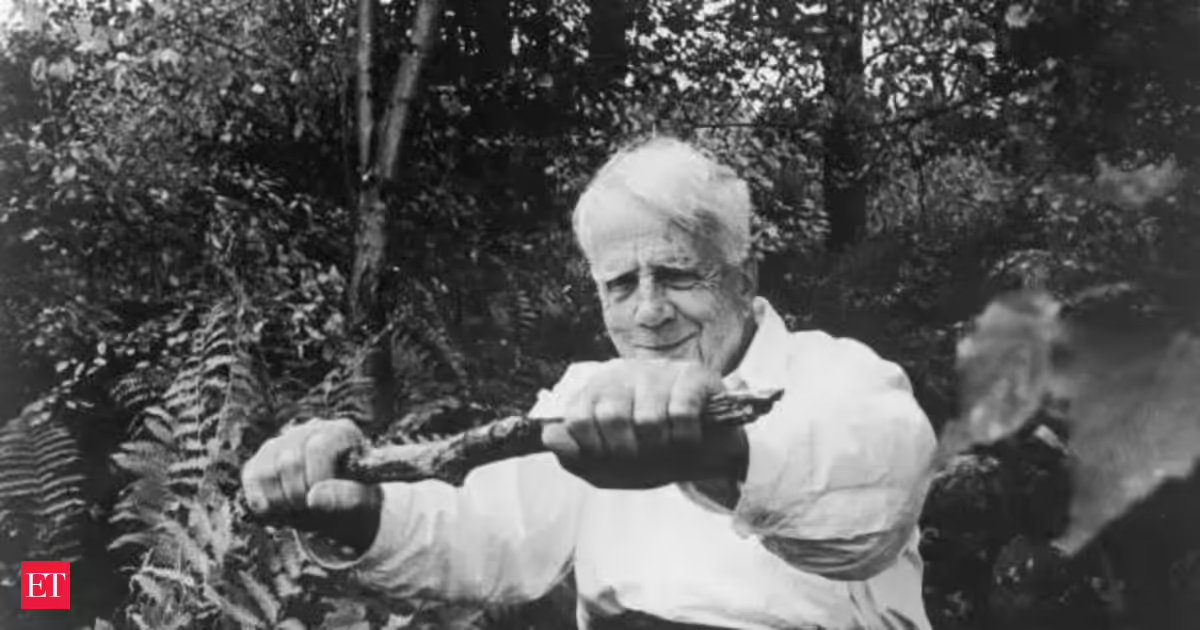
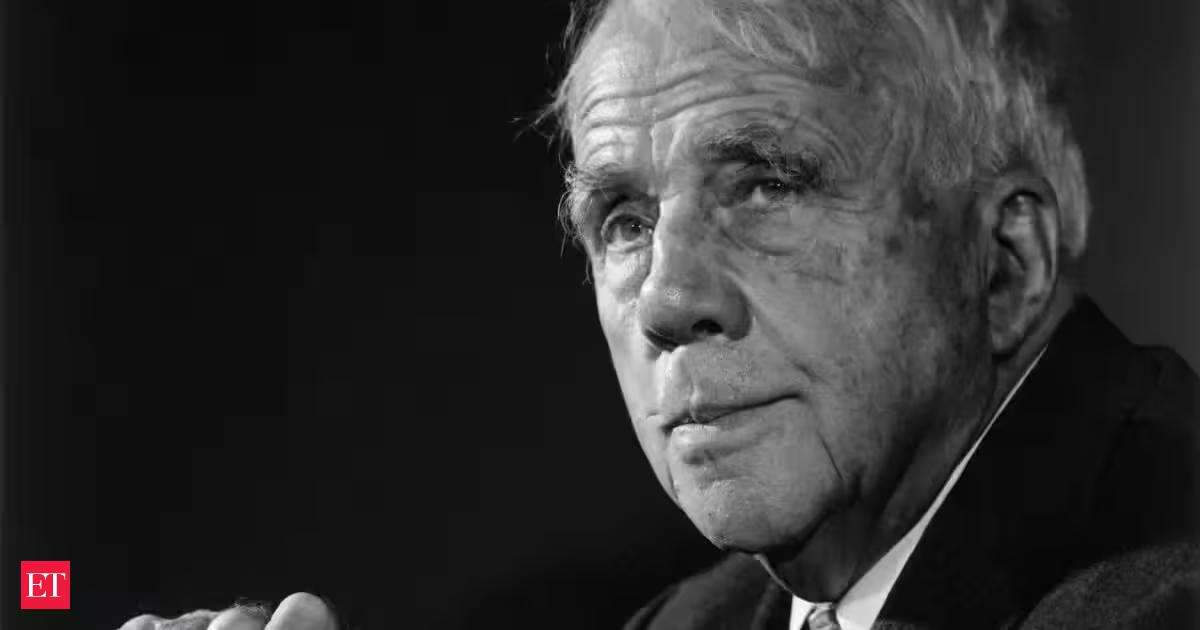
Robert Frost’s most famous poem, “The Road Not Taken,” “has confused audiences literally from the beginning,” David Orr has written.
In the spring of 1915, Frost sent an envelope to Edward Thomas that contained only one item: a draft of “The Road Not Taken,” under the title “Two Roads.” According to Lawrance Thompson, Frost had been inspired to write the poem by Thomas’s habit of regretting whatever path the pair took during their long walks in the countryside—an impulse that Frost equated with the romantic predisposition for “crying over what might have been.” Frost, Thompson writes, believed that his friend “would take the poem as a gentle joke and would protest, ‘Stop teasing me.’”
That wasn’t what occurred. Instead, Thomas sent Frost an admiring note in which it was evident that he had assumed the poem’s speaker was a version of Frost, and that the final line was meant to be read as generations of high school valedictorians have assumed. The sequence of their correspondence on the poem is a miniature version of the confusion “The Road Not Taken” would provoke in millions of subsequent readers: