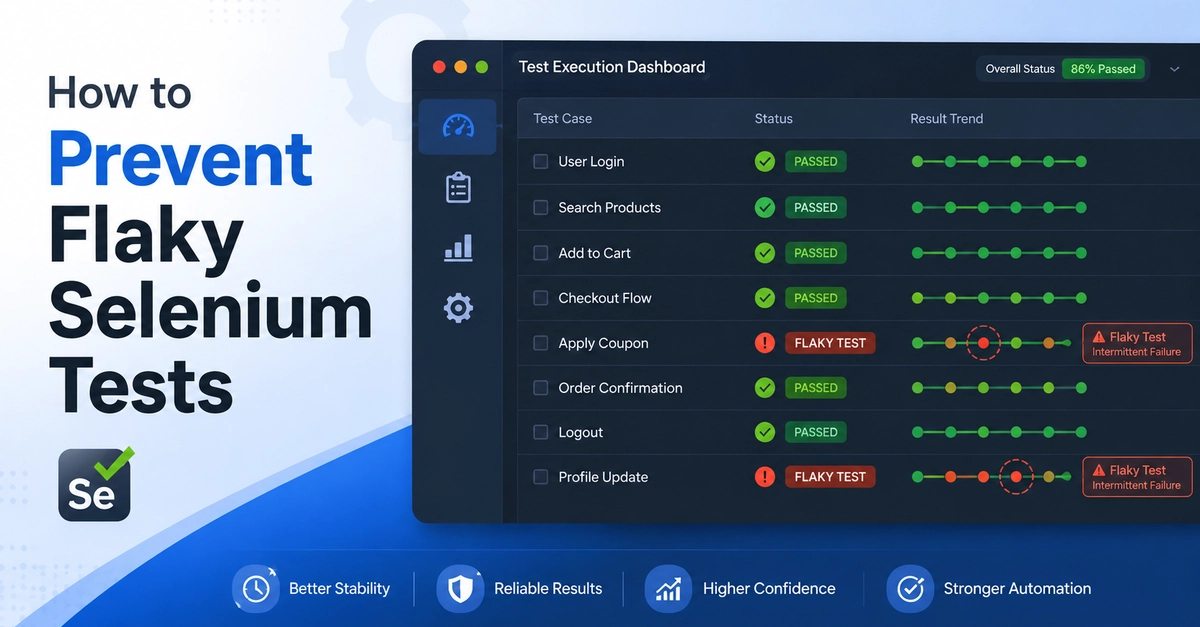
Flaky tests aren't random — they're deterministic bugs you haven't found the trigger for yet. This post covers the 8 real root causes, how to reproduce flakiness on demand instead of guessing, and the fixes that actually stick. Code examples throughout.
You've been there. A test fails in CI. You re-run it. It passes. You shrug, blame "the network," and move on — until it fails again three days later, right before a release. Multiply that across a suite of 500 tests and you've got a team that no longer trusts its own automation, a Slack thread full of "is this a real bug or just flaky?", and engineers quietly ignoring red pipelines.
Flaky tests aren't a minor annoyance — they're a trust problem. The moment "red" stops meaning "something broke," your suite becomes noise instead of signal. Here's how to actually kill flakiness instead of papering over it with retries.
What flakiness actually is
A flaky test produces different results on different runs without any change to the code, the environment, or the test itself. Same commit, same browser, same spec file — different outcome.